


When you search for flights from the United States today, it is almost impossible to avoid CheapOair. The site appears in Google results, in price-comparison widgets, and in social media ads promising big savings if you book now. At the same time, airlines from Delta and United to Southwest and JetBlue keep urging travelers to “book direct” on their own sites. For many travelers, especially those who only fly a few times a year, it is not obvious which path is actually smarter. This guide breaks down how CheapOair works, how it compares to booking directly with airlines in 2026, and when each option really makes sense in the real world.
Get the latest updates straight to your inbox!
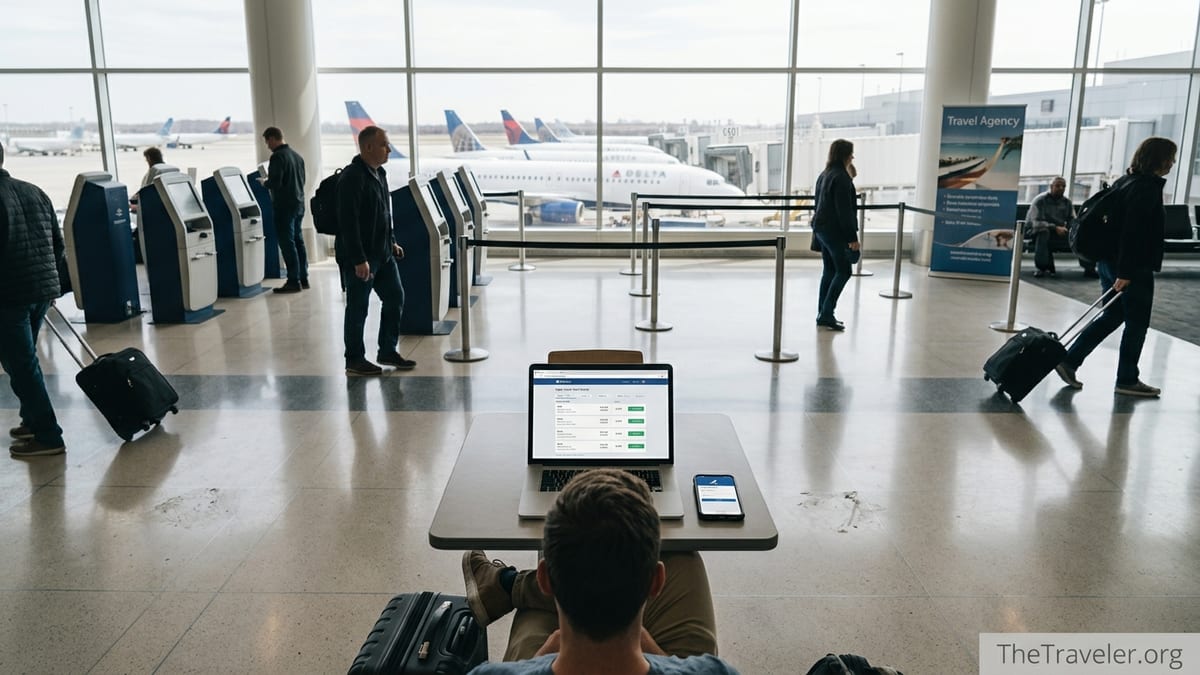
How CheapOair Works vs Booking Direct
CheapOair is what the travel industry calls an online travel agency, or OTA. It does not operate any planes itself. Instead, it connects to airline reservation systems, marks up or discounts the fares it accesses, and adds its own service fees. The company makes money on those fees plus commissions and incentives from airlines and other travel suppliers. When you buy a ticket on CheapOair, you enter into a three-way relationship: you, the OTA, and the airline that will actually carry you.
Booking directly with an airline is simpler. You search for flights on the airline’s website or app, pay the airline, and receive an e-ticket number issued straight into the airline’s system. If your Delta flight from New York to Los Angeles is delayed, for example, both your payment and your reservation live with Delta, and any change or refund flows through its own policies rather than through a middleman.
In practical terms, this means CheapOair can sometimes show combinations that an airline might not highlight, like pairing one Alaska Airlines segment with a separate American Airlines leg or bundling low-cost carriers with major airlines. But it also means that when something goes wrong, you may find yourself bounced between CheapOair and the airline, each saying the other controls your reservation.
Understanding that CheapOair is an intermediary, not an airline, is the first step in deciding whether the savings it shows are worth the trade-offs in support, fees, and flexibility compared with booking direct.
Where CheapOair Can Save You Money
In 2026, the main reason travelers still use CheapOair is the possibility of a lower headline price. OTAs receive financial incentives from airlines and seat wholesalers and sometimes pass part of that on to you. Independent fare comparisons show that on some routes, especially competitive domestic corridors or secondary international routes, CheapOair and rival OTAs can undercut airline websites by 20 to 50 dollars per ticket on the same basic economy or main cabin fare.
Consider a real-world style example. A traveler searching for a round-trip July flight from Chicago to Orlando might see a fare of around 260 dollars on a major airline’s website. On CheapOair, the same airline, dates, and times might appear at 229 dollars. That apparent 31 dollar saving is enough to catch attention, and multiplied by four travelers it looks like more than 120 dollars saved for a family vacation.
On some long-haul routes, especially where airlines quietly distribute discounted “consolidator” inventory, the difference can be more striking. Travelers regularly report seeing economy tickets from New York to Southeast Asia priced perhaps 1,100 dollars on an airline’s site, while OTAs including CheapOair list similar itineraries in the 950 to 1,000 dollar range. For a couple flying that route, saving 200 to 300 dollars can be a powerful incentive to book through the OTA despite potential headaches.
CheapOair also advertises discounts on its own service fees, such as limited-time promotions that shave up to 10 dollars per person off its fees for economy tickets and larger cuts for first-time app users. For price-sensitive travelers booking far in advance on relatively simple itineraries, those stacked discounts can make the CheapOair total look meaningfully lower than the airline-direct price at the moment of purchase.
Fees, Fine Print, and the Real Cost of Your Ticket
The price that lures travelers to CheapOair is usually the base fare. The real cost of flying includes baggage, seat selection, changes, and, crucially, intermediary fees. CheapOair, like many OTAs, adds its own service charges on top of what airlines charge, especially when you need to change or cancel your flights after booking.
CheapOair’s own policy documents and customer-service guides describe service fees layered on airline penalties for changes and cancellations. For example, if your airline would normally charge 150 dollars to change a nonrefundable international ticket, CheapOair may add its own change fee on top, turning a 150 dollar hit into something noticeably higher. Travelers posting complaints in 2024 and 2025 describe situations where they expected to pay the airline’s change fee only, then discovered CheapOair added an additional amount per ticket to process the modification.
There are also service fees baked directly into the initial purchase. CheapOair advertises “discounts” that explicitly apply to its own service fees, not to the underlying airfare set by the carrier. This means that even if its total price undercuts the airline by 25 dollars at checkout, part of what you are paying is a fee for CheapOair itself. If you later need to interact with customer support, that same fee structure can work against you, since every change represents another chance for extra charges.
By comparison, booking direct with airlines typically involves fewer layers of fees. You still pay for bags and seats, and some airlines charge phone service fees for changes requested through a call center rather than online. But you rarely face a separate intermediary fee for basic modifications when you self-manage your booking on the airline’s site or app. The biggest practical difference shows up when plans change: a 200 dollar hit when booked direct can quietly become 260 or 300 dollars when routed through CheapOair due to its extra service charges.
What Happens When Things Go Wrong
The moment your flight is cancelled, delayed, or rescheduled is where the gap between CheapOair and booking direct becomes most obvious. Airlines clearly state that if you booked through an OTA, that agency is responsible for handling changes and refunds in most cases. CheapOair’s support materials make the same point from the other side: when airline coordination is required, they may charge their own service fees and rely on the carrier’s approval for any waivers.
Real-world complaints illustrate how messy this can become. Travelers posting on consumer complaint boards in 2024 and 2025 describe refunds that took months to arrive after airlines cancelled flights, with CheapOair telling them that the carrier had not yet released the money. In one recent case, a traveler who had cancelled a Manila hotel and flight package through CheapOair was still waiting for a promised refund several months and multiple emails later. Another customer reported buying what turned out to be a “fake ticket” due to a ticketing failure, then struggling to obtain compensation or even clear information about what happened.
On Reddit and other travel forums, CheapOair users tell similar stories. One traveler arrived at the airport to learn from the airline that their payment had never been properly transmitted, even though the CheapOair website showed the booking as confirmed. Others recount missing a flight and then being told at the gate that rebooking was only possible via CheapOair, followed by long hold times, dropped calls, and inconsistent answers from different agents. These are not universal experiences, but they illustrate the extra layer of vulnerability introduced when an intermediary controls your reservation.
By contrast, travelers who booked directly with airlines during major disruptions, such as severe winter storms or air traffic control meltdowns, typically have clearer paths to resolution. When a New York to Denver flight is cancelled, for example, passengers who booked on United.com can often be rebooked via the airline’s app within minutes or speak to an airport agent who has full authority over their tickets. Those who booked the same itinerary via CheapOair or another OTA may be told that only the agency can touch the ticket, forcing them to juggle phone calls while standing in a rebooking line.
Customer Service, Accountability, and Data Concerns
CheapOair advertises 24/7 support and a customer advocacy team designed to handle unresolved issues. Internal customer-service guides circulating in 2025 describe escalation procedures and multiple channels, including phone support and complaint forms. In practice, reviews and complaints show a mixed picture, with some customers praising successful resolutions and many others frustrated by long response times and difficulty getting clear answers when things go sideways.
Independent complaint aggregators track hundreds of CheapOair grievances, with travelers citing everything from unreturned calls and emails to confusion over who actually holds their money at any given time. Some 2024 and 2025 reports describe travelers who had to call both the airline and CheapOair repeatedly just to confirm whether a refund had been processed or a voucher issued. For infrequent travelers, especially those caught in stressful situations abroad, this back-and-forth can be overwhelming.
There have also been recent discussions in travel communities about phishing and account-security worries related to CheapOair. In mid-2026, for instance, several Reddit users reported receiving detailed scam emails that used accurate CheapOair booking information, leading some to wonder whether their data had been exposed through the company or through another leak. At the time of writing, there is no definitive public proof of a CheapOair-specific data breach, but the incidents underscore an important point: every third party added to your trip is another place where personal and itinerary information is stored and potentially exploited.
When you book direct, the number of entities that hold your full travel profile is smaller: typically the airline, your payment provider, and any optional services like travel insurance you choose to add. This does not eliminate risk, but it simplifies the chain of accountability. If you detect fraud related to a Delta or American ticket you bought on their sites, you have a clear starting point. With CheapOair in the mix, determining whether an issue is rooted with the airline, the OTA, or an external scammer can be more complicated.
Loyalty Programs, Credits, and Schedule Changes
Another subtle but important difference between CheapOair and booking with airlines directly lies in how frequent flyer benefits, credits, and schedule changes are handled. Most airlines allow you to enter your loyalty number when booking via an OTA, and miles generally credit correctly as long as the ticket is issued on the airline’s own stock. However, elite benefits such as complimentary upgrades, same-day changes, and fee waivers may be harder to exercise when an intermediary controls part of the booking.
For example, JetBlue has long charged an extra fee when customers attempt to modify or cancel tickets booked through a travel agency instead of via JetBlue’s own channels. While policies vary by carrier and change over time, similar patterns are common. A traveler holding a main-cabin Delta ticket bought directly from Delta might be able to change flights within the United States with no change fee, paying only any fare difference. The same traveler holding an identical fare purchased via CheapOair could find that CheapOair charges its own service fee to process the change on top of any airline-collected fare difference.
Schedule changes are another minefield. Airlines frequently adjust departure times or swap aircraft months before departure. When you booked direct, you usually receive an email from the airline and can accept, decline, or modify the new schedule inside the airline’s app. With CheapOair, notifications may arrive from the OTA rather than the airline, and any request for a different flight often has to be channelled back through CheapOair. Travelers report cases where the airline’s own agents saw available alternative flights but refused to move them because the ticket was “owned” by an agency, while CheapOair’s agents claimed that alternatives were not available or would cost extra.
Credits and vouchers create similar friction. If you cancel a nonrefundable ticket booked directly with a carrier, you often receive a credit held under your name that you can apply directly on the airline’s website. With CheapOair, some travelers have ended up with credits that must be used through the OTA, sometimes with additional restrictions on dates or carriers and with new service fees applying when they rebook.
When It Might Make Sense to Use CheapOair
Given all these downsides, are there any situations where using CheapOair is reasonable? For some travelers, yes, but the conditions are narrower than CheapOair’s marketing suggests. The biggest factor is complexity. CheapOair can be more useful when you are dealing with relatively straightforward, low-risk itineraries where you are unlikely to change plans and where the savings are significant enough to offset the extra risk.
Imagine booking a simple round-trip from Dallas to Las Vegas for a long weekend, on a single mainstream U.S. carrier, outside of hurricane or blizzard season. If CheapOair genuinely offers the same exact flights 40 dollars cheaper than the airline website, and you are confident you will not need to change dates, that might be a risk worth taking for a budget-conscious traveler. Similarly, if you are juggling multiple international carriers on a complex route and find that only CheapOair or another OTA can ticket the full itinerary at a reasonable price, you might decide the trade-off is acceptable as long as you understand the support limitations.
CheapOair can also serve as a discovery tool. Many experienced travelers use OTAs and metasearch sites to search for route options, find lesser-known airlines, or spot unusual one-stop combinations. They then try to replicate those itineraries directly on airline websites. In cases where this is not possible, CheapOair becomes the fallback. Some Reddit users even recommend checking CheapOair’s prices first to see what is available, then going directly to the airline to book the same flights whenever possible.
The key is to avoid relying on CheapOair for trips where timing is critical, such as tight international connections, important business meetings, weddings, or once-in-a-lifetime vacations. In those cases, the value of direct control with the airline usually outweighs any upfront savings CheapOair can offer.
Why Booking Direct Is Often the Safer Default
Most travel experts, frequent flyers, and airline loyalty communities still encourage booking flights directly with airlines as the default strategy in 2026. The reasons are simple: clearer accountability, fewer layers of fees, better disruption handling, and more straightforward use of loyalty benefits and credits. When your money goes straight to the airline, the company operating your flight also controls the rules for changes, cancellations, and rebookings, and its agents can typically act on your reservation without third-party permission.
In practice, this means fewer surprises. If United changes the schedule on your San Francisco to Tokyo flight by several hours, booking direct usually gives you more flexibility to choose an alternative or request a refund within the airline’s own policies. If there is a major operational meltdown and thousands of travelers are trying to rebook at once, airlines often prioritize customers who purchased tickets directly, and airport staff will be clearer about what they can and cannot do for you.
Booking direct also reduces the risk of miscommunication and technical failures. The horror stories about CheapOair and similar OTAs often stem from breakdowns in how information flows between the OTA and the airline: payments that never reached the carrier, schedule-change notices that were delayed or never sent, or duplicate records created when both the OTA and airline attempted to modify the same reservation. When you remove the intermediary, you remove many of those failure points.
Finally, direct booking better supports long-term travel habits. Airline apps today make it easy to track flights, receive push notifications for delays and gate changes, and rebook during disruptions. Loyalty programs reward consistent direct bookings with miles, status, and fee waivers that can save serious money over time. While CheapOair can be useful in very specific circumstances, for most travelers most of the time, booking direct is the lower-stress, more predictable choice.
The Takeaway
Choosing between CheapOair and booking flights directly with airlines is ultimately a question of risk tolerance versus short-term savings. CheapOair can sometimes provide real discounts, especially on certain international or competitive domestic routes, and can offer route combinations that may not show up easily on individual airline sites. For travelers on simple, flexible trips where the price gap is substantial, accepting the extra risk of using an intermediary may be a rational decision.
However, the pattern visible in recent years is clear. Complaints about CheapOair frequently center on slow or confusing refunds, layered service fees, poor communication during disruptions, and difficulty resolving ticketing errors. Add emerging worries about data security and phishing attempts that exploit detailed booking information, and the picture becomes even less reassuring. While many travelers complete CheapOair bookings without incident, the consequences when something does go wrong are often more severe than when tickets are bought directly from airlines.
For most people, especially those traveling for critical events, long-haul international itineraries, or trips where every day matters, booking direct with the airline remains the safer and often smarter choice. Use CheapOair and similar OTAs as research tools and occasional booking options when the savings are meaningful and the itinerary is low-risk, but treat direct airline booking as your default. That balance helps you capture genuine deals when they appear without sacrificing control, support, and peace of mind when you need them most.
FAQ
Q1. Is CheapOair a legitimate company or a scam?
CheapOair is a real online travel agency that issues valid airline tickets for millions of travelers each year, but it also attracts recurring complaints about ticketing glitches, slow refunds, and hard-to-reach customer service. It is not an outright scam, yet the frequency and severity of reported issues mean you should approach it with more caution than you might use on major airline websites.
Q2. Why are flights sometimes cheaper on CheapOair than on airline websites?
Flights can appear cheaper on CheapOair because the company accesses special agency fares, receives incentives from airlines and consolidators, and can adjust its own service fees to undercut airline websites. However, part of what you pay goes to CheapOair’s fees, and later changes or cancellations may involve extra charges that erase any initial savings.
Q3. Will I earn frequent flyer miles if I book through CheapOair?
In most cases, yes. As long as the ticket is issued on the airline’s own stock and you add your loyalty number to the reservation, you should earn miles and basic credit toward status. That said, some elite perks, fee waivers, and same-day change options can be harder to use when an online travel agency controls the booking.
Q4. What happens if my flight booked with CheapOair is cancelled?
If your flight is cancelled, the airline’s rules on refunds or rebooking still apply, but you usually have to work through CheapOair to make changes or claim money back. This can mean long hold times and extra service fees. Airport agents may tell you to contact CheapOair rather than helping directly, while CheapOair may say they are waiting on the airline, which can leave you stuck in the middle during a stressful situation.
Q5. Can I change or cancel a CheapOair booking within 24 hours?
Many airlines operating from the United States allow free changes or cancellations within 24 hours on tickets booked directly through their own channels. CheapOair advertises similar options on some fares, but its own terms can be stricter and may include service fees even inside that window. Always read CheapOair’s specific cancellation rules for your booking rather than assuming the airline’s more generous policy will automatically apply.
Q6. Is customer service better when I book directly with airlines?
Generally yes. When you book direct, the airline that operates your flight also controls your ticket and can usually rebook you, process refunds, and fix seat or baggage issues without involving a third party. With CheapOair, customer service is split: the airline may have limited authority to touch your reservation, while CheapOair may be overwhelmed during peak disruption periods, leading to longer waits and more finger-pointing.
Q7. Are there situations where using CheapOair is actually a good idea?
CheapOair can be a reasonable choice for simple, low-risk itineraries with significant verified savings compared with airline websites, especially when you are confident your plans will not change. It can also be helpful when only an OTA can ticket a multi-airline itinerary you need. Even in those cases, you should weigh the money saved against the higher friction if you later need to modify or troubleshoot the trip.
Q8. How can I safely use CheapOair if I decide to book through it?
If you choose to use CheapOair, double-check all passenger details and dates, verify that the flights exist on the airline’s own site, and confirm that you receive an airline-issued e-ticket number after purchase. Monitor your reservation directly via the airline’s app, keep screenshots of confirmations and chat logs, and be cautious about any unexpected emails or calls requesting payment or personal data to avoid phishing scams.
Q9. Do airlines treat passengers differently if they booked through an OTA like CheapOair?
Airlines must transport you according to the fare you purchased, regardless of where you bought it, but in practice passengers who booked direct often enjoy smoother handling. Some carriers charge extra fees to modify agency bookings, and airport staff sometimes have less flexibility to adjust tickets issued by OTAs. During major disruptions, priority may effectively tilt toward customers who purchased directly.
Q10. As of 2026, is it usually better to book flights on CheapOair or directly with airlines?
For most travelers in 2026, booking directly with airlines is the safer and more reliable default. CheapOair can occasionally deliver real savings, but those savings come with higher risk of fees, communication breakdowns, and slow resolution when things go wrong. Using CheapOair mainly as a research tool and reserving actual bookings for airline websites is often the best compromise.