


More news on this day
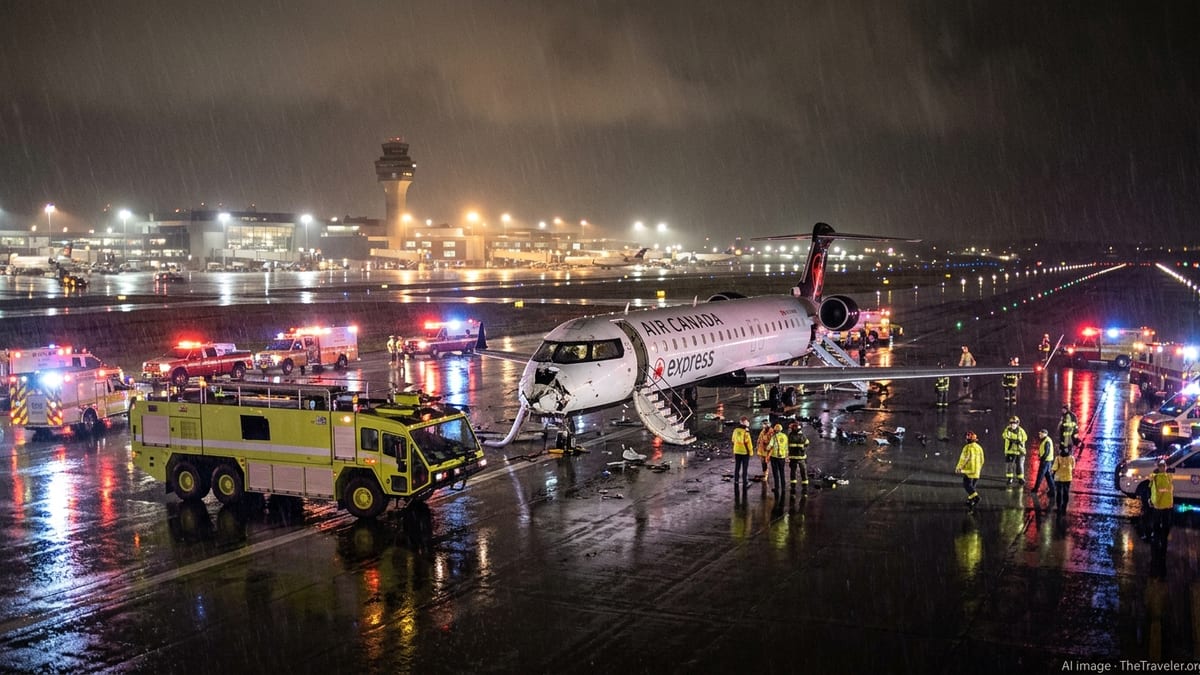
Operations at Traverse City’s Cherry Capital Airport returned to normal after roughly 90 minutes of disruption on Wednesday following a runway incident involving an arriving aircraft that temporarily halted flights.
Get the latest news straight to your inbox!
Short Ground Stop Follows Runway Incident
According to early regional news coverage and aviation tracking data, a brief interruption in service at Cherry Capital Airport began shortly after an inbound aircraft experienced an operational issue on the runway. The event prompted air traffic controllers and airport staff to temporarily pause movements while the aircraft was secured and the runway inspected.
Publicly available flight data indicates that arrivals and departures were briefly placed in a holding pattern or delayed at their points of origin. Several flights showed departure times pushed back by around one to two hours while the situation was assessed and ground crews worked to clear the affected area.
Reports indicate that the interruption, which lasted about 90 minutes, did not result in serious injuries. There were no immediate signs of structural damage to terminal facilities, and the affected aircraft was eventually moved from the active runway so that normal operations could resume.
Regional outlets described the situation as an “incident” rather than a crash, with no fire reported and emergency vehicles deployed primarily as a precaution. Passengers already inside the terminal experienced delays but were able to remain in the concourses while the runway was temporarily unavailable.
Flights Resume With Residual Delays
Once the disabled aircraft was cleared and inspections were completed, Cherry Capital lifted the operational pause and began sequencing departing and arriving flights back onto the schedule. Publicly accessible tracking boards showed traffic gradually normalizing, with some flights departing close to their rescheduled times and others still facing knock-on delays.
Travel industry reporting on similar disruptions indicates that residual delays can persist for several hours after a brief shutdown, as aircraft and crews are repositioned and connections are rebooked. The pattern at Cherry Capital appeared consistent with that wider experience, with a modest backlog working through the system into the afternoon and evening.
Airlines serving Traverse City encouraged passengers to monitor their flight status and make use of mobile apps or airport display boards to confirm updated departure times. Some travelers with tight connections at larger hubs faced itinerary changes as carriers adjusted their networks.
By later in the day, publicly available data suggested that Cherry Capital’s schedules were largely back in alignment, with only scattered delays lingering from the earlier disruption. Ground transportation and parking operations at the airport were unaffected.
What Passengers Experienced on the Ground
For passengers in the terminal, the disruption translated mainly into extended waiting times and gate changes. Social media posts from the region showed small lines forming at customer service counters as travelers sought alternate connections or reassurance about their upcoming departures.
Industry analysts note that regional airports such as Cherry Capital are particularly sensitive to even short interruptions, because they often have fewer runways and limited flexibility to reroute traffic compared with major hubs. When a single runway is unavailable, the impact can ripple quickly across the day’s schedule.
Travelers arriving into Traverse City during the pause reportedly remained on board their aircraft for a short time or diverted to nearby airports before receiving clearance to proceed. Others who had just landed were held on taxiways while emergency and maintenance crews confirmed the runway was safe for continued use.
Airport services inside the terminal, including concessions and rental car counters, remained open throughout the incident. For many passengers, the main visible sign of disruption was the cluster of delayed or “awaiting update” entries on departure boards and the presence of emergency vehicles positioned near airfield access points.
Safety Protocols and Investigative Steps
Publicly available information on comparable runway incidents at U.S. airports indicates that even minor events trigger a defined series of safety checks before operations are allowed to resume. Runway surfaces, lighting, and navigational aids are inspected, and the aircraft involved is evaluated for damage or mechanical issues.
At Cherry Capital, reports indicate that the 90 minute timeframe between the start of the disruption and the return of normal traffic reflected the time needed to remove the aircraft, complete required inspections, and coordinate with air traffic control to restart arrivals and departures. Such intervals are broadly in line with similar situations documented at other regional airports.
In the coming days, additional details about the cause of the incident are expected to emerge through routine reporting channels and, if required, formal investigative summaries. Early indications suggest an isolated operational issue rather than broader systemic concerns affecting Cherry Capital’s infrastructure or procedures.
Travel safety advocates often point to these kinds of temporary pauses as evidence of the aviation sector’s emphasis on caution. Even when an event does not cause physical harm, the decision to halt operations allows specialists to verify conditions and reduce the risk of subsequent complications.
What Travelers Should Do After a Brief Airport Shutdown
For passengers planning to travel through Traverse City in the wake of the incident, standard advice applies. Airlines generally recommend arriving at the airport with extra time when schedules have recently been disturbed, since check in counters and security lanes can be busier as backlogged travelers move through the system.
Travel publications note that mobile notifications and airline apps are often the fastest way to learn about rebookings or gate changes. In events similar to the Cherry Capital disruption, carriers sometimes issue waivers that allow customers to adjust itineraries without additional fees, particularly if delays extend or connections are lost.
Observers of U.S. aviation trends highlight that, although operational pauses and technical incidents periodically affect airports of all sizes, the overall system continues to record strong safety performance. Short suspensions of activity, such as the roughly 90 minute pause at Cherry Capital, are typically resolved quickly, with travelers able to continue their journeys later the same day.
For Northern Michigan’s primary commercial airport, the resumption of regular operations underscored the importance of rapid response and coordination between airfield crews, airlines, and air traffic controllers whenever an aircraft experiences difficulty on or near the runway.