


More news on this day
Rail passengers in parts of the United Kingdom are being urged to travel only if absolutely necessary as rare red extreme heat warnings are extended, prompting widespread timetable changes, speed restrictions and the risk of short-notice cancellations across key intercity and commuter routes.
Get the latest news straight to your inbox!
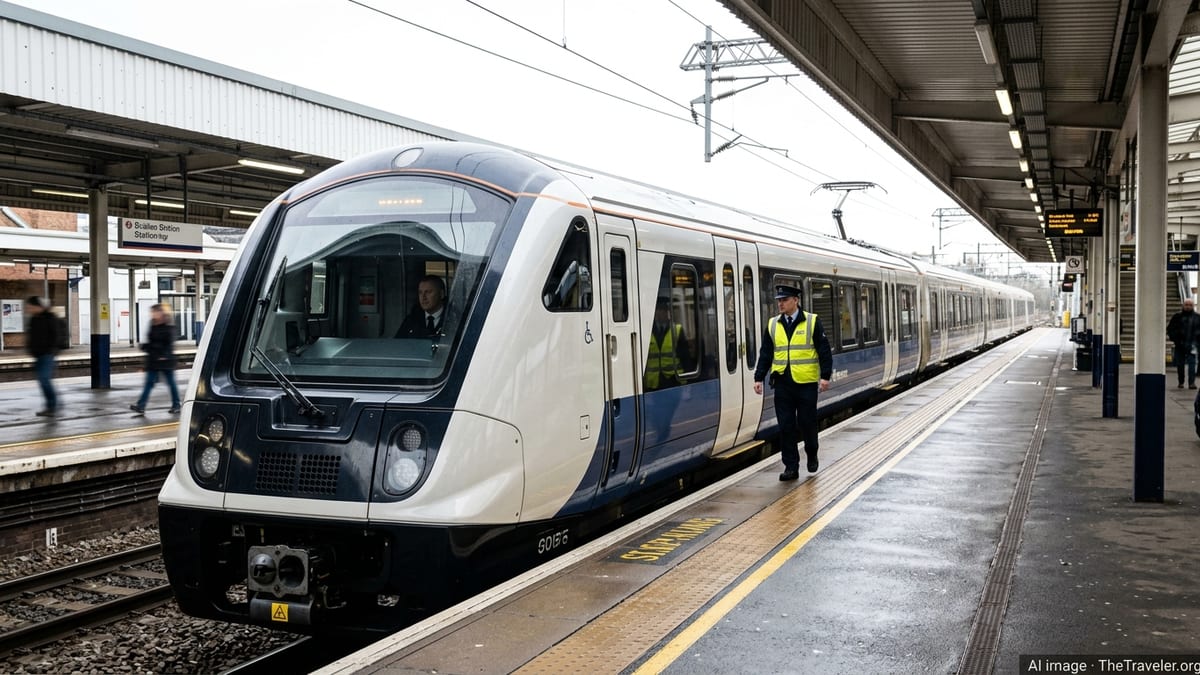
Red heat alerts widen as temperatures climb
Publicly available weather information shows that a rare red warning for extreme heat is now in force across parts of southern and western England, with the alert extended through at least Friday 26 June. The warning signals a risk to life from high temperatures, including for people who are otherwise healthy, and has triggered contingency plans across the rail network.
The Met Office red warning areas cover some of the country’s busiest rail corridors, including routes linking London with the South West, the Thames Valley and sections of the south coast. Reports indicate that temperatures are forecast to reach record or near-record June highs, increasing the likelihood of heat-related damage to infrastructure.
Travel and transport coverage notes that the UK Health Security Agency has also escalated its heat-health alert level, citing significantly increased pressure on health and emergency services. Rail operators are responding by warning that journeys through the red warning zones should only be attempted if they are essential, and that conditions on board trains may be uncomfortable despite efforts to provide additional water and support.
The extension of the weather alerts means that disruption is expected to continue beyond an isolated hot spell, affecting midweek commuters, leisure travellers and those heading to airports and coastal destinations at the start of the summer getaway period.
Network Rail and operators tighten restrictions
Coverage from industry-focused outlets indicates that Network Rail is imposing widespread precautionary speed restrictions across tracks exposed to direct sun, especially on routes built on older infrastructure or with known heat vulnerabilities. Slower running is intended to reduce the risk of rails buckling and overhead power lines sagging, but it also shortens capacity and lengthens journey times.
Train companies including Great Western Railway, CrossCountry and operators serving Gatwick Airport are running amended timetables, with some routes reduced and others subject to late changes as the heatwave develops. Public travel updates show that Great Western Railway is explicitly advising that services into, through or out of the red warning zone on Wednesday 24 and Thursday 25 June should be used for essential travel only.
On intercity routes linking the Midlands and North of England with London, operators are warning that trains may be busier than usual outside the highest-risk areas as passengers attempt to reroute or re-time journeys to avoid the red warning zones. There is also potential for knock-on disruption where trains and staff are out of position as a result of earlier cancellations or diversions.
Some rail replacement bus services already planned for engineering work are being re-emphasised for essential travel only, particularly on stretches where both road and rail are affected by extreme heat. Industry messages make clear that even where services are advertised as running, they may be altered at short notice if track temperatures rise beyond safe thresholds.
Advice for passengers in affected regions
Passengers intending to travel into, out of or within the red warning areas are being strongly encouraged, through operator channels and national travel coverage, to consider whether their journey can be postponed, re-routed or replaced with remote alternatives. Rail companies are highlighting that some advance tickets can be used on different days, or may be refunded or changed without the usual fees, in recognition of the exceptional conditions.
For those who must travel, publicly available guidance stresses the importance of preparing for extended journey times and the possibility of being held in very hot conditions if trains are delayed between stations. Passengers are being urged to carry sufficient drinking water, lightweight clothing and any necessary medication, and to check that mobile phones are charged in case of disruption.
Real-time journey planners and operator-specific update pages are being flagged as the primary sources of information before setting out, as printed timetables and earlier planning tools may no longer reflect current service levels. Travellers are being advised to verify both outbound and return legs, and to allow additional time for transfers at key hubs such as Reading, Bristol, Birmingham and London terminals.
Guidance circulated by rail companies also reminds passengers not to use emergency alarms between stations except in genuine emergencies, as unscheduled stops can delay access for response teams in hot conditions. Where station staff are available, travellers are encouraged to seek assistance with alternative routes or to access cool waiting areas away from crowded platforms.
Tourism and commuter travel heavily impacted
The timing of the heatwave during the early summer season is having a marked effect on both domestic tourism and routine commuting, according to travel industry reporting. Popular coastal and countryside destinations in the South West and along the south coast are among those served by lines now subject to essential travel warnings, complicating plans for day trips and short breaks.
Visitors from overseas arriving into major airports in the affected regions may also face uncertainty on onward rail connections. Services linking Gatwick Airport with central London and other destinations are among those where passengers are being asked to travel only if essential, with operators warning of potential crowding, altered stopping patterns and reduced comfort on board.
Within cities, some commuters are opting to work from home rather than risk lengthy delays in hot carriages or on exposed platforms. Discussion across public forums and workplace channels suggests that many employers are accepting the essential travel warnings as a valid reason to adjust working arrangements, particularly for staff based in the most severely affected zones.
Hotels, attractions and event organisers are monitoring the situation closely, as reduced rail capacity can deter visitors even where venues remain open. Industry analysts note that increasingly frequent bouts of extreme weather are adding volatility to demand patterns, encouraging tourism businesses to build more flexibility into booking and cancellation policies.
Longer-term questions over climate resilience
The current disruption is prompting fresh scrutiny of how well the UK rail network is equipped to cope with more frequent and intense heatwaves. Commentators in transport and climate policy circles point out that infrastructure in many regions was originally designed for cooler, temperate conditions, and that track, signalling and power systems can be vulnerable when temperatures move far outside historic norms.
Network Rail has previously outlined investment plans aimed at improving resilience, including the use of heat-resistant rail steels, improved monitoring of track temperatures and upgrades to overhead power equipment. However, the extension of red weather warnings and repeated appeals for passengers to travel only if absolutely necessary underline the scale of the challenge as climate-related extremes become more common.
Passenger groups argue in published commentary that clearer, earlier communication is essential when such events are forecast, so that travellers can make informed decisions before committing to non-refundable accommodation, tickets or appointments. They also emphasise the importance of accessible information for vulnerable travellers, including older people and those with health conditions that can be exacerbated by heat.
As the current heatwave continues, public information suggests that disruption is likely to remain fluid, with the possibility of further amendments to timetables and travel advice if temperatures climb higher than expected or if infrastructure issues emerge. Passengers are being encouraged to continue checking for updates throughout the week and to plan journeys on the assumption that only essential travel should be attempted in the areas covered by the most severe weather warnings.