


More news on this day
Chicago O’Hare International Airport emerged as the epicenter of U.S. air travel disruption on Friday, with data showing 3,195 delayed flights and 141 cancellations affecting tens of thousands of passengers at one of the country’s busiest hubs.
Get the latest news straight to your inbox!
Storms, Congestion and Summer Demand Converge
The disruption at O’Hare unfolded against a backdrop of peak summer demand, with heavy passenger volumes already stretching airline and airport resources. Weather systems moving through the Midwest triggered ground stops and reroutes, quickly backing up operations at an airport that serves as a pivotal national and international connecting point.
Publicly available tracking data indicate that delays at O’Hare accumulated across the day rather than resulting from a single incident. Early slowdowns caused by thunderstorms and low ceilings contributed to a growing cascade of late departures and arrivals, which then rippled into afternoon and evening schedules. By nightfall, O’Hare had recorded more delays than any other U.S. airport.
Industry analysts note that high summer loads leave airlines with limited slack in their networks. When severe weather hits a major hub such as O’Hare, aircraft and crews are often out of position, and recovery can take multiple scheduling banks, turning what might begin as modest holdups into large-scale disruption.
O’Hare’s Central Role in the National Air Network
Chicago O’Hare functions as a core hub for multiple major carriers, concentrating arrivals and departures into tightly timed banks designed to maximize connections. That efficiency, however, can also make the airport particularly vulnerable when conditions deteriorate. A single disrupted bank of flights can cause hundreds of passengers to misconnect, and missed connections in turn drive up both delay minutes and cancellations as itineraries are rebuilt.
According to available aviation performance research, hub airports with dense traffic patterns and complex runway operations tend to experience more significant knock-on effects when the system is stressed. O’Hare’s heavy use for both domestic connections and long-haul international services magnifies that effect, since disrupted inbound flights can strand travelers and aircraft far from their ultimate destinations.
Friday’s figures also highlight how performance at one airport can shape the national picture. With 3,195 delayed flights tied to O’Hare alone, the Chicago hub represented a substantial share of all U.S. disruptions for the day, influencing operations at dozens of other airports where delayed aircraft eventually arrived or from which they were scheduled to depart.
FAA Capacity Limits and Long-Running Delay Concerns
The spike in disruptions comes as federal regulators continue efforts to rein in congestion at O’Hare. The Federal Aviation Administration has extended temporary scheduling limits intended to cap daily operations and reduce overscheduling during peak hours. These measures are designed to keep traffic at levels the airfield and surrounding airspace can handle more reliably under typical weather conditions.
According to published regulatory notices and recent coverage, authorities have focused on curbing the number of flights scheduled during the busiest arrival and departure banks, arguing that reducing pressure in those windows can cut both routine delays and the severity of meltdowns when thunderstorms or other hazards arise. Friday’s chaos underscores that even with such limits, severe summer weather can still overwhelm available buffers.
O’Hare has grappled with delay issues for decades, dating back to periods when the airport regularly ranked among the most congested in the United States. A long-running airfield modernization program and scheduling controls have improved average performance, but peak travel days in stormy seasons continue to expose structural vulnerabilities in how airlines and airports manage volume at major hubs.
Passenger Frustration and Travel Planning Challenges
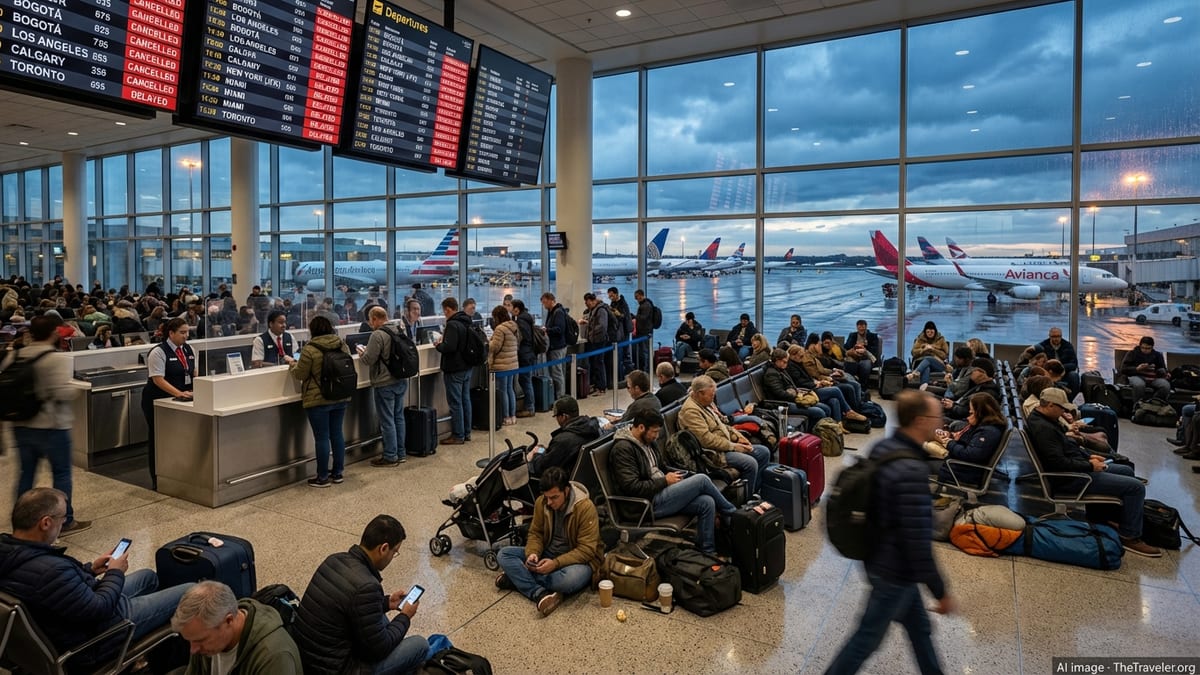
As delays mounted on Friday, travelers reported missed connections, extended tarmac waits and long customer service lines while attempting to rebook. Social media posts and online discussion forums reflected growing frustration from passengers who described sitting on aircraft awaiting gates, watching rolling departure times on terminal monitors and scrambling to secure scarce alternative flights.
Consumer advocates often point out that passengers caught in such disruptions have limited options once operations deteriorate at a major hub. With flights close to full in the peak summer period, rebooking opportunities on the same day can be rare, especially for travelers heading to smaller markets with limited service. Hotel and meal costs frequently fall to passengers in cases where disruptions are attributed to weather rather than airline-controlled causes.
Travel planning experts typically recommend that passengers connecting through airports known for heavy summer thunderstorms and congestion, such as O’Hare, build in longer layovers and schedule critical trips earlier in the day. The large number of delayed flights on Friday illustrates how late-afternoon and evening departures are particularly susceptible when early banks fall behind, leaving little time for the system to recover before the nightly shutdown of operations.
Broader Implications for Summer 2026 Air Travel
The scale of Friday’s disruption at O’Hare raises fresh questions about the overall resilience of the U.S. air travel system heading into the heart of the 2026 summer season. Airlines have been operating close to pre‑pandemic capacity while managing staffing challenges, tighter maintenance windows and evolving air traffic control constraints in several regions.
Recent academic and industry analyses have highlighted how delays can propagate rapidly through the network when a key hub experiences extended disruption. Once a critical mass of flights falls behind schedule, each subsequent delay or cancellation can compound the problem, lengthening recovery times and affecting airports far beyond the original trouble spot.
Friday’s numbers for O’Hare, with thousands of delayed flights and more than a hundred cancellations tied to a single day, demonstrate how quickly a combination of storms, congestion and high demand can overwhelm even one of the nation’s most heavily managed hubs. For travelers, the episode serves as another reminder that flexibility, contingency planning and real-time monitoring of flight status remain essential tools in navigating a volatile summer travel landscape.