


More news on this day
A scrub fire near key rail corridors in central Auckland has caused widespread delays and cancellations across the city’s train network, disrupting peak travel and forcing thousands of commuters to seek alternative transport options.
Get the latest news straight to your inbox!
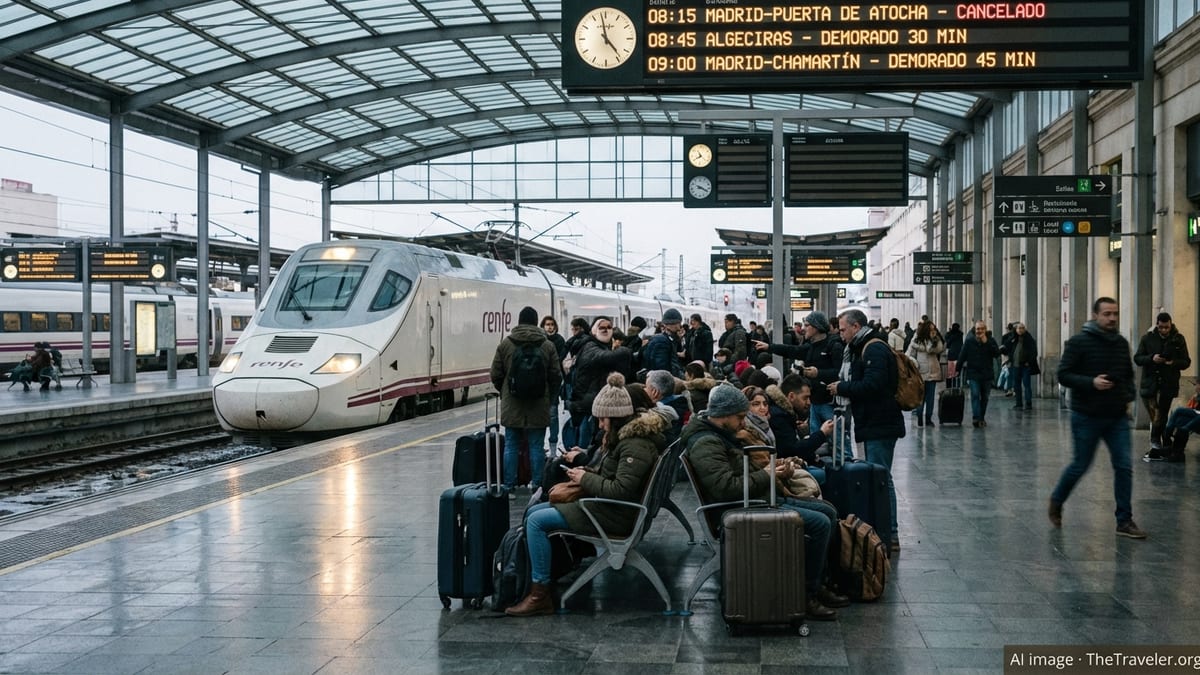
Fire near tracks forces suspension of key services
Reports from local media and transport updates indicate that the scrub fire broke out close to rail infrastructure serving central Auckland, prompting safety precautions that led to an immediate suspension of several train services. Smoke and fire activity near the tracks raised concerns about visibility and potential damage to overhead lines and signalling equipment, triggering an emergency response and halting trains in both directions.
Publicly available information shows that services in and out of Auckland’s central area were among the most affected, with trains held outside stations and some services terminated before reaching the city. Network operators cited the need to keep trains clear of the affected section until fire crews could secure the scene and confirm that the infrastructure had not been compromised.
The disruption coincided with busy travel periods, compounding the impact on passengers heading to work, school and major city events. Commuters described crowded platforms, limited information and rapidly changing departure boards as operators worked to reconfigure services around the blocked section of track.
Early assessments suggested the fire was contained to vegetation adjacent to the rail corridor rather than within stations themselves, but its proximity to critical infrastructure left little margin for risk, prolonging the shutdown while inspections were carried out.
Widespread delays, cancellations and knock-on disruption
Service alerts from Auckland’s rail operator and local transport bulletins showed extensive cancellations across multiple lines as controllers attempted to keep trains and staff out of the affected area. Some peak services were withdrawn entirely, while others were turned back short of their usual termini, creating a patchwork timetable that proved difficult for passengers to navigate.
Because of Auckland’s reliance on a small number of central junctions, delays in one corridor quickly rippled across the wider network. Trains already in service were forced to queue or run at reduced speed, amplifying delays well beyond the immediate fire zone. Passengers on unaffected lines also experienced longer journey times and platform congestion as revised routes funneled more people through fewer trains.
Replacement bus services were organised on short notice to bridge some of the gaps, but capacity constraints and road congestion meant that these options were quickly overwhelmed. Travel times into the central city stretched significantly, with some commuters choosing to abandon public transport altogether and switch to private vehicles or remote work for the day.
The incident added to a broader pattern of disruption on Auckland’s rail system in recent months, where infrastructure projects, technical issues and weather-related events have already tested passenger patience and network resilience.
Safety checks and infrastructure inspections extend disruption
Once the scrub fire was brought under control, engineering and safety teams began detailed inspections of the affected corridor. According to published coverage of similar incidents in New Zealand and overseas, checks typically focus on overhead power lines, signalling cabinets, cable troughs and trackside equipment that may be vulnerable to heat or smoke damage.
In this case, initial indications suggested that visible damage was limited, but network managers kept restrictions in place while confirming that complex systems such as signalling and power supply were functioning correctly. Even minor equipment faults near a busy junction can have outsized impacts on network reliability, prompting a cautious approach to restoring normal operations.
During the inspection period, trains were gradually reintroduced at reduced frequency, with operators warning of continuing delays and short-notice cancellations. Services ran under tighter speed limits through the affected area, adding a further buffer while crews monitored equipment and verified that any temporary repairs were holding under live conditions.
Passengers were urged through public channels to check digital timetables and service alerts before travelling, as real-time information became the primary tool for managing expectations during the phased recovery.
Commuter frustration and questions over resilience
The scrub fire disruption triggered renewed debate about the resilience of Auckland’s rail network and its vulnerability to incidents in or near central corridors. Commentators on local platforms highlighted the system’s limited redundancy, noting that even a short stretch of compromised track can shut down large parts of the network because alternative routing options are scarce.
This latest episode follows a series of rail interruptions linked to infrastructure upgrades, signal problems and unrelated emergencies at key stations. Publicly available reports on Auckland public transport reliability have already pointed to the cumulative impact of repeated closures and delays on passenger confidence, particularly for those who depend on trains for daily commuting.
Advocates for public transport investment argue that the incident underlines the need for more robust protection of rail corridors, including improved vegetation management and fire prevention measures around tracks. They also point to the importance of modern signalling systems and better contingency planning to enable faster recovery when incidents occur.
For passengers caught up in the delays, however, the immediate concern was simply getting to their destinations. Social media posts and commuter forums reflected a mix of understanding about the safety risks posed by the fire and frustration at the scale of the disruption caused by a relatively localised event.
Next steps for operators and travellers
As inspections progressed and services were gradually restored, operators signalled that full timetables could take some time to stabilise, with out-of-position trains and staff rosters needing to be reset after the emergency response. Experience from previous disruptions suggests that residual delays can persist even after physical issues on the line are resolved.
Transport planners are expected to review the incident alongside other recent interruptions to identify lessons for future emergency responses. Areas of likely focus include the speed and clarity of passenger communications, the availability of standby bus fleets and the robustness of power and signalling systems when exposed to fire and smoke near rail corridors.
Travel advice issued through public channels continued to emphasise flexibility, encouraging passengers to allow extra time for journeys, consider alternative modes where practical and stay up to date through real-time service updates. For many regular users, the scrub fire has become another reminder of both the benefits and vulnerabilities of relying on Auckland’s evolving rail network.
While the immediate priority remains restoring normal services, the incident is expected to fuel ongoing conversations about how Auckland can build a rail system that is better able to withstand shocks, whether from vegetation fires, technical faults or the demands of a rapidly growing city.