


More news on this day
Thick haze from Canadian wildfires has pushed Connecticut’s air quality into unhealthy territory this week, but available data suggests only a modest and mostly weather-related impact on flights so far.
Get the latest news straight to your inbox!
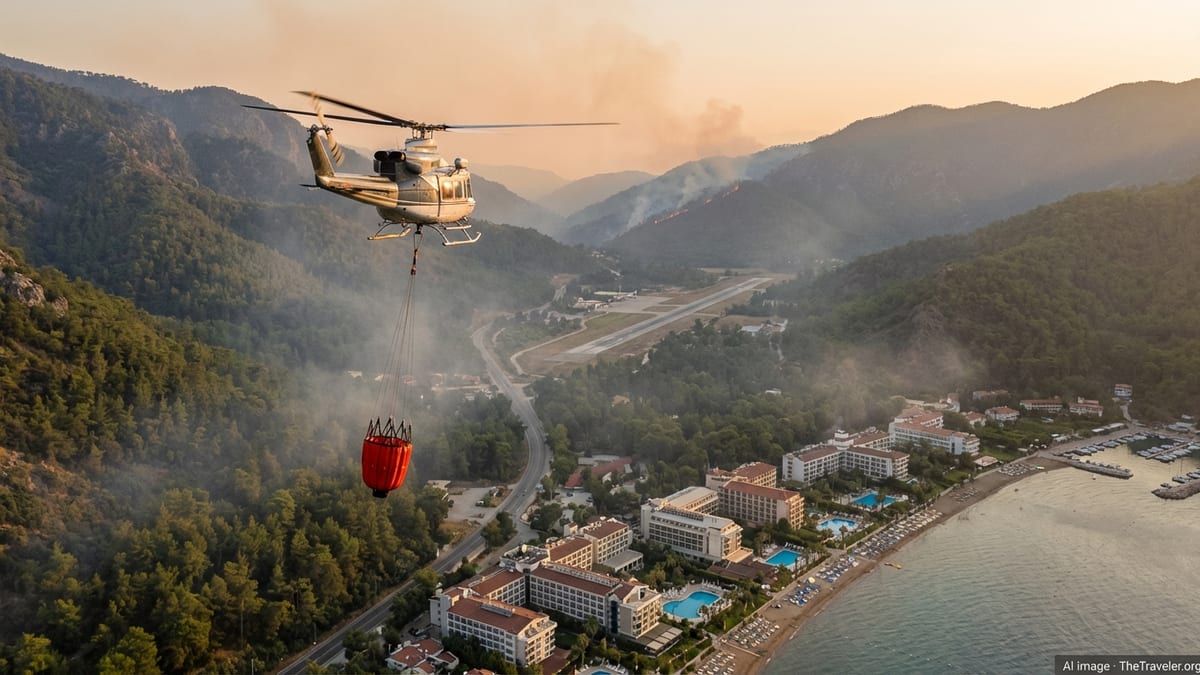
Smoke, Haze and Air Quality Alerts Across Connecticut
Wildfire smoke from Canada has streamed into New England since midweek, shrouding skylines from New Haven to Hartford in a milky haze and triggering repeated air quality alerts. Publicly available bulletins from state agencies describe fine particulate pollution at levels considered unhealthy for sensitive groups across all of Connecticut on July 15 and 16, with Fairfield, New Haven and Litchfield counties at times reaching categories considered unhealthy for the general population.
Satellite imagery and air quality maps show plumes of smoke sliding south and east over the state, periodically thickening visibility and giving the sun an orange tint. Residents have reported smoke odor and eye irritation, and health officials have urged people with heart or lung disease, older adults and children to limit strenuous outdoor activity until particulate levels ease.
Despite the dramatic skies, aviation operations are governed by more specific visibility and ceiling thresholds than those used for public health messaging. That distinction has allowed most scheduled flights to continue operating, even at times when the air at ground level has been classified as unhealthy to breathe for prolonged periods.
How Flights Have Been Affected at Bradley and Tweed
Connecticut’s two main commercial airports, Bradley International in Windsor Locks and Tweed New Haven, have each seen delays and a small number of cancellations since the smoke first thickened earlier in the week. Flight-tracking data compiled from services such as FlightAware indicates that, between Tuesday and Thursday, more than one hundred flights were delayed and under a dozen were canceled at Bradley, with a smaller number of delays and no cancellations recorded at Tweed over the same period.
Published coverage comparing those numbers with typical summer-day operations notes that the level of disruption has remained within the range usually associated with thunderstorms, routine congestion or minor ground delays. Reporting also indicates that most delays have been attributed in airline and airport systems to broader weather patterns in the Northeast, rather than to smoke conditions at Connecticut airports alone.
In practical terms, that means passengers have encountered slower-than-normal operations at times, particularly during peak travel periods, but widespread ground stops or mass cancellations directly linked to smoke have not materialized. Both Bradley and Tweed have continued to process departing and arriving flights throughout the week, albeit with the kind of rolling schedule changes that are common during unsettled summer weather.
Why Most Planes Can Still Operate in Smoky Skies
For commercial aviation, the critical question is not whether skies look hazy from the ground, but whether visibility and cloud ceilings along approach and departure paths meet federal safety standards. Smoke can reduce horizontal visibility, but as long as those values remain above instrument and visual flight rules thresholds, aircraft can take off and land using a combination of onboard instruments, ground-based navigation aids and air traffic control guidance.
Air quality alerts in recent days have been driven primarily by elevated fine particulate levels at breathing height, measured in micrograms per cubic meter, rather than by visibility dropping to the point of shutting down runways. Observations from weather stations near Connecticut airports have shown hazy skies but generally adequate visibility, allowing pilots to maintain the required margins for safe operations.
Aviation specialists routinely note that modern airliners are designed to handle a wide range of atmospheric contaminants, including smoke and dust, for limited periods. Engine manufacturers publish operating guidance for conditions with airborne particulates, and airlines may adjust climb profiles or fuel margins when haze is present. Those operational tweaks, while largely invisible to passengers, help keep flight schedules moving even when the horizon appears blurred.
What Travelers Should Expect Over the Coming Days
Forecast discussions from meteorologists tracking the smoke plume suggest that Connecticut is experiencing a brief improvement in air quality on Friday, with the thickest concentrations sliding to the south and east. However, model guidance also indicates that additional smoke aloft could rotate back into the region Friday night into Saturday, potentially renewing hazy conditions and pushing particulate levels higher again.
If that pattern plays out, travelers could see a continued mix of routine weather-related delays across the Northeast, occasionally compounded by reduced visibility from smoke during the morning and evening peaks. The most likely impacts would be minor schedule adjustments, holding patterns or speed reductions rather than wholesale flight cancellations attributable solely to smoke over Connecticut.
Airports and airlines will continue to adjust operations based on real-time visibility readings, wind shifts and low-level cloud cover, all of which have proven at least as influential as smoke on flight timing this week. Travelers with tight connections may want to allow extra buffer time while the region remains under intermittent smoke influence.
Tips for Flying In and Out of Connecticut During Smoke Events
While major disruptions have been limited so far, passengers can take several practical steps to navigate travel during ongoing smoke episodes. Checking flight status early and often on airline apps or departure boards remains essential, since modest operational slowdowns can cascade into schedule changes later in the day, especially at hub airports feeding routes to and from Connecticut.
Health considerations are also part of the equation. Travelers who are sensitive to poor air quality may wish to minimize outdoor time at the curb or in open-air parking areas, use climate-controlled transit or shuttles when possible and carry any prescribed inhalers or medications in a personal item. Some health agencies recommend well-fitting masks for individuals at higher risk when particulate levels reach unhealthy categories, including during airport transfers that involve extended waits outdoors.
Experts emphasize that this week’s smoky skies are part of a broader pattern of more frequent wildfire smoke intrusions into the northeastern United States in recent years. As long-distance transport of smoke becomes more common, episodic hazy days may remain a recurring backdrop to summer air travel in and out of Connecticut, even when the planes themselves continue to fly.