


More news on this day
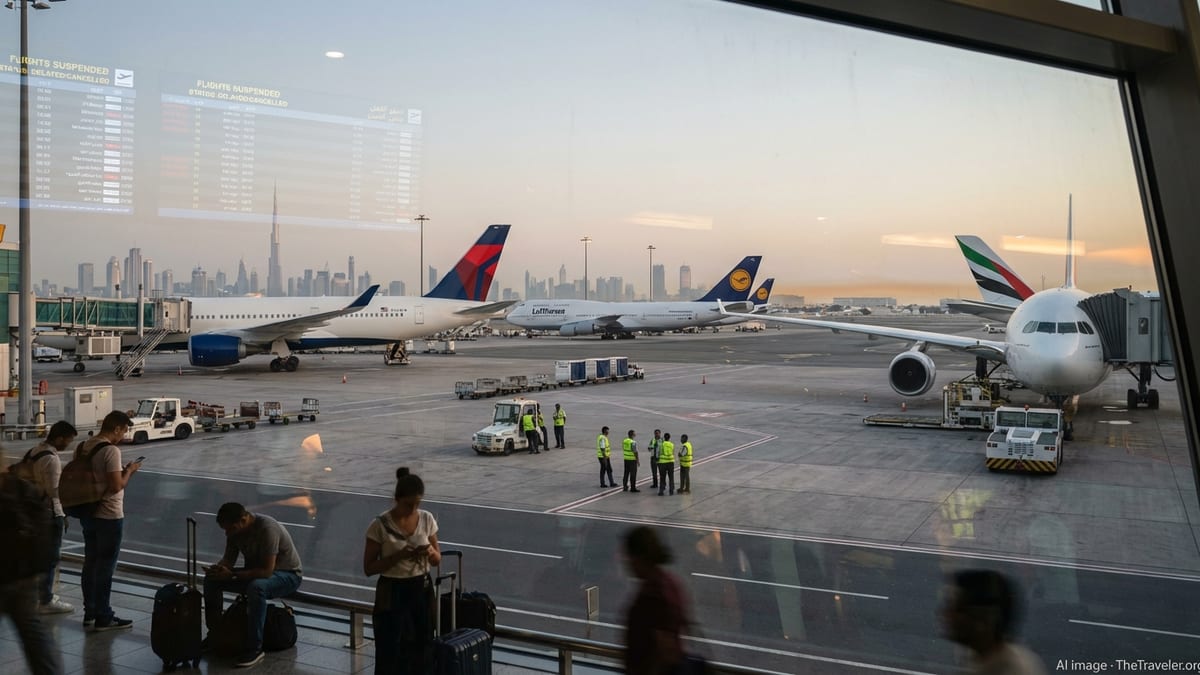
Chicago O’Hare International Airport is facing another bout of heavy disruption, with publicly available tracking data indicating 357 flight delays and six cancellations affecting key routes to London, Frankfurt and Atlanta on services operated by American Airlines, Delta Air Lines and Lufthansa.
Get the latest news straight to your inbox!
Major Hub Struggles to Maintain Schedule Integrity
The latest wave of disruption at O’Hare underscores the vulnerability of one of the world’s busiest hubs to operational strain, as hundreds of delayed departures and arrivals ripple through airline schedules. Tracking services show that the impact is being felt across both domestic and long haul networks, with aircraft and crews arriving late and pushing subsequent flights behind schedule.
American Airlines and Delta Air Lines, which both maintain substantial operations at O’Hare, are among the carriers most visibly affected. Delays on their Chicago departures feed directly into onward rotations, meaning a late pushback to Atlanta or another domestic city can cascade into further disruptions on later flights in North America and across the Atlantic.
Lufthansa’s operations at O’Hare, focused heavily on its Frankfurt hub, are also included in the current disruption picture. When widebody flights on transatlantic routes run late, the knock on effect can extend into missed or compressed connections in Europe, amplifying the inconvenience for travelers well beyond Chicago.
The concentration of delays within a compressed window of the day puts additional pressure on airport infrastructure, from gate availability to ramp operations. This can create a feedback loop in which even modest schedule disturbances become harder to absorb as the day progresses.
Transatlantic Links to London and Frankfurt Disrupted
O’Hare’s transatlantic corridors to London and Frankfurt are central to the latest disruption, as delayed departures and arrivals on these routes affect tightly timed connection banks on both sides of the Atlantic. Publicly available flight boards and aviation data services indicate that services linking Chicago with London Heathrow and Frankfurt are among those experiencing extended waits on the ground.
American Airlines uses London as a critical gateway for onward travel into Europe, while Lufthansa and partner carriers rely on Frankfurt as a major transfer point for flights into Central and Eastern Europe, the Middle East and Africa. When departures from Chicago are held at the gate or placed into extended ground queues, passengers risk missing onward flights or being rebooked onto later services with limited remaining capacity.
For travelers beginning journeys in Chicago, the disruption translates into longer time spent in departure halls and at boarding gates, as airlines work through revised departure times and crew duty limitations. Those already en route to O’Hare on connecting services face uncertainty over whether they will make their planned transatlantic connections or be forced into overnight stays.
The strain on long haul services is particularly acute because widebody aircraft are more difficult to reassign at short notice. Once a transatlantic flight is delayed beyond a certain threshold, the knock on consequences can extend into the following day’s schedule for the airline involved.
Atlanta and Domestic Connectivity Feel the Ripple Effect
Routes between Chicago and Atlanta, one of the busiest domestic corridors in the United States, are also heavily entangled in the disruption. Delta’s presence at Atlanta and American’s wider domestic network mean that delays on Chicago to Atlanta sectors can quickly multiply into missed connections across the Southeast and beyond.
Publicly available flight information shows that delays on short haul and medium haul routes out of Chicago often occur in waves, with a bank of flights to major hubs like Atlanta, Dallas, New York and Denver all shifting later into the day. This reduces the flexibility for airlines to reposition aircraft and crew, and leaves less room in the timetable to recover from subsequent issues such as weather or air traffic flow restrictions.
Passengers traveling on multi leg itineraries that include both Chicago and Atlanta are particularly exposed. A delay on the initial Chicago departure can place tight connections in jeopardy, while disruption in Atlanta can in turn push return services back, feeding fresh delays into the Chicago schedule during the evening peak.
As schedules compress, aircraft utilization becomes increasingly challenging. With limited spare capacity in peak periods, airlines sometimes opt to cancel a small number of flights in order to restore order to the wider operation, a pattern reflected in the six recorded cancellations at O’Hare.
Airlines Juggle Passenger Care and Operational Recovery
According to publicly available policy summaries and federal consumer dashboards, major U.S. carriers including American Airlines and Delta Air Lines commit to providing certain forms of assistance when delays are within the airline’s control. Typical measures can include meal vouchers after extended waits and hotel accommodation when overnight stays become unavoidable due to significant schedule disruption.
In practice, how these commitments are implemented depends on the underlying cause of each delay and the availability of alternative flights. When widespread disruption hits a key hub, rebooking options may be limited, particularly on high demand long haul routes such as Chicago to London and Frankfurt. Travelers may be offered rerouting through alternative hubs, later same day departures, or in some cases flights on the following day.
Lufthansa’s transatlantic passengers are subject to a different regulatory framework once they cross into European jurisdiction, where consumer protections for long delays and cancellations can be more prescriptive. However, the immediate experience at O’Hare remains similar for all affected passengers, who must navigate crowded customer service desks, long wait times for callbacks and frequently changing departure information.
Industry observers note that when disruption reaches the scale seen in Chicago, airlines are effectively engaged in a balancing act, weighing the protection of long haul operations against the need to maintain a basic level of connectivity across domestic networks. The six cancellations recorded at O’Hare appear to form part of this broader effort to stabilize schedules after the initial shock of delays.
Travelers Urged to Monitor Status and Build in Extra Time
With O’Hare experiencing elevated numbers of delays and a smaller but still significant number of cancellations, travel experts advise passengers to monitor real time flight status closely on airline channels and airport information boards. Same day notifications can and do change rapidly as carriers adjust departure times, swap aircraft and respond to evolving weather and air traffic conditions.
Flexible planning is especially important for those with onward connections in London, Frankfurt or Atlanta. Building longer connection windows into itineraries, where possible, can provide a buffer when departure from Chicago is pushed back. Travelers already en route to O’Hare are encouraged by consumer advocates to familiarize themselves with airline policies regarding meal vouchers, hotel accommodation and rebooking so they know what support to request if their plans are disrupted.
Recent federal data and industry analysis indicate that the broader U.S. aviation system has been operating with elevated delay and cancellation rates through early 2026, particularly at major hubs such as Chicago and Atlanta. That backdrop increases the likelihood that even localized operational challenges at O’Hare can quickly spill across airline networks and into international markets.
For now, the combination of 357 delays and six cancellations at Chicago O’Hare highlights the continued fragility of tightly packed airline schedules. With peak summer travel approaching, passengers using the airport’s domestic and transatlantic services may need to factor in a higher than usual risk of disruption when planning critical journeys.