

More news on this day
China’s largest airlines have stunned travelers by rolling out sweeping no-fee refunds and flight-change options on Middle East routes, as an escalating regional crisis forces mass cancellations, diversions and last-minute schedule overhauls across Asia–Europe corridors.
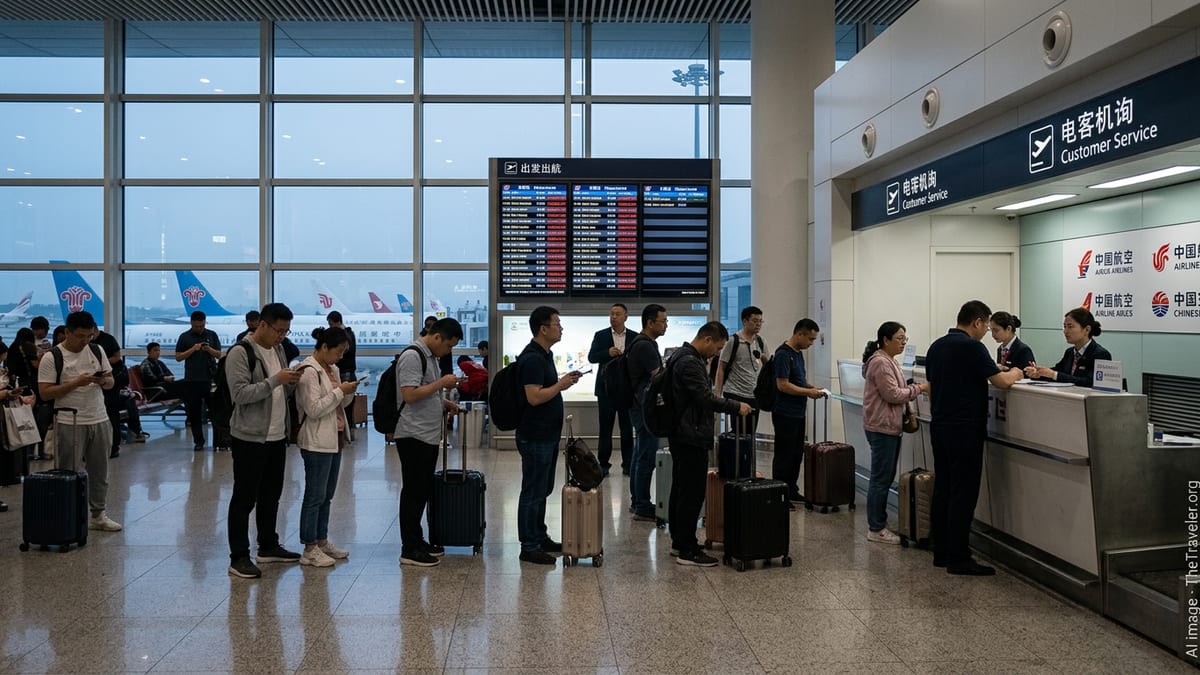
Explosive Middle East Tensions Upend China–Gulf Air Links
A sharp spike in hostilities involving Iran, Israel and the United States has triggered widespread airspace closures across parts of the Gulf and Levant, disrupting some of Asia’s most important aviation corridors. Several countries have temporarily shut or restricted key flight information regions, forcing Chinese and global carriers to ground services, reroute via longer paths or substitute aircraft at short notice.
For Chinese travelers, the shock has been immediate. Flights linking Beijing, Shanghai and Guangzhou with major Middle Eastern hubs such as Dubai, Abu Dhabi and Riyadh have faced rolling cancellations and significant delays. The fallout is rippling far beyond the region itself, as detours around closed airspace add hours to journeys between China and Europe, and strain aircraft and crew availability across airline networks.
In response, Chinese regulators have pressed carriers to prioritize safety while keeping consumer disruption to a minimum. That push, combined with the operational challenges of flying around volatile airspace, has set the stage for one of the most generous sets of ticket-waiver policies mainland travelers have seen in years.
Big Three Chinese Carriers Roll Out Unusually Generous Waivers
Air China, China Eastern Airlines, China Southern Airlines and Shenzhen Airlines have all issued special ticket policies that effectively turn many Middle East bookings into risk-free bets for a limited period. For tickets involving unused travel segments between late February and the end of May, and purchased or reissued before the afternoon of March 10, these airlines are allowing fee-free refunds and changes on affected routes when travel falls within the crisis window.
The policies apply to a broad swath of itineraries touching affected Middle East destinations, particularly Dubai, Abu Dhabi and Riyadh. On many tickets, passengers can cancel for a full refund to the original form of payment or move their travel to a later date without paying the usual change penalties. In numerous cases, rebooking is also permitted onto alternative flights or slightly different routings at no extra cost, provided the origin and destination remain the same and travel stays within specified validity periods.
For leisure and business travelers accustomed to strict, nonrefundable discount fares on Chinese airlines, the change is striking. Under normal conditions, even minor voluntary changes can incur hefty fees and fare differences, especially on popular China–Gulf and China–Europe connections. Today, for a narrow but critical booking window, the balance of risk has shifted dramatically away from the customer and back toward the airlines.
Industry analysts say there is a strategic calculation at work. With many passengers jittery about transiting near conflict zones, generous waivers help calm nerves and prevent a collapse in forward bookings. They also make it easier for airlines to adjust schedules tactically as the military and diplomatic situation evolves, without being locked into carrying every passenger exactly as originally ticketed.
How the No-Fee Refund and Change Rules Actually Work
Behind the dramatic headlines, the fine print still matters. The current policies are designed primarily for involuntary situations, meaning flights or routes that are canceled, heavily delayed or materially affected by airspace closures and routing changes. In practice, that covers most services directly serving the Gulf and surrounding conflict zones, along with certain itineraries that must overfly the region and are no longer able to do so safely or efficiently.
Typically, a ticket will qualify if it was issued within a defined purchase window and if at least one unused segment falls between specified travel dates, generally beginning around February 28. Travelers whose flights are canceled outright are usually entitled to full refunds or free rebooking. Those who prefer not to travel at all due to safety concerns on still-operating flights may also be eligible for penalty-free refunds or changes, depending on the carrier and routing.
What makes the current situation so unusual is that many airlines are waiving not only change fees but, in certain scenarios, additional fare differences that would normally apply when rebooking. That means passengers can often shift to a later date or slightly different flight in the same cabin without paying extra, even when market prices have risen. However, if travelers request voluntary changes far beyond the covered period or to different destinations, standard fare rules and surcharges can still kick back in.
Travel advisers caution that the details vary between carriers and that some exceptions may apply to heavily discounted group fares or tickets issued through third-party platforms. Passengers are advised to check their original fare conditions and then cross-reference them with the latest special-waiver bulletins before making any moves.
Steps Travelers Should Take Now to Lock In Flexibility
For those already holding tickets on Chinese carriers to or through the Middle East between late February and the end of May, the first step is to confirm whether your itinerary falls within the official waiver dates and affected destinations. That information is being updated frequently through airline announcements, news reports and airport advisories, so it is essential to refer to notices issued on or after early March rather than relying on older guidance.
Once eligibility is clear, travelers should act quickly. Most Chinese carriers are requiring that refund or change requests be submitted through the original place of purchase within the ticket’s validity period, and often within a relatively short time frame after disruption is announced. For tickets bought via online travel agencies or brick-and-mortar agents, that means contacting the intermediary directly and explicitly quoting the Middle East special-policy code or notice that applies.
Passengers booking new trips into the region this spring can also use the situation to their advantage. As long as the special ticketing policies remain in force, securing an itinerary during the waiver-eligible purchase window can effectively build a no-fee exit ramp into your plans. If tensions ease and flights operate normally, the trip goes ahead as planned. If conditions deteriorate again, you may have options to postpone, reroute or cancel without the usual financial penalties.
Travelers are also being urged to save screenshots or PDFs of the waiver rules that were in place on the day they booked or changed their tickets. In the event of disputes at airport counters or call centers, having a record of the applicable policy can make the difference between a seamless refund and a prolonged argument over fees.
Ripple Effects on Global Fares and Future Travel Behavior
The shock Middle East crisis has come at a time when Asia–Europe traffic was already rebuilding toward pre-pandemic levels. Airspace closures and mass rerouting have added flying time, fuel burn and complexity for airlines that rely on efficient Gulf and Levant corridors. While Chinese carriers are currently absorbing much of the cost through fee waivers and operational workarounds, analysts warn that sustained instability could push up average fares on long-haul routes in the months ahead.
Yet the episode could also accelerate a broader shift toward more flexible ticket products. In recent years, Chinese airlines have experimented with pandemic-era waivers, diplomatic-crisis carve-outs and limited-time change-fee holidays. The sweeping Middle East policies are the latest sign that, when faced with major geopolitical shocks, even traditionally rigid carriers are willing to offer near risk-free options to keep travelers engaged.
For frequent flyers, the experience may recalibrate expectations. Travelers who once assumed nonrefundable meant inflexible are now seeing that, under extraordinary circumstances, fee-free refunds and changes are possible, and sometimes aggressively promoted. That could influence future booking behavior, with more customers favoring airlines and routes that have a track record of generous waivers in times of crisis.
For now, however, the priority for anyone traveling between China and the Middle East is straightforward. Stay closely tuned to airline advisories, act swiftly once your flight’s status changes and move to secure the rare, no-fee flexibility that Chinese carriers are offering before this extraordinary window quietly closes.