


More news on this day
A wave of flight cancellations between China and Japan and a steep drop in Chinese visitors are reshaping tourism flows across Asia, redirecting demand toward South Korea, Singapore and other emerging travel hubs while exposing the vulnerability of Japan’s visitor economy to geopolitical shocks.
Get the latest news straight to your inbox!
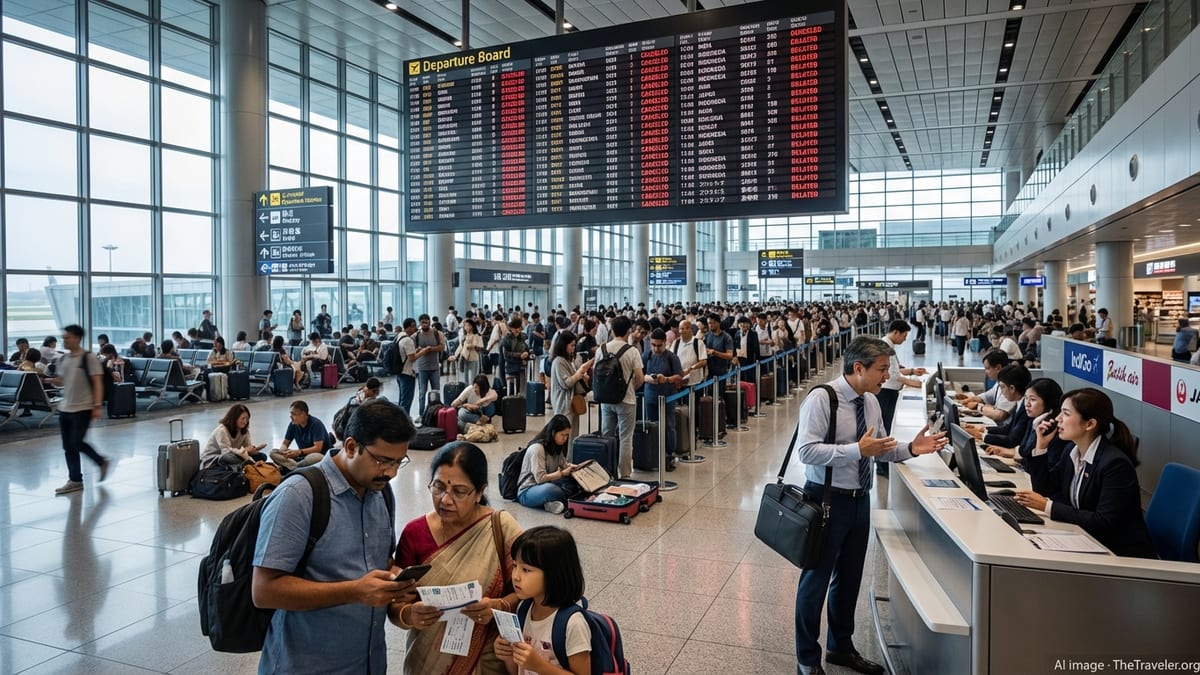
China–Japan Rift Triggers Steep Tourism Disruption
Publicly available aviation and tourism data indicate that political tensions between Beijing and Tokyo since late 2025 have translated into an abrupt contraction in China–Japan air traffic. Chinese ministries issued a Japan travel warning in November 2025, followed by large-scale cancellations of group tours and tickets. Industry estimates compiled from official statistics suggest that more than half a million airline bookings from China to Japan through the end of that year were scrapped as travelers and agencies pulled back.
Airline schedules on key trunk routes were rapidly thinned. Figures cited in recent coverage of the 2025 to 2026 diplomatic crisis show that up to about 40 percent of planned flights in December 2025 on China–Japan routes were removed from schedules as carriers cut frequencies to major Japanese cities including Tokyo, Osaka, Sapporo and Fukuoka. In April 2026, Chinese media reports put the ongoing cancellation rate at close to 38 percent of scheduled services, underscoring that the disruption has persisted well beyond the initial shock.
Japan’s own tourism indicators confirm the depth of the downturn in its largest outbound market. Data from the Japan Tourism Agency and the Japan National Tourism Organization show that visitors from mainland China plunged in December 2025, falling by around 45 percent year on year, with spending by Chinese travelers in the first quarter of 2026 estimated at roughly half the level recorded a year earlier. While Japan still logged a record 42.7 million overall foreign arrivals in 2025, spending and volumes from China deteriorated sharply toward the end of the year and into 2026.
The squeeze has already filtered through to local tourism economies. Regional media reports from Osaka and other major tourism cities describe mounting cancellations at hotels serving group tours, falling room rates in districts that previously depended on Chinese package visitors, and weaker duty-free sales at department stores. Analysts note that businesses tied tightly to Chinese clientele, such as language-specific tour operators and shopping facilities inside the so-called “one-dragon” ecosystem serving Chinese groups, are among the hardest hit.
Japan’s Tourism Model Tested by Reliance on Chinese Spending
The latest downturn has sharpened attention on how heavily parts of Japan’s inbound tourism sector leaned on Chinese demand. Official figures compiled for 2025 show that travelers from mainland China remained the biggest single source of inbound spending, contributing around 2 trillion yen to Japan’s visitor economy. That purchasing power supported retailers, accommodation providers and service businesses from Tokyo’s luxury districts to regional outlet malls.
When Beijing’s advisory and subsequent flight reductions took effect, the impact was felt first in segments most dependent on package tours and shopping-oriented travel. Travel-industry briefings and research reports released in late 2025 and early 2026 describe sudden drops in hotel occupancy in areas surrounding major attractions, with some properties reporting hundreds of group reservations canceled in a matter of weeks. Duty-free counters, cosmetics brands and high-end fashion retailers also reported lower sales to Chinese visitors compared with earlier in the year.
At the macro level, Japan’s overall inbound tourism remained relatively resilient thanks to record arrivals from markets such as South Korea, Taiwan and the United States. However, economic analysis by Japanese research institutes has highlighted a growing divergence: visitor numbers are high, yet per-capita spending is under pressure as higher-spending Chinese travelers are partially replaced by tourists with different spending patterns. The result is a more complex picture, with headline arrival records masking localized pain in businesses tailored to Chinese tour groups.
Some policymakers and economists have argued that the shock could ultimately accelerate efforts to diversify both Japan’s source markets and its tourism offerings beyond shopping and urban hotspots. But for operators concentrated in narrow segments of the China-facing market, the sharp downturn has already translated into job losses, restructuring and, in some cases, business closures.
South Korea Positions Itself as a Flexible Alternative
While Japan contends with falling Chinese arrivals, South Korea is working to entrench its position as one of Asia’s most adaptable tourism markets. Government statistics show that South Korea welcomed more than 16 million foreign visitors in 2024, with further gains expected as airlines rebuild capacity and the country promotes large-scale cultural and business events. Industry materials from 2025 highlight a particular focus on incentive tours, K-culture festivals and regional attractions designed to capture demand from both Chinese and global travelers.
In parallel, South Korea has been deepening tourism and transport ties with neighboring markets that are themselves reorienting travel flows. Trade-promotion and tourism documents from 2025 detail targeted outreach to Russia and other markets for events such as the “Korea Spring” festival and related promotional programs, with Moscow and other Russian cities listed among key source markets. These efforts run alongside broader economic and energy engagement between Russia and Northeast Asia, and are viewed by analysts as part of Seoul’s bid to keep tourism channels diversified across multiple regions.
South Korea’s relatively flexible air connectivity has also helped it absorb some of the demand diverted away from Japan. Travel agents in the region report growing interest in itineraries that pair South Korea with other destinations in Southeast Asia and Europe, bypassing Japan entirely when concerns about flight reliability or political tensions arise. For Chinese travelers in particular, Seoul, Busan and Jeju continue to feature prominently in online travel surveys as favored city-break and shopping destinations.
Observers note that South Korea’s tourism authorities are placing emphasis on digital marketing, seamless payments and language support tailored to Chinese and other Asian visitors. By combining those initiatives with high-profile cultural exports, the country is attempting to cement a reputation as a reliable and engaging alternative for travelers reconsidering plans to visit Japan.
Singapore and Emerging Hubs Capture Redirected Chinese Demand
Nowhere is the reordering of Chinese outbound travel more visible than in Southeast Asia, where Singapore has quickly regained its status as a top destination. According to the Singapore Tourism Board, China has emerged as the city-state’s largest source market since the launch of mutual visa-free travel in early 2024. By late 2025, Chinese arrivals to Singapore had overtaken those from Indonesia, historically the leading source of visitors.
Regional business media and market research reports indicate that this trend has strengthened in 2025 and 2026 as Japanese routes have become less reliable. Analysts cite a combination of factors underpinning Singapore’s appeal to Chinese travelers, including visa-free entry, extensive flight connectivity, a reputation for safety and the rapid rollout of familiar digital payment options. Survey data on Chinese outbound travel sentiment released in 2025 showed Singapore ranking as the most popular intended foreign destination among more than 15,000 respondents in China.
As Chinese tourists look for alternatives to Japan, Singapore is also benefiting from changes in travel behavior. Coverage by local media and international outlets describes a clear shift from large escorted groups to “free and easy” travel, with visitors arranging their own flights, hotels and activities. That plays to the strengths of Singapore’s urban attractions, integrated resorts and events calendar, and it has prompted investments in experiences ranging from food tourism to major concerts and sports events that can anchor multi-day stays.
Other regional hubs are also vying for a share of the redirected demand. Tourism promotions from destinations such as Thailand, Malaysia and the United Arab Emirates increasingly bundle shopping, entertainment and relaxation in packages marketed directly to Chinese consumers through digital platforms. For many travelers, multi-destination itineraries that link Singapore with neighboring countries by air or cruise have emerged as attractive substitutes for the traditional Japan-focused tour.
New Travel Corridors Underscore Shifting Geopolitical Alignments
Beyond the immediate commercial impact on Japan, the realignment of travel flows is unfolding against a backdrop of broader geopolitical shifts in Northeast Asia and beyond. The deepening partnership between Russia and North Korea, formalized in a comprehensive strategic treaty signed in June 2024, has included highly publicized projects aimed at developing new tourism infrastructure and transport corridors.
One of the most symbolic initiatives has been the promotion of North Korea’s Wonsan Kalma coastal tourist zone, which held a grand opening ceremony in June 2025 attended by senior North Korean officials and the Russian ambassador. Russian tour operators began advertising package holidays to the resort later that summer, positioning it as a new beach destination for Russian travelers at a time when Moscow’s own international travel options have narrowed due to sanctions and airspace restrictions.
In tandem, work has advanced on cross-border infrastructure such as the bridge linking Russia’s Khasan region with North Korea’s Tumangang, intended to support freight and potentially future passenger flows. While the current scale of tourism involved is limited compared with major Asian hubs, analysts point out that such projects are politically significant and signal an intent to cultivate alternative travel and trade corridors outside traditional US-aligned networks in the region.
South Korea’s efforts to broaden its tourist base, Singapore’s rapid rise as a preferred destination for Chinese travelers and Russia’s turn toward tightly controlled tourism partnerships all point to a more fragmented landscape for Asian travel. As geopolitical rivalries reshape air routes, visa regimes and traveler sentiment, Japan’s experience with the sudden loss of Chinese visitors is emerging as a case study in how quickly a tourism superpower can be exposed when a single market sours.