


More news on this day
American Airlines is preparing a major upgrade of its domestic fleet, outlining plans to install new 4K seatback entertainment screens and expand premium seating across its narrowbody aircraft in a move that signals a sharp pivot toward a more upscale onboard experience.
Get the latest news straight to your inbox!
Reversing Course on Seatback Entertainment
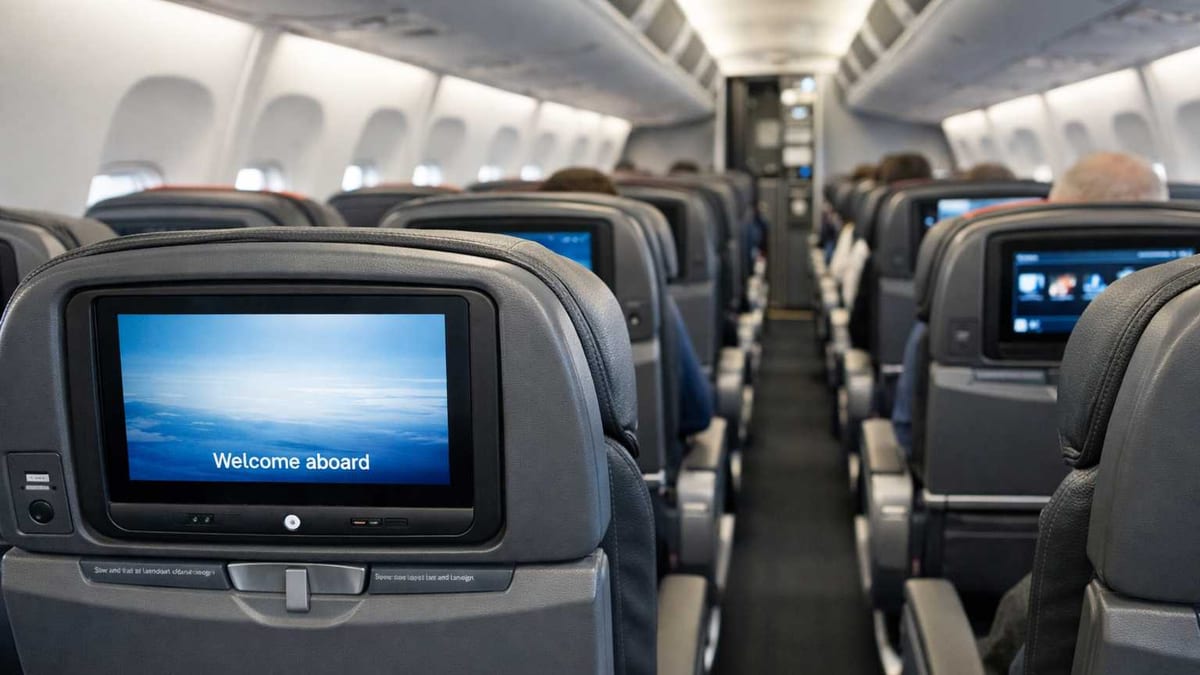
The carrier spent much of the past decade removing built-in entertainment systems from most Boeing 737 and Airbus A321 jets while promoting streaming over onboard Wi-Fi to passengers’ personal devices. Publicly available information and recent coverage now indicate that American intends to reverse that strategy, introducing modern, high-resolution seatback screens across its narrowbody fleet starting later this decade.
Details circulating in corporate materials and industry reports point to a phased program that will bring 4K-capable displays, Bluetooth connectivity for wireless headphones and at-seat power to a large portion of American’s single-aisle aircraft. The move would align the airline more closely with competitors that have invested heavily in fixed screens as a core part of the customer experience on domestic and transcontinental routes.
Although exact timelines have not been fully detailed publicly, information shared in investor filings and discussed in aviation forums suggests the rollout will be linked to both new aircraft deliveries and a broad cabin retrofit program. The emphasis is on creating a consistent product where passengers can expect a personal screen and power outlet at every seat rather than the current patchwork of configurations.
Industry observers note that the shift reflects changing expectations among travelers who increasingly view full-featured inflight entertainment as a baseline amenity, particularly on longer flights. It also marks a symbolic departure from American’s earlier belief that fast Wi-Fi and personal devices were sufficient replacements for embedded screens.
What Will Change on Board
The new seatback systems described in company materials are expected to feature larger screens than those historically found on American’s domestic aircraft, with 4K resolution and improved brightness to make content easier to view in brightly lit cabins. Reports indicate that each screen will integrate with the aircraft’s power and connectivity systems, allowing passengers to charge devices via USB-C ports while watching movies, television shows or live-map displays.
Bluetooth support is set to become standard, allowing travelers to pair their own wireless headphones instead of relying on wired headsets. This capability has been highlighted as a key differentiator in recent aircraft interior announcements and reflects a broader trend in cabin design across the industry.
The airline’s streaming platform, which currently allows passengers to watch content on their phones, tablets and laptops after connecting to the onboard Wi-Fi portal, is expected to remain in place as a complementary option. Passengers who prefer to use their own devices will still be able to access entertainment that way, while those who favor a larger, fixed screen will gain that choice on more routes.
For American, integrating the new hardware with its existing high-speed satellite Wi-Fi network is also intended to support a broader content offering, including refreshed libraries of films, series, music and potentially live or near-live programming on select aircraft types.
More Premium Seats on Narrowbody Jets
Alongside the entertainment overhaul, American is pursuing what it has termed a premiumization strategy across both domestic and international fleets. Recent news releases and securities filings outline a series of retrofit projects that add more premium seats at the front of the cabin and in extra-legroom sections, particularly on Airbus A319 and A320 aircraft.
The airline has already begun updating these smaller Airbus jets with additional first class seats, new finishes and upgraded power options, with work scheduled to ramp up through the middle of the decade. Similar changes are planned for larger models such as the A321 family and forthcoming Boeing 737 MAX variants, where layout diagrams referenced in regulatory documents show expanded premium cabins compared with earlier configurations.
This shift builds on separate widebody programs that introduce new long-haul business-class suites and refreshed premium economy seating. Together, the initiatives are designed to increase the proportion of higher-yield seats across the fleet, giving American more flexibility to match capacity with demand on both domestic and international routes.
Industry analysis suggests that adding premium seating to narrowbody aircraft can be particularly valuable on transcontinental and high-frequency business markets, where travelers are often willing to pay more for additional space, priority services and enhanced inflight amenities such as upgraded entertainment.
Competitive Pressures in the U.S. Market
American’s renewed focus on seatback entertainment and premium cabins comes amid intensifying competition among major U.S. airlines to differentiate their onboard products. Delta Air Lines and United Airlines have both invested in installing or upgrading seatback screens across wide swaths of their domestic fleets, positioning the feature as a hallmark of a more upscale travel experience.
For years, American stood apart by largely removing embedded systems from narrowbody aircraft in favor of streaming, a decision that attracted criticism from some frequent flyers who viewed the cabins as less comfortable and less competitive. Commentary in aviation forums and consumer travel coverage has frequently compared American’s simplified interiors with the more feature-rich offerings at rival carriers.
By committing to reintroduce seatback screens and expanding premium seating, American is signaling an intent to close that perceived gap. Analysts note that the strategy also dovetails with the airline’s broader efforts to drive loyalty through its AAdvantage program, refreshed onboard amenities and targeted network growth.
The scale of the planned upgrades is significant given the size of American’s narrowbody fleet, which numbers in the hundreds of aircraft. Bringing a consistent entertainment and seating standard to that many jets is expected to be a multi-year process, influenced by production slots at Airbus and Boeing as well as the sequencing of retrofit work across existing airframes.
Timeline and What Travelers Can Expect
While complete implementation will take time, passengers are likely to see the earliest examples of the upgraded product on new deliveries and select retrofitted aircraft before the end of the decade. Recent communications tied to aircraft introduction schedules point to the late 2020s as a key period for the rollout of modernized narrowbody cabins, including those with enhanced screens and expanded premium sections.
Travelers booked on certain Airbus A319 and A320 flights are already encountering refreshed interiors with additional first class seats and improved power options, and similar updates are expected to become more common as more aircraft cycle through maintenance lines. Over time, the goal described in corporate materials is a more predictable experience, where a seat with power and a personal screen is the norm rather than an exception.
For customers, the practical impact will vary by route and aircraft assignment, but the overall direction is clear: American is moving toward a more feature-rich cabin on its bread-and-butter domestic fleet. That includes modern inflight entertainment, more opportunities to book or upgrade into premium seating, and cabins designed to align more closely with the airline’s newest long-haul products.
As these changes take shape, travelers watching the evolution of American’s fleet can expect a gradual but visible shift in the onboard experience, with technology and comfort playing larger roles in how the carrier positions itself in the crowded U.S. market for airline loyalty.