

More news on this day
Travelers across China are facing another round of air travel disruption as a new wave of flight cancellations and delays hits major carriers including Air China, China Eastern and Hainan Airlines, affecting key corridors into Beijing, Shanghai, Chengdu, Chongqing and other busy hubs.
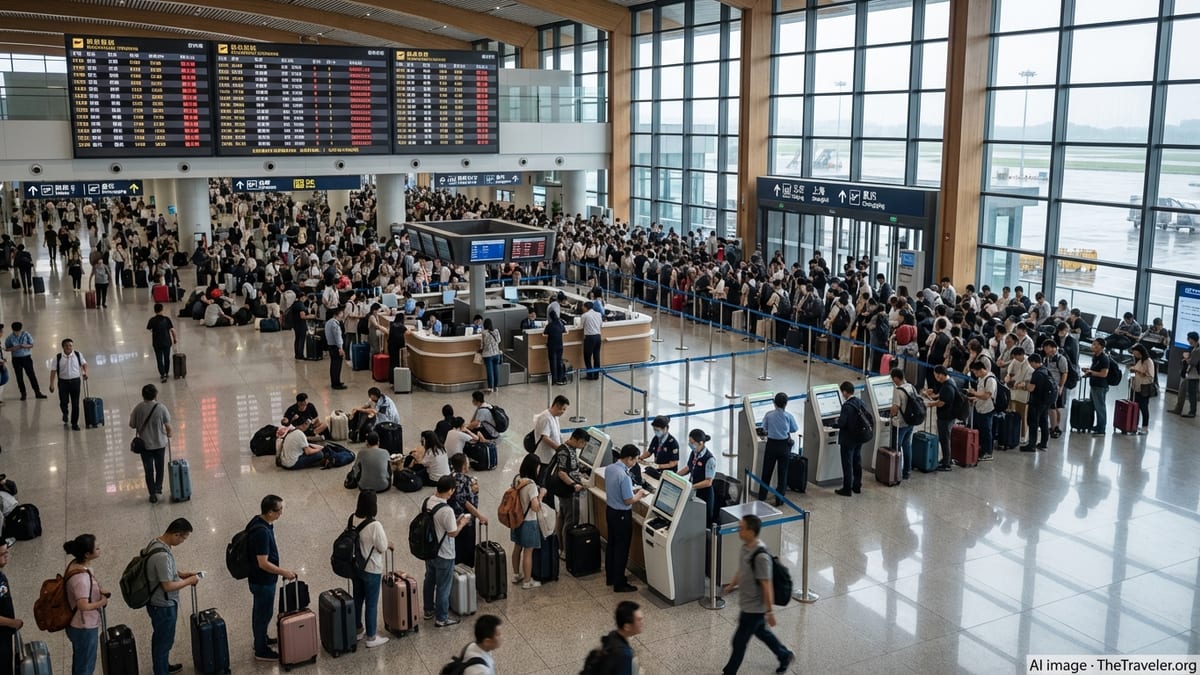
Fresh Wave of Cancellations Hits Key Chinese Routes
The latest disruption unfolded on February 27, compounding weeks of volatile operating conditions across China’s aviation network. Data from flight tracking services and industry reports indicated that dozens of additional flights were scrubbed or heavily delayed on Thursday, with more than eight new cancellations alone affecting trunk routes into Beijing Capital, Shanghai Pudong and Hongqiao, Chengdu’s twin airports and the fast-growing hub of Chongqing.
Services operated by Air China, China Eastern Airlines and Hainan Airlines were among those most visibly affected, alongside smaller regional players that help connect interior cities with the country’s coastal megacities. While the bulk of cancelled flights were domestic, the ripple effect was felt on select international connections that rely on tight turnarounds and shared aircraft.
Industry analysts noted that the cancellations add to a pattern of episodic turbulence for Chinese air travel this winter, following earlier events in January and February in which clusters of flights were grounded or delayed at major hubs in Beijing, Shanghai and Chengdu as adverse weather and network congestion converged.
Weather Volatility and Network Strain Undermine Reliability
China’s vast geography and varied climate have been key drivers of recent disruptions. Fast-moving cold fronts, low cloud and bouts of heavy rain in both western and eastern regions have periodically reduced visibility and constrained runway capacity, forcing airlines to cut back schedules at short notice to maintain safety margins.
Airlines and airport operators have also been contending with a sharp rebound in demand. Official data from China’s civil aviation regulator show that passenger volumes over the 2026 Spring Festival holiday rose strongly from the previous year, with nearly nineteen thousand flights operating daily during the peak period. As operations remain near capacity on many days, even modest weather disturbances can cascade into widespread delays and targeted cancellations.
Operational experts say this mix of high load factors, dense scheduling on trunk routes such as Beijing to Shanghai or Beijing to Chengdu, and limited slack in crew and aircraft rotations has left carriers with little flexibility. When conditions deteriorate, cancelling a block of flights becomes the most practical way to stabilize the network, even though it strands thousands of passengers in the short term.
Impact on Major Hubs: Beijing, Shanghai, Chengdu and Chongqing
Beijing and Shanghai once again found themselves at the center of the latest disruption. At Beijing Capital International Airport, departures to southwestern cities including Chengdu, Chongqing and Kunming were among those most affected, with cancellation notices appearing across departure boards and passengers being directed to rebooking counters as gate assignments shifted repeatedly.
In Shanghai, Hongqiao and Pudong airports each reported clusters of cancellations and rolling delays on busy shuttle-style services linking the city with Beijing, Guangzhou and Chengdu. The concentration of trunk routes at these hubs means that a handful of cancellations can quickly create knock-on delays for onward services, particularly for aircraft and crew scheduled to operate multiple legs in a single day.
Western hubs such as Chengdu and Chongqing also saw significant operational pressure. With Chengdu now served by both Shuangliu and Tianfu airports, airlines have leaned heavily on the city as a transfer point between eastern seaboard cities and inland destinations. When weather or airspace constraints slow traffic into these airports, delays accumulate rapidly and carriers are forced to trim frequencies to reset rotations.
How Airlines Are Responding and What Travelers Can Expect
Carriers including Air China, China Eastern and Hainan have responded by prioritizing core trunk routes and peak-time services while thinning out lower-demand flights during off-peak windows. In some cases, airlines have consolidated passengers from multiple lightly booked flights onto a single departure and cancelled the remaining services, a tactic that improves aircraft utilization but can leave travelers grappling with inconvenient departure times.
Airlines and airports have also sought to use established ticketing flexibility on shuttle-style corridors, particularly between Beijing and Shanghai, to accommodate disrupted passengers on alternative services where seats are available. Ground staff have been deployed in greater numbers at key hubs to manage long queues at ticket desks and boarding gates, although passengers continue to report extended waits and limited real-time information when multiple flight waves are affected at once.
Travelers booked on near-term flights into or out of Beijing, Shanghai, Chengdu or Chongqing are being advised by local authorities and industry sources to monitor their flight status closely, build in generous connection times and be prepared for schedule changes even after check-in. Those with flexible itineraries are encouraged to consider off-peak travel hours or alternative airports within the same region to improve their chances of an on-time departure.
Broader Questions Over Capacity and Resilience
The recurring clusters of cancellations and delays across China in recent months have prompted broader questions about the resilience of the country’s rapidly expanding aviation system. While new runways, terminals and routes have been added at a remarkable pace over the past decade, the recovery in travel demand has exposed the sensitivity of the network to weather, airspace constraints and operational bottlenecks.
Analysts point out that China’s major hubs operate at very high utilization levels for much of the day, leaving limited buffer capacity when things go wrong. Investments in air traffic management technology, improved coordination between airlines and airports, and more dynamic scheduling practices are seen as critical to reducing the frequency and severity of disruption in the years ahead.
For now, passengers are likely to face a period of adjustment as airlines balance ambitious growth plans with the need to protect reliability. With more flight disruptions possible during late winter and early spring weather systems, travelers heading to or within China over the coming weeks may find that flexibility and patience are as essential as a valid ticket and passport.