

More news on this day
China’s decision to grant visa-free entry to British passport holders in early 2026 is already reshaping travel demand from the United Kingdom, with tour operators such as Pure One Travel racing to design new itineraries and capitalize on a surge of interest in longer, higher-value trips.
Get the latest news straight to your inbox!
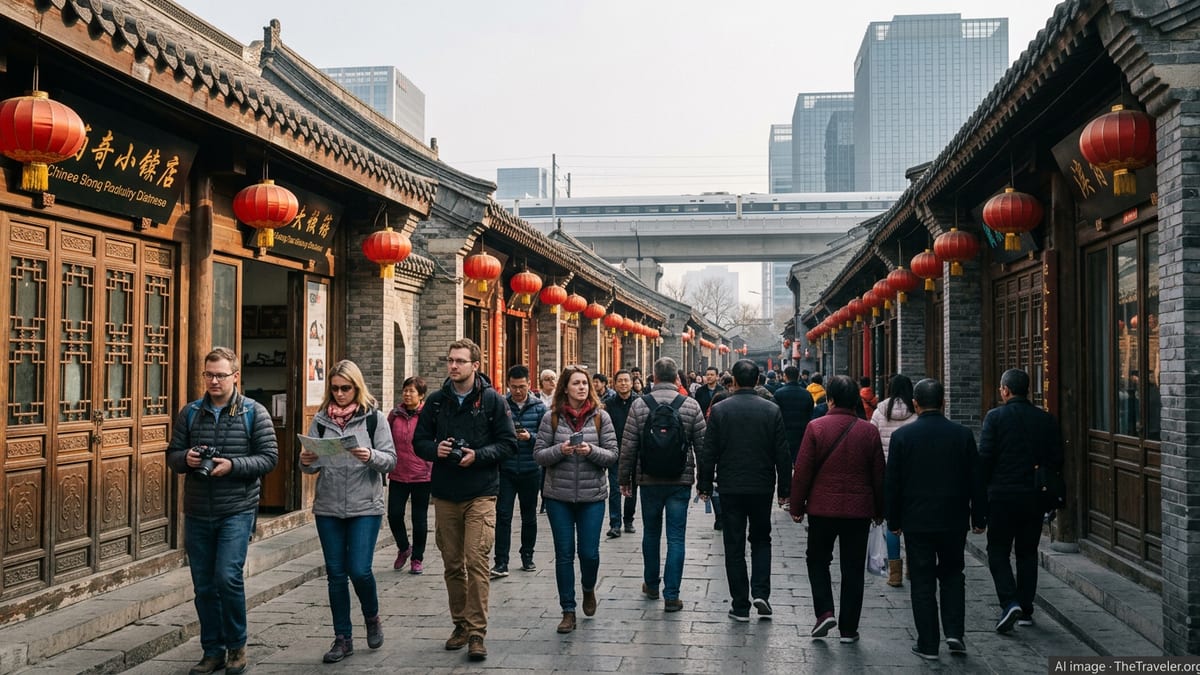
Visa-Free Access Extends China’s Post-Pandemic Reopening Drive
Publicly available information indicates that China’s latest visa policy shift, which from February 2026 allows UK citizens to enter visa-free for stays of up to 30 days, is part of a broader campaign to revive inbound tourism and business travel after years of strict border controls. Reports show that the United Kingdom joins a growing group of nations now eligible for short-term visits without a visa, reflecting Beijing’s effort to diversify its visitor base and strengthen links with major European markets.
Data from recent coverage of China’s travel recovery points to a rapid rise in arrivals since the first wave of visa-free pilots launched in late 2023. Authorities have gradually expanded unilateral waivers and mutual exemption deals to dozens of countries across Europe, Asia, Latin America and the Middle East, while also easing rules for 240-hour visa-free transit. The inclusion of the UK is widely seen as a logical next step in this trajectory toward more open borders.
Travel industry analysis suggests that visa-free entry reduces friction at a time when British travelers face a complex global landscape of shifting entry rules and airline schedules. Cutting out consular paperwork and application fees can materially change trip planning, making China more competitive against alternative long-haul destinations such as Japan, Vietnam or the Gulf states.
According to recent tourism statistics, China’s inbound visitor numbers are still climbing back toward pre-pandemic levels, even after strong year-on-year growth in 2024 and 2025. The extension of visa-free access through to the end of 2026 for many nationalities signals that policymakers expect demand to keep building and want to avoid a slowdown in bookings.
UK Demand Shifts Toward Longer, Experience-Led China Journeys
Travel market reports covering early 2025 and 2026 bookings indicate that interest in China from the UK is not only returning, but changing in character. Instead of primarily short, checklist-style city breaks, British travelers are showing a stronger appetite for multi-stop itineraries that combine classic highlights such as Beijing and Shanghai with lesser-known cultural and nature destinations.
Industry data from online platforms and global payment networks suggests that air and hotel bookings tied to visa-free source markets roughly doubled between early 2024 and early 2025. Analysts note that this rebound has been driven in part by younger, independent travelers and repeat visitors who are willing to explore second-tier cities, high-speed rail routes and regional food scenes, provided entry procedures are simple.
For UK visitors specifically, the 30-day visa-free window encourages itineraries that link several provinces in a single trip. This may include time in the Yangtze River Delta for contemporary art and design, detours to mountain landscapes in the southwest, or extended stays in Guangdong and Guangxi to connect with Chinese diaspora communities. Market observers say that these longer trips, though less frequent than short breaks, tend to generate higher local spending on boutique accommodation, regional cuisine and privately guided experiences.
Reports on evolving consumer behavior across Asia also highlight a growing focus on sustainability and authenticity among high-income travelers from Western Europe. In practice, this translates into slower itineraries, interest in eco-certified hotels, and demand for encounters with local crafts, food traditions and community-led cultural projects rather than purely iconic sightseeing.
Pure One Travel Targets High-Value Niches With New China Product
Against this backdrop, UK-based specialist operator Pure One Travel is moving to position itself as a boutique provider of curated China trips that match the new visa regime. Company materials describe a focus on highly personalized itineraries, small groups and educational content, a model that aligns with expectations of increasingly discerning long-haul travelers.
Publicly available information about Pure One Travel’s leadership points to existing experience in both leisure and educational travel between China, the UK and wider Europe. The firm has previously emphasized tailored planning, close collaboration with local partners and a willingness to design complex, multi-country routes for school groups and private travelers.
Market observers note that the extension of visa-free access through 2026 gives operators such as Pure One Travel a relatively stable planning horizon. It allows them to develop multi-year series of fixed-date departures, secure long-term allotments with hotels in major Chinese gateways and regional cities, and negotiate rates with airlines as new and returning routes are added.
Analysts expect competition among UK tour providers to intensify as larger brands refresh their China programs and smaller specialists carve out niches in areas such as food-focused itineraries, photography tours, winter sports in northern provinces and river-cruise extensions. Pure One Travel’s emphasis on tailored service positions it to target travelers who want assistance navigating regional flight networks, high-speed rail and domestic logistics without sacrificing flexibility.
Exclusive Tours Blend Classic Sights with Second-Tier Cities
While detailed 2026 catalogues are still emerging, industry commentary suggests that new UK-focused China programs are likely to combine flagship attractions with lesser-visited destinations to differentiate themselves from pre-pandemic offerings. For Pure One Travel, this is expected to mean itineraries that start in familiar hubs, before continuing to regional centers connected by expanding high-speed rail lines and new international routes.
Sample program structures highlighted in trade coverage include multi-city journeys linking Beijing’s historic sites with contemporary Shanghai, followed by stays in cities such as Chengdu, Xi’an, Guilin or Kunming to showcase contrasting landscapes, cuisines and minority cultures. Some itineraries are also expected to integrate time in emerging cultural districts, design-forward hotels and restored heritage neighborhoods that appeal to repeat visitors.
Industry analysts point out that the 30-day visa-free limit shapes itinerary design in subtle ways. Operators are encouraged to prioritize depth within a smaller number of regions rather than racing across the entire country, while still leaving room for optional side trips and independent exploration days. This dovetails with broader trends toward “slow travel,” which emphasize fewer hotel changes, longer stays and more local immersion.
Reports on China’s domestic tourism infrastructure note that travelers now benefit from an expanded network of airports, upgraded high-speed rail stations and improved digital payments options that are more accessible to foreign visitors than in the past. These developments make it easier for boutique operators to confidently include destinations that previously posed logistical challenges for first-time visitors from the UK.
Outlook: Visa-Free Momentum and Competition in 2026
Forecasts from tourism analysts suggest that 2026 could be a pivotal year for China’s position in the UK long-haul market. The combination of visa-free entry, recovering air capacity and a broader reassessment of travel priorities among British consumers has created space for new products that emphasize culture, learning and local engagement.
At the same time, the policy environment remains dynamic. Many visa-free arrangements are currently framed as temporary or trial measures, even where observers consider further extensions likely. Market commentary therefore stresses the importance of travelers checking the latest entry conditions before booking, and of operators building in flexibility to adapt itineraries if rules or transport links change.
For Pure One Travel and its competitors, the coming seasons will test whether demand for curated, higher-spend China journeys can be sustained beyond the initial surge of pent-up interest. If current trends in booking data and traveler behavior continue, the UK market may see China shift from a once-in-a-lifetime trip to a repeat destination where visitors return to explore new regions under an increasingly open, visa-free regime.