


More news on this day
Cleanup crews in Repentigny, Quebec, are working into the week to dismantle derailed freight cars, clear damaged track and restore normal operations after a Canadian National freight train left the rails in a residential area on Sunday, July 5.
Get the latest news straight to your inbox!
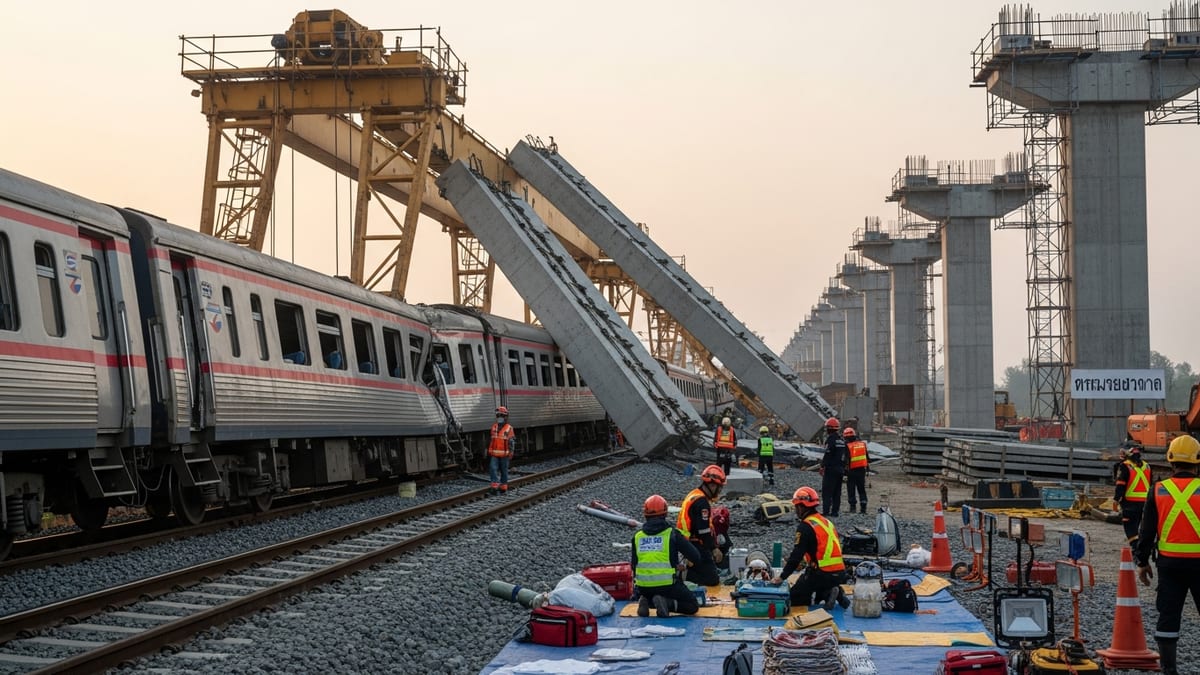
On-site work focuses on securing cars and tracks
Published coverage from Quebec and national outlets indicates that roughly 20 cars of a Canadian National freight train derailed in the Le Gardeur sector of Repentigny, northeast of Montreal, on Sunday afternoon. Several cars came to rest close to homes and local streets, prompting an extensive emergency response and traffic closures around the corridor.
Reports indicate that rail and emergency teams have spent the hours since stabilizing the cars, checking them for leaks and hazards, and preparing heavy equipment to move the damaged wagons off the line. Visuals shared in local media show cranes, specialized rail trucks and work crews clustered along the right of way as each car is inspected and, where possible, re-railed or lifted onto flatbeds for removal.
According to publicly available information, railway personnel are also cutting and removing damaged sections of track to make way for temporary repairs. That work is expected to continue into Monday and possibly beyond, depending on the extent of the infrastructure damage and the sequencing required to remove each derailed car safely.
Rail operations through the area remain suspended while this on-site dismantling continues. Detours and alternate routing are being used for other trains on the network, prolonging schedule disruptions for freight movements through the Montreal region.
No injuries reported but nearby homes and power affected
Early summaries from Canadian news outlets state that there were no serious injuries linked to the derailment, despite the proximity of the train to nearby residences. Local reports describe the incident as unsettling for residents, but note that the crash did not result in fire, explosion or visible hazardous material release.
Publicly available information shows that several dozen to a few hundred homes in the immediate vicinity were temporarily evacuated as a precaution while responders assessed the scene. Residents were gradually allowed to return once initial checks of the derailed cars were completed and no significant leaks were detected.
Coverage also notes that the derailment affected local utilities. Images and reports from the scene indicate that overturned cars and related damage contributed to localized power interruptions for households near the tracks. Utility crews have been working alongside railway teams to inspect lines and restore service as access becomes safe.
Noise, dust and heavy machinery associated with the cleanup are expected to continue to affect the neighborhood in the short term. Municipal updates cited in media coverage emphasize that access restrictions and intermittent closures of nearby streets could last until all cars are cleared and the rail line is stabilized.
Investigation and safety review under way
According to a notice from the Transportation Safety Board of Canada, a team of federal investigators has been deployed to Repentigny to document the site and begin analyzing what led to the derailment. Published information indicates that their work typically includes examining the condition of the track, wheels and axles, reviewing train handling data and event recorder logs, and interviewing personnel involved in the operation.
Railway investigators and technical staff are expected to work in parallel with the cleanup, taking advantage of the slow removal of each car to inspect couplers, braking systems and loading patterns. Past investigation reports from similar incidents in Quebec show that factors can range from infrastructure defects and equipment failures to issues involving train speed, train makeup or maintenance practices.
Publicly available information suggests that a detailed report on the Repentigny incident may take months to complete, as is typical for complex rail investigations. Interim updates are generally provided when safety advisories or urgent recommendations are identified, particularly if inspectors see patterns that could affect other parts of the national network.
While the root cause has not yet been determined, media coverage notes that the event will likely feed into broader reviews of corridor speeds, track inspection regimes and risk management strategies for freight trains operating in densely populated areas across Quebec and Canada.
Travel and logistics disruptions for the Montreal region
The derailment occurred on a line that carries freight traffic serving the greater Montreal region, and the incident has ripple effects across logistics chains. Reports from Canadian outlets indicate that trains normally using the corridor have been rerouted or temporarily held while teams clear the tracks and verify infrastructure safety.
For road users in Repentigny, closures of level crossings and nearby streets have added delays to local travel. Publicly available information notes that some drivers have been detoured onto parallel routes, and that congestion has increased during peak periods as traffic funnels through fewer crossings.
Although passenger rail services were not directly involved in the derailment, the incident highlights how freight disruptions can indirectly influence wider transport networks. Depending on the duration of the cleanup and repairs, freight operators may need to adjust schedules and routing patterns around Montreal, which can affect delivery times for goods moving into and out of the region.
Local coverage suggests that municipal and regional agencies are monitoring the situation, coordinating with rail and utility crews, and providing periodic updates on access restrictions. Travelers passing through the north shore of Montreal are being encouraged, through public advisories, to allow extra time and remain alert to detour signage near Repentigny.
Community concerns shaped by past rail disasters
The Repentigny derailment is unfolding almost exactly 13 years after the Lac Mégantic rail disaster of July 2013, a coincidence that has featured prominently in commentary from residents and observers. Publicly available coverage indicates that the memory of that tragedy, in which a runaway oil train derailed and exploded in a small Quebec town, continues to shape how communities perceive rail risk.
While the incident in Repentigny did not result in fatalities, fire or large-scale environmental damage, residents quoted in regional media describe a renewed sense of vulnerability associated with heavy freight traffic moving close to homes, schools and local businesses. The images of derailed cars near backyards have amplified calls for closer scrutiny of routing decisions and land use planning near busy rail lines.
Analysts and commentators cited in news reports note that several rail incidents over the past decade have driven incremental changes to safety rules, tank car standards and operating practices in Canada. The latest derailment is expected to add pressure for continued investment in track maintenance, signaling systems and risk mitigation measures in urban and suburban rail corridors.
As Repentigny navigates the cleanup and the long technical review that will follow, the incident is likely to remain a reference point in ongoing debates about how to balance efficient freight movement with the safety and peace of mind of communities that live beside the tracks.