


More news on this day
Heavy equipment, floodlights and work crews are now a constant presence along the tracks near Neshaminy Falls in Bensalem, Pennsylvania, where cleanup continues after at least 16 freight cars derailed earlier this week, disrupting a busy commuter corridor and briefly prompting evacuation and shelter-in-place advisories.
Get the latest news straight to your inbox!
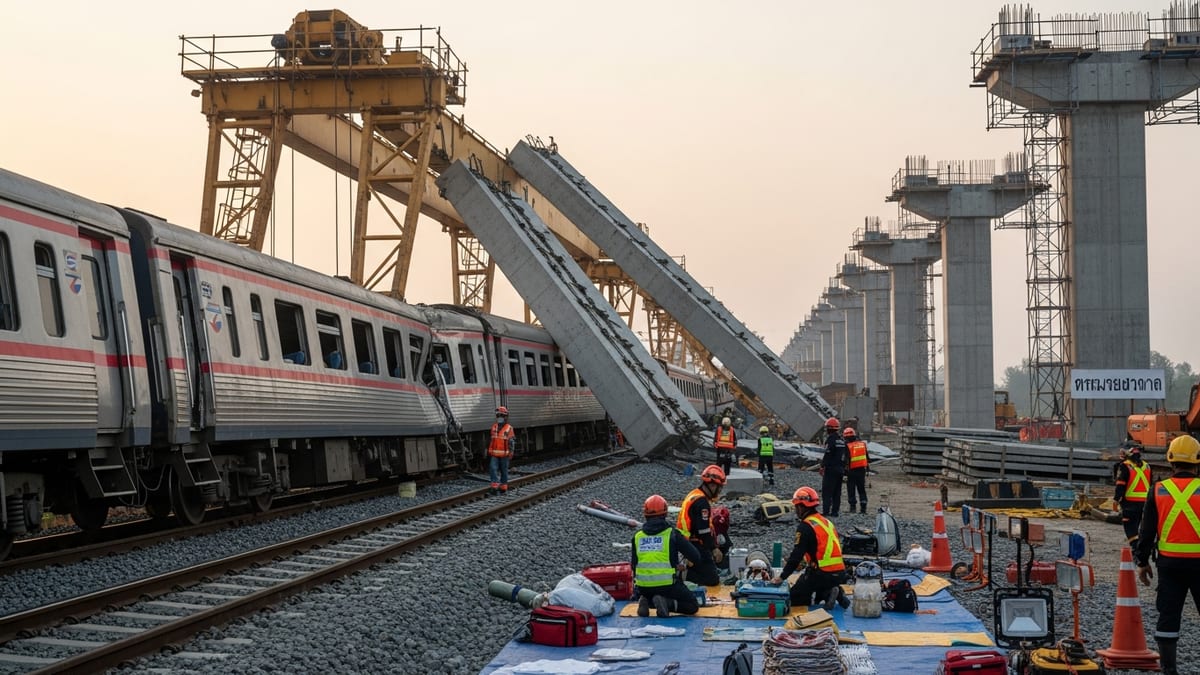
From emergency response to prolonged cleanup
The derailment occurred on Tuesday, June 30, when a CSX freight train hauling 72 cars left the tracks between Street Road and the Neshaminy Falls station in Bensalem Township. Publicly available information indicates that between 13 and 16 cars ended up off the rails, with several overturned along the right-of-way and into an adjacent embankment.
Initial reports described a tense few hours as responders evaluated several tank cars that were believed to contain hazardous materials. Coverage from multiple regional outlets indicates that air monitoring and visual inspections did not detect leaks, and that the train’s hazardous cargo remained contained inside the cars. By Tuesday evening, evacuation and shelter-in-place advisories affecting nearby homes, businesses and a motel along Old Lincoln Highway were lifted.
With the immediate emergency phase over, the scene has shifted to a complex, multi-day industrial operation. Crane booms, excavators and specialized rail equipment are being used to stabilize, lift and rerail the damaged freight cars, while contractors lay down fresh ballast and begin inspecting the steel rails and ties for hidden damage.
Nighttime images shared by local news outlets show crews working under bright portable lights as they cut twisted metal, remove debris and prepare the derailed cars to be hauled away. Publicly available updates characterize the operation as careful but urgent, aiming to restore the line for freight traffic while avoiding additional damage to the corridor.
Travel disruptions around a key Bucks County corridor
The derailment unfolded near one of Bucks County’s busier suburban corridors, where rail lines run parallel to major roads, retail centers and residential neighborhoods. Reports indicate that roads including Grove Avenue, sections of Bristol Road near Neshaminy Mall and nearby ramps were closed shortly after the incident to keep the public away from the wreckage and heavy equipment.
While the derailed train itself was a CSX freight movement, its location close to passenger infrastructure created knock-on effects for regional rail. Publicly available schedules show that service on SEPTA’s West Trenton Line was temporarily disrupted while rail professionals assessed whether passenger tracks and overhead systems were at risk from the toppled freight cars and cleanup work.
For travelers, that meant detours both on the roads and on the rails. Commuters heading between Bucks County and Philadelphia faced longer journeys as they navigated around closures or shifted to alternate transit routes. Local coverage indicates that regular rail service has been gradually restored as the damaged freight line is isolated and cleanup continues.
For visitors staying in nearby hotels or passing through Neshaminy Mall and other retail centers, the derailment has become an unexpected backdrop. Heavy trucks hauling equipment, idling locomotives and work zones fenced with caution tape are now part of the landscape along a corridor more typically associated with shopping runs and school drop-offs.
What travelers see on the ground today
As of Wednesday, July 1, publicly available images show several freight cars still lying on their sides, some with visible dents and buckled frames. Others have already been lifted back onto the rails or placed on flatbed trailers, awaiting removal from the site. Sections of track bed have been dug out, exposing ties and fasteners where crews are checking for structural damage.
On nearby streets, travelers encounter a patchwork of traffic patterns. Some roads once fully closed are now open with reduced lanes or temporary detours, while access points closest to the tracks remain restricted by barricades and work vehicles. Electronic signs and police vehicles help direct local traffic away from the tightest work zones.
For those passing through by car, the derailment scene offers a glimpse into the scale of modern rail logistics. The derailed consist includes a mix of covered hoppers, boxcars and tank cars, some still carrying their original company logos and hazard placards. Even from a distance, the size of the overturned cars and cranes is striking compared with the two-story homes and low-rise commercial buildings nearby.
Travelers on surviving portions of the regional rail network may get quick, elevated views of the cleanup as trains roll past at reduced speeds. Rail operators typically impose slow orders through incident zones until inspections confirm that tracks, signaling and overhead equipment are safe for normal operations.
Environmental monitoring and safety checks
Since the derailment, widely shared public information indicates that environmental monitoring has been a key component of the response. Air quality testing has been conducted around the site to check for fumes, while crews have inspected soil and ballast for any signs of spilled product from the derailed cars.
Reports from local and regional outlets consistently note that no hazardous material leaks have been detected so far. Even so, containment booms, absorbent pads and portable monitoring devices remain visible in and around the work area as a precaution while heavy equipment continues to move and flip rail cars.
Rail safety specialists are also focused on the condition of the track structure itself. Cleanup operations typically involve removing the derailed cars, assessing whether rails have been bent or misaligned and examining track components for heat or stress damage. Once the physical repairs are complete, a series of test runs with locomotives or specialized track geometry cars usually follows before full-speed operations resume.
For residents and travelers concerned about longer-term impacts, official public statements referenced in news coverage emphasize ongoing inspections and monitoring until the site is fully restored. Any significant structural issues identified along the corridor could lead to more extensive track replacement, extending the presence of work crews in the area.
Rail safety, tourism and traveler confidence
The Bensalem derailment arrives at a time when rail safety is the subject of renewed public attention nationwide, following several high-profile freight incidents in recent years. Industry data cited in coverage of the event suggest overall accident rates have been trending downward, yet the vivid imagery of derailed tank cars and emergency vehicles naturally raises questions for travelers.
For visitors to the Philadelphia region, the derailment is unlikely to change overall travel plans, but it may influence perceptions of journeys that rely on rail corridors shared by freight and passenger trains. Regional tourism organizations generally continue to promote rail as an efficient and lower-impact way to explore the area, while encouraging travelers to stay informed about service alerts and temporary disruptions.
Local businesses near the derailment site, including lodging and dining options, may see short-term effects as access routes shift and some visitors choose alternative areas until cleanup wraps up. At the same time, the presence of out-of-town contractors and rail workers can temporarily boost demand for nearby hotels, meals and services.
As the last derailed cars are removed and fresh ballast is tamped into place, the scene is expected to transition from a dramatic tangle of steel to a more familiar stretch of track flanked by parking lots and tree lines. For now, anyone traveling through this part of Bucks County will likely catch a glimpse of the scaled-up cleanup, a reminder of how closely freight infrastructure runs alongside everyday suburban life.