


More news on this day
Air travel across Australia and New Zealand has been heavily disrupted as more than 50 flights are cancelled and hundreds delayed, with services operated by Qantas, Virgin Australia, Air New Zealand, Solomon Airlines and several partner carriers affected on key routes between Melbourne, Sydney, Brisbane, Auckland and Wellington.
Get the latest news straight to your inbox!
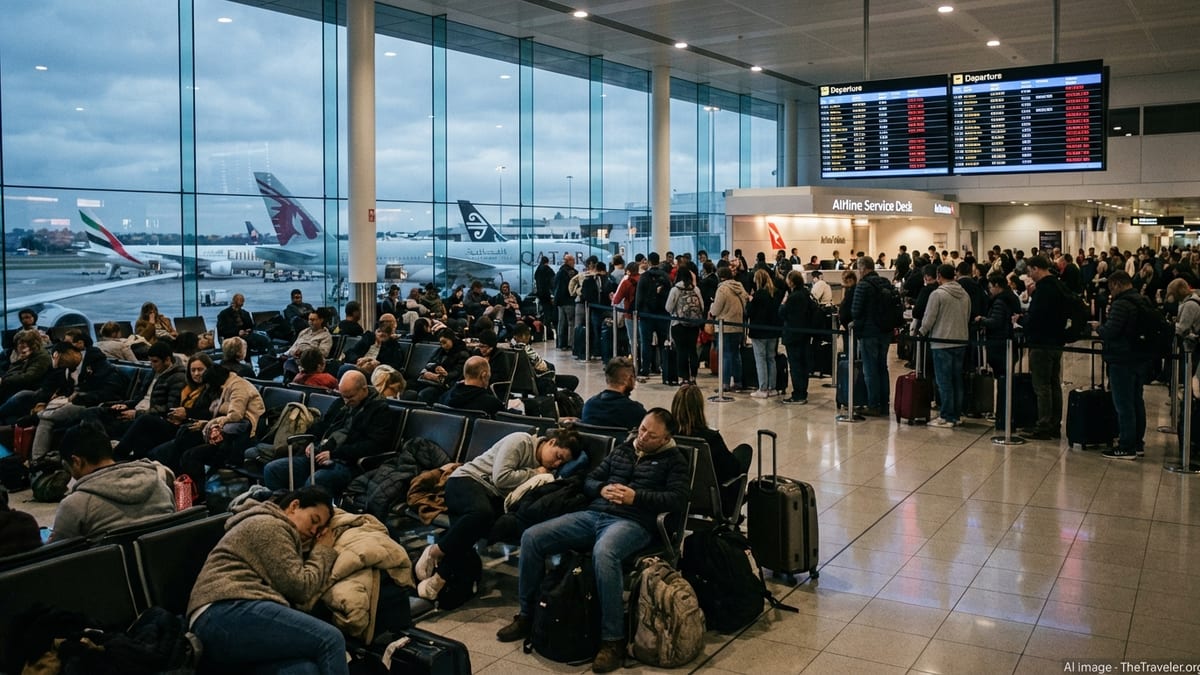
Widespread Cancellations and Delays Across Key Trans-Tasman Hubs
Reports from live flight boards and aviation tracking platforms indicate at least 55 flight cancellations and more than 800 delays affecting routes within Australia and New Zealand and on trans Tasman links. The disruption is being felt most acutely at major hubs including Sydney, Melbourne, Brisbane, Auckland and Wellington, where peak morning and evening waves of departures are showing clusters of late and cancelled services.
Publicly available data for Auckland Airport shows multiple cancellations and delays on international and domestic services, including a cancelled Air New Zealand service to Melbourne among a sequence of disrupted long haul and regional flights. Similar patterns appear on boards for Sydney and Brisbane, where services operated by or on behalf of Qantas, Virgin Australia and partner airlines are running late or have been withdrawn from schedules.
Tracking information suggests the disruption is not confined to a single carrier or route, but is instead spread across a network of domestic links and trans Tasman connections. Short haul flights that normally provide frequent shuttles between Australian east coast cities and New Zealand’s largest centres are among those affected, creating knock on impacts for travellers with onward international connections.
Major Airlines and Codeshare Partners Caught in the Disruption
The disruption is touching a broad mix of brands because of the way airlines in the region share capacity. Qantas, Virgin Australia, Air New Zealand, Solomon Airlines and others are all represented in live status feeds, alongside codeshare partners such as Singapore Airlines, Emirates, United Airlines and regional and leisure operators. When one carrier alters its schedule, partner airlines often show corresponding changes for the same physical flight.
Flight tracking pages for Sydney and Auckland illustrate this interconnectedness, listing single services under multiple airline codes while reflecting the same delay or cancellation. A flight operated by one airline may appear simultaneously under several different brands, which amplifies the visible scale of the disruption for passengers checking status by carrier.
According to published aviation data, delays are occurring on both highly trafficked trunk routes and secondary city pairs. Flights between Melbourne, Sydney and Brisbane are being joined by disrupted services linking these hubs with Auckland, Wellington and other New Zealand centres. The breadth of affected operators and the codeshare structure are combining to spread the operational impact across the wider regional network.
Pressure on Trans Tasman and Domestic Connectivity
The timing and location of the disruptions are placing particular pressure on trans Tasman travel. Published schedules show that services between Auckland and major Australian ports, as well as flights from Wellington to Melbourne and Brisbane, form critical links for both business and leisure travellers. When cancellations and extended delays occur on these routes, connections to long haul flights in both directions are threatened.
Recent on time performance reports from New Zealand’s transport authorities underscore how sensitive these corridors are to periods of disruption. Routes such as Wellington to Brisbane and Auckland to Perth are highlighted for their cancellation and delay rates in earlier months, illustrating that even relatively modest unreliability can ripple across the network when aircraft and crews arrive late into busy hubs.
With today’s wave of cancellations and delays, passengers travelling between Australia and New Zealand are facing the prospect of missed onward flights, extended layovers and the need to reroute through alternative cities. Airports that normally function as efficient through points for trans Tasman travel are instead dealing with banked up queues at check in, security and transfer desks as travellers attempt to rebook.
Impacts on Travellers and Airport Operations
The most immediate effect of the disruption is being felt by passengers already en route or preparing to depart. Flight information pages show services marked as cancelled or significantly delayed in close succession, often within a peak hour window. Travellers arriving at airports expecting routine departures are instead encountering rapidly changing status boards and revised departure times.
Airport infrastructure is also coming under strain. Extended delays create congestion at gates and holding stands, and lead to additional pressure on baggage systems, ground handling and customer service counters. Even when a relatively small proportion of daily flights is cancelled, cascading delays can lead to aircraft being out of position and crew reaching duty time limits, which complicates recovery efforts throughout the day.
For those landing into affected hubs, arrivals disruption can translate into long waits at immigration and baggage reclaim as multiple delayed flights arrive in compressed time frames. Passengers with tight domestic connections within Australia or New Zealand are more likely to miss onward services when earlier segments run significantly behind schedule.
What Passengers Can Expect as Airlines Work to Recover
Based on patterns seen in previous regional disruption events, recovery is likely to extend beyond the initial window of cancellations and delays. Even after the immediate cause eases, airlines typically require several schedule cycles to reposition aircraft and crew, clear backlogs of rebooked travellers and return on time performance closer to normal levels.
Publicly available guidance from airlines in similar situations indicates that affected travellers are generally rebooked onto the next available services, subject to seat availability, with priority often given to those with imminent long haul connections. However, when multiple flights on the same route are disrupted, spare capacity can be quickly exhausted, particularly on popular business and holiday corridors between Australia and New Zealand.
Passengers still preparing to travel on routes involving Melbourne, Sydney, Brisbane, Auckland or Wellington are likely to face altered departure times, equipment changes or rerouting over alternative hubs as airlines work through the disruption. Travel industry advisories commonly recommend monitoring flight status frequently on the day of travel and allowing additional time at the airport whenever widespread regional delays are being reported.