


More news on this day
A Canadian National Railway freight train derailed northeast of Montreal on Sunday, sending 45 cars off the tracks, disrupting power for hundreds of homes and drawing fresh attention to the safety of one of Canada’s busiest rail corridors.
Get the latest news straight to your inbox!
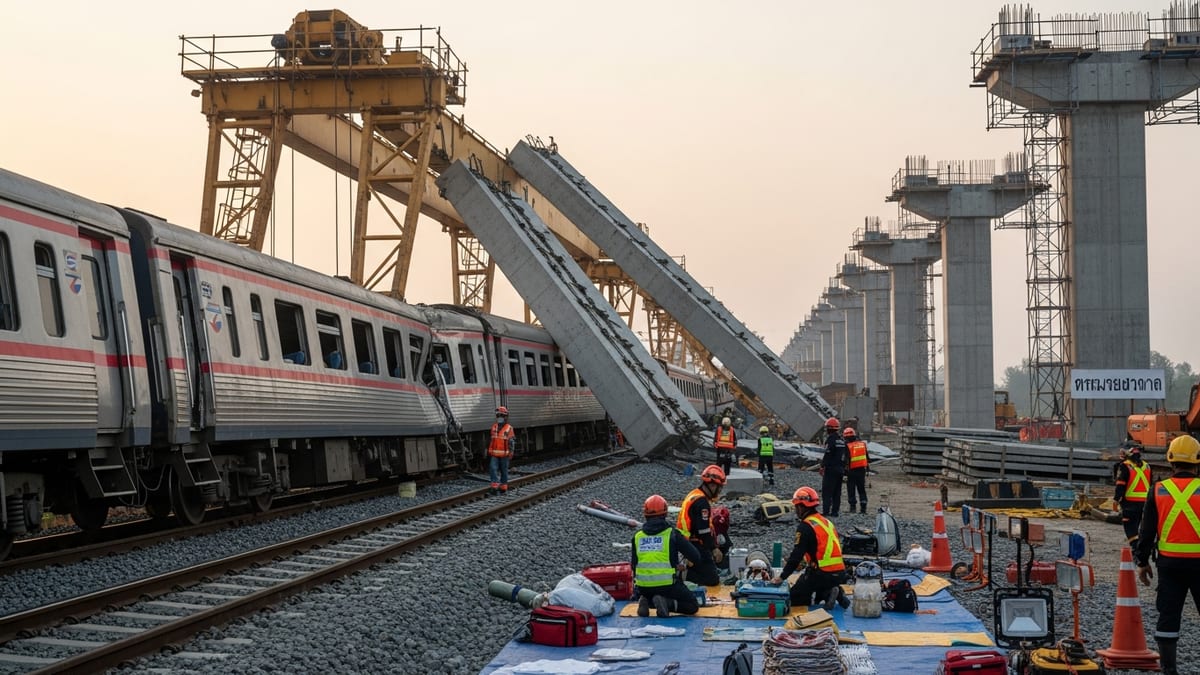
Derailment near Repentigny halts traffic and knocks out power
Published coverage indicates the derailment occurred Sunday, July 5, near Repentigny, a community northeast of Montreal along the St. Lawrence River. Local reports describe a long freight consist leaving the rails on a section of track that runs close to residential neighborhoods and commercial areas.
Information carried by several Canadian outlets states that 45 rail cars left the tracks. Photographs from the scene show a string of freight cars accordion-style along the right of way, with some tilted on their sides and others leaning at sharp angles but remaining upright.
According to publicly available reporting, the incident cut electricity to more than 1,000 Hydro Québec customers in the surrounding area after infrastructure near the railway was affected. The utility’s online outage map did not immediately list a firm restoration time on Sunday, prompting detours and temporary closures on nearby streets as crews assessed the damage.
Early reports do not indicate any injuries among train crew or nearby residents. Local emergency teams were present as a precaution while rail personnel and municipal workers secured the site.
No dangerous goods reported as investigators assess scene
Canadian National has publicly indicated that three of the derailed cars had previously transported diesel fuel but were not loaded at the time of the incident. Available coverage notes that no hazardous materials were reported spilled and that the affected tank cars remained intact.
Images shared by news organizations show freight equipment including covered hoppers and tank cars among the 45 derailed units. The configuration suggests a mixed freight service, a common sight on this key east-west route that links Montreal with communities across Quebec and beyond.
Rail personnel and investigation teams are expected to dismantle the train on site, moving or re-railing cars one by one to clear the track. That process typically takes many hours and can stretch into days when such a large number of cars are involved.
Public updates so far have focused on the absence of hazardous leaks and injuries, a contrast with some past derailments in North America that have involved chemicals or fuel. Even in the absence of a spill, the scale of the incident and the proximity to homes have heightened local concern.
Disruption for residents and travelers in a key Quebec corridor
The derailment has had immediate impacts for residents who rely on local road and rail crossings. Reports describe temporary blockages at level crossings and the establishment of detour routes to allow pedestrians and vehicles to move between neighborhoods divided by the tracks.
For travelers, the corridor northeast of Montreal is an important link for both freight and passenger traffic. While early information centers on the freight operation involved, disruptions to the line can ripple into schedule changes, slower train movements, or temporary rerouting while the damaged segment is repaired.
Municipal leaders in similar communities along Canadian rail lines have previously raised concerns about the cumulative effect of derailments, citing delays, blocked crossings, and uncertainty when incidents occur near built-up areas. The Repentigny event is likely to renew those discussions, especially given the scale of the train involved and the number of cars that left the rails.
Travelers using regional rail and road networks around Montreal may experience residual effects as cleanup continues, including localized congestion and adjusted train timetables until service resumes at normal capacity.
Cleanup, repairs and questions about rail infrastructure
Once investigators document the pattern of derailed cars and any track damage, attention will turn to restoring the line. Standard recovery work in an incident of this size includes removing damaged rolling stock, replacing ties and rail, and checking signaling and communications equipment along the affected stretch.
Published information from past Canadian investigations shows that derailments are often linked to a combination of track condition, equipment issues, and operating factors. In previous cases involving large numbers of cars, the Transportation Safety Board of Canada has highlighted the role of rail defects, wear on curves, or excessive forces within long trains as potential contributors.
While the cause of the Repentigny derailment has not yet been detailed in official findings, the scale of the event is likely to draw close scrutiny to inspection routines, train length and weight, and the state of the infrastructure in suburban areas around Montreal. Industry observers note that this corridor carries a high volume of freight, making resilience and rapid repair a priority.
For nearby communities, the sight of dozens of freight cars off the rails underscores the stakes of ongoing maintenance and safety oversight. Even when no hazardous materials are released, a derailment of this magnitude can upend daily life, disrupt power and travel, and challenge confidence in the rail network that underpins both local and national economies.
Broader context for travelers watching Canada’s rail network
The Repentigny derailment comes amid a series of rail incidents across Canada that have periodically affected passenger movements, tourism flows, and supply chains serving major cities and remote regions alike. In recent years, freight train derailments in British Columbia, Ontario, and the Prairies have interrupted both cargo shipments and passenger services that share or connect to the same lines.
For domestic and international travelers following developments in Canada’s rail system, events such as this one highlight the balance between the efficiency of moving large volumes of goods by rail and the disruptions that can occur when something goes wrong. When corridors near major cities are affected, consequences can range from altered commuter rail schedules to delays for long-distance services that link provinces.
Travel-news readers planning journeys through Quebec and eastern Canada may watch for timetable updates and advisories issued by passenger rail operators and local transit agencies in the days following such an incident. Even when freight-only tracks are involved, knock-on effects can appear elsewhere on the network as traffic is rerouted and maintenance crews occupy sections of line.
As investigators examine how a CN train in suburban Montreal ended up with 45 cars off the tracks, the outcome of their work will feed into broader discussions about how Canada maintains the safety and reliability of a rail system that remains central to both travel and trade.