


More news on this day
Malaysia Airlines and Batik Air have announced a wave of flight suspensions and cancellations affecting routes across the Gulf and Saudi Arabia, as the escalating US–Israel–Iran conflict continues to reshape airspace access and disrupt long haul travel between Asia, the Middle East and Europe.
Get the latest news straight to your inbox!
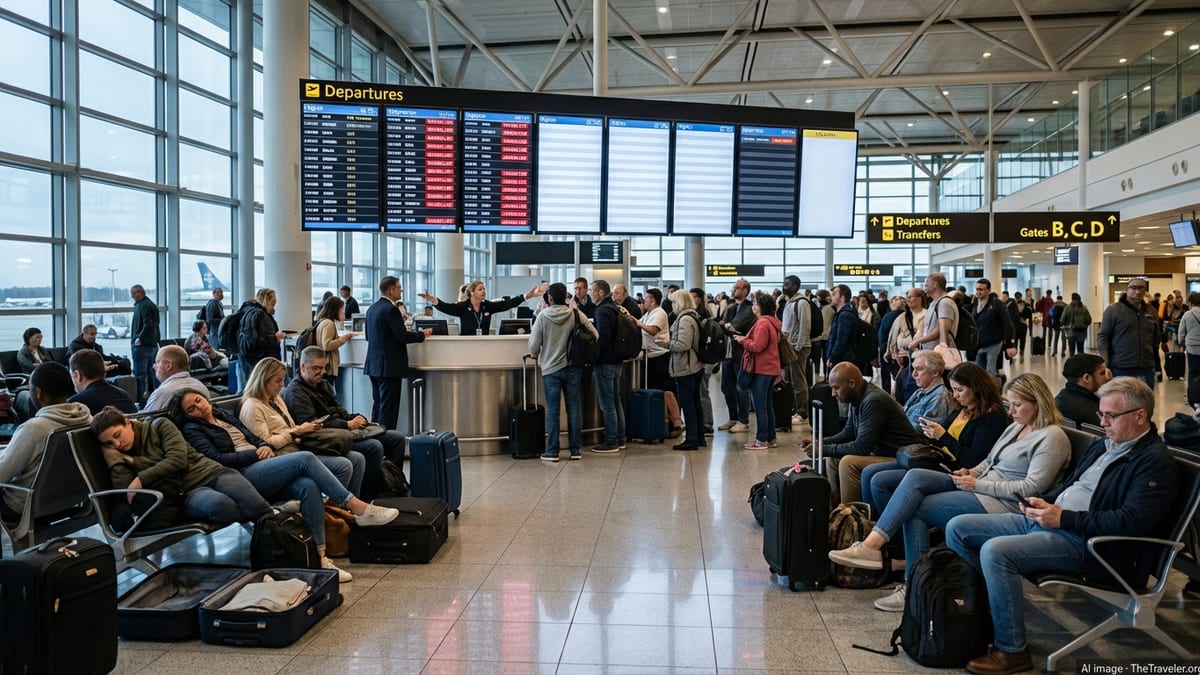
Airspace closures force Malaysian carriers to pull back
Published aviation notices and regional media reports indicate that airspace restrictions over Iran, Iraq, Israel, Jordan, Qatar and several Gulf corridors followed coordinated strikes by the United States and Israel on Iranian targets beginning 28 February 2026. The resulting security concerns prompted airlines worldwide to reroute or suspend services across key Middle East hubs.
Malaysia Airlines moved quickly to halt passenger operations on several high profile routes. Publicly available information shows that flights between Kuala Lumpur and Doha, Jeddah and Madinah were initially cancelled for the period from 28 February to early March, as the carrier assessed overflight risks on the most direct paths between Southeast Asia and the Middle East.
Batik Air, a major Malaysian leisure and regional operator, issued its own precautionary advisory on 28 February. In a statement posted on its website and shared by local travel media, the airline warned that flights into the wider Middle East region could face short notice schedule changes, including cancellations, while it monitored developments in the conflict and related airspace notifications.
The decisions reflect a broader pattern among global airlines, many of which have temporarily abandoned traditional Gulf waypoints or are flying significant detours around conflict zones, adding distance, fuel burn and complexity to already stretched long haul networks.
Malaysia Airlines suspends Doha, Jeddah and Madinah services
According to Malaysian news coverage and airline advisories, Malaysia Airlines first suspended its Kuala Lumpur–Doha service as airspace closures spread across the Gulf. The carrier subsequently extended the suspension window several times, citing an unchanged regional security picture and ongoing reviews of overflight permissions along the most efficient routing options.
For religious travel markets, the impact was particularly acute. Coverage from Malaysian outlets and travel industry publications shows that flights to Jeddah and Madinah, heavily used by umrah and hajj pilgrims, were halted at the height of the disruptions, leaving tour operators scrambling to secure seats on alternative carriers still serving Saudi Arabia.
In early March, the airline briefly restored a limited number of services from Kuala Lumpur to Jeddah and Madinah, creating a short travel window for stranded pilgrims and other passengers. However, the carrier maintained that operations remained subject to continuous risk assessment and that schedules could change with little notice if airspace conditions deteriorated again.
Even as Saudi routes gradually returned, Doha services remained offline for a longer period. Industry analysis noted that the Qatari capital sits closer to some of the most sensitive airspace segments, making it more challenging to operate commercially viable detours without significant time and cost penalties.
Batik Air adjusts network under precautionary advisory
Batik Air’s late February advisory framed its response as a precaution tied to rapidly evolving conditions rather than a blanket withdrawal from the Middle East. The document highlighted that flights scheduled to operate into affected areas might be changed or cancelled, and encouraged passengers to stay in contact with the airline or their travel agent for the latest updates.
Flight tracking data and travel trade reports suggest that Batik Air focused on selectively pruning services instead of shutting down entire city pairs. Routes that relied heavily on overflight permissions through Iranian or Iraqi airspace appeared to be among the most vulnerable to disruption, while flights that could be rerouted over safer corridors were more likely to continue, albeit with extended flight times.
The airline’s stance mirrors that of many medium sized carriers in Asia, which must balance safety and regulatory obligations with the commercial realities of thinner margins and limited spare capacity. By signaling that schedule changes were possible across its affected network, Batik Air effectively gave itself operational flexibility to react as airspace conditions shifted from day to day.
For Malaysian travelers, the practical effect has been a more volatile timetable and an increased likelihood of last minute cancellations or rerouting, especially for itineraries involving connections through Gulf or Levantine hubs.
Knock on effects for pilgrims and long haul travelers
The suspension and reduction of services by Malaysia Airlines and Batik Air coincided with peak travel periods for umrah pilgrims and for Malaysians connecting to Europe via Middle Eastern hubs. Reports from Malaysian media describe tour companies chartering or rebooking clients onto other airlines that continued to serve Jeddah and Madinah, often at higher fares and with longer itineraries.
Some umrah groups were temporarily stranded in Saudi Arabia after their original return flights, which had been scheduled to transit through Gulf hubs, were cancelled when airspace closures widened. Operators responded by rerouting passengers on direct or alternative services to Malaysia as seats became available.
For long haul travelers, the loss of Kuala Lumpur–Doha and reduced connectivity via other Middle Eastern gateways removed a key one stop option to Europe and parts of Africa. Travel industry commentary notes that Malaysia Airlines responded by boosting capacity on its direct Europe services and adjusting routings to avoid restricted skies while maintaining schedules to London and Paris.
These changes have contributed to longer flight times on some Asia–Europe routes and tighter seat availability, particularly in the weeks immediately following the outbreak of hostilities, as airlines across multiple regions competed for safe corridors and spare aircraft.
Malaysian authorities urge caution as situation evolves
Malaysia’s foreign ministry and civil aviation authorities have issued public travel advisories since early March, strongly encouraging citizens to defer non essential trips to several Middle Eastern countries affected by the conflict. The guidance reflects a broader recognition that the region’s airspace picture remains fluid, with potential for sudden closures or new restrictions.
Separate notices from Malaysia’s aviation regulator outlining operational disruptions due to Middle East airspace closures emphasise the importance of travellers checking directly with airlines before departure. Passengers are being urged to confirm flight status, understand refund or rebooking policies, and allow additional time for changes that may occur on short notice.
Logistics and supply chain bulletins published in June continue to describe the conflict as an ongoing risk factor for aviation in and around the Gulf, pointing to intermittent delays, selective cancellations and rerouted flights as airlines adapt to shifting security assessments.
For now, Malaysia Airlines and Batik Air remain in adjustment mode, cautiously rebuilding parts of their Middle East footprint while keeping contingency plans in place. As the US–Israel–Iran conflict persists without a clear resolution, further timetable changes and rolling cancellations across the region’s air network remain a distinct possibility.