

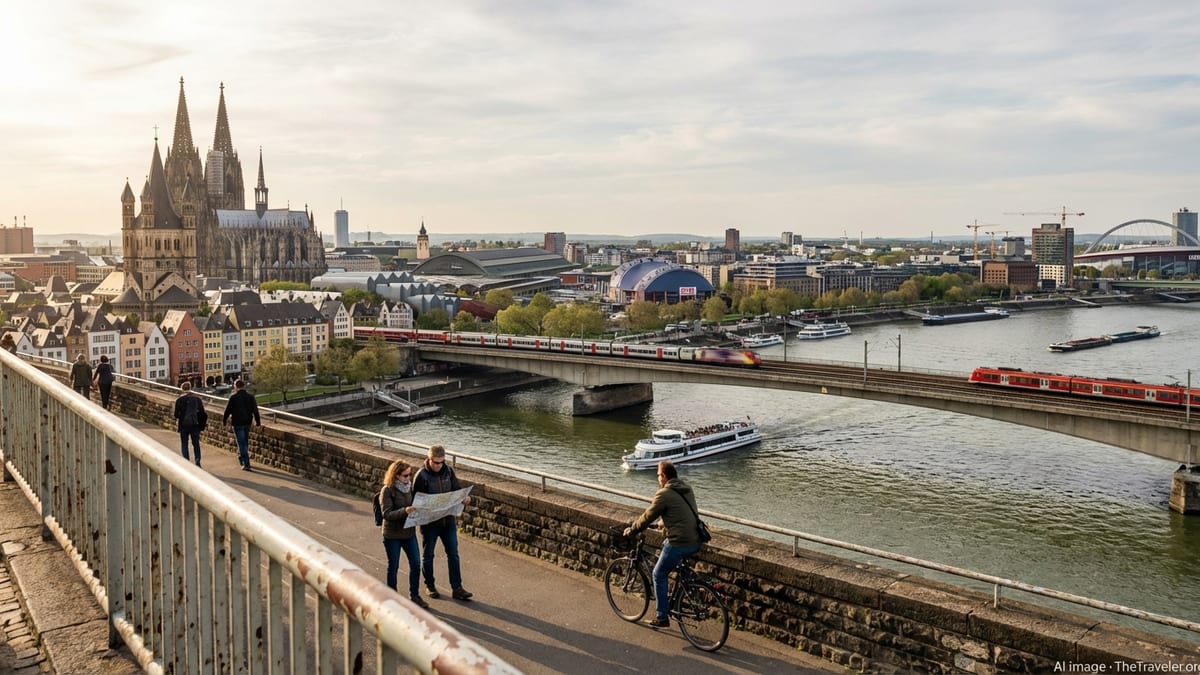
Cologne is one of Germany’s most inviting cities for visitors, compact enough to feel manageable yet big enough to reward several days of exploration. To make the most of your stay, it helps to grasp how the city is laid out, which neighborhoods suit different types of travelers, and how to navigate the public transport network that links them all together. This guide focuses on Cologne’s urban geography, key districts, and the practicalities of getting around so you can settle in quickly and explore with confidence.
Understanding Cologne’s Urban Layout
Cologne stretches along both banks of the Rhine, but most visitors will spend their time on the western side, where the historic center and many of the major sights are located. The city’s heart is the area around Cologne Central Station and the cathedral, which sits just to the west of the river. From there, the city fans out in concentric rings that broadly follow the line of the former medieval walls and 19th century fortifications, today traced by a series of ring roads and green belts. Understanding the layout helps prioritize the main things to do in Cologne.
Navigation is made easier by the Rhine itself, which runs roughly north to south. Locals refer to the western bank as the “left” side of the Rhine and the eastern bank as the “right,” and many place names are oriented around this distinction. You will also come across the “Innenstadt,” the administrative inner city district that comprises the old town and several adjacent neighborhoods, and the surrounding residential districts such as Ehrenfeld, Nippes, and Südstadt that have grown into lively communities in their own right.
Cologne’s main train station functions as a central hub not only for long distance rail but also for the S-Bahn suburban trains and several light rail lines. From here, you can think of the city as a wheel, with the Hauptbahnhof close to the center and the districts extending outward like spokes. This mental map is a useful way to organize your stay, whether you are planning museum visits, nightlife, or day trips along the Rhine.
Despite being one of Germany’s larger cities, Cologne’s core is relatively compact. Many central neighborhoods blend into one another on foot, and walking is often the most pleasant way to experience the city grid of broad shopping streets, quiet residential blocks, and riverfront promenades. For anything beyond the walkable center, the well-integrated public transport network fills in the gaps.
The Historic Center: Altstadt and the Cathedral Quarter
Most first impressions of Cologne begin in the historic center, where the soaring twin spires of Cologne Cathedral dominate the skyline. This quarter, clustered around the Hauptbahnhof and the old town along the Rhine, is where you will find many of the city’s headline attractions, including major museums, historic churches, and riverfront squares lined with traditional houses.
The Altstadt, or old town, stretches south from the cathedral along the Rhine. It is characterized by narrow lanes, colorful facades, and a dense concentration of bars serving Cologne’s signature Kölsch beer in small glasses. While some of this area caters to tourists, especially around the riverside, it remains a useful orientation point and a convenient base if you want to be within easy walking distance of the main sights and the central station.
Just to the west and south of the cathedral lie the commercial streets that form Cologne’s primary shopping district. Hohe Straße and Schildergasse form a busy pedestrian spine, lined with department stores and international brands. Behind these thoroughfares, smaller side streets hide more independent shops, cafes, and restaurants, as well as a number of mid-range hotels that allow you to stay central without being directly in the most crowded lanes.
For many visitors, staying in or near the cathedral quarter is the most straightforward choice, particularly on a short trip where convenience matters more than neighborhood character. You will have immediate access to long distance trains, local public transport, and the major museums, and you can reach the riverfront or the main shopping streets in minutes. The trade-off is that prices tend to be higher and the area can feel busy into the evening, especially during major events or trade fairs.
Creative Districts on the Left Bank: Ehrenfeld, Belgisches Viertel, and Südstadt
Beyond the inner core, several left bank neighborhoods have become destinations in their own right, each with a distinct feel. North-west of the center, Ehrenfeld has grown from an industrial quarter into one of the city’s most creative districts. Warehouses and factory buildings now house clubs, live music venues, studios, and street art, while the main thoroughfares feature an eclectic mix of migrant-run eateries, independent bars, and design shops.
Ehrenfeld is connected to the center by frequent trams and regional trains, and the journey from the Hauptbahnhof to Ehrenfeld station takes just a few minutes. Once there, the grid of streets around Venloer Straße and the Gürtel ring road is easy to explore on foot. This area is popular with students and young professionals, so nightlife tends to be vibrant, and it can be a good base for travelers who prioritize local atmosphere and evening options over immediate proximity to the cathedral.
Closer to the center, the Belgisches Viertel, or Belgian Quarter, lies just southwest of the main shopping streets. Its leafy squares and late 19th century apartment buildings house trendy cafes, boutique fashion stores, and an array of casual dining options. It is one of Cologne’s most fashionable areas and a favorite with locals for both daytime strolling and evening drinks. Despite its popularity, it still feels residential and relaxed compared with the busiest parts of the old town.
Further south, Südstadt covers the neighborhoods below the old town along the left bank. This area combines handsome historic streets with a strong sense of community. You will find an appealing mix of traditional breweries, contemporary bars, and small galleries, as well as access to riverside parks that are busy on warm evenings. Public transport connects Südstadt smoothly to the center, but it also rewards exploration by foot or bicycle along its quieter back streets.
Northern Neighborhoods: Agnesviertel and Nippes
North of the inner city, Agnesviertel and Nippes offer a different slice of Cologne life. Agnesviertel, centered around the imposing Agneskirche, is noted for its preserved late 19th and early 20th century buildings. Many of these survived wartime damage better than the old town, resulting in elegant facades, detailed stucco work, and leafy, orderly streets. It feels both stately and relaxed, with a mix of small cafes, delicatessens, and independent shops that draw residents and visitors alike.
Agnesviertel blends into Nippes as you move further north. Historically more working class, Nippes has become increasingly popular with younger families and creative professionals, giving it a lively yet lived-in character. The main axis of Neusser Straße is lined with cafes, restaurants, and everyday shops, while side streets lead to quieter residential pockets and neighborhood squares. Compared with the core tourist areas, prices can be more moderate and the atmosphere more distinctly local.
For visitors, these northern neighborhoods work well if you prefer a base that feels less like a hotel zone and more like a real residential district. Public transport connections to the center are strong, with tram lines and the S-Bahn linking Nippes and Agnesviertel to the Hauptbahnhof in a matter of minutes. Walking or cycling along the green spaces that follow the course of the former fortifications, you also get a sense of how Cologne’s urban fabric developed beyond the old walls.
Although they lack the big-name sights of the old town or the riverfront, Agnesviertel and Nippes are excellent areas to experience Cologne’s everyday rhythms. Morning markets, neighborhood bakeries, and informal corner pubs contribute to an atmosphere that many travelers find more rewarding on a second or third visit, when the focus shifts from checking off monuments to living like a local.
Right Bank Cologne: Deutz, Mülheim, and Emerging East Side Areas
Crossing the Rhine to the right bank opens up another perspective on the city. Directly opposite the cathedral lies Deutz, a district that has transformed over recent decades. It is home to the city’s main trade fair grounds, the Lanxess Arena, and the modern office and hotel developments of the Rheinpark and Rheinauhafen areas nearby. From the riverfront in Deutz, you enjoy one of the best views of the Cologne skyline, especially at sunset when the cathedral and old town are illuminated.
Deutz is exceptionally well connected. The Messe/Deutz station is a major junction for regional and long distance trains, and several light rail lines cross here. For travelers attending trade fairs, concerts, or sporting events, staying in Deutz can be practical, with quick links back across the river to the old town on foot, by tram, or via short S-Bahn hops. The area offers a mix of business hotels and more modest accommodations, as well as a growing number of restaurants and casual bars catering to both locals and visitors.
Further north along the right bank, Mülheim has been shifting from an industrial and working class quarter to an increasingly creative mixed-use district. Large former industrial sites are being repurposed for media companies, creative industries, and cultural events, adding to a longstanding tradition of neighborhood markets and small shops. The riverside promenade and nearby green spaces give this part of the city a more open feel than some central districts.
Right bank neighborhoods tend to be slightly less familiar to first-time visitors, but they can offer better value and a different side of Cologne’s character. With bridges and frequent tram and train services linking both sides of the river, basing yourself east of the Rhine no longer feels remote. It can be particularly advantageous during major events when central hotel prices rise sharply and availability becomes tight.
Navigating Cologne’s Public Transport Network
Cologne’s public transport network combines trams, light rail, buses, and suburban trains under a unified regional tariff system. Services within the city are operated primarily by the local transport company and integrated into the wider Verkehrsverbund Rhein-Sieg, the regional public transport authority. For visitors, this means that a single ticket can usually be used across different modes of transport within the relevant fare zone.
In practice, you will mainly use the Stadtbahn light rail lines and trams, which combine underground sections in the center with surface-level routes further out. These lines link the Hauptbahnhof with surrounding neighborhoods such as Ehrenfeld, Südstadt, Deutz, and Mülheim. The S-Bahn suburban trains are particularly useful for trips to and from the airport or for reaching outlying districts more quickly. Buses tend to fill in the gaps where rail coverage is thinner, especially in residential areas.
Tickets are sold at machines in stations, on some platforms, and at key bus and tram stops. Many visitors rely on single journey tickets for occasional trips, but 24-hour tickets and longer-duration products can be more economical if you expect to move around frequently. For example, 24-hour tickets valid for one person or up to five people are widely available, and regional passes cover both Cologne and nearby cities within the Rhine-Sieg network.
Validation is a critical step. Paper tickets you purchase from machines usually need to be stamped in a validation machine before boarding or immediately upon entering a station platform. Fines for traveling without a valid ticket are substantial, and inspectors carry out spot checks across the network. Increasingly, mobile tickets purchased through official apps simplify this process by incorporating time-stamping automatically, but you should ensure you understand how your chosen ticket format works before you board.
Tickets, Passes, and the KölnCard
Understanding the ticketing options can save both time and money. Standard choices include single tickets for short journeys, multi-ride tickets that you stamp each time you travel, and flexible 24-hour or multi-day tickets valid within specified zones. As of early 2026, the regional tariff has been adjusted in line with wider changes in Germany, and prices are updated periodically, so it is important to check current rates on official ticket machines or information boards when you arrive.
For many travelers, especially those planning intensive sightseeing, the KölnCard is particularly attractive. Available for 24 or 48 hours and for individuals or small groups, the card offers free travel on buses and trains within Cologne and discounts at numerous museums, cultural institutions, and guided tours. It functions as both a transport pass and a visitor card. You can buy it at tourist information offices, ticket machines, or through official apps, and it must be correctly activated for the validity period to begin.
In addition to local visitor cards, there are nationwide products such as the Deutschlandticket, a monthly subscription that allows unlimited travel on most local and regional public transport across Germany for a flat price, which increased at the start of 2026. This is more relevant for longer stays or multi-city itineraries than for short city breaks, but it can be cost-effective if Cologne is one stop on a broader tour using regional trains rather than long distance high-speed services.
When choosing between single tickets, day passes, the KölnCard, or broader regional products, consider how intensively you will use public transport, whether you will be visiting museums and cultural attractions, and if you are traveling alone or in a group. With clear signage in both German and English at ticket machines, you can compare options on arrival, and transport staff and tourist information centers are accustomed to helping visitors select the best product for their needs.
From Cologne Bonn Airport to the City
Cologne Bonn Airport lies to the southeast of the city, and despite its relatively compact size, it is well connected by public transport. The airport’s train station, located between the main terminals and clearly signposted, is served by S-Bahn suburban trains and Regional Express services that run directly to Cologne’s central station and other important hubs. For most travelers, these trains are the fastest and most straightforward way into the city.
S-Bahn lines S13 and S19 run at frequent intervals throughout the day, with typical journey times of around 15 to 20 minutes from the airport to the Hauptbahnhof. Regional Express trains can shave a few minutes off that, though service patterns vary over the course of the day and week. Ticket prices for these public transport options are aligned with the regional tariff, and a standard single ticket from the airport into central Cologne is generally in the mid single-digit euro range. The ride is included for holders of valid regional passes and certain visitor cards.
For those who prefer to avoid trains with luggage or at night, airport taxis and pre-booked private transfers are widely available. The drive into the city typically takes 20 to 30 minutes depending on traffic and your exact destination. While more expensive than public transport, door-to-door service can be worthwhile if you are traveling with family, carrying heavy bags, or arriving after a long flight. Car rental desks are also present at the airport for travelers planning to explore the wider region by road.
Whatever option you choose, it is wise to confirm schedules close to your travel dates, as timetables can be adjusted for construction work, seasonal patterns, or special events. Large sporting tournaments and trade fairs, in particular, can affect service frequency and demand. Apps from the national rail operator or the local transport companies provide real-time information, and airport information desks can advise on the best route on the day.
On Foot, by Bike, and by Car: Moving Within the City
While public transport is comprehensive, Cologne is also well suited to walking and cycling. The city center is compact, and many of the most visited sights sit within a 20-minute walk of the cathedral. Broad pedestrianized shopping streets, riverside promenades, and green corridors make walking not only practical but also enjoyable, especially in the milder months. Signage is generally clear, and the streets in central areas are safe and active into the evening.
Cycling infrastructure has been expanding, with marked lanes on many major roads and traffic-calmed routes through residential districts. Bike rental options range from classic rental shops to app-based shared bike schemes located at docking points around the city. Cycling can be an efficient way to connect neighborhoods such as Ehrenfeld, Belgisches Viertel, and Südstadt without relying on timetables, and it allows you to explore parks and riverside paths at your own pace.
Driving in central Cologne, by contrast, is often less convenient. Parking in the Innenstadt is limited and can be expensive, and traffic congestion occasionally builds up during peak hours or when major events are in town. The city also operates environmental regulations that restrict access to certain areas for vehicles that do not meet defined emissions standards, which can affect visitors arriving by car from other regions. For these reasons, many travelers choose to park at their accommodation or at Park & Ride facilities on the edge of the city and then switch to public transport for everyday movement.
Taxis and ride services fill the gap for late-night journeys or special situations, but in everyday use they are more of a complement than a substitute for the tram and train network. Combining walking, cycling, and public transport tends to offer the best mix of flexibility, speed, and cost efficiency for exploring Cologne’s diverse neighborhoods.
The Takeaway
Cologne rewards visitors who take a little time to understand its layout and transport system. Once you grasp the basic geography of the city along the Rhine, with the cathedral and old town as a central anchor and distinct neighborhoods radiating outward, planning your days becomes much easier. Each district offers a slightly different flavor, from the tourist-friendly charm of the Altstadt to the nightlife of Ehrenfeld, the elegance of Agnesviertel, and the evolving right bank quarters of Deutz and Mülheim.
Public transport knits these areas together with reliable tram, light rail, and suburban train services, supported by a clear ticketing system and visitor-focused products such as the KölnCard. Efficient links from Cologne Bonn Airport mean you can move from plane to central hotel in under half an hour in most cases, and the compact city core encourages walking and cycling once you are settled.
This guide often leads travelers to ask whether Cologne is worth visiting. With that framework in mind, you are free to focus on the experiences that matter most to you, confident that you can move around the city with ease.
FAQ
Q1: Which neighborhood is best for first-time visitors to Cologne?
For a first visit, staying near the cathedral and the old town is usually the most convenient, as you will be close to the main sights, the central station, and several tram lines, reducing travel time and simplifying orientation.
Q2: Is the KölnCard worth buying?
The KölnCard is worthwhile if you plan to use public transport several times a day and visit multiple museums or attractions, since it combines unlimited local travel within Cologne with discounts at many cultural sites and tours.
Q3: How safe is public transport in Cologne at night?
Public transport in Cologne is generally considered safe, with regular services and visible staff, though it is still sensible to follow normal urban precautions, such as keeping valuables secure and choosing well-lit platforms and carriages.
Q4: How long does it take to travel from Cologne Bonn Airport to the city center?
By S-Bahn or Regional Express train, the journey typically takes around 15 to 20 minutes, while a taxi or private transfer usually takes 20 to 30 minutes depending on traffic and your exact destination.
Q5: Do I need a car to explore Cologne’s neighborhoods?
You do not need a car for Cologne itself; public transport, walking, and cycling are usually faster and more practical, and parking in the center can be limited and costly.
Q6: What is the difference between the left and right bank areas of Cologne?
The left bank contains the historic center and many of the classic sights, while the right bank districts like Deutz and Mülheim are more dominated by trade fair venues, modern developments, and emerging creative quarters, often with better value accommodations.
Q7: Are tickets valid across trams, buses, and trains?
Within the regional transport network, most standard tickets are valid on trams, buses, and S-Bahn or Regional Express services within the designated zones, making it easy to transfer between modes on a single fare.
Q8: How walkable is Cologne’s city center?
Cologne’s center is highly walkable, with most major attractions, shopping streets, and the riverfront located within a 20-minute walk of the cathedral and the central station.
Q9: Which neighborhoods are good for nightlife?
Ehrenfeld, Belgisches Viertel, parts of Südstadt, and sections of the old town are known for bars, clubs, and live music, each offering a slightly different atmosphere from traditional brewery halls to contemporary venues.
Q10: How can I check current public transport schedules and prices?
The most reliable way is to use official apps or information boards from the local transport operator and the regional transport authority, which provide real-time timetables, route planners, and up-to-date ticket prices.