


Despegar is one of Latin America’s largest online travel agencies, popular with travelers looking for cheap flights, hotels, and dynamic packages across the region and beyond. Its reach is impressive, but so are the number of complaints from travelers who misunderstood the small print, clicked too fast, or assumed Despegar worked exactly like booking directly with an airline or hotel. Used carefully, it can be a useful tool. Used carelessly, it can become an expensive headache. Here are the most common mistakes travelers make when using Despegar, and how to avoid repeating them.
Get the latest updates straight to your inbox!
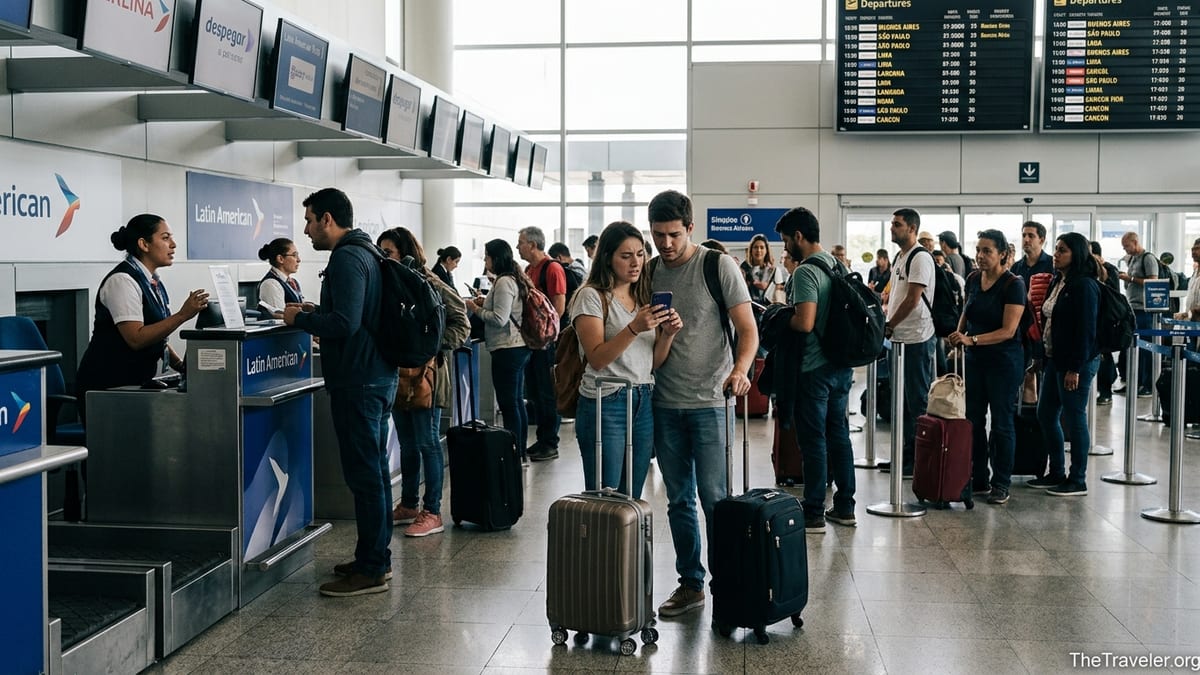
Misunderstanding What Despegar Actually Is
One of the most frequent mistakes is treating Despegar as if it were the airline or hotel itself, rather than an intermediary. Despegar sells travel services provided by airlines, hotel chains, low-cost carriers, and car rental companies, and its own help center makes clear that change and cancellation rules are set by those providers, not by Despegar. In practice, that means you might see a “great deal” on a flight from São Paulo to Miami and assume Despegar will have full control over changes and refunds, when in reality it must follow whatever fare rules the airline attached to that ticket.
This confusion shows up repeatedly in consumer complaints. For example, a traveler might book a nonrefundable promotional fare with a low-cost carrier through Despegar because it is the cheapest option on the search results page. When political unrest or a work issue forces a change, the traveler understandably reaches out to Despegar expecting a flexible response, only to discover that any waiver or exception must come from the airline. Despegar’s agents are often limited to pushing requests through formal channels. If the airline refuses, Despegar rarely has authority to override that decision.
Another consequence of misunderstanding Despegar’s role is assuming it will automatically re-protect you in irregular operations like major storm disruptions or IT outages. If a carrier cancels a flight, some airlines will proactively rebook passengers who bought direct, but passengers who booked through an intermediary can find themselves stuck between two parties: Despegar telling them that only the airline can change the ticket, and the airline insisting that all modifications must be handled by the agency that issued the ticket. Knowing from the outset that Despegar is a middleman, not the operating airline or hotel, helps you set realistic expectations about who can solve what, and how quickly.
Overlooking Fare Rules, Restrictions, and Add-On Costs
Another widespread mistake is focusing only on the headline price and skipping the fine print. Despegar’s listings often mix full-service carriers with ultra-low-cost airlines, plus hotels that charge resort fees, cleaning fees, or mandatory service charges. The base price can look extremely attractive, but the true cost becomes clear only once you read the fare conditions and additional costs section.
A typical example: a traveler in Mexico City sees a Despegar promotion for a weekend in Cancún at a beachfront resort with flights included for what seems like half the price of booking each element separately. The booking flow shows a low package price in Mexican pesos, but the hotel portion is nonrefundable, the outbound flight is on a low-cost carrier that charges extra for checked bags and sometimes even carry-on luggage, and the resort applies a daily “service fee” and environmental tax payable at check-in. A traveler who does not expand each detail section may arrive at the hotel surprised by an extra several hundred dollars in charges across a four or five night stay.
The same pattern appears with car rentals. A car offer might appear on Despegar for a fraction of what the rental brand advertises on its own website. On closer inspection, the Despegar rate may not include mandatory local insurance in markets like Argentina or Brazil. The traveler arrives believing they prepaid most of the cost, only to be told at the counter that they must purchase liability coverage locally, often wiping out any savings. Avoiding these traps requires deliberately clicking into fare rules, hotel policies, and car rental inclusions before paying.
Ignoring Currency, Exchange Rates, and Foreign Transaction Issues
Because Despegar operates in multiple countries and currencies, another common mistake is not paying close attention to which currency is selected at checkout. Travelers in the United States, for example, might find themselves booking in Argentine pesos or Brazilian reais because they navigated Despegar’s regional sites or used a VPN. The amount on the confirmation email looks low, but when the credit card statement arrives, the combination of currency conversion and bank fees can add 5 percent or more to the cost.
Real-world complaints often involve two layers of surprise. First, Despegar may apply its own conversion rate when it charges a card in a different currency than the traveler expects. Second, the traveler’s bank may treat the purchase as an international transaction, applying a foreign transaction fee on top. A family booking a multi-stop trip across South America can unknowingly create multiple cross-currency charges for flights, hotels, and transfers. Because each segment may be ticketed in the supplier’s local currency, the final bill across all statements can end up significantly higher than the original impression.
Another issue is booking in a foreign currency with a card that does not handle dynamic currency conversion well. Some travelers assume that selecting pricing in U.S. dollars guarantees no extra charges. In practice, the underlying transaction might still originate from a foreign merchant, and any refund later may be processed in the original currency. If exchange rates move between the purchase date and the refund date, the traveler may recover less than they paid, even if Despegar returns the full nominal amount. Reading the payment section carefully and using a card with no foreign transaction fees mitigates these risks.
Booking the Cheapest Nonrefundable Option Without Considering Flexibility
Despegar’s search results heavily emphasize the lowest prices, and many travelers click on the cheapest nonrefundable option without thinking about how likely their plans are to change. This problem is especially acute for complex itineraries with connections or for trips far in the future. A deeply discounted fare from Lima to Madrid with a long layover may be enticing, but if it is labeled as nonrefundable and nonchangeable, any change in vacation dates, work obligations, or personal circumstances can turn that bargain into an expensive sunk cost.
Despegar’s own help pages explain that changes and cancellations typically involve provider penalties and fare differences, and that some low-cost fares cannot be changed at all. Still, customers regularly proceed assuming that exceptions will be made later, especially when significant events occur such as strikes or airline schedule changes. In some cases, airlines do authorize free changes or vouchers, but the process through an intermediary can be slower and less transparent. Travelers report waiting weeks for Despegar to process airline-approved refunds or to issue updated tickets after a schedule disruption.
Consider a traveler in Buenos Aires who buys the lowest fare from a low-cost carrier to fly to São Paulo for a concert. Two months later, work forces a shift in dates. The airline’s website offers flexible options for direct bookings, but the ticket purchased through Despegar is locked into stricter rules. Even if the airline appears willing to help, it may insist the traveler work through Despegar, which in turn can only proceed according to the fare category initially sold. A slightly more expensive flexible fare or a “free change” protection add-on at booking might have been a much better value than absorbing the cost of a new ticket.
Not Monitoring Email and App Notifications for Schedule Changes
Airlines change schedules regularly for operational reasons, from aircraft rotation to airport slot constraints. Despegar acknowledges that airlines may modify flight times, dates, or even airports and that customers must confirm acceptance of significant changes. A major mistake is assuming that no news is good news and failing to monitor the email address or app notifications associated with the Despegar account.
In practice, Despegar usually communicates airline-initiated changes via automated emails and in-app messages. But if a traveler booked using a work email that later changes, or if those messages land in a spam folder, the traveler may never see important notices. There are documented cases of passengers arriving at the airport to find their departure time moved earlier by several hours, or even their flight rebooked a day earlier or later, because the airline made a change and Despegar required the traveler’s confirmation by a certain deadline. When that confirmation never arrived, the system sometimes canceled or froze the booking.
Another vulnerability is for group or family bookings. One person may handle the purchase on Despegar using their own contact information, but another relative travels alone. If Despegar sends updates only to the original purchaser, the traveler may remain unaware of modifications until too late. The safest approach is to log into the Despegar account regularly in the weeks before departure and cross-check flight details directly on the airline’s website using the airline confirmation code, which is typically included in Despegar confirmations. Doing this can reveal schedule changes that might not yet have been clearly communicated by email.
Assuming Customer Service Will Instantly Fix Complex Problems
Another common mistake is expecting Despegar’s customer service to function like a concierge that can override airline and hotel decisions. Public review platforms feature many stories of travelers who, faced with cancellations, double charges, or overbooked hotels, assume that one call or chat will restore everything. When agents instead open a case and say they must wait for a response from the airline or property, frustration grows quickly.
For example, some travelers have reported arriving at a hotel in Bogotá or Santiago with a Despegar prepaid voucher, only to be told by the front desk that no reservation appears in the system. The hotel may be full, the desk clerk may not speak the traveler’s language fluently, and Despegar’s call center may route them through multiple menus before reaching a person. In the best cases, Despegar eventually confirms the error and refunds the stay or moves the traveler to an equivalent property, but this process can take hours on the ground and days or weeks for money to return to the original payment method.
Similarly, airline involuntary cancellations due to storms or technical outages can generate mass rebooking chaos. A traveler who bought directly from an airline can often stand in a rebooking line or use the airline’s app. A Despegar customer might instead spend long periods on hold while Despegar negotiates with airline inventory on their behalf. Complaints to consumer agencies and in lawsuits have highlighted that reimbursements sometimes arrive long after travelers expected, even when regulators or consumer offices later pressure companies to accelerate those refunds. Expecting instant solutions from a third-party reseller is unrealistic, and travelers should have backup plans and emergency funds for nights in transit hotels or alternative transport if things go badly wrong.
Failing to Document Everything and Verify Details Directly
When bookings involve an intermediary, keeping thorough documentation becomes critical. A common mistake is to rely entirely on Despegar’s app or website and not save screenshots of prices, conditions, and confirmation pages. If something later goes wrong, having a clear record of what you purchased can make the difference between a quick resolution and an extended argument about who promised what.
In real disputes seen on consumer forums, travelers have benefited from simple steps like capturing the final price breakdown screen, noting whether taxes and resort fees were “included” or “payable at the property,” and saving copies of emails where agents confirmed certain conditions. When a hotel later claims a booking was made without breakfast, for instance, but a screenshot shows “breakfast included,” travelers can provide that to Despegar as evidence. Similarly, if an airline denies a refund by claiming a ticket was nonrefundable, proof that Despegar advertised a flexible fare can support a complaint.
Another smart habit is to double-check all details directly with the end provider a few days after booking. This could mean calling the hotel to confirm that the room type, number of guests, and payment status match the Despegar voucher, or checking the airline’s website to verify seat assignments and special requests like wheelchair assistance. Travelers who skip this step sometimes discover discrepancies only when standing at a check-in counter or front desk, at which point options are limited. A short confirmation call in advance can reveal problems while there is still time to correct them.
The Takeaway
Despegar can be a powerful tool for finding and combining travel options in Latin America and beyond, but only for travelers who use it with clear eyes and careful habits. Many of the most painful experiences described in complaints and legal filings share the same roots: misunderstanding Despegar’s role as an intermediary, ignoring fare conditions and extra fees, overlooking currency issues, and overestimating what customer service can accomplish when things go wrong.
To use Despegar safely, treat it as a marketplace rather than a fully flexible travel partner. Slow down during the booking process, expand every rule and condition, verify the currency, and favor flexible options when your plans are uncertain. Once you have booked, monitor your email and app notifications closely, cross-check details directly with airlines and hotels, and keep thorough documentation of every step. These habits will not eliminate every risk in modern travel, but they will sharply reduce the chances that your Despegar booking turns into an avoidable ordeal.
FAQ
Q1. Is it safer to book flights directly with the airline instead of through Despegar?
It depends on your priorities. Booking directly with airlines often makes changes and irregular operations easier to handle, since there is no intermediary. Despegar can be useful for comparing multiple airlines and currencies, but you introduce an extra layer into any future problem. For time-sensitive trips or complex itineraries, many travelers prefer to book critical flights directly with the carrier.
Q2. Why do I sometimes see a different final price on my credit card than I saw on Despegar?
This usually comes from currency conversion and bank fees. Despegar may process your payment in a different currency than you expected, and your card issuer may add foreign transaction charges. Exchange rates can also move between booking and any later refund. Using a card with no foreign transaction fees and verifying the currency at checkout helps minimize surprises.
Q3. What should I do if the airline changes my flight and I booked through Despegar?
First, check both your Despegar account and the airline’s website using the airline reservation code. If the new schedule does not work, contact Despegar promptly, because they usually must handle reissues for tickets they sold. Keep records of all communications and, if the change is substantial, ask about options such as alternative flights, vouchers, or refunds according to the airline’s policy.
Q4. How can I avoid surprise hotel fees when booking with Despegar?
Always expand the “taxes and fees” or “important information” sections before paying. Look for language indicating resort fees, service charges, environmental taxes, or cleaning fees payable at the property. After booking, call or email the hotel with your Despegar confirmation to verify what has been prepaid and what will be charged on arrival, and ask them to note any confirmations on your reservation.
Q5. Are Despegar’s travel protection or insurance add-ons worth buying?
Value varies by traveler and policy. Some add-ons may cover penalties for changes or cancellations under specific circumstances, while others offer only limited benefits. Before purchasing, read the full conditions and compare them with coverage you may already have through your credit card or existing travel insurance. Do not assume an add-on automatically makes a nonrefundable fare fully flexible.
Q6. What can I do if my hotel does not find my Despegar reservation at check-in?
Stay calm and present your Despegar confirmation and any prepaid voucher. Ask the front desk to search by your name, dates, and the Despegar booking reference. While they check, contact Despegar using the emergency or urgent assistance channels listed in your confirmation. Document everything with photos of the front desk and any written notes, and keep receipts if you must pay for another hotel so you can seek reimbursement later.
Q7. How long do refunds from Despegar usually take?
Time frames vary depending on whether the refund comes from Despegar itself or from an airline or hotel. Even after Despegar processes a refund, banks and card issuers may take days or weeks to display the credit. When a refund is tied to an airline schedule change or cancellation, the process can stretch longer, especially if multiple intermediaries are involved. Keep checking your statements and follow up with Despegar if the promised deadline passes.
Q8. Can I change a nonrefundable Despegar booking if I have an emergency?
Nonrefundable bookings are, by definition, restrictive, but some providers may make exceptions for documented emergencies such as serious illness or bereavement. In such cases, gather all supporting documentation and contact Despegar, which can submit a request to the airline or hotel. Approval is never guaranteed, and decisions rest mainly with the provider, not with Despegar.
Q9. How can I reduce the risk of problems when using Despegar for complex trips?
For itineraries with multiple flights, hotels, and ground services, consider splitting bookings: use Despegar for price comparison and simple segments, but book critical legs or first and last nights directly with providers when possible. Allow generous connection times, avoid mixing nonrefundable elements with tight schedules, and verify each segment directly with airlines and hotels. Keeping a printed or offline copy of all confirmations is especially important for complex trips.
Q10. What should I document when booking with Despegar to protect myself?
At minimum, capture screenshots of the final price breakdown, fare rules, cancellation conditions, and any message indicating that taxes or fees are included. Save all confirmation emails and chat transcripts with agents. If you call airlines or hotels to confirm details, note dates, times, and names of people you spoke with. Having this documentation makes it easier to resolve disputes with Despegar, providers, or consumer protection agencies if something goes wrong.