


The Bay of Naples sits at a crossroads of everything people dream about in Southern Italy: an energetic city, pastel seaside towns, legendary islands, and the ash-frozen ghost of Pompeii under the shadow of Vesuvius. If you are trying to decide whether to give this area two nights or a full week in your Southern Italy itinerary, the answer depends less on picturesque postcards and more on what you actually enjoy on the ground: food, archaeology, nightlife, beaches, or quiet views. Here is what the Bay of Naples really offers in 2026, with concrete examples to help you decide if it deserves a starring role or just a short cameo in your trip.
Get the latest updates straight to your inbox!
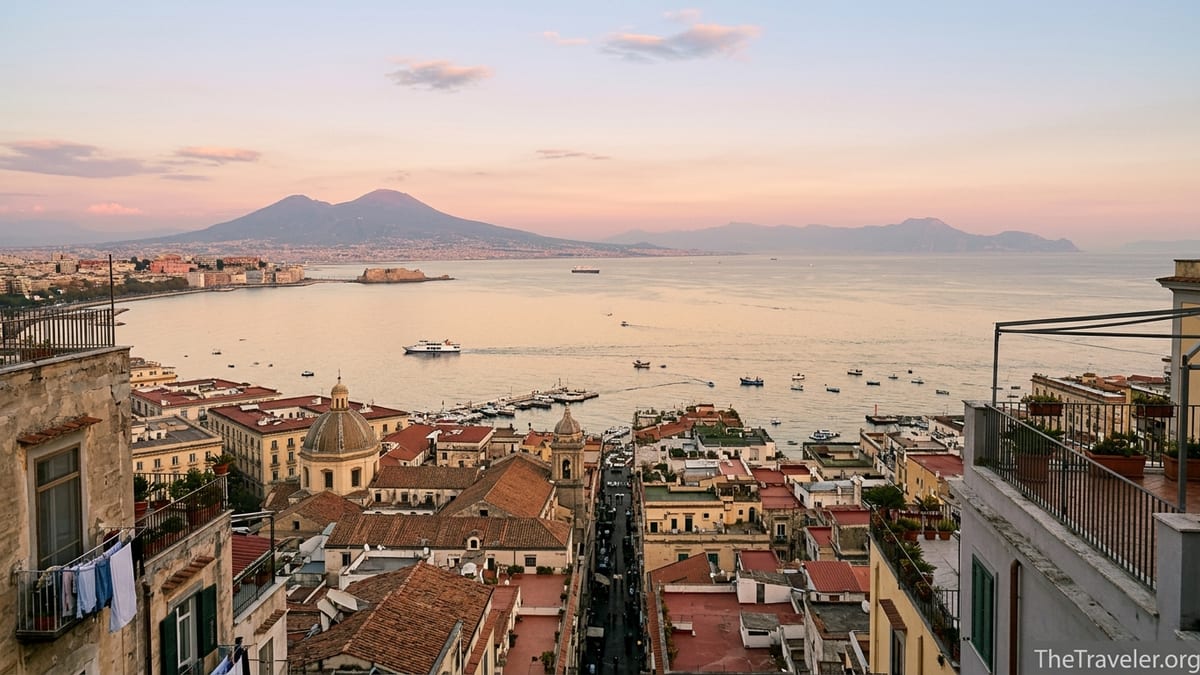
Bay of Naples vs Amalfi Coast: What Are You Really Choosing Between?
Many travelers treat the Bay of Naples and the Amalfi Coast as interchangeable, but the experience is very different. Around the bay you have Naples itself, Sorrento perched on its cliffs, and islands like Capri, Ischia and Procida reachable by frequent ferries in season. The Amalfi Coast, by contrast, is a string of smaller resort towns like Positano and Amalfi along a single dramatic road. In practice, choosing the Bay of Naples gives you a larger, more varied base with urban grit, world-class museums and affordable food, while Amalfi is more about polished scenery, boutique hotels and slower evenings.
Costs are a major part of the equation. In April or October, midrange hotels in central Naples often run noticeably less than in Positano for a similar quality of room, and even Sorrento, which caters heavily to tourists, tends to price below the most famous Amalfi Coast villages. A couple might find a modern, central hotel in Naples with breakfast for roughly what just one night in a sea-view boutique hotel on the Amalfi Coast can cost. Daily expenses follow the same pattern: an excellent pizza dinner in Naples can be close to what you would pay for a single cocktail in a glamorous Amalfi bar.
Access also differs in practice. Naples is a major rail hub and has its own airport, so arriving from Rome or Milan is usually straightforward on a high-speed train. From there you can continue to Sorrento by local Circumvesuviana train or a more comfortable commuter service, and seasonal ferries connect Naples and Sorrento with Capri, Ischia and Procida. By comparison, the Amalfi Coast almost always involves at least one more change of transport, usually a bus, private transfer, or smaller ferry service timed to daylight hours. If you want maximum flexibility with minimal logistics, the Bay of Naples has the edge.
For many itineraries, the biggest advantage of the Bay of Naples is how much you can see in a short radius. Within roughly an hour of Naples you can walk Roman streets in Pompeii, swim off a quiet beach on Procida, or take a funicular from the chaotic port up to the chic Vomero district for sunset. The Amalfi Coast is stunning, but each excursion can eat up a whole day because the road is slow and crowded. If you value variety and spontaneity, dedicating several nights to the Bay of Naples often delivers more experiences per travel day.
Naples City: Energy, Food and Safety in Real Life
Naples itself is what makes some travelers hesitate about the bay. Its reputation for chaos and petty crime is not entirely undeserved, yet recent safety assessments in 2026 describe a city where violent crime against tourists remains rare but street smarts matter, especially around the central station and busy lanes in the historic center. In practical terms this means using a cross-body bag that zips, keeping phones away from the curb where scooters pass, and avoiding flashing expensive watches or large cash. Travelers who do this generally report feeling challenged by the intensity more than genuinely unsafe.
Neighborhood choice shapes your experience. The area around Napoli Centrale and Piazza Garibaldi is the most convenient for early trains to Pompeii or Rome, but it is also the least charming, with more aggressive street vendors and a grittier feel. Many visitors instead book in the historic center near Spaccanapoli, in seafront districts like Chiaia and Santa Lucia, or up in Vomero on the hill. For example, a midrange guesthouse on a quiet side street off Via dei Tribunali gives you atmospheric churches, pizzerias, and small groceries within a short walk, plus a livelier but generally safe ambiance late into the evening.
On the reward side of the equation, Naples can be spectacular. The National Archaeological Museum holds many of the mosaics and frescoes removed from Pompeii and Herculaneum, which means seeing the ruins without visiting the museum gives you only half the story. Food is a highlight everywhere. Classic pizzerias often charge a surprisingly low price for a margherita, and neighborhood spots serve fried seafood cones, espresso, and pastries at prices that feel low compared with other Italian cities. This everyday affordability is a big reason budget and midrange travelers find the Bay of Naples worth a multi-night stay.
Naples also offers the kind of street life that makes Southern Italy memorable for many visitors. After dark in summer, streets like Via Toledo and the lanes around Piazza Bellini fill with people of all ages out for a walk, snack, or drink. You can grab a table at an outdoor bar for an aperitivo, then wander to a simple trattoria for pasta and local wine. If your idea of a perfect evening is a quiet seaside promenade with only the sounds of waves, this energy might feel overwhelming. But if you enjoy cities that are very much alive, Naples makes the Bay of Naples not just worth visiting but hard to leave.
Sorrento and the Islands: Classic Holiday Atmosphere
If you picture waking up to sea views and lemon trees rather than motor scooters, Sorrento or one of the islands may be a better base than Naples itself. Sorrento balances resort polish with easy connections: frequent local trains link it to Pompeii and Herculaneum, and ferries tie it to Capri and, in season, to Naples and the Amalfi Coast. Many first-time visitors who are unsure about staying in Naples choose Sorrento because it feels smaller and more orderly yet still offers a range of restaurants, shops and evening strolls along the cliffs.
Across the water, Capri remains one of Italy’s most iconic islands. High-speed ferries in 2025 and 2026 have been running from both Naples and Sorrento, with several departures in the morning and afternoon during high season. Most day trippers arrive, queue for the funicular to Capri town, browse designer boutiques or stop for a coffee on the main piazza, then join a shared boat tour to circle the island or visit the Blue Grotto when the sea is calm. Prices for a simple sit-down lunch with a view can be significantly higher here than on the mainland, which is why some travelers bring a picnic or opt for a late afternoon drink instead of a full meal.
Ischia and Procida offer a softer, more lived-in version of island life. Ferries connect both islands to Naples, and in season you can also find routes linking them to each other or to Sorrento. Ischia has thermal parks where you can spend a full day moving between warm pools, sea access and shaded loungers, paying a fixed entrance fee that often undercuts what a beach club on Capri might charge. Procida, smaller and colorful, has become popular with travelers who want a quiet fishing-village feel and simple seafood trattorias rather than luxury shopping.
For many itineraries, the Bay of Naples is worth including precisely because you can match your base to your tolerance for intensity. One couple might stay three nights in Naples for the museums and food, then move to Ischia for three nights of spa time. Another might split between Sorrento and a night on Capri, arriving by late-afternoon ferry when most day-trippers are leaving. Few other areas in Southern Italy offer such a range of experiences with travel times measured in under two hours from a major city.
Pompeii, Herculaneum and Vesuvius: Worth the Hype?
The archaeological sites around the Bay of Naples are a dominant reason many travelers consider the region non-negotiable. Pompeii alone could fill a long day: recent guides describe the visitable area as large enough that even a focused visit usually takes at least three hours, and many travelers stay four to six hours if they wander beyond the central forum and amphitheater. The site is often crowded in summer, and timed tickets and caps on walk-up visitors have been used to manage numbers during peak periods, so buying tickets in advance for July and August is increasingly wise.
Herculaneum, closer to Naples, offers a complementary and in some ways more intimate experience. It is a much smaller site but with notably better preserved houses, wooden beams and upper floors than Pompeii, because it was buried differently during the eruption. Many recent visitors find that 90 minutes to two hours is enough to walk all the streets, making it an excellent half-day trip. Because visitor numbers are lower and the area is compact, it can feel far less overwhelming than Pompeii while still delivering the eerie sensation of walking through a suspended Roman town.
Logistics are straightforward from any Bay of Naples base. From Naples or Sorrento you can use the Circumvesuviana or a more comfortable commuter train to reach stations right by the entrances to both sites. Some travelers choose to combine Herculaneum in the morning and Pompeii in the afternoon, using a single day pass or regional cultural card that includes transport and entry to multiple sites. Others opt for a guided day tour that bundles round-trip bus transfer, an archaeological guide and skip-the-line access, which can be useful in peak season if you prefer not to manage details yourself.
Visiting Vesuvius itself is possible as a half-day from Naples, Sorrento or even from the archaeological sites. In practice, most visitors either use a shuttle service that runs up to the park gate and then hike the last stretch to the crater, or they book a combined Pompeii and Vesuvius excursion. Reviews from 2025 and 2026 suggest that the crater paths can be dusty and steep in parts, with little shade, so closed shoes, a hat and plenty of water are important. Whether this is “worth it” depends on your interest in landscapes; some travelers love the view over the bay from the rim, while others feel their time is better spent exploring one more hour among the ruins.
Practicalities: Budget, Transport and Crowds
Financially, the Bay of Naples can work for a wide range of budgets if you plan carefully. At the lower end, budget-conscious travelers often base themselves in Naples, where a simple but central guesthouse can cost less than equivalent rooms in Sorrento or Capri. Eating like a local keeps costs down: standing at a bar for a quick espresso and pastry, grabbing a slice of pizza for lunch, and choosing trattorias on side streets rather than main squares all help. At the higher end, Sorrento and Capri offer luxury hotels with pools, private terraces and dedicated concierges, often at prices still competitive with similar properties on the Amalfi Coast.
Transport is generally reliable but occasionally affected by strikes and schedule changes, as across the rest of Italy. High-speed trains link Naples with Rome and Florence in a few hours, local trains serve Pompeii and Herculaneum frequently, and ferries connect the islands with the mainland. In practice, many travelers build in some buffer time on travel days in case of delays, especially when relying on ferries back to Naples for a same-day flight or long-distance train. Booking an earlier ferry and having lunch near the port before departure is a common strategy to reduce stress.
Crowding is the biggest non-financial downside many people experience. In July and August, midday streets in Naples can feel intensely hot and busy, while lanes in Capri town and the most famous alleys of Sorrento can become shoulder-to-shoulder. To make the Bay of Naples feel more worth it, consider traveling in late April, May, late September or October, when sea temperatures can still be pleasant but crowds are thinner and hotel prices often moderate. Within any month, starting your sightseeing early, reserving key museum time slots in advance, and taking a long mid-afternoon break can make a big difference.
For those planning Southern Italy in a tight timeframe, it helps to translate logistics into actual days. With four full days, for example, you could base in Naples, spend one day exploring the city, one day on Pompeii and Herculaneum, one day doing a Capri or Ischia excursion, and one flexible day for a museum or food tour. With six or seven days, you could split your stay between Naples and an island or Sorrento. Once you start listing what you want to see, many travelers find that the Bay of Naples fills a week easily, which is a strong argument for its inclusion on most itineraries.
Who Will Love the Bay of Naples (and Who Might Not)
The Bay of Naples tends to delight travelers who enjoy a mix of culture and real-life city texture. If you love street markets, local food that is affordable and unpolished, and wandering neighborhoods where laundry hangs between balconies, Naples itself may become your favorite stop in Italy. If you are passionate about ancient history, the combination of Pompeii, Herculaneum, the museum in Naples and optional trips to lesser-known Roman villas makes this region almost indispensable.
It is also a strong choice for travelers who want flexibility built into their Southern Italy itinerary. From a base in Naples or Sorrento you can wake up, check the sky, and decide between a museum day, ruins, an island ferry or a casual stroll followed by long coffee breaks, all without major re-planning. Families often appreciate the variety too: one day might include a guided visit to Pompeii with stories tailored to children, the next a beach or pool day on Ischia or Sorrento where kids can swim while adults relax under umbrellas.
On the other hand, not everyone falls in love with the Bay of Naples. If your ideal vacation is quiet, meticulously tidy streets and mostly upscale boutiques, the rawness of Naples can feel more stressful than stimulating. Even in Sorrento and on Capri, crowds, tour groups and high prices in peak season can leave some visitors wishing they had prioritized less famous corners of Southern Italy such as Puglia or Basilicata instead.
The key is to be honest about your own travel style. If you are willing to accept some noise, graffiti and occasional pickpocket risk in exchange for incredible food and archaeology, the bay will likely feel deeply rewarding. If you know that chaotic traffic and dense crowds drain you quickly, consider limiting Naples city time to one or two nights, basing in Sorrento or Ischia, and focusing on early-morning and late-afternoon excursions when the streets feel calmer.
The Takeaway
So is the Bay of Naples worth visiting for your Southern Italy itinerary? For most travelers, the answer is yes, and not just as a quick stop. This region combines a major historic city, some of Europe’s most important archaeological sites, and islands that offer everything from glamorous cliffside hotels to low-key fishing harbors, all within a compact area that is easy to reach from Rome by train.
What determines how much time to give it is not whether the bay is beautiful or interesting, but how you personally trade off energy versus ease, crowds versus convenience, and pizza-fueled nights versus quiet seaside evenings. Many visitors find a balance by splitting time between Naples and a calmer base like Sorrento or Ischia, using ferries and trains to mix ruins, museums and sea days. Others happily dive into Naples for three or four nights, treating the city and its food as the main attraction.
If your priorities include ancient history, distinctive cuisine, and the feeling of being in a place that is very much alive rather than preserved, it is hard to argue against the Bay of Naples. With realistic expectations about crowds and street life, plus a few basic safety habits, this corner of Campania often becomes not just a worthwhile addition to a Southern Italy route, but the part of the trip people remember most vividly years later.
FAQ
Q1. Is Naples safe enough to use as a base for the Bay of Naples?
Yes for most travelers, provided you use basic city precautions such as keeping valuables secure, staying alert in crowds and avoiding flashing expensive items, especially around the central station and very busy streets.
Q2. How many days should I spend in the Bay of Naples on a Southern Italy trip?
Four full days is a practical minimum to see Naples, Pompeii or Herculaneum and one island, while a week lets you split time between the city and a quieter base like Sorrento or Ischia.
Q3. Is it better to stay in Naples or Sorrento?
Naples suits travelers who want big-city energy, museums and lower day-to-day costs, while Sorrento is better if you prefer a smaller, calmer resort feel with easy access to both Pompeii and the islands.
Q4. Can I visit Pompeii and Herculaneum in one day?
Yes, many visitors see Herculaneum in 1.5 to 2 hours in the morning and spend 3 to 4 hours in Pompeii in the afternoon, using the local train between the two sites.
Q5. Which island in the Bay of Naples should I choose if I only have one day?
Capri is the classic choice for dramatic scenery and high-end atmosphere, while Ischia is better for thermal spas and beaches and Procida for a quieter, colorful fishing-village vibe.
Q6. Do I need to book ferries and train tickets in advance?
For peak summer and island routes in the middle of the day, advance booking is wise, while local trains to Pompeii and Herculaneum are often bought on the day, allowing flexibility.
Q7. Is the Bay of Naples a good destination for families with children?
Yes, especially if you mix educational visits like Pompeii with pool or beach time in Sorrento, Ischia or Capri, and keep daily sightseeing blocks reasonably short.
Q8. When is the best time of year to visit the Bay of Naples?
Late April to early June and late September to October usually offer warm weather, swimmable seas, and fewer crowds and lower prices than the peak months of July and August.
Q9. Can I combine the Bay of Naples and the Amalfi Coast in one itinerary?
Yes, many travelers base in Naples or Sorrento first for ruins and islands, then move to an Amalfi Coast town for two or three nights of slower-paced coastal scenery.
Q10. Is the Bay of Naples worth visiting if I am not very interested in ancient history?
It can still be worthwhile for the food, islands and urban character of Naples, but if archaeology does not appeal at all you might shorten your stay and allocate more days to other Southern Italy regions.