

The United Arab Emirates offers high incomes and modern infrastructure, but also some of the Middle East's highest living costs. For couples evaluating relocation, understanding the realistic monthly cost of living is essential for negotiating compensation packages and assessing long term affordability. This briefing outlines typical monthly budgets for a couple in the UAE, focusing on major metropolitan centers where most expatriates reside, and highlighting how spending patterns shift between basic, mid range and comfortable lifestyles.
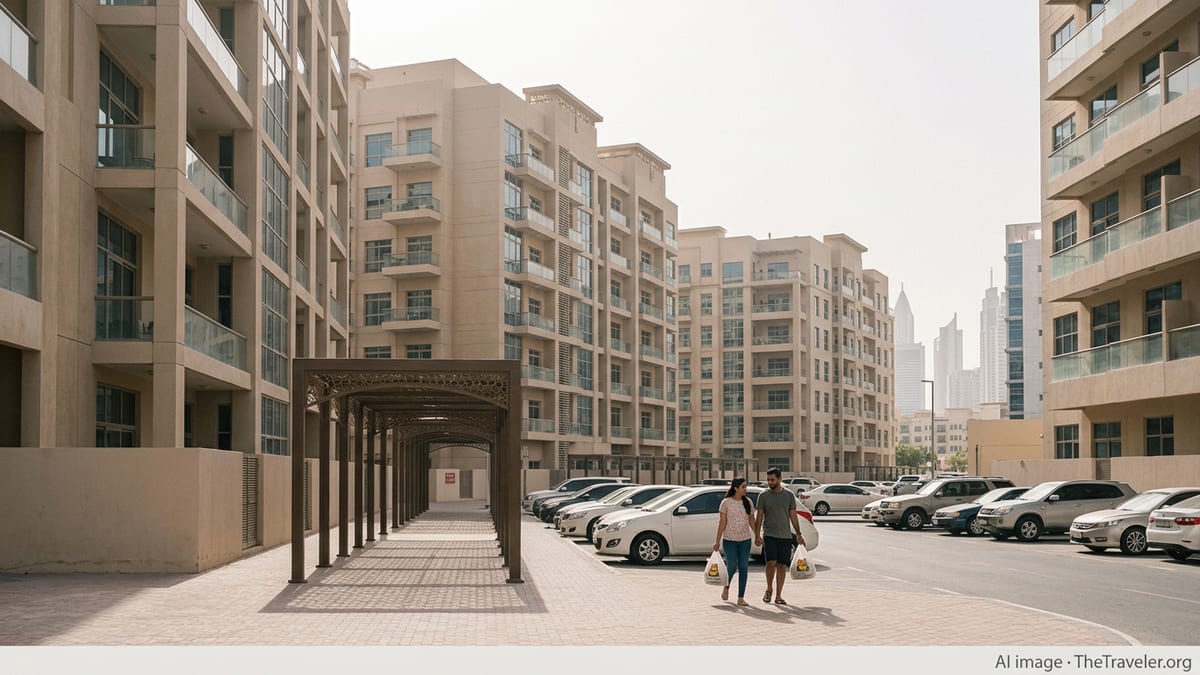
Framework: Key Cost Drivers for Couples in the UAE
For most couples relocating to the UAE, particularly to Dubai and Abu Dhabi, monthly living costs are shaped by a combination of housing, utilities, private transport or ride hailing, groceries, dining, telecoms and discretionary spending. While earnings are often tax free, headline salaries can give a misleading impression of purchasing power if these recurring expenses are not fully mapped out in advance.
Housing tends to be the single largest cost component, even when employers provide a housing allowance rather than direct accommodation. Transport can also become a significant line item for couples who rely on private cars or daily ride hailing rather than the metro or buses. Everyday services such as mobile data, home internet and domestic help are widely used by expatriate couples and should be explicitly built into budget assumptions.
Costs in the UAE vary meaningfully by emirate and by neighborhood. Central, expatriate oriented areas in Dubai and Abu Dhabi typically command higher prices for rent, groceries and dining than more peripheral areas or smaller emirates such as Sharjah or Ajman. The budget scenarios in this report assume a couple living in a mainstream expatriate district of Dubai or Abu Dhabi, which is where most corporate relocations are concentrated.
Figures below use approximate ranges based on recent market data converted to US dollars for comparability. Actual costs will vary depending on lifestyle, housing choices, employer benefits and currency movements.
Housing and Utilities: Core Monthly Commitments
Housing for a couple in the UAE generally means a one bedroom or small two bedroom apartment in an expatriate friendly neighborhood. Rents are often quoted annually and paid in one to four cheques, but the financial impact is best understood as a monthly equivalent. Broadly, a one bedroom apartment in a central district of Dubai or Abu Dhabi commonly sits in the mid four figures in US dollar terms per month, while a similar property in a less central area will be notably lower.
For a conservative but livable option, a couple might target a one bedroom apartment in a non waterfront, non luxury building in a secondary but still well connected area. The monthly rent equivalent for this type of unit typically sits in the lower part of the mid range for major global cities. A mid range couple that prioritizes a modern building with amenities such as a pool and gym in a more central or popular expatriate area should expect to move toward the middle of that spectrum, while those seeking larger space or premium locations can quickly move into a distinctly higher tier.
Utilities for a couple, including electricity, water, cooling and basic refuse charges, tend to be moderate by international standards but can rise in the hottest months when air conditioning runs continuously. A typical monthly utility bill for a one bedroom apartment will generally sit in the low to mid hundreds of US dollars, while a two bedroom apartment may cost more, depending on air conditioning usage and building efficiency. Internet for the home, usually via a bundled fiber or broadband package, tends to add another moderate fixed cost each month.
Some employers provide either company housing or a housing allowance that covers part or all of rent. Couples evaluating offers should treat rent and utilities as non negotiable baseline costs and assess whether the proposed compensation adequately absorbs these, especially given that rent inflation in popular neighborhoods can be material over time.
Food, Groceries and Dining Out
Food costs for a couple in the UAE are driven by the mix of home cooking versus dining out, type of supermarket used and the extent to which imported brands are preferred. Large hypermarkets and discount oriented chains offer lower prices for staples, while premium supermarkets and specialty stores that cater to expatriate tastes command higher margins, especially on imported fresh items and branded packaged goods.
A couple that cooks most meals at home, shops primarily at mid market supermarkets and uses local or regional brands can often manage a monthly grocery budget in the mid hundreds of US dollars. This assumes a standard diet without extensive premium items, frequent alcohol purchases or specialty dietary products. Couples that prefer international brands, organic products and imported fresh produce should anticipate grocery spending that trends toward the higher end of the mid hundreds or into the low thousands of dollars per month.
Dining out is widely available at all price points, from low cost cafeterias to high end restaurants in hotels and malls. A modest pattern of eating out, such as one or two inexpensive restaurant meals per week plus occasional mid range outings, may add a few hundred dollars per month to a couple's budget. A more restaurant centric lifestyle with frequent mid range dinners and occasional fine dining can easily double that figure.
Alcohol is heavily taxed and mainly available in licensed venues and specialist stores, which can significantly elevate bills in restaurants and bars. Couples who consume alcohol regularly in social situations should incorporate this into discretionary spending assumptions, as it can be a material cost driver relative to non alcoholic dining.
Transport and Mobility Costs
Transport patterns for couples in the UAE vary sharply depending on location and lifestyle. In central parts of Dubai, the metro and tram network can cover many routine commutes and weekend trips, supplemented by taxis and ride hailing. In Abu Dhabi and other emirates, private vehicles and ride hailing services are more central to everyday mobility.
For couples relying primarily on public transport, monthly costs can be modest. Regular use of metro and buses with top up cards typically remains in the low hundreds of dollars per month for two people, even when supplemented with occasional taxis. This scenario fits couples who live and work along major public transport corridors and who are comfortable planning around metro and bus schedules.
Car ownership introduces a different cost structure. While fuel is comparatively affordable by global standards, upfront vehicle purchase or lease payments, comprehensive insurance, parking and periodic servicing and registration add up. A couple running a modestly priced car might expect their total monthly transport costs, including fuel and maintenance set aside, to sit somewhere in the mid hundreds of dollars range, with higher figures for new or premium vehicles. Heavy reliance on ride hailing instead of car ownership can produce similar or higher monthly costs depending on usage intensity and distance.
Parking in residential buildings is often included for at least one vehicle, but paid parking in business districts, malls and central areas can incrementally add to monthly outlays. Couples should model transport according to realistic commute patterns and weekend activities rather than idealized minimal use, especially in hotter months when walking outdoors is less feasible.
Telecoms, Digital Services and Domestic Help
Telecommunications in the UAE are provided by a small number of operators and are priced at a premium relative to many Western markets. Most couples will require at least two mobile lines with data and a home internet connection. A typical mobile postpaid plan with sufficient data and minutes for regular use often lands in the mid double digits in US dollars per line per month, while home internet service tends to sit in the low to mid hundreds of dollars depending on speed and bundled services.
Digital subscriptions such as streaming platforms, cloud storage and other online services are widely used by expatriates and can add another modest recurring amount to the monthly budget if several platforms are maintained simultaneously. Although individually small, these charges are predictable and should be aggregated in detailed planning.
Many couples in the UAE also make use of domestic help, either on a part time basis for cleaning or, less commonly for couples without children, as live in staff. Part time cleaning services, arranged weekly or biweekly through agencies, can cost the equivalent of a low to mid three figure sum per month depending on frequency and hours. Live in domestic staff involve higher total costs once salary, government fees, accommodation and other obligations are considered, and are more common among larger households.
Couples weighing domestic help should factor in not only monthly cash costs but also initial setup expenses and ongoing compliance requirements. From a budgeting perspective, domestic help is discretionary but often becomes normalized in expatriate districts, so planning ahead avoids surprises later.
Scenario Based Monthly Budgets for a Couple
To translate these components into decision grade figures, it is useful to consider three stylized scenarios for a couple living in an expatriate area of Dubai or Abu Dhabi. The ranges below are indicative and expressed in US dollars, focusing on recurring monthly expenses. They exclude major one off costs such as relocation, school fees, healthcare emergencies and annual travel, which should be modeled separately.
In a basic but comfortable scenario, a couple rents a modest one bedroom apartment in a non premium area, uses public transport plus occasional taxis, cooks at home most of the time and limits dining out and paid entertainment. In this case, a combined monthly budget in the approximate range of 2,500 to 3,500 dollars is broadly plausible. Within this, housing and utilities typically account for around half of total spending, with the remainder split between groceries, transport, telecoms and limited discretionary items.
In a mid range expatriate lifestyle scenario, the couple rents a good quality one bedroom or compact two bedroom apartment in a popular area, perhaps owns a modest car, dines out several times per month at mid range venues and maintains several digital subscriptions. Under these assumptions, total monthly living costs more commonly sit in the region of 3,500 to 5,500 dollars, again with housing as the dominant component. This is broadly representative of many dual income professional couples in the main cities.
In a comfortable or premium scenario, with a larger or more centrally located apartment, frequent private car use or ride hailing, regular dining in mid to high end establishments and occasional domestic help, monthly expenses can move into the 5,500 to 7,500 dollar band or higher. Couples considering this level of lifestyle should ensure that total compensation, including any housing or transport allowances, leaves sufficient savings margin after these recurring outlays.
Cost Volatility, Hidden Items and Planning Considerations
Beyond headline items, couples relocating to the UAE should be aware of cost volatility and less obvious monthly charges that influence overall affordability. Rental markets in prime districts can experience periods of rapid rent increases, and renewal negotiations may reset monthly equivalents significantly higher than initial contracts. Energy and water tariffs may also adjust over time, affecting utility bills, especially for larger or less efficient apartments.
Some costs are paid annually but effectively represent monthly obligations when averaged across the year. Examples include vehicle registration and insurance, certain service charges, and periodic maintenance for privately owned vehicles. Incorporating a monthly provision for these annual or semiannual costs provides a more accurate view of true living expenses.
Imported consumer goods, branded clothing and electronics are widely available but can be more expensive than in some origin countries. While these are not strictly monthly necessities, many couples find that ad hoc shopping, household purchases and small electronics upgrades become a recurring background cost. Similarly, social expectations within expatriate networks around dining out and weekend activities can exert upward pressure on discretionary spending.
When assessing a relocation package, couples are advised to stress test budgets against less conservative assumptions: higher rent upon renewal, increased dining out as social networks grow and occasional higher transport usage in peak summer periods. This approach reduces the risk that an initially adequate salary becomes tight once real life patterns settle.
The Takeaway
The cost of living in the UAE for a couple spans a broad spectrum depending mainly on housing choices and lifestyle intensity. A frugal but still reasonable standard of living in a major emirate is possible on a monthly budget in the mid two to low three thousand dollar range, but this entails disciplined housing selection, extensive home cooking and careful control of discretionary spending. More typical expatriate couple lifestyles in Dubai and Abu Dhabi tend to cluster in the mid three to mid five thousand dollar range per month once realistic rent, utilities, transport, food, telecoms and modest leisure activities are incorporated.
For couples negotiating international assignments or considering independent moves, the key is to translate broad salary figures into concrete line item budgets and to benchmark those against preferred lifestyle scenarios. Housing, in particular, should be assessed at realistic current market levels for the desired neighborhoods rather than legacy or advertised low end figures. Taking a structured, data informed view of monthly costs before relocating improves the ability to negotiate appropriate allowances, avoid underestimation and make a clear judgment on whether life in the UAE is financially sustainable over the medium term.
FAQ
Q1. What is a realistic minimum monthly budget for a couple in the UAE?
A couple living modestly in a non premium area, using mostly public transport and cooking at home, can often operate on roughly 2,500 to 3,500 US dollars per month, with housing as the largest element.
Q2. How much of a couple's budget typically goes to rent in the UAE?
Rent and basic utilities commonly absorb around 40 to 60 percent of a couple's monthly budget in major cities, depending on apartment size, location and whether an employer provides a housing allowance.
Q3. Are groceries in the UAE more expensive than in Europe or North America?
Basic staples can be comparable, but reliance on imported brands and premium supermarkets can push grocery costs above those in many European or North American cities, especially for fresh produce and specialty items.
Q4. Is it cheaper for a couple to own a car or rely on public transport and taxis?
For couples living and working near Dubai's metro, public transport plus taxis can be cost effective. In more car dependent areas, a modest vehicle often becomes comparable in cost to frequent ride hailing, particularly for longer commutes.
Q5. How much should a couple budget for utilities and internet each month?
A typical one bedroom or small two bedroom apartment will often incur utilities in the low to mid hundreds of dollars per month, with home internet adding another moderate fixed charge, depending on speed and provider.
Q6. Do most couples in the UAE hire domestic help, and what does it cost?
Many couples use part time cleaning services, commonly costing a low to mid three figure amount per month. Live in staff are less typical for couples without children and involve significantly higher total costs.
Q7. How much can dining out add to a couple's monthly budget?
Occasional low cost restaurant visits may add a few hundred dollars per month, while frequent mid range and high end dining, especially with alcohol, can substantially increase total living costs.
Q8. How volatile are living costs for couples in the UAE over time?
The main area of volatility is rent, which can rise notably at renewal in popular districts. Other costs such as utilities, transport and groceries typically move more gradually but can still trend upward.
Q9. Should couples expect extra monthly costs that are not immediately obvious?
Yes. Annual vehicle costs, ad hoc household purchases, social activities and digital subscriptions can cumulatively add a meaningful amount each month beyond core items like rent and food.
Q10. How should a couple evaluate whether a UAE salary is sufficient for their lifestyle?
Couples should build a line item budget using realistic local cost ranges, test it against conservative and more generous lifestyle scenarios, and ensure that the proposed salary or package still allows for savings after covering all recurring expenses.