


More news on this day
Traffic on Interstate 205 near Northeast Airport Way slowed to a crawl after a series of crashes and stalled vehicles disrupted the key approach to Portland International Airport, creating delays for commuters and air travelers alike.
Get the latest news straight to your inbox!
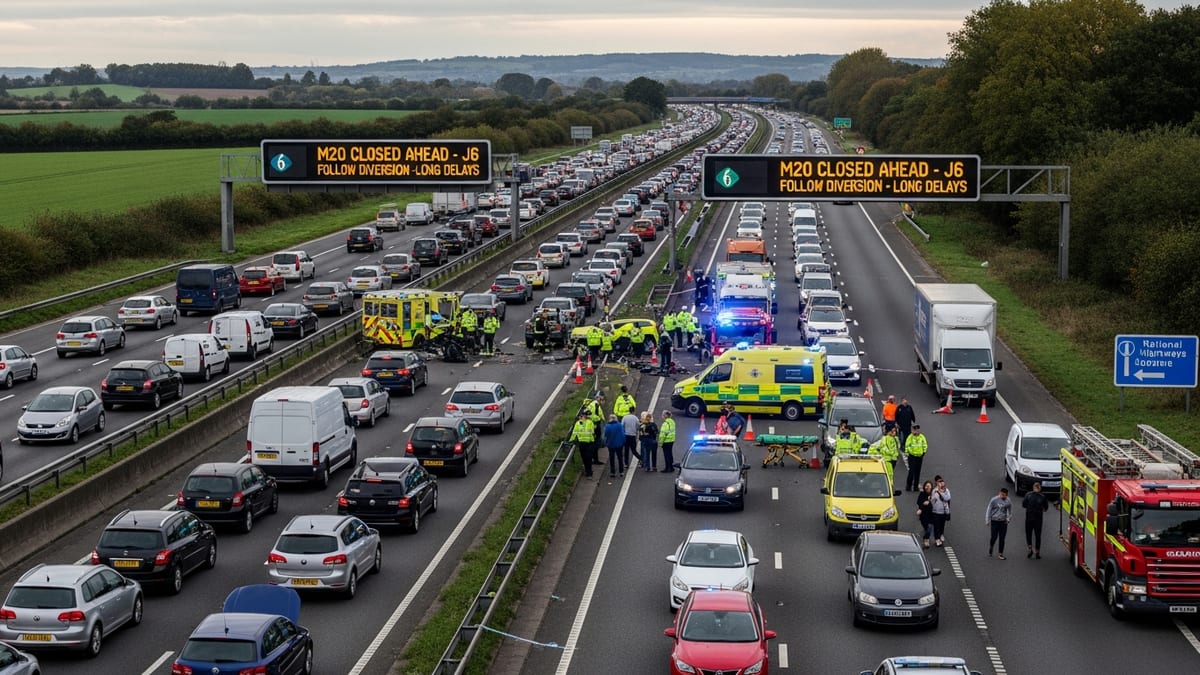
Key Portland Airport Approach Severely Congested
Publicly available traffic information for the Portland area indicates that crashes and disabled vehicles near the Interstate 205 interchange with Northeast Airport Way caused extended congestion on Tuesday morning. The affected stretch, just south of the Glenn Jackson Bridge over the Columbia River, is one of the primary highway routes serving Portland International Airport and surrounding freight and logistics hubs.
Camera images and regional traffic reports showed traffic in the southbound lanes of I-205 moving slowly or stopping entirely through the airport access zone for portions of the morning peak. Vehicles attempting to reach airport terminals from the freeway and from Airport Way itself encountered significant backups, with some queues stretching toward the bridge and adjacent industrial areas.
The disruption occurred along a corridor already known for heavy commuter volumes and complex weaving patterns between ramps. Even minor incidents in this area can quickly ripple outward, affecting both cross-river travel between Oregon and Washington and access to cargo and distribution facilities clustered along Airport Way.
Chain-Reaction Backups for Commuters and Airport Travelers
Traffic-mapping services showed long southbound delays on I-205 in the vicinity of mileposts near the Airport Way interchange, with speeds dropping well below typical peak-hour levels. Drivers reported extended travel times as they approached the airport corridor, and some attempted to divert to earlier exits or alternative crossings over the Columbia River.
Congestion did not remain confined to the freeway lanes. As vehicles sought alternate routes, Airport Way itself experienced slowdowns in both directions, particularly at intersections that connect to local hotel clusters, rental car facilities and airport-support businesses. The added volume led to longer-than-usual wait times at traffic signals and increased pressure on secondary arterials that were never designed to carry sustained freeway-level demand.
Travelers heading to Portland International Airport for departing flights faced the risk of missing check-in or security windows if they had not planned extra time. Local travel advisories and common guidance from regional agencies generally recommend that airport-bound drivers monitor live traffic conditions and allow additional time whenever I-205 near Airport Way experiences crashes or lane-blocking incidents.
Freight and Regional Mobility Also Affected
The I-205 and Airport Way interchange area is a critical node for freight movement in the Portland region. Airport Way serves not only the passenger terminals, but also a concentration of air cargo facilities, warehouses, and distribution centers that depend on reliable freeway access for just-in-time deliveries.
When crashes reduce lane capacity on I-205, trucks heading to or from these facilities can be delayed, affecting delivery windows and potentially adding costs for carriers and shippers. Even short-lived lane closures can create queues of heavy vehicles that take time to dissipate once normal traffic flow resumes.
Regional transportation planning documents have long identified the I-205 and Airport Way connection as a congestion hot spot where high traffic volumes, freight activity and airport access demands intersect. The latest incidents highlight how vulnerable this corridor remains to sudden disruptions, particularly during busy commuting periods or times of elevated airport travel.
Ongoing Safety Concerns Along the I-205 Corridor
Crash and delay patterns on I-205 near Airport Way are consistent with broader safety and congestion challenges documented along the corridor. Previous technical studies of I-205 have noted that the combination of high traffic volumes, multiple on- and off-ramps in close succession, and frequent lane changes contributes to elevated crash risk at several locations.
Near Airport Way, southbound drivers must navigate lane shifts associated with the airport exit, while northbound traffic approaching the Glenn Jackson Bridge often encounters speed differentials between through traffic and vehicles entering or exiting for local connections. Sudden braking in these transition zones can increase the likelihood of rear-end collisions and secondary incidents.
Transportation analysis for the broader Columbia corridor has also pointed to the sensitivity of I-205 to even minor incidents. A stalled vehicle in a single lane, for example, can sharply reduce capacity and trigger multi-mile queues during peak periods, especially when traffic is already operating close to the roadway’s practical limits.
Guidance for Drivers During Disruptions
When crashes and stalled vehicles affect I-205 near Northeast Airport Way, publicly available guidance typically encourages drivers to check real-time traffic tools and regional highway information services before setting out. During periods of significant disruption, delays of 20 minutes or more are possible for southbound traffic approaching the airport access area.
For airport-bound travelers, transportation agencies and travel resources commonly advise leaving earlier than usual and considering alternative routes, such as using other river crossings or approaching the airport via surface streets where appropriate. However, many nearby arterials are already busy during rush hour, so diversions can shift congestion rather than eliminate it.
Motorists already on I-205 are generally urged by public safety messaging to remain in their lanes, avoid abrupt last-minute merges and maintain safe following distances when traffic is slowing unexpectedly. Crashes in the Airport Way segment of the freeway often arise in stop-and-go conditions, where even small misjudgments in speed or spacing can lead to secondary collisions and lengthen the overall disruption.