


More news on this day
Newly released information from Crawford County and local agencies is shedding light on the freight train derailment in Bucyrus, where a tipped tanker and hazardous materials concerns prompted overnight evacuations and travel disruptions across the north-central Ohio community.
Get the latest news straight to your inbox!
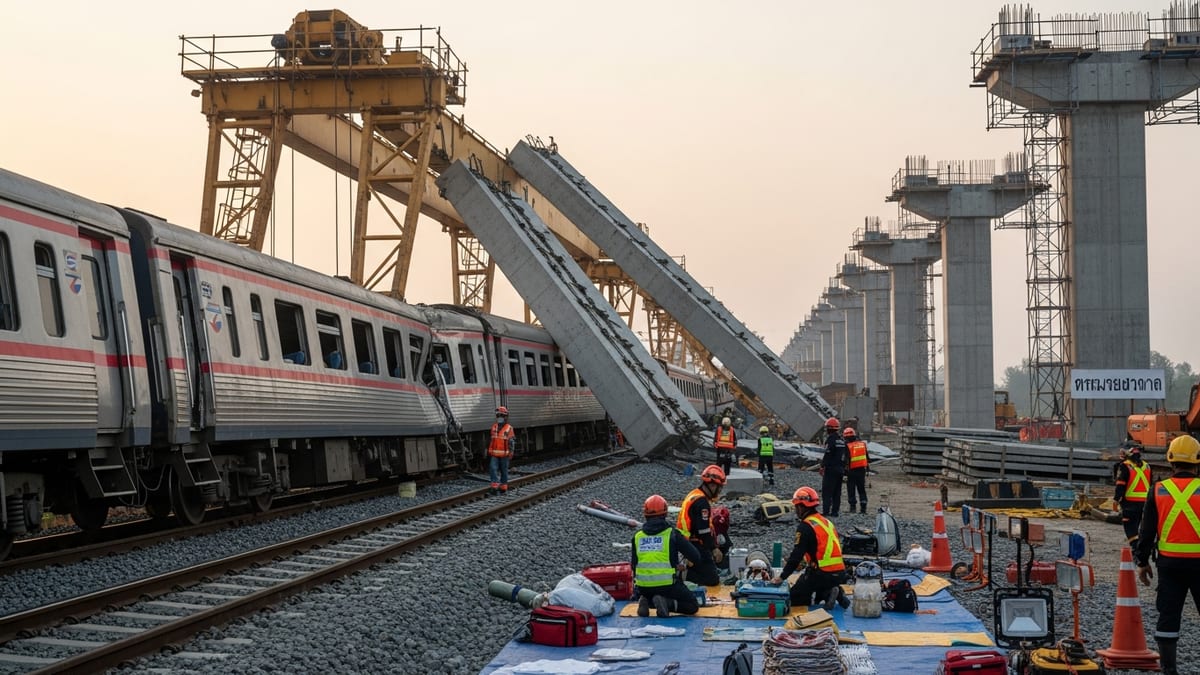
Updated picture of the derailment and response
Publicly available information shows that the derailment occurred on Sunday evening, July 5, at the Whetstone Street railroad crossing in Bucyrus, a small city west of Mansfield along a busy regional rail corridor. Reports indicate that a Norfolk Southern freight train left the tracks near the intersection with Auto Avenue, sending several cars off the rails and tipping at least one tanker car.
Regional and local coverage indicates that six railcars derailed, including at least one tanker believed to be carrying hydrochloric acid, a corrosive substance widely used in manufacturing and water treatment. Early concern about a possible leak led responders to treat the scene as a hazardous materials incident while they assessed whether any contents had escaped.
According to multiple outlets, there were no immediate reports of serious injuries linked to the derailment. Images published by local news organizations show freight cars on their sides, damaged wheelsets and signal equipment, and heavy machinery moving into position to begin rerailing and removal work.
Information shared through county alert channels describes a multiagency response involving fire, police, emergency management and specialized hazmat teams, as well as railroad personnel brought in to stabilize the derailed consist and evaluate any risks from the tanker car.
Evacuation zone narrows as risk reassessed
Initial alerts late Sunday instructed residents within roughly a quarter-mile radius of the derailment site to leave their homes as a precaution, given the possibility of a hydrochloric acid release and the potential for vapors to cause breathing difficulties or irritate eyes and skin. The evacuation area covered portions of residential streets around Whetstone Street and nearby blocks that straddle a transition zone of homes, light industry and commercial properties.
By Monday morning, updated briefings described in local coverage indicated that the evacuation footprint had begun to narrow as inspectors gained more clarity about the integrity of the tanker and other derailed cars. Reports from Crawford County-focused outlets state that, at that time, there were no active leaks detected from the railcars, easing fears of an airborne chemical plume.
Despite the more favorable assessments, officials kept a safety perimeter in place closest to the tracks while heavy equipment operated and crews worked around pressurized tanks. Residents just outside the reduced evacuation zone were advised to stay indoors, monitor county alert systems and avoid unnecessary travel near the site while rail and roadway access remained limited.
Public statements summarized in media accounts emphasize that the evacuation decisions were framed as precautionary steps guided by standard hazmat protocols and evolving on-scene measurements, rather than evidence of an ongoing large-scale release.
Traffic, travel and rail operations affected
The derailment has had a visible impact on local mobility, particularly for drivers who rely on Whetstone Street to cross the tracks or connect to other east-west routes through Bucyrus. Crawford County news outlets report that Whetstone Street is expected to remain closed for an extended period while crews clear the wreckage, inspect the track structure and repair damaged infrastructure.
Travelers passing through the region on parallel highways and local roads are being encouraged in public notices to use alternate routes and build in extra time, as detour traffic filters onto other crossings already affected by seasonal construction. Some coverage notes that the rail line through Bucyrus is part of a wider corridor used by both freight haulers and connecting passenger traffic elsewhere in the state, meaning temporary slow orders or reroutes could ripple through the timetable.
Rail activity around the immediate derailment site has been halted while the cleanup progresses, with railcars being separated, lifted and removed from the right-of-way. Once the line is cleared, track and signal inspections will determine how quickly normal rail speeds can resume, a step that will influence how long schedule adjustments persist.
For residents accustomed to frequent train movements through Bucyrus, the combination of silence on the line and heavy equipment noise from cranes and loaders is an unusual shift, underscoring how central the railroad remains to the city’s daily rhythms and economy.
What is known about the hazardous cargo
According to regional broadcast and print coverage, at least one of the derailed tank cars was loaded with hydrochloric acid. This chemical is commonly transported in specialized pressurized tank cars designed to limit the risk of catastrophic failure, even in a derailment. The concern in Bucyrus centered on whether that car had been compromised when it tipped, and whether any vapors or liquid had escaped.
Descriptions in media summaries indicate that detection equipment and visual inspections did not identify a significant leak during the early hours of the response. That finding, combined with wind conditions and the orientation of the railcars, allowed emergency planners to gradually tighten the evacuation area while still enforcing a cautious buffer closest to the tanker.
The Bucyrus incident comes amid heightened regional and national attention to hazardous materials shipments by rail, particularly in smaller communities located along busy freight lines. Publicly accessible federal data and recent safety reports show that corrosive substances and other industrial chemicals move routinely through Midwestern rail hubs, prompting periodic calls for strengthened tank car standards and additional monitoring of high-hazard routes.
For travelers and residents alike, the Bucyrus derailment serves as a reminder that routine freight movements can carry specialized cargo, and that emergency plans often must account for a range of chemical risks even when an incident ultimately results in limited environmental impact.
Next steps for cleanup and investigation
Cleanup operations in Bucyrus are expected to continue over the coming days, as wrecked cars are removed and crews work to restore both rail service and normal traffic patterns on surrounding roads. Local reports note that Whetstone Street could remain closed into midweek while the crossing is rebuilt and nearby utilities and signals are checked for damage.
Norfolk Southern personnel and contracted specialists are managing the technical aspects of rerailing and debris removal, while county and city agencies coordinate detours, public messaging and any remaining shelter or support services for displaced residents. According to published coverage, monitoring of air quality and surface conditions near the derailment site will continue until emergency managers are satisfied that no delayed releases or secondary issues have occurred.
The cause of the derailment remains under review. It is customary in such events for railroad investigators, federal regulators and, in some cases, the National Transportation Safety Board to examine track conditions, train handling, equipment performance and recent maintenance records. Findings from that process can take months to finalize but often inform future safety recommendations that affect communities along similar rail corridors.
As Bucyrus works through the immediate disruption, transportation observers point out that the incident adds to a growing list of freight derailments under scrutiny in 2026, reinforcing ongoing debates about rail infrastructure investment, hazardous materials routing and the balance between freight efficiency and local safety in smaller cities that sit at the crossroads of major lines.