

More news on this day
Melilla, Spain’s North African enclave on the shores of the Western Mediterranean, is accelerating its push into cruise tourism as port authorities advance plans for a new cruise terminal and dedicated berth designed to bring larger vessels and higher passenger volumes to the city from 2027 onward.
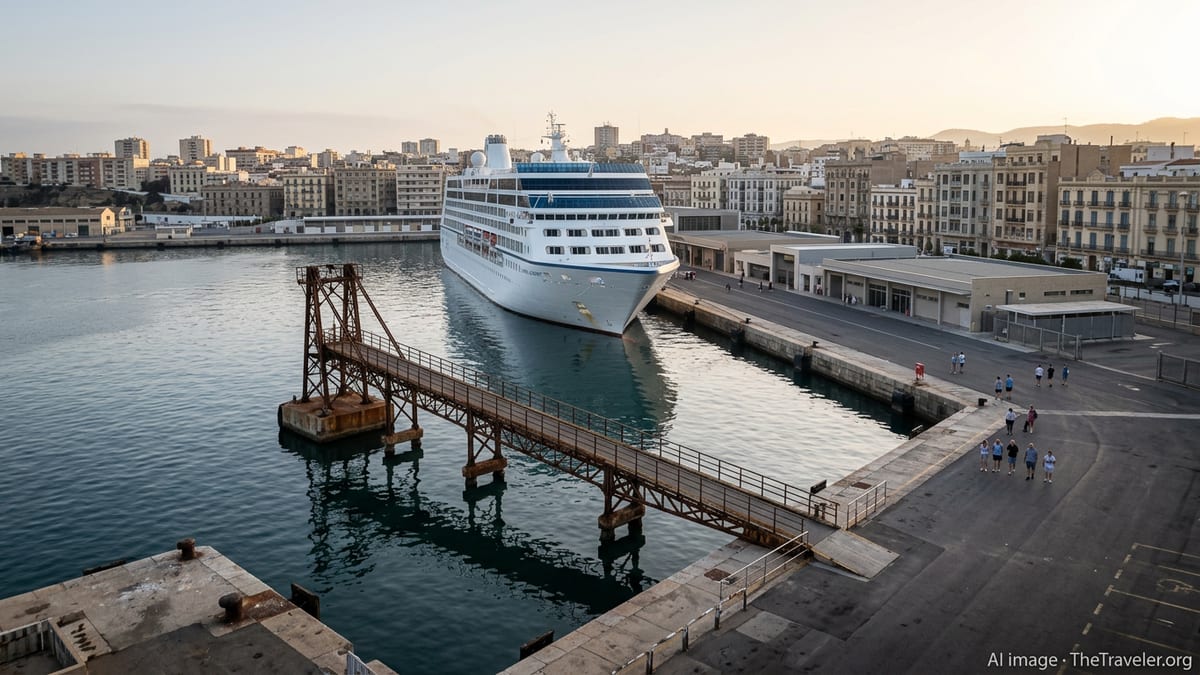
Port Investment Signals Strategic Cruise Pivot
The Port Authority of Melilla has confirmed that the city is moving ahead with a purpose built cruise terminal and associated infrastructure, positioning the enclave as a new stop on Western Mediterranean itineraries. The project, backed by the regional government, includes a concession area of roughly 1,500 square meters for a terminal building, alongside refurbished commercial premises in the marina and improved passenger control facilities near the historic mineral loading jetty.
Officials describe the works as the first phase of a broader redevelopment plan that will culminate in a new cruise berth capable of accommodating ships up to about 400 meters in length. Technical design work for this larger pier is scheduled to be completed in 2025, with construction then expected to take around a year and a half. The objective is to move beyond ad hoc calls by small and mid sized vessels and offer a dedicated infrastructure package that meets the requirements of mainstream international lines.
In parallel, the disused mineral loading structure, a protected landmark on Melilla’s waterfront, is being repurposed as a symbolic gateway for cruise visitors. While the full length cruise berth is under development, the historic jetty will function as a key arrival point, giving passengers immediate access to the city and its modernist architecture while helping to brand Melilla as a distinctive port of call.
Traffic Targets and Emerging Itinerary Interest
Local authorities have set an ambition to reach about 150,000 cruise passengers a year by 2030, a sharp increase from the roughly 9,000 visitors received on a dozen ship calls in the most recent full season. That target underpins the investment case for both the terminal and the long cruise berth, and reflects growing interest from cruise brands looking to diversify Western Mediterranean routes beyond the traditional hubs of Barcelona, Palma and Civitavecchia.
The Port Authority has highlighted that discussions with cruise operators intensified after Melilla presented its plans at a major European cruise trade fair in Málaga. Since then, the city has been working closely with Mexican group ITM and its subsidiary MDT, a company specializing in developing and marketing cruise destinations. The partnership is designed to position Melilla not merely as a technical port call, but as a fully fledged destination that can be integrated into itineraries serving Spain, France, Italy and North Africa.
Early projections shared by local officials suggest that from 2027 and especially into 2028, several lines could begin scheduling regular calls, using Melilla as a niche cultural and geopolitical highlight within Western Mediterranean cruises. This would build on the positive feedback from recent test calls such as that of the Azamara Quest, whose predominantly long haul clientele were seen as a good fit for the enclave’s mix of Spanish, North African and modernist urban heritage.
Western Mediterranean Cruise Map Shifts South
Melilla’s cruise strategy is unfolding as the wider Western Mediterranean market undergoes a period of adjustment. Established ports including Barcelona and Palma de Mallorca are debating or implementing caps on cruise traffic in response to concerns over congestion and environmental impact. At the same time, emerging North African and smaller Spanish ports are trying to capture a share of the region’s still growing cruise demand.
Industry analysts note that the rise of ports such as Nador West Med and the continued expansion of Tanger Med in Morocco have added fresh competitive pressure for cargo and ferry traffic in the Alboran Sea. In passenger terms, however, these developments also create opportunities for combined Europe North Africa itineraries that loop through enclaves like Melilla, Spanish mainland ports such as Motril and Almería, and Moroccan cities along the same coastline.
Recent itinerary announcements by major cruise groups for the 2027 Mediterranean season show a gradual increase in calls at North African destinations, including Tunisian and Moroccan ports. While Melilla is not yet a headline stop in those programs, port executives argue that its location at the intersection of European and African routes gives it a natural role as a boutique port of call, especially for lines seeking less saturated destinations with clear capacity for managed growth.
Destination Development and Onshore Readiness
Turning Melilla into a competitive cruise destination involves more than maritime infrastructure. The city’s tourism and urban planning departments are working with the Port Authority to shape the visitor experience from the quayside into the historic center and beach areas. Plans under discussion include enhanced signage, upgraded pedestrian routes, and curated shore excursion options that highlight Melilla’s modernist architecture, fortified waterfront and multicultural heritage.
Local businesses in the marina and adjacent districts are being encouraged to adapt their offerings to cruise passenger schedules, with a focus on gastronomy, crafts and short format cultural experiences. Authorities stress that they aim to promote what they describe as respectful, lower impact tourism that can help extend the season without overwhelming the compact urban fabric of the enclave.
Security and border formalities are another pillar of the project. As a Spanish and therefore European territory on the African coast, Melilla must ensure that passport control and customs procedures for international cruise calls are handled efficiently. The planned passenger control building near the cruise terminal is meant to streamline these flows, allowing day visitors to maximize their time ashore while maintaining the city’s regulatory obligations as an external border of the European Union.
Balancing Growth, Sustainability and Regional Competition
As Melilla looks to scale up cruise arrivals, questions of environmental performance and long term sustainability are moving up the agenda. The Port Authority has begun adding solar capacity at its headquarters and is aligning the cruise berth project with broader decarbonization initiatives taking shape across Spanish ports, including the gradual roll out of shore power for ships and tighter controls on emissions and underwater noise.
Officials in Melilla argue that starting from a relatively low tourism base allows the city to design its cruise offer with overtourism concerns in mind, learning from the experiences of larger Mediterranean destinations. With passenger caps and scheduling coordination now commonplace in ports such as Palma and Barcelona, the enclave is positioning itself as a complementary, less crowded stop that can absorb a portion of regional demand without the same level of local resistance.
At the same time, cruise tourism is being framed as one pillar of a broader economic diversification strategy in a territory that has long depended on public sector employment and cross border trade. By leveraging its unique geography and cultural mix, Melilla hopes to carve out a recognizable niche on the Western Mediterranean map, using the new cruise terminal and future long berth as catalysts for both visibility and investment in the years ahead.