


More news on this day
Travelers planning trips to Cyprus are facing new uncertainty after the high-speed FILOJET passenger ferry capsized off the northern coast near Kyrenia, killing eight people and leaving seventeen missing in one of the island’s worst recent maritime disasters.
Get the latest news straight to your inbox!
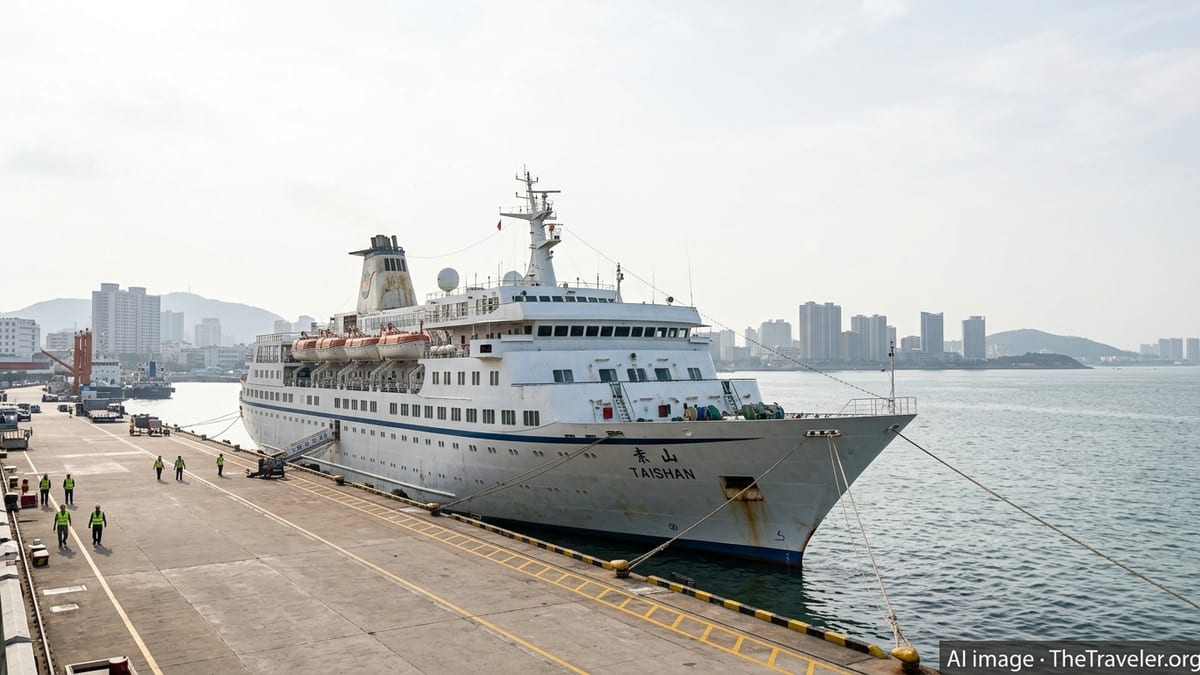
Deadly Capsize Off Kyrenia Prompts Safety Concerns
Publicly available reports indicate that the Turkish-flagged FILOJET catamaran, operated by Filo Denizcilik, departed the port of Kyrenia at around midday on Sunday, August 30, bound for Taşucu in Türkiye’s Mersin province with roughly 267 people on board. The vessel reportedly began taking on water shortly after leaving port and later overturned in waters estimated at more than 500 meters deep, complicating recovery efforts and reducing the chances of locating survivors inside the hull.
Initial figures from Turkish Cypriot announcements and regional media described a chaotic scene in which passengers clung to the upturned hull as rescue vessels and aircraft converged on the site north of Kyrenia. Coverage from local outlets such as Politis and Cyprus Inform indicates that at least eight people have been confirmed dead, while seventeen remain unaccounted for, with more than 240 survivors pulled from the sea and from life rafts.
International news agencies and regional broadcasters describe the incident as the most serious passenger-shipping disaster involving a scheduled ferry service around Cyprus in recent years. The scale of the search-and-rescue mobilization, which has included Turkish naval assets and offers of assistance from the Republic of Cyprus, underlines how abruptly a short, familiar coastal crossing turned into a mass-casualty emergency.
Weather conditions remain part of the early discussion. Reports from Channel NewsAsia and other outlets note that the island had experienced strong storms the previous day, though maritime officials cited in those reports indicated that conditions at the time of departure on Sunday were regarded as acceptable for the crossing. The exact technical cause of the flooding and capsize has not yet been determined.
Investigations Focus on Vessel Condition and Crew Actions
As the death toll stabilized at eight and the number of missing narrowed toward seventeen, attention in Cypriot and Turkish-language coverage shifted to the condition of the vessel and decisions made before and during the voyage. Reporting compiled by Cyprus Inform, El País and other outlets states that the captain and seven members of the FILOJET crew have been detained as part of a formal investigation into potential negligence and safety failings.
Passengers’ accounts collected in regional media describe a ferry that appeared to be taking on water soon after departure, with some travelers reportedly urging crew to turn back. Italian and Cypriot news reports, including detailed reconstructions in Corriere della Sera and Politis, recount claims that the vessel continued on its route until a sudden structural failure or shift in stability caused it to roll over, throwing many passengers into the sea without life jackets.
Analysis pieces and maritime incident summaries circulating in specialist forums and local news sites emphasize that the catamaran-type FILOJET had been operating regularly on the Kyrenia–Taşucu route, a popular corridor for Turkish tourists and local residents. Technical records cited in several outlets list the vessel at around 40 meters in length and 10 meters in beam, designed as a high-speed passenger craft rather than a conventional car ferry.
Authorities in the self-declared Turkish Republic of Northern Cyprus have launched an administrative and criminal inquiry into the disaster, while Türkiye’s maritime regulators are also expected to examine certification, maintenance history and compliance with international safety conventions. Commentators in Cypriot media suggest that investigators are likely to focus on watertight integrity, loading, speed decisions in residual swell, and the availability and distribution of life-saving appliances on board.
Travel Advisories and Ferry Operations Under Review
In the immediate aftermath of the capsize, regional tourism and transport stakeholders began reassessing the reliability and risk profile of short-sea crossings in the eastern Mediterranean. Travel-industry coverage, including a same-day briefing by TravelDailyNews International, highlights that several tour operators and cruise lines are monitoring updates closely, particularly for itineraries that rely on independent ferry segments between Cyprus and southern Türkiye.
Updated advisories circulated through consular channels and online travel-alert platforms are drawing attention to potential disruptions on the Kyrenia–Taşucu route and to heightened inspections of similar fast ferries in the region. While most formal advisories stop short of blanket warnings against travel to Cyprus, they urge passengers to check the status of specific sailings, anticipate schedule changes, and remain attentive to safety briefings and posted capacity limits on any coastal vessel.
Within Cyprus, published commentary points to a likely tightening of port-state control checks for high-speed craft, including more rigorous review of stability documentation, emergency drills and life-raft capacity before vessels are cleared to depart. Travel-risk analysts cited in industry reporting also anticipate a short-term dip in demand for ferry crossings linked to Kyrenia as images of the overturned hull and nighttime rescue operations circulate globally.
For the broader tourism economy, which relies heavily on seamless connectivity between air, sea and land transport, the incident raises questions about contingency planning. Travel-news outlets are advising visitors to build additional buffers into travel plans, especially when same-day ferry connections are required to meet flights or organized tours, and to consider refundable tickets or flexible booking options while investigations unfold.
Impact on Cyprus Tourism and Traveler Confidence
The FILOJET disaster comes at a sensitive time for the island’s visitor economy, which has been working to consolidate a recovery in arrivals from Europe and the Middle East. Northern coastal destinations such as Kyrenia market themselves heavily on their harborfront promenades and day-trip excursions by sea, making any perception of maritime risk particularly significant for local businesses.
Business owners interviewed in local-language media and quoted by regional outlets describe cancellations and inquiries from foreign guests in the hours after international coverage of the capsize broke. Although hotel and resort operations across the island remain fully open, travel analysts note that ferry-linked excursions may face short-term pressure as travelers reassess optional boat trips, harbor cruises and regional crossings until more is known about the causes of the sinking.
Public commentary in Cypriot and Turkish press also reflects a broader debate about safety culture in regional shipping. Opinion pieces point to earlier incidents across the Mediterranean in which overloading, maintenance gaps or lax enforcement contributed to tragedies at sea, and argue that restoring traveler confidence will require visible improvements in inspection regimes and transparent publication of investigation findings.
Despite the shock, tourism boards and destination marketers are emphasizing that air links, land transport and the majority of licensed coastal excursions continue to operate normally under established safety standards. However, travel-risk consultants suggest that responsible promotion of Cyprus in the coming weeks will need to acknowledge the tragedy, provide clear information about regulatory responses, and give visitors practical guidance on how to evaluate the safety of any maritime activity they choose to book.
Practical Guidance for Visitors Planning Trips to Cyprus
For travelers with upcoming itineraries that involve Cyprus and nearby Turkish ports, publicly available travel-advice pages recommend confirming all sea connections directly with operators or through reputable agents before departure. Given the ongoing investigation and search operations north of Kyrenia, there is potential for temporary route suspensions, re-routings, or capacity reductions on certain ferries.
Maritime safety organizations, consular services and travel insurers commonly advise passengers to take a proactive approach when boarding any ferry or excursion boat. That includes locating life jackets on embarkation, noting muster points and exits, and paying attention to any safety announcements or signage provided by crew. Travelers are also urged to respect official instructions about remaining seated in rougher conditions and to avoid overcrowded decks or railings, particularly on high-speed craft.
Travel-insurance specialists quoted in international reporting on the FILOJET case underline the importance of policies that cover missed connections, search-and-rescue costs and medical evacuation in the event of an incident at sea. Visitors booking multi-leg trips that combine flights, ferries and hotel stays may wish to review policy wording for maritime travel and ensure that contact details for emergency assistance providers are accessible offline.
Prospective visitors are further encouraged to monitor reputable news outlets and official travel-advisory portals for updates on the FILOJET investigation and any resulting regulatory changes. While authorities continue search efforts for the seventeen missing passengers and work to recover evidence from the wreck site, the disaster is expected to shape discussions around ferry safety and travel risk in Cyprus and the eastern Mediterranean for months to come.
Politis: Kyrenia Ferry Disaster Leaves Eight Dead, 17 Missing
Cyprus Inform: Kyrenia ferry disaster death toll rises to eight
Channel NewsAsia: Eight die, many more missing after ferry capsizes off North Cyprus
TravelDailyNews: Eight dead after FILOJET ferry capsizes off northern Cyprus