

More news on this day
King Fahd International Airport in Dammam remains open and operating, but travelers are being warned to expect delays and last minute changes as Middle East airspace tensions ripple across global flight schedules.
Get the latest news straight to your inbox!
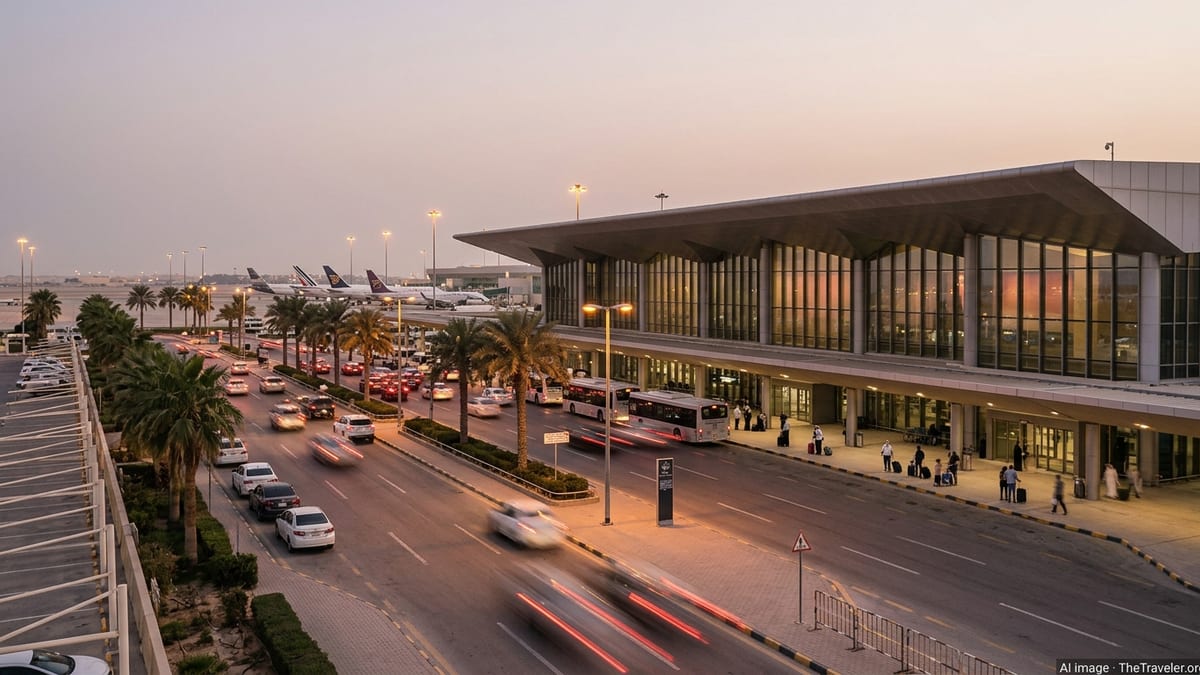
Dammam Stays Operational Amid Regional Flight Disruptions
While several Gulf airports have faced partial closures or severe capacity cuts in recent weeks, publicly available aviation and logistics updates indicate that King Fahd International Airport in Dammam continues to handle both domestic and selected international services. The airport has not been subject to the blanket shutdowns seen in neighboring hubs, but traffic flows have become more erratic as airlines rework routings around high risk airspace.
Industry bulletins monitoring the situation describe Saudi airports, including Dammam, as open but operating on a limited basis in light of the broader conflict-driven turbulence affecting the region. That status means flights are in principle able to arrive and depart, yet schedules remain vulnerable to operational pauses, extended ground times and evolving restrictions imposed by foreign governments and individual carriers.
Reports from passengers and aviation trackers suggest that Dammam has increasingly served as an alternative gateway for residents of nearby states where airspace is more heavily constrained. This diversion of demand has added pressure to an airport that is itself navigating a complex operating environment shaped by shifting military and security risk assessments.
Although no official closure has been declared for Dammam’s airspace, the airport is operating within a constantly changing patchwork of overflight permissions, airline risk policies and international advisories, all of which can translate into last minute disruption for travelers transiting the eastern coast of Saudi Arabia.
Middle East Airspace Tensions Reshape Routes and Risk Calculations
The current disruption traces back to an escalation of conflict involving Iran, Israel and the United States, which has triggered missile and drone activity across multiple Middle Eastern states. Published coverage from regional and international outlets shows that countries such as Qatar, Bahrain, Kuwait and Jordan have introduced partial or full airspace closures at various periods, with some restricting hours of operation or suspending most commercial traffic.
These restrictions have forced airlines and air navigation authorities to redraw standard corridors over the Gulf, Iraq and Iran. Some carriers have chosen to suspend flights to specific destinations altogether, while others have added substantial detours to avoid particular flight information regions. The result is a fragmented network in which an airport like Dammam can remain technically open, but still be heavily affected by the loss of nearby hubs and safe routings.
International risk advisories highlight that certain airspace segments above the Persian Gulf and Gulf of Oman are subject to heightened caution, particularly for operators registered in the United States and Europe. While these notices do not close Saudi airports, they influence which airlines continue to serve Dammam, how they route aircraft into and out of the region, and whether contingency alternates are required on every flight plan.
In parallel, regional logistics and shipping circulars point to a broader slowdown in passenger and cargo movements across the Gulf. With airspace in some states effectively off limits and others operating with reduced capacity, Dammam’s relative openness has made it a key node in a strained network, even as the airport must contend with the same safety and security considerations facing the wider aviation sector.
Knock On Effects for Airlines and Passenger Itineraries
Airlines are responding to the volatility with a mix of suspensions, consolidations and rerouting that directly affects travelers using Dammam. Some regional and international carriers have temporarily halted services to high risk destinations, including select Saudi cities, while maintaining limited frequencies on others. Others have shifted certain connections to alternative airports or reduced overall flight volumes to the Gulf to manage crew and fleet constraints.
Operational updates from logistics providers note that services to Dammam remain available but are often described as limited, with carriers warning of possible last minute changes. Schedule integrity has been further complicated by extended flight times on rerouted services, which can lead to crew duty time issues, rolling delays and missed connections even when Dammam’s runways and terminals themselves are fully functional.
Travel forums and passenger reports indicate that some travelers are deliberately routing through Dammam when flights from Qatar or Bahrain are curtailed, adding demand on peak departures. This can mean fuller flights, longer check in queues and increased pressure on baggage and security processes. Although airport operations staff are used to handling surges in traffic, the unpredictability of demand has made it harder for airlines and ground handlers to forecast volumes accurately.
For those connecting beyond the region, the disruption in Middle Eastern airspace has knock on effects on long haul journeys to Europe, North America, Asia and Africa. Rerouted flights can miss onward connections, forcing rebooking and overnight stays, particularly when airlines are operating with limited spare capacity. Travelers using Dammam as a gateway are being advised by airlines and travel companies to allow additional time and to prepare for potential itinerary changes at short notice.
What Travelers Using Dammam Need to Know Right Now
Available travel advisories consistently recommend that passengers treat the situation as fluid, even if their flight appears confirmed. Those flying from or through Dammam are being urged to monitor airline notifications closely on the day of travel, as departure times, routings and even operating carriers may change in response to evolving airspace constraints or security assessments elsewhere in the region.
Travel risk consultancies emphasize that while Saudi Arabia’s eastern airports, including Dammam, are currently operating, they are embedded within a high risk regional environment. Passengers should expect the possibility of extended airport dwell times, last minute gate changes, and occasional holding patterns in the air if traffic sequencing is affected by congestion at neighboring hubs or by temporary route closures.
For those planning new trips, booking flexible tickets and avoiding tight connections through the Gulf is being widely recommended. Travel providers suggest building in longer layovers, especially when itineraries involve multiple carriers or require overflight of currently sensitive areas. Travelers with time sensitive commitments are encouraged to consider contingency plans, such as alternative routings via Europe or South Asia, should the situation deteriorate.
Although the continued operation of Dammam’s King Fahd International Airport offers an important outlet for regional and international travel, the broader Middle East airspace picture remains unsettled. Until tensions ease and more predictable routing options return, passengers using the airport should approach their journey with flexibility, patience and an expectation that delays and deviations are a distinct possibility.