

More news on this day
Saudi Arabia’s King Fahd International Airport in Dammam remains open and handling passenger and cargo flights, but travelers are being warned to expect delays, diversions and disrupted connections as airspace tensions intensify across the wider Middle East.
Get the latest news straight to your inbox!
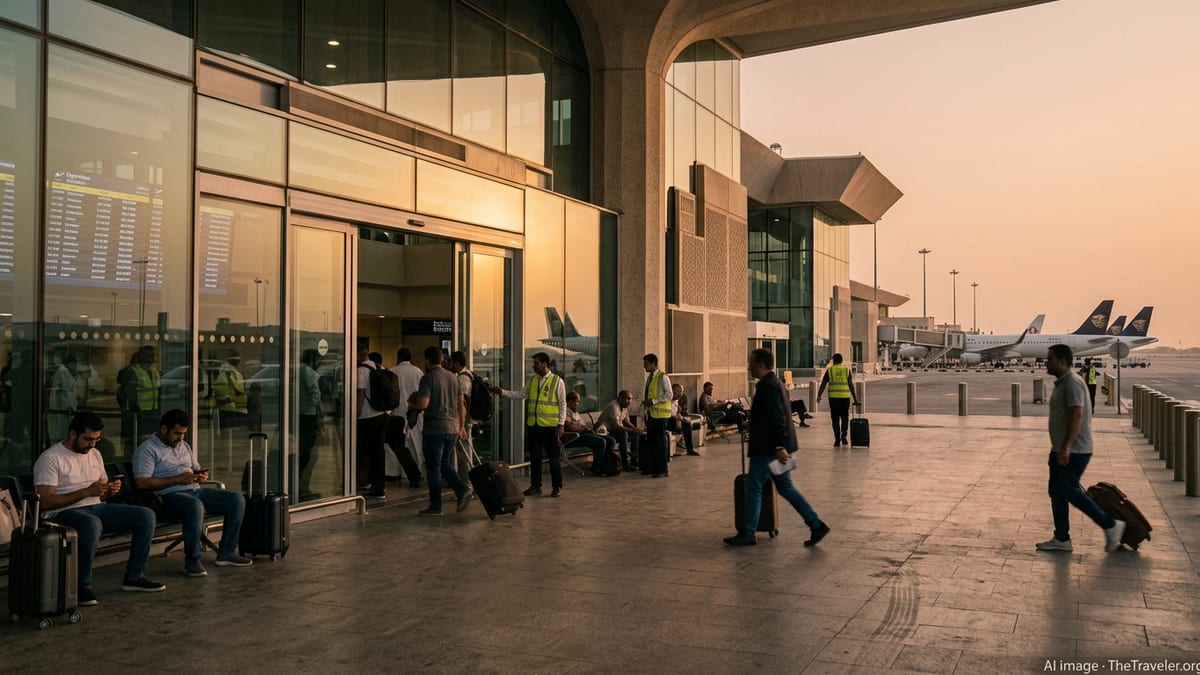
Operational but Cautious at King Fahd International
Recent industry advisories describe Saudi Arabia’s airports, including Dammam, as operational yet subject to heightened caution because of the evolving security situation and shifting airspace restrictions in neighboring states. Publicly available logistics and aviation updates issued in early March characterize Saudi gateways such as Riyadh, Jeddah and Dammam as open with limited constraints, in contrast to several nearby hubs facing partial closures or more severe disruption.
While there is no formal closure of Saudi airspace for commercial traffic, assessments from aviation risk specialists highlight partial restrictions in the kingdom’s eastern and northern flight regions, closest to current military activity. These constraints are not preventing scheduled departures from Dammam, but they are influencing the routings airlines can use, and in some cases the viability of specific international links.
As a result, many flights from Dammam that would traditionally overfly nearby Gulf states or use them as transit points are being re-evaluated or rerouted. Airlines are adapting their schedules day by day in response to updated safety guidance and changing air traffic control procedures, which is feeding through into timetable shifts and operational complexity even when the airport itself is functioning normally.
Airport-focused travel advisories note that Saudi facilities are maintaining normal security postures and passenger processing, but acknowledge that conditions could tighten at short notice if regional tensions escalate further or if additional airspace restrictions are introduced.
Regional Airspace Disruptions Ripple Through Dammam
The pressures on Dammam’s operations stem less from issues on the ground in Saudi Arabia and more from the wider pattern of airspace closures and limitations across the Middle East. Published coverage over the past two weeks describes a patchwork of suspensions, diversions and restricted flight corridors affecting Bahrain, Qatar, the United Arab Emirates and parts of Jordan and Iraq, all of which are traditionally intertwined with Saudi routes.
With some Gulf and Levant airspaces either temporarily closed or heavily constrained, airlines serving Dammam are being forced to use longer, more southerly or westerly routings to avoid conflict-affected areas. This adds flight time and increases congestion along alternative corridors, contributing to knock-on delays even for services that technically remain on schedule.
Analyses from aviation data providers show that hundreds of flights across Asia, Europe and the Middle East have been delayed or cancelled since late February as carriers adjusted to the evolving situation. Dammam is among the cities cited as affected by suspensions or schedule cuts by certain foreign airlines, particularly on routes that previously relied on overflight permissions or onward connections via hubs now operating on a reduced basis.
These disruptions have also changed regional travel patterns. Some airlines and logistics providers are temporarily favoring alternative hubs such as Muscat for relief operations and rerouted cargo, while others are consolidating capacity through Saudi airports, placing additional pressure on existing services at Dammam, Riyadh and Jeddah.
Airlines Trim Routes and Reroute via Safer Corridors
According to recent airline and freight bulletins, several Middle Eastern and international carriers have scaled back or suspended flights to specific Gulf destinations, citing airspace closures and security concerns. Reports indicate that Saudi carriers and some foreign airlines continue to operate from Dammam on selected routes, but with adjusted timings, altered routings and, in some cases, reduced frequencies.
Some carriers have announced suspensions on sectors linking Dammam with airports in countries where airspace access has become uncertain or where infrastructure has been directly affected by recent strikes. At the same time, other operators are using Dammam as an alternative gateway for passengers who would ordinarily fly through now-disrupted hubs, reinforcing its role as a backup transit point for the eastern Arabian Peninsula.
Freight and logistics updates describe air operations into Saudi Arabia as open yet constrained, with longer flight paths and last-minute schedule changes becoming common features of the current operating environment. This affects everything from express parcels and medical shipments to standard bellyhold cargo, all of which may pass through Dammam’s facilities.
The changing route map has also reshaped crew and aircraft rotations. With some regional layover points harder to access, airlines are repositioning aircraft and staff to Saudi and Omani airports, which can lead to sudden adjustments in departure times from Dammam as operators balance safety margins with network commitments.
Travelers Urged to Check Flights and Prepare for Delays
Saudi airport operators, including those overseeing Dammam, have used public information channels to urge passengers bound for destinations affected by airspace suspensions to verify their flight status directly with airlines before leaving home. Earlier advisories from Dammam’s airport management highlighted that travelers heading to countries impacted by current regional developments are particularly at risk of late schedule changes, including rerouting or cancellations.
International travel guidance from risk and insurance firms echoes that message, emphasizing that flight information may change within hours of departure as military and regulatory conditions evolve. Passengers are being encouraged to keep airline apps and contact details up to date, to monitor notifications closely and to allow extra time at the airport in case of security or check in bottlenecks caused by disrupted schedules.
For those connecting through Dammam, experts recommend building longer layovers into itineraries and avoiding tight self-made connections, as the margin for delay has narrowed significantly. Longer routings around restricted airspace mean that even a modest hold on the ground can push arrival times beyond originally scheduled slots, with knock-on effects for onward journeys.
Travelers are also being advised to pay close attention to visa and entry requirements when itineraries are modified at short notice. In some cases, rebooked routes may involve transits or temporary entries into countries that were not part of the original plan, making it essential to understand documentation rules before accepting alternative travel arrangements.
Outlook: Elevated Uncertainty but Continued Operations
Aviation and security analysts broadly agree that, for now, Saudi airports including Dammam are expected to remain open, even as the regional security environment stays volatile. The main variables for travelers are likely to be flight timing, routing and airline choice, rather than outright airport closures inside the kingdom.
Industry briefings suggest that as long as conflict activity remains concentrated outside Saudi territory and air defense measures continue to protect domestic infrastructure, authorities will seek to keep commercial aviation running while applying targeted airspace controls along sensitive borders. This approach aims to preserve essential connectivity for residents, expatriate workers and cargo flows, while managing the risks posed by military operations in neighboring states.
However, the same briefings stress that circumstances can change quickly. Further missile or drone incidents elsewhere in the Gulf, additional airspace restrictions, or fresh advisories from international regulators could all prompt airlines to adjust their posture toward Dammam and other Saudi gateways with little warning.
For travelers planning journeys into or out of Dammam in the coming days, the most consistent piece of guidance across airlines, airports and independent travel advisories is clear: assume the airport will be operating, but build in flexibility, monitor flight status repeatedly before departure, and be prepared for last minute alterations as Middle East airspace tensions continue to evolve.