

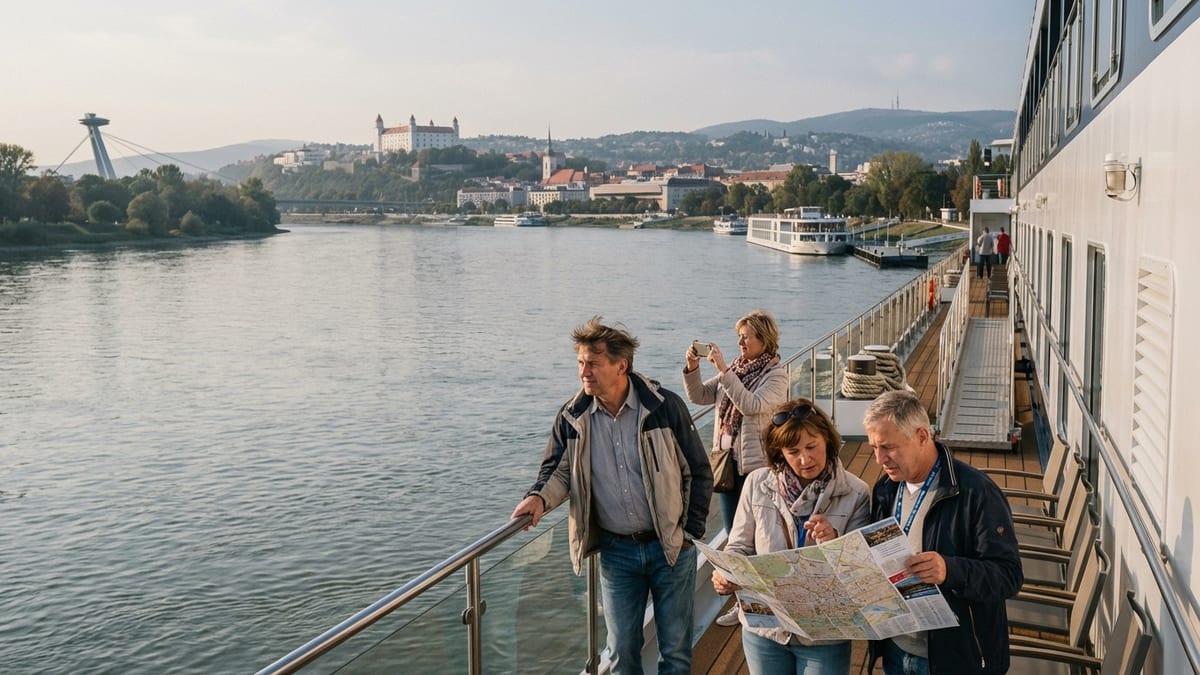
The classic Danube itinerary from Passau to Budapest is one of Europe’s great river journeys. Yet for many first time cruisers, what actually happens in each port remains a mystery until arrival. Where do ships dock, how close are you to the historic centers, and what should you realistically plan to see with the time you have?
This guide breaks down the four key ports on most week long Danube cruises Passau, Vienna, Bratislava and Budapest so you know what to expect before you step on board.
Understanding the Passau Vienna Bratislava Budapest Route
Nearly every major river line offers some version of a Passau to Budapest itinerary, often in both directions and sometimes extended toward Germany’s Regensburg or further downriver into Serbia and Romania. On the core route, the four headline ports are relatively close together, which allows for comfortable overnight sailing and generous daytime sightseeing. Many sailings operate from March through November, with spring and fall increasingly popular shoulder seasons alongside the traditional high summer months.
The order of ports can vary. Some itineraries run Passau Vienna Bratislava Budapest, others reverse it, and some insert scenic sailing through the Wachau Valley between Passau and Vienna or between Vienna and Passau, depending on current and water levels. Each port plays a role in shaping the most popular Danube cruise itineraries. Regardless of direction, these four stops function as cultural anchor points, each offering a distinct perspective on Central Europe’s history and contemporary life.
Because this is river cruising rather than ocean travel, ships usually dock very close to historic centers, and formal terminal buildings are the exception, not the rule. In many cases you step directly from ship to riverside promenade and walk into the old town within minutes. The trade off is that infrastructure can be relatively simple, moorings can change on short notice, and ships sometimes raft alongside each other in busy ports, meaning you may walk through neighboring vessels to reach shore. Port variety is often a deciding factor in whether Danube cruises are worth it.
Planning ahead for each port means understanding where ships commonly dock, how quickly you can reach the main sights on foot or by public transport, and whether it makes sense to join the ship’s excursion or explore independently. With a bit of preparation, you can tailor each stop to your interests, whether that is baroque architecture, café culture, World War II history or simply lingering over riverside views.
Passau: Gateway to the Blue Danube
Passau, in southeastern Germany near the Austrian border, is the embarkation or disembarkation point for many Danube cruises. Known as the “City of Three Rivers,” Passau sits at the confluence of the Danube, Inn and Ilz, and its compact baroque old town spreads across a wedge of land framed by water on three sides. River tourism is central to the local economy, and infrastructure has steadily evolved to cope with the seasonal surge in ships and coaches.
Most cruise vessels tie up along the Danube waterfront close to the historic core, typically on or near the riverside promenade that runs past the old town. In high season it is normal to see multiple ships lined up, sometimes rafted one or two deep. When this happens, passengers from outer ships may cross neighboring vessels via gangways and interior corridors to reach the quay. It may feel unusual at first, but crew from all ships coordinate to manage foot traffic safely and clearly.
The main mooring areas used by long distance river cruises cluster around the central riverfront within walking distance of Passau’s Altstadt. From here it is generally a 10 to 15 minute stroll to St Stephen’s Cathedral, the pedestrian shopping streets and the main squares. Some ships use berths that are even closer to the old town, while others may tie up marginally further along the riverbank, but for most passengers the city is comfortably walkable.
Overflow and winter berths sit a short distance outside the immediate center, including moorings upstream and downstream used when the core waterfront is particularly busy. In these cases, cruise lines typically provide shuttle buses to the old town or integrate transfers into their included excursions. If you are joining a cruise in Passau, your line will usually specify an embarkation pier in your documents, although final assignment can shift due to river conditions and port traffic. It is worth arriving in the city at least a few hours early, or even the day before, both to cushion against travel delays and to have time for a stroll through the baroque streets.
Experiencing Passau in Limited Time
Because Passau often serves as a bookend port, time in the city can vary dramatically. Some itineraries allow only a few afternoon hours before sailing, while others include an overnight or a morning city tour before coaches depart for homebound airports. With limited time, the key is to focus on the compact historic core rather than trying to cover all the hilltop fortifications and riverfront walks in one go.
The central landmark is St Stephen’s Cathedral, whose white and pastel baroque façade and twin towers dominate the old town skyline. Inside, the ornate stucco and fresco work is typical of the South German baroque style. Many cruises operate in the season when daily organ concerts are held, which can be an atmospheric way to introduce yourself to the city if your call coincides with performance times. Even a brief visit offers a strong sense of the city’s religious and artistic heritage.
From the cathedral, pedestrian lanes radiate out toward the Inn and Danube banks, passing pastel townhouses, small boutiques and cafés. Walking down to the confluence of the three rivers gives a sense of Passau’s strategic position on historic trade routes. On a clear day, the views back towards the old town from across the river or from one of the bridges underscore how closely the city is bound to the water that now carries modern cruise ships.
For those embarking or disembarking, practicalities matter as much as sightseeing. The modest scale of the riverfront facilities means you will not find a large terminal building with extensive services. Check in and luggage handling typically take place on the ship itself, while nearby coach parking areas act as the interchange point for airport transfers. Taxis congregate near common boarding points, but it is wise to prearrange transport if you are catching a specific train or flight, especially during peak summer weekends when demand is highest.
Vienna: Grand Capital on the Danube
Vienna is the star attraction on many Danube itineraries, a former imperial capital with monumental architecture, world class museums and a café culture that remains a daily ritual. Unlike small river towns, Vienna sprawls along both banks of the Danube and around a separate canal closer to the historic center. Cruise ships use several different mooring sites, each with distinct transit options into the inner city.
The two best known docking areas for long distance Danube vessels are Nussdorf and Reichsbrücke. Nussdorf, on the northern edge of the city near the entrance to the Danube Canal, offers a relatively quiet residential setting with good coach access. Many lines bus passengers from here into the Ringstrasse area for guided tours. Reichsbrücke, near one of Vienna’s major Danube bridges, places ships closer to modern high rise districts and the Vienna International Centre, with direct public transport links via the U1 metro line.
Smaller or day excursion vessels sometimes use berths directly along the Danube Canal closer to the historic center, but most overnight river cruise ships cannot dock there due to size and bridge restrictions. Instead, they rely on coordinated bus shuttles and public transport to bridge the short gap between the river and the inner city. Travel times from typical cruise moorings to Vienna’s central sights are generally 15 to 25 minutes by coach or metro, depending on traffic and exact berth.
Port infrastructure has gradually modernized to handle the sustained growth in river cruise traffic, with designated parking for coaches and signed gangways at the main mooring fields. Nonetheless, unlike a purpose built ocean terminal, facilities remain functional rather than glamorous. You step directly from ship to riverside path, then either board your excursion coach, walk to a nearby tram or metro stop, or follow the line’s shuttle bus signs. Clear information from your cruise director on the evening before arrival is your best guide to where exactly you will be and how to navigate into town.
Making the Most of a Vienna Call
Time in Vienna varies by itinerary, but many cruises include either a late evening arrival with a full day following, or a morning arrival that allows for an afternoon and an evening in the city. Some ships remain docked overnight, letting passengers attend concerts, opera performances or evening strolls in the old town before returning to the river. Others sail in the early evening after a city tour, especially on shorter itineraries or when schedules are compressed by river traffic and lock transits.
Most cruise lines offer a classic panoramic tour that circles the Ringstrasse, passes major landmarks and includes a guided walk in the historic core around St Stephen’s Cathedral. This is an efficient primer if you have never visited before. Depending on your interests and the time available, you might then use free time to linger in a traditional coffee house, visit the Hofburg complex or explore the trendy neighborhoods behind the grand boulevards. The key is to avoid trying to see all of Vienna in a single port day and instead choose one or two themes, such as imperial history, music or contemporary design.
Independent exploration is straightforward if your ship is docked near a metro line. Vienna’s public transport network is extensive, frequent and well signposted, with clear ticketing machines and multilingual information. Many river cruisers pick up a day ticket and use it to shuttle between the mooring, the city center and outlying highlights like Schönbrunn Palace. Cruise excursion programs often include a dedicated palace tour, but if not, visiting on your own is entirely feasible as long as you allow for travel time and potential queues.
In the evening, some itineraries feature an optional classical concert, often staged in historic venues that recreate the atmosphere of the city during the era of Mozart and Strauss. If your ship overnights, you can walk or take a coach back after the performance. If it sails late the same evening, crew will typically accompany groups to ensure timely return. Check onboard schedules carefully because river conditions can occasionally shift departure times, affecting how long you have on shore.
Bratislava: Compact Capital with an Easy Walk From the Ship
Bratislava, the Slovak capital, has emerged as a favorite stop precisely because it offers a different scale and pace from both Vienna and Budapest. For river cruisers, one of its greatest advantages is the location of the passenger port, which sits directly beside the historic center on the Danube’s north bank. Ships berth along a compact stretch of quay between major city bridges, only a few minutes on foot from the old town gate.
The riverfront passenger terminal area includes a small terminal building and several floating platforms used by cruise vessels and local sightseeing boats. From the gangway, passengers step onto the embankment promenade and can be in the medieval core within five to ten minutes of unhurried walking. Because the port lies within the central city, easy access to cafés, shops, ATMs and public transport is built in, even though the immediate cruise facilities themselves remain modest in scale.
Most Danube itineraries schedule a half day in Bratislava, often arriving in the morning and departing in the early afternoon or evening, depending on the overall timing between Vienna and Budapest. That relatively short call actually suits the destination well. The historic center is compact, largely pedestrianized and easy to navigate, with the main squares, St Martin’s Cathedral and the castle hill all within reach even on a brief visit.
From a logistical standpoint, Bratislava is also one of the simplest ports for independent exploration. If you choose to forgo the ship’s walking tour, you can simply follow the flow of passengers from the quay towards the old town or use nearby tram and bus stops to reach specific neighborhoods. The intimacy of the city center, combined with its riverside setting, makes it an appealing place to merely wander, sit in a café and get a feel for local life between more monumental capital cities upstream and downstream.
What to Expect Ashore in Bratislava
Ship organized excursions in Bratislava typically focus on a guided walk through the old town, sometimes combined with a short coach ride up to Bratislava Castle for panoramic views over the Danube and the city’s mix of historic rooftops and modern towers. The castle complex itself has been extensively restored and houses museums, but for many visitors the highlight is simply standing along the ramparts and watching river traffic move below.
Within the medieval core, you will encounter pastel townhouses, ornate facades and the city’s well known whimsical statues tucked around street corners. Main squares are lined with terraces where locals and visitors linger over coffee or wine. Despite increasingly busy river traffic, the scale remains human and, outside peak summer weekends, pleasantly uncrowded compared with major Western European capitals.
Because the port lies essentially at the edge of the old town, you can easily tailor your time. Some passengers prefer to climb to the castle first and then drift back down into the lanes, while others focus on churches, galleries and shops close to the river. The flat, paved walkways around the port and into the historic core suit a wide range of mobility levels, though the castle hill does involve a moderate climb or a short coach transfer.
Later in the day, the ship’s schedule often includes scenic sailing as you depart Bratislava, passing under landmark bridges and out toward the border region between Slovakia and Hungary. Those open deck hours, combined with the easy on off access earlier in port, make the Bratislava call feel relaxed yet complete, a balance that many passengers appreciate midway through a week of consecutive city stops.
Budapest: Riverfront Showpiece and Turnaround Port
Budapest is both a highlight destination and, for many lines, a key turnaround port where cruises begin or end. The city straddles both sides of the Danube, with hilly Buda on the west bank and flat Pest on the east. Its core riverfront, lined with grand buildings and crossed by iconic bridges, provides some of the most spectacular views on any European waterway, especially after dark when monuments are floodlit and ships conduct night cruises along the illuminated embankments.
Most river cruise ships berth along the Pest side embankment between major bridges, within walking distance of central squares and shopping streets. Docks are identified by numbers and names rather than by a single large terminal, and different cruise lines may use different berths even on the same day. Some dinner and sightseeing cruises use separate piers, occasionally including ones on the Buda bank near prominent landmarks, but overnight Danube cruise vessels overwhelmingly favor the central Pest waterfront for ease of access and dramatic views.
The docking zone most familiar to river cruisers stretches roughly between the Elizabeth Bridge and the Chain Bridge, though additional piers extend north toward Margaret Bridge and south toward Liberty Bridge. From these quays, it is typically only a few minutes’ walk to tram stops, metro stations and central pedestrian streets. The embankment itself acts as an informal promenade, and disembarkation often feels like stepping straight into a postcard scene, with the Buda Castle district, Matthias Church and Fisherman’s Bastion rising on the opposite bank.
As in other Danube ports, infrastructure is functional rather than lavish. Expect simple gangways, floating pontoons and basic signage rather than large terminals. Check in and customs procedures, where applicable, take place on the ship, while local staff may operate small ticket kiosks or boarding points for sightseeing boats nearby. Because multiple vessels can be in port simultaneously, mooring assignments can shift and rafting alongside other ships is not uncommon in busier periods, especially during festive seasons and summer weekends.
Exploring Budapest From the Riverfront
When Budapest is your embarkation or disembarkation point, your time in the city will depend heavily on flight schedules and whether you choose to add pre or post cruise hotel nights. Many river cruise passengers elect to arrive at least a day early to adjust to time zones and to explore at a more relaxed pace. This makes particular sense in Budapest, where a full day or more is easily filled with thermal baths, market halls, grand boulevards and castle hill walks.
Ship excursions typically introduce the dual identity of Buda and Pest. A classic tour will drive past the Parliament building and other Pest landmarks, cross the river for a walk in the castle district, and then return along the embankment for photo stops. Variations may include interior visits to key sites or focus more closely on one side of the city. If your cruise spends an overnight here, there may also be an evening illumination cruise section built into the itinerary, even if the ship itself remains docked.
For independent exploration, the central river docks are well placed. From typical berths it is an easy walk to central squares that anchor tram and metro networks. Many passengers begin with a stroll along the riverfront promenade toward the Chain Bridge, then either cross to Buda for the funicular up to the castle district or continue inland into Pest’s shopping streets and café zones. Public transport tickets are straightforward to purchase, and routes are well documented at stops.
On departure day, coaches connect the riverfront to the airport or train stations, and traffic conditions largely determine travel time. Your cruise line will schedule transfers with some buffer for congestion, but if you are arranging your own onward journey, allow generous margins. Budapest’s appeal as both a destination and a river hub means that demand for taxis, rideshares and private transfers can spike when several ships turn around on the same weekend.
Practical Tips for Navigating Danube Cruise Ports
Across Passau, Vienna, Bratislava and Budapest, a few patterns repeat. First, river cruise moorings are often very close to old towns but not always signed like large sea ports. Ports can assign berths only a short time before arrival, and ships may be moved along the quay or even across the river based on traffic and water conditions. For this reason, your primary source of accurate, up to date information will be daily briefings on board and the port details printed in the program or displayed near reception.
Second, do not expect full service terminals in every port. Check in, security and customer service largely happen on your vessel, with local port authorities working behind the scenes. Facilities at the quay may range from a simple floating pontoon with a ramp to a small terminal building with waiting areas, restrooms and a kiosk. It is sensible to use the ship’s amenities before heading out, carry a small amount of local currency for incidental purchases, and note your vessel’s exact location visually in case you choose to return independently rather than with a group.
Third, mobility and footwear matter more on river cruises than glossy brochures sometimes suggest. Gangways can be steep in certain water conditions, floating platforms may shift slightly, and cobblestone streets begin almost immediately in historic centers like Passau and Bratislava. Pack supportive shoes for walking tours and be prepared for a mix of surfaces, including bridges and short uphill sections to vantage points and castles.
Finally, keep in mind that river levels and lock operations can influence port times and, in rare cases, the sequence of calls. High or low water events can force ships to adjust docking sites or rely more heavily on coach transfers between ports. Reputable lines build contingency plans into their operations so that guests can still see the highlights, but flexibility and a sense of adventure will serve you well if the river dictates changes. When conditions are normal, however, the proximity of moorings to city centers in these four ports is one of the route’s greatest advantages.
The Takeaway
Understanding how Danube cruise ports work transforms the Passau Vienna Bratislava Budapest route from a string of unknown stops into a well paced journey through Central Europe. In Passau, you begin or end at a walkable baroque town molded by three rivers. In Vienna, you balance moorings slightly outside the center with fast links to imperial boulevards and coffee houses. Bratislava greets you with a quayside just steps from its compact medieval core, while Budapest stages one of the continent’s great riverfront spectacles right outside your cabin window.
Across all four cities, the defining characteristic of river cruising holds true: your ship docks close to the heart of the action, but facilities remain intimate, sometimes shifting and always shaped by the living river beneath. With realistic expectations, comfortable shoes, and an eye on the daily program, you can step off at each mooring confident that you know where you are, how to reach the main sights and what kind of experience awaits. That clarity leaves more room for what ultimately matters most: watching Europe’s history lined up along the Danube banks as you sail from one storied port to the next.
FAQ
Q1. How far are the Passau docks from the historic old town?
Most cruise ships in Passau dock along the central Danube waterfront within roughly a 10 to 15 minute walk of the old town and St Stephen’s Cathedral. In very busy periods some ships may use berths a bit farther away, but lines generally provide shuttle buses or integrate transfers into their excursions when that happens.
Q2. Where do river cruise ships usually dock in Vienna?
Long distance Danube cruise ships typically use moorings at Nussdorf or near the Reichsbrücke bridge. Both areas sit outside the immediate historic center but are connected to it by coach transfers and public transport, particularly via the metro and tram networks. Smaller excursion boats may use additional piers on the Danube Canal closer to the old town.
Q3. Is Bratislava’s cruise port really within walking distance of the city center?
Yes. The passenger port in Bratislava lies directly beside the historic core on the Danube’s north bank. From the ship, it usually takes five to ten minutes on foot to reach the main old town squares, and slightly longer to climb toward the castle if you choose to go on foot rather than by coach.
Q4. Do river cruise ships in Budapest dock on the Buda or Pest side?
Overnight river cruise vessels generally dock along the Pest side embankment between major bridges, although some sightseeing and dinner cruises may depart from Buda side piers. From the main Pest quays, you can easily walk to central squares, tram stops and metro stations.
Q5. How often do ships raft alongside each other instead of docking directly at the pier?
Rafting is common in high season when several ships are in port at once, particularly in Passau and Budapest. When this happens, you may need to walk through one or more neighboring ships to reach the gangway, guided by crew members who coordinate safe and orderly passage.
Q6. Can I explore these ports independently instead of joining ship excursions?
In all four cities you can explore independently, provided you are comfortable with basic urban navigation and public transport. Passau and Bratislava are particularly easy to walk from ship to old town. In Vienna and Budapest, metro and tram networks make it straightforward to move between docks and major sights as long as you keep an eye on timing.
Q7. How much time do cruises typically spend in each port on this route?
Exact schedules vary by line and itinerary, but many cruises allow a half day to a full day in Passau, a long day or overnight in Vienna, a half day in Bratislava, and at least one full day in Budapest. Some itineraries begin or end in Budapest or Passau, which can increase available time on those ends if you add hotel nights.
Q8. Are the port areas accessible for travelers with limited mobility?
Port quays and nearby promenades are generally flat and paved, though gangway angles can be steeper in certain water conditions. Old towns feature cobblestones and, in Bratislava and Buda’s castle district, some hills. Most cruise lines offer assistance for boarding and disembarking, and many excursions can be adapted with shorter walking routes or coach based touring.
Q9. Do I need local currency in each port if most time is spent on the ship?
It is advisable to carry at least a small amount of local currency in each country for small purchases, public transport tickets and tips in cafés or markets. Cards are widely accepted in urban areas, but having some cash makes quick, low value transactions easier, particularly in smaller shops or for street snacks.
Q10. How much can river conditions affect port calls on the Passau to Budapest route?
Most of the season operates without major disruption, but unusually high or low water levels can occasionally force schedule changes, berth substitutions or, in rare cases, coach transfers between ports if ships cannot navigate certain stretches. Reputable cruise lines monitor conditions closely and adjust plans to maintain sightseeing opportunities, keeping guests updated through daily briefings.