

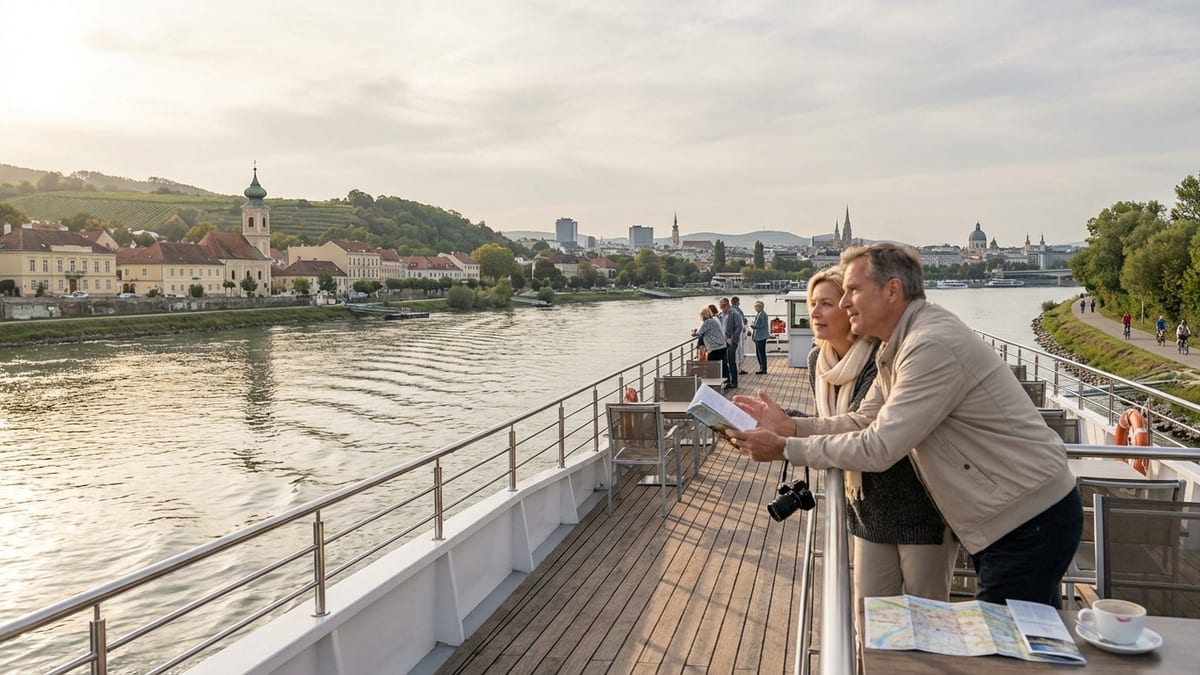
The Danube remains one of Europe’s great romantic journeys, and for many travelers the dream centers on its cultural powerhouses: Vienna, Budapest, and Passau. Yet most river cruise brochures list similar port names and sailing lengths, which makes it hard to know which itinerary genuinely fits your style.
This guide compares the main Danube river cruise patterns linking these three cities, highlights representative sailings from major lines, and breaks down how Vienna, Budapest, and Passau differ as embarkation points and as experiences on the water.
Key Danube Itinerary Types Linking Vienna, Budapest, and Passau
Before comparing individual cities, it helps to understand the typical routes that major cruise lines operate between them. In 2025 and 2026, Danube programs from large players such as AmaWaterways, APT, Emerald Cruises, CroisiEurope and others cluster into a handful of core patterns.
Each has different implications for flight logistics, time on the river, and how deeply you experience each port. After choosing a route, the next step is narrowing down the best Danube cruises to book for that itinerary. Different routes pair better with either luxury or budget Danube cruises, depending on what you value most.
Classic Weeklong Passau–Budapest (or Reverse)
The workhorse itinerary for many lines is a seven or eight day cruise between Passau and Budapest, usually with Vienna and the Wachau Valley in between. CroisiEurope markets this as a “Beautiful Blue Danube” sailing, with Passau, Melk, Dürnstein, Vienna, Esztergom and Budapest as key stops, and similar patterns appear with other operators.
For most travelers, this route offers a strong balance of river time and cultural immersion. It typically includes:
- Boarding in Passau, often in the afternoon, with a leisurely first evening cruise
- A full day around Melk and the Wachau Valley, including optional abbey visits and wine tastings
- Extended time in Vienna, often with an evening concert or palace visit
- A scenic sail into Budapest, sometimes with a night-time illumination cruise on arrival or departure
Because Passau is a smaller city with a compact port zone, embarkation and disembarkation days are often more relaxed than in the big capitals, which some guests see as a plus. However, this route assumes you are comfortable taking a train or coach transfer from Munich or another gateway city at the start or end of your trip.
Travelers choosing between rivers may want to compare Danube cruises vs Rhine cruises before committing. If you are still deciding, this breakdown of whether Danube cruises are worth it provides helpful context.
Budapest–Vienna Short Breaks
An interesting newer development is the rise of short “taster” cruises between Budapest and Vienna without extending to Passau. TUI River Cruises, for example, sells three-night adults-only itineraries that start in Vienna and end in Budapest or vice versa, aimed at travelers who want a taste of river cruising without committing a full week.
These itineraries appeal if you want to fold a cruise into a longer land trip through Central Europe. You can spend several days on your own in Budapest or Vienna, then join a concise cruise that may also stop in Bratislava or the Wachau Valley. The trade-off is less time in smaller riverside towns and fewer slow, scenic stretches.
Extended “Grand Danube” Routes Including Passau
At the other end of the spectrum are extended voyages that go far beyond the Vienna–Budapest–Passau triangle, sometimes from Germany deep into the Balkans or to the Black Sea. Riverside Luxury Cruises, for instance, has promoted a 23-day “Unabridged Danube” that rolls past headline cities and lesser-known ports.
In this model, Passau often serves as an early or late stop rather than as a terminus. You might board in Germany or Austria, cruise past Passau, then continue via Vienna and Budapest into Eastern Europe. These itineraries suit guests with ample time who want to see the Danube as a continuous narrative of Central and Eastern Europe rather than as a quick highlight reel.
Themed or Niche Itineraries Centered on the Trio
Finally, several lines layer themes over the classic Danube circuit. Forbes recently profiled 2025 Danube sailings with gourmet, wellness, and cultural focuses from AmaWaterways, Emerald Cruises, APT and others. Many of these still pivot around Vienna, Budapest and Passau but are marketed as:
- Wine and gastronomy cruises featuring Wachau and Hungarian wine regions
- Music and culture trips with private concerts in Viennese palaces or castle recitals
- Active itineraries emphasizing cycling along the Danube towpaths and guided hikes
If you already know you want to compare these three cities by river, choosing a themed itinerary can add an extra layer of purpose to your days ashore and afloat.
Vienna as a Danube Cruise Hub: Pros, Cons, and Best Itineraries
Vienna is both a destination par excellence and a practical embarkation or disembarkation port for Danube cruises. Its international airport, high-speed rail links and strong hotel infrastructure make it a natural anchor for cruise lines. Yet its scale and wealth of culture can be both an asset and a challenge, depending on how you travel.
What It Feels Like to Cruise In and Out of Vienna
Arriving in Vienna by river is romantic in a different way than arriving in Budapest. The Danube runs a little outside the historic core, so you do not sail past iconic landmarks at close quarters in the same dramatic fashion. However, you do glide through the broader metropolitan landscape before docking near modern riverfront districts, which offers a subtle glimpse of contemporary Vienna.
From most piers, cruise lines arrange transfers into the city center or include guided walking tours that cluster around St. Stephen’s Cathedral, the Hofburg Palace area and the Ringstrasse. Some itineraries feature evening excursions to traditional heuriger wine taverns in the hills, turning Vienna into both a cultural and culinary highlight.
Representative Vienna-Focused Itineraries
Several of the 2025 and 2026 Danube programs profiled in recent travel coverage use Vienna as a key hub. APT’s “Highlights of the Danube” is a notable example, linking Munich and Budapest with stops in Passau, Melk, Linz and Vienna, plus options for side trips to Salzburg or Český Krumlov. That itinerary typically includes a full day in Vienna, sometimes capped with a special-event classical performance.
Emerald Cruises’ “Danube Explorer” also threads through Vienna after starting in Budapest. Its program leans into active touring, such as guided cycling through the city and along Danube Island, before guests return to the vessel for an evening departure. AmaWaterways’ “Best of the Danube” similarly includes Vienna in its Budapest-centric sailings, highlighting the Ringstrasse and major palaces.
These representative itineraries underscore Vienna’s versatility. It easily supports both traditional sightseeing and more immersive experiences such as concerts in baroque halls or behind-the-scenes palace events arranged by luxury lines.
Strengths and Weaknesses of Vienna as a Cruise Anchor
Vienna’s strengths as part of a Danube itinerary include:
- Excellent air connections, making pre- or post-cruise stays straightforward from North America
- Deep cultural offerings, from the Staatsoper to world-class museums and imperial palaces
- Efficient public transport that simplifies independent exploration between cruise activities
On the downside, Vienna’s very richness can feel compressed on shorter itineraries. If your cruise schedule allows only half a day or one full day in the city, you might leave feeling you only skimmed the surface. Additionally, because many lines call here, popular concert experiences or palace visits can be heavily trafficked during peak season.
Budapest by River: Dramatic Arrivals and Deeper Danube Storytelling
Budapest has become one of the signature visual moments of Danube cruising. Its grand riverfront architecture, chain bridges and illuminated Parliament building make arrival and departure by ship especially memorable. It also functions as a bridge between Central and Eastern Europe in both geography and narrative, which cruise lines increasingly emphasize.
The Experience of Sailing Into Budapest
Many itineraries save Budapest for a finale, and with good reason. As your ship approaches, you pass under successive bridges while the skyline unfolds on both the Buda and Pest sides of the river. Evening arrival is particularly prized, with some lines including a dedicated night-time “Budapest by lights” sailing where guests gather on deck to photograph the floodlit Parliament and Castle District.
The riverfront location of many piers means you step off the ship directly into one of Europe’s great urban panoramas. From there, included walking or coach tours often take in Heroes’ Square, Andrássy Avenue, the thermal baths and viewpoints atop Gellért Hill or the Fisherman’s Bastion. For guests new to Eastern Europe, this can feel like the most distinctive and surprising stop on the Danube.
Budapest-Centric Danube Itineraries
Several of the high-profile Danube cruises spotlighted for 2025 use Budapest as their anchor. AmaWaterways’ “Best of the Danube” starts or ends here, pairing Budapest with Bratislava, the Wachau Valley, Melk, Linz and Vienna. Onboard programming may echo this emphasis with Hungarian tastings or folk performances.
Emerald’s “Danube Explorer” begins in Budapest as well, with early days dedicated to exploring the city’s baroque and art nouveau architecture before heading upriver toward Bratislava, Vienna and beyond. TUI River Cruises’ “Magical Danube” also leans on Budapest’s romantic image, billing it as the “Pearl of the Danube” and encouraging guests to visit historic thermal baths and the hilltop bastions before cruising west via Bratislava and Vienna to Passau.
These itineraries affirm Budapest’s role as both a visual centerpiece and a practical hub, particularly for travelers intrigued by the transition from former Eastern Bloc countries into Austria and Germany along the Danube corridor.
Advantages and Trade-offs of Starting or Ending in Budapest
Budapest offers several benefits as a cruise terminus:
- Striking riverfront approaches that feel uniquely tied to the cruise experience
- More favorable pricing for hotels and dining compared with some Western European capitals
- A strong sense of place, with thermal culture, ruin bars and a distinctive culinary scene
However, the city’s airport connections can involve more indirect routings for North American travelers than Vienna’s, especially outside peak season. Guests with mobility challenges may also find Budapest’s hills and cobblestones more demanding. Finally, first-time visitors sometimes underestimate how much time they will want here; two days pre- or post-cruise can feel short if you are balancing sightseeing with spa visits and food experiences.
Passau: Small-Town Charm and Scenic River Gate
Passau, at the confluence of the Danube, Inn and Ilz rivers in southeastern Germany, plays a quieter but crucial role in Danube cruising. Often marketed as the “City of Three Rivers,” it appears as either a starting or ending point on numerous itineraries from mainstream and European lines, including CroisiEurope and Avalon Waterways. Its scale and setting make it a gentle gateway into river life.
Embarking in Passau
Boarding a Danube cruise in Passau tends to be less hectic than in larger cities. The town’s compact Old Town is walking distance or a short transfer from most docking areas, which allows time for a pre-cruise stroll past pastel facades and the baroque St. Stephen’s Cathedral. Many itineraries welcome guests aboard in the late afternoon, with a safety briefing and welcome cocktail before an early evening departure upriver or downriver.
River cruise advisors note that if your cruise begins or ends in Passau, your operator will typically bundle coach transfers to Munich or Prague, which function as your primary air gateways. This arrangement can be convenient if you want to see another city on land but adds an overland component to your otherwise water-based journey.
Passau on Representative Itineraries
CroisiEurope’s “Beautiful Blue Danube” itinerary is a useful example of how Passau is used on mainstream routes. Passengers embark here, then the ship sails toward the German–Austrian border and onward to Melk, the Wachau Valley, Vienna, Esztergom and Budapest. After several days moving through increasingly grand capitals, the memory of Passau’s intimate streets often provides a charming counterpoint.
Other lines, such as Avalon Waterways, also include Passau in a variety of Danube-only and multi-river itineraries, sometimes as the northern terminus of an eight-day Budapest–Passau run, other times as a midpoint on longer routes that continue toward Nuremberg or the Main–Danube Canal. In all cases, Passau stands out less for marquee sights than for its role as a scenic, manageable place to start or finish.
Who Will Appreciate Passau Most
Passau is particularly appealing if you:
- Prefer a low-key boarding day without big-city traffic or long drives from the pier into town
- Like walkable historic centers with a village feel but urban amenities
- Are happy adding overland transfers to Munich or Prague before or after your river segment
Travelers focused strictly on major capitals might find Passau less essential. Yet for many, that quieter opening or closing chapter is part of what makes a Danube cruise feel like more than just a sequence of famous landmarks.
Comparing the Major Cruise Lines on the Vienna–Budapest–Passau Corridor
While Vienna, Budapest and Passau form the geographic backbone of many Danube journeys, the experience of moving between them varies significantly by cruise line. Luxury touches, shore-excursion philosophy and onboard atmosphere all color how you perceive these cities from the water.
AmaWaterways: Upgraded Comfort on Classic Routes
AmaWaterways’ Danube offerings, including its “Best of the Danube” sailings, often start in Budapest and call in Bratislava, the Wachau Valley, Melk, Linz and Vienna. The line emphasizes wellness, with onboard hosts leading exercise classes and well-equipped gyms even on river vessels. Its flagship AmaMagna, which has been singled out in travel coverage for sailing the Danube at twice the width of many ships, offers unusually large suites, multiple restaurants and even a pickleball court.
For travelers evaluating the cities themselves, AmaWaterways’ strengths show up in the quality and variety of excursions. In Vienna, that may mean a choice between a traditional panoramic tour, a more in-depth art or music excursion, or active biking options. In Budapest, you might opt for a culinary tour or a focus on Jewish heritage rather than a standard coach circuit.
APT: Classic Sightseeing with Signature Experiences
APT’s “Highlights of the Danube,” which runs roughly between Munich and Budapest, uses Passau and Vienna as key stops and adds curated “Signature Experiences” such as recitals in historic castles and palace concerts. In Vienna, for example, select itineraries include special access events in aristocratic palaces, transforming a standard capital stop into a more intimate evening.
For guests comparing itineraries, this approach means your time in Vienna or along the Wachau may feel less like a checklist and more like a set of memorable occasions. However, these immersive touches can slightly reduce your free time in port compared with more flexible lines.
Emerald Cruises: Contemporary Feel and Active Touring
Emerald Cruises’ “Danube Explorer” sails from Budapest to Passau, stopping in Bratislava, Vienna, Dürnstein, Melk, Linz and surrounding countryside. Its ships, often described as modern and design-forward, feature indoor pools that convert to cinemas at night, contributing to a more contemporary onboard vibe.
Emerald tends to emphasize active options in Vienna and Passau, such as guided bike rides and hiking excursions in the Wachau, while still offering classic coach tours for guests who prefer less walking. If you value a younger-leaning demographic and are keen to interact with the cities from the saddle rather than from a bus window, this style may appeal.
TUI River Cruises: Short Breaks and Adults-Only Atmosphere
TUI River Cruises, building on a primarily British customer base, offers three-night taster cruises between Vienna and Budapest in addition to full-length “Magical Danube” voyages from Budapest to Passau. Ships such as TUI Maya and TUI Skyla are marketed as adults-only, with familiar British touches onboard.
The shorter Vienna–Budapest itineraries are particularly relevant if you are comparing the two capitals directly. They often include at least one full day in each city, with optional day trips and structured touring but enough free time to explore independently. The adults-only policy can contribute to a quieter, more couples-oriented environment.
CroisiEurope and European Lines: Value-Driven and Compact Ships
CroisiEurope, a French family-run operator, maintains a robust presence on the Danube with multiple itineraries between Budapest and Passau and beyond. Its “Beautiful Blue Danube” route from Passau to Budapest is representative, including Melk, Dürnstein, Vienna and Esztergom, with an all-inclusive pricing model that covers meals, drinks and many excursions.
Ships are generally smaller and more simply appointed than those of some luxury counterparts, but their scale allows for an intimate feeling, especially on scenic days through the Wachau Valley. For budget-conscious travelers who still want comprehensive coverage of Vienna, Budapest and Passau, this style of European line can be compelling.
Designing Your Ideal Itinerary: How to Choose Between Vienna, Budapest, and Passau
Once you understand the role each city plays on typical Danube routes, the next step is to match that knowledge against your own travel style and logistical needs. The choice is rarely about visiting one city instead of another; most good itineraries include all three. Rather, it is about deciding where you want to linger, where to start and finish, and how much land time you want around your river segment.
Choosing Your Embarkation and Disembarkation Ports
When selecting a specific cruise, consider the following combinations:
- Passau to Budapest for a gentle small-town start and a dramatic capital finish
- Budapest to Passau if you prefer to tackle big-city navigation at the beginning and unwind later
- Vienna to Budapest short break if you are coupling the cruise with independent rail travel in Central Europe
- Extended routes that include all three as waypoints within a longer Danube story
In general, flying into Vienna or Munich often yields the best transatlantic flight options. You might choose a Passau–Budapest cruise then spend extra nights on land in Vienna in between, using trains to knit the pieces together.
Balancing River Time with City Exploration
Weeklong cruises between Passau and Budapest usually dedicate one full day or a long afternoon and evening to Vienna and at least a day and a half to Budapest. Passau often receives a half-day at the start or end. If you want deeper immersion, look for itineraries that either:
- Include overnight stays in both Vienna and Budapest, allowing you to see them by day and after dark
- Build in pre- or post-cruise hotel nights, booked through the line or independently, in your chosen “anchor” city
Travelers particularly interested in opera, classical music or museums might prioritize more nights in Vienna, while those drawn to thermal baths and a blend of old and new nightlife may favor extra time in Budapest.
Seasonality and Direction of Travel
Seasonality along the Danube affects both scenery and crowd levels. Spring and autumn often bring milder temperatures and fewer tourists, which can make city walking tours more pleasant. Summer offers long daylight hours on deck, but key sites in Vienna and Budapest will be busier. Some lines also run winter and Christmas market cruises that center on festive city squares rather than vineyards and outdoor terraces.
Direction of travel can influence perception too. Many guests report that ending in Budapest feels climactic because of the showpiece night sailing. Others prefer finishing in Passau or Vienna to ease the transition from cruise life back to air travel logistics. If the idea of big-city hustle at the end of your vacation sounds stressful, ending in Passau and transferring quietly to Munich or Prague may be more appealing.
Budget and Onboard Style
Your choice of itinerary is intertwined with budget and onboard expectations. Luxury lines with larger suites, more dining choices and curated experiences in Vienna and Budapest will cost more per night than value-focused European lines. On a per-port basis, however, most passengers on the same river will see similar headline sites; the difference is how they see them, and what happens back on board afterward.
If you are mainly interested in checking off Vienna, Budapest and Passau with competent guiding and comfortable accommodation, a mid-range or European line should suffice. If you see the cruise itself as a floating boutique hotel and want to attend private palace concerts or dine in multiple onboard venues, a higher-end operator sailing classic routes may be worth the premium.
The Takeaway
Seen from the water, Vienna, Budapest and Passau tell three distinct chapters of the Danube story. Vienna is the polished imperial capital with deep cultural reserves and easy air access. Budapest is the riverfront showstopper whose illuminated skyline has become the signature image of modern Danube cruising. Passau is the human-scaled gateway, where three rivers meet and the rhythms of river life begin or end gently.
Most of the best Danube river itineraries in 2025 and 2026 weave these cities together, often in a seven or eight day arc between Passau and Budapest with Vienna in the middle. Major lines such as AmaWaterways, APT, Emerald Cruises, TUI River Cruises and CroisiEurope interpret that arc in different ways, from short Vienna–Budapest tasters to extended grand voyages that continue deeper into Eastern Europe.
For travelers choosing among them, the essential questions are simple: where do you want your most vivid city memories to cluster; how important are luxury touches and curated experiences; and how much time on land do you want to build around your sailing. Answer those, and the “best” Danube itinerary is less a universal ranking than a well-matched line and route that carry you, at river pace, through three of Europe’s defining river cities.
FAQ
Q1. How many days do I need for a Danube cruise that includes Vienna, Budapest, and Passau?
Most mainstream itineraries that include all three cities run seven or eight days, usually starting or ending in Passau and using Vienna and Budapest as major stops. If you want extra time to explore the capitals in depth, plan for at least two or three additional nights on land before or after your cruise.
Q2. Is it better to start my cruise in Passau, Vienna, or Budapest?
Each option has merits. Passau offers a calm, small-city embarkation and scenic departure. Vienna provides excellent air links and culture right at the beginning or end. Budapest delivers the most dramatic riverfront arrival, especially at night. Your decision should factor in flight options, your comfort with big-city logistics, and where you want to spend extra days.
Q3. Which direction of travel is more scenic on the Danube between these cities?
The scenery is fundamentally the same in both directions, with highlights such as the Wachau Valley, Melk and Dürnstein appearing regardless of where you start. Some travelers prefer ending in Budapest for the emotional impact of the illuminated skyline, while others like concluding in Passau or Vienna for smoother travel logistics.
Q4. Are short Vienna–Budapest cruises worth it compared with full weeklong itineraries?
Short three or four night Vienna–Budapest cruises are worthwhile if you want to sample river cruising or combine it with a longer rail or land trip. They usually offer at least one full day in each capital and sometimes a stop in Bratislava or the Wachau. However, you will see fewer smaller towns and spend less time simply watching the river landscape unfold than on a full weeklong Passau–Budapest route.
Q5. How busy are Vienna and Budapest during peak cruise season?
From roughly May through September, Vienna and Budapest can be very busy, with multiple ships in port on the same day and crowds at palace complexes and central squares. This does not ruin the experience, but it does mean that early morning or late evening walks, as well as smaller-group or themed excursions, can feel more relaxed than midday mass tours.
Q6. What kind of excursions are typical in these three cities?
In Vienna, standard excursions cover the Ringstrasse, St. Stephen’s Cathedral and imperial palaces, often with optional concerts or heuriger evenings. Budapest tours usually include Heroes’ Square, Gellért or Buda hills viewpoints, and sometimes thermal bath visits or Jewish Quarter walks. In Passau, excursions are more low-key, focusing on Old Town walking tours, the cathedral and panoramic viewpoints where the three rivers meet.
Q7. How do transfers work if my cruise starts or ends in Passau?
If your cruise uses Passau as embarkation or disembarkation port, your line will typically arrange coach transfers to or from larger transport hubs such as Munich or Prague. These transfers are often bundled into the cruise package or offered as add-ons. Travel times vary but commonly fall in the two to three hour range by road.
Q8. Are Danube river cruises between Vienna, Budapest, and Passau suitable for first-time river cruisers?
Yes. The stretch between Passau, Vienna and Budapest is one of the most popular introductions to river cruising. Ports are well equipped, navigational conditions are generally gentle, and the mix of grand capitals and smaller towns provides variety without long days at sea. Short Vienna–Budapest samplers are particularly friendly for first-timers who are unsure about committing to a full week.
Q9. How do I choose between luxury and value-focused river cruise lines on this route?
Start by deciding how important onboard amenities and curated experiences are to you versus simply seeing the destinations. Luxury lines tend to offer larger cabins, more dining choices, wellness facilities and special events such as palace concerts. Value-focused and European operators may have simpler ships but still deliver strong core sightseeing at lower per-night costs. Matching your expectations and budget is more important than the specific river route, which is broadly similar across operators.
Q10. When is the best time of year to cruise the Danube between Passau, Vienna, and Budapest?
Spring and early autumn often offer a good balance of mild weather, pleasant river levels and manageable crowds. Summer brings long daylight and lively city atmospheres but also higher temperatures and more visitors. Some lines operate winter and Christmas market cruises, which trade vineyard and terrace scenes for festive squares and seasonal markets in Vienna and Budapest, with a very different but appealing ambiance.