

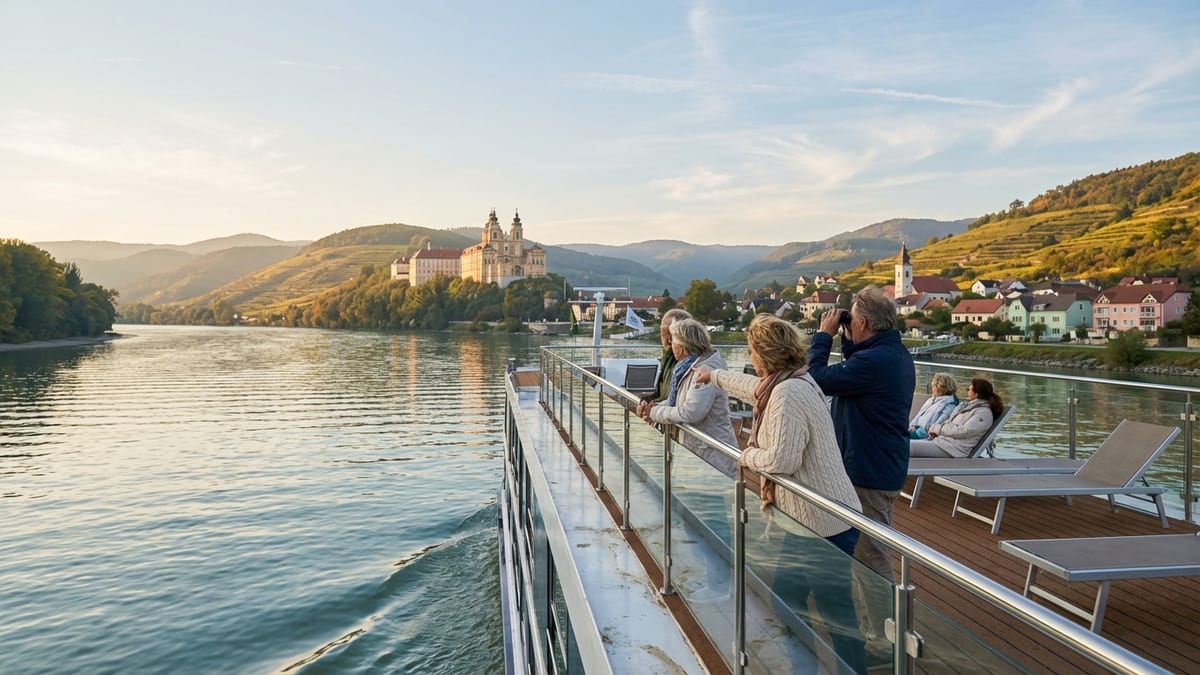
The Danube has been romanticized in waltzes and poetry for centuries, but it is only when you glide along its currents on a river cruise that the geography, history and rhythm of the region fully come into focus. Danube river cruises are among Europe’s most popular itineraries, connecting grand imperial capitals with vine covered hills, medieval fortresses and the gateway to the Black Sea.
Yet for first time cruisers, the variety of routes and the way these trips actually operate can be confusing. This explainer breaks down how Danube cruises work today, which routes you are most likely to encounter, and what to expect from life on board and in port.
Understanding the Danube and Its Cruise Regions
The Danube is Europe’s second longest river. It rises in Germany’s Black Forest, flows through or along the borders of ten countries and eventually empties into the Black Sea.
For travel purposes, it is useful to think of the Danube in three broad sections: Upper Danube, between Germany and western Hungary; Middle Danube, between Hungary and Serbia; and Lower Danube, stretching through Bulgaria and Romania toward the river’s wide delta. Most mainstream cruise itineraries focus on the Upper Danube, which combines big name cities with scenic stretches like Austria’s Wachau Valley. After understanding the basics, many travelers ask whether Danube cruises are worth it in real life.
Upper Danube routes typically cover the river between Passau or Regensburg in Germany and Budapest in Hungary, sometimes extending west via the Main Danube Canal to Nuremberg and on to the Rhine, or east to Bratislava in Slovakia and beyond.
This is the region where you will encounter Vienna, Salzburg day trips, baroque abbeys perched above the water and vineyard lined cycling paths. It is also where river levels and lock systems are most efficiently managed for cruise traffic, which contributes to the popularity of these itineraries with both first timers and cruise lines.
The Middle and Lower Danube receive fewer ships but reward travelers who want to see beyond the classical central European circuit. From Budapest down to Belgrade, the river cuts through the former Austro Hungarian and Ottoman spheres of influence, with smaller ports in Croatia and Serbia.
Farther east, the Lower Danube carves a dramatic passage at the Iron Gates gorge between Serbia and Romania before relaxing into broad, wildlife rich wetlands in the Danube Delta.
Cruises in these regions tend to run fewer months of the year and may attract more seasoned river cruisers, but they are essential to understanding the Danube as a whole. This overview makes it easier to compare the most common Danube cruise itineraries.
Main Danube Cruise Routes and Typical Itineraries
For most travelers, the phrase “Danube cruise” refers to an eight day sailing between Passau and Budapest or a similar route that includes Vienna and Bratislava. Operators such as CroisiEurope and others regularly publish itineraries like Passau Melk Vienna Budapest or Budapest Bratislava Vienna Passau, running from spring through autumn. These trips are long enough to include at least three major cities plus the scenic Wachau Valley but short enough to fit into a standard vacation window and price bracket.
On the Upper Danube, a typical weeklong cruise might embark in Budapest with an overnight stay, call at Bratislava’s compact old town, dock in Vienna for a day of palaces and classical music, then continue upstream into the Austrian countryside. Ships pause at Melk for its hilltop Benedictine abbey and often in Dürnstein or Krems in the Wachau wine region before finishing in Passau. Some variations reverse the route or add extra nights in signature cities like Vienna or Budapest, which are as much city breaks as ports of call.
Longer “Grand” itineraries link the Danube with other European waterways. Cruises from Budapest to Nuremberg or Amsterdam use the Main Danube Canal, allowing ships to climb a series of locks across the continental divide and join the Main and then the Rhine. A 15 day route from Budapest to Amsterdam, for instance, can cover three major rivers and several canal systems in one continuous journey. On the eastern side, extended itineraries from Budapest or Vienna to ports near the Danube Delta typically last 10 to 14 days and include stops in Belgrade, the Iron Gates, Bulgarian towns such as Ruse and Romanian ports linked by coach to Bucharest or Constanța.
Shorter themed itineraries sit at the other end of the spectrum. Christmas market cruises along the Danube have grown steadily in popularity, focusing on December sailings between cities like Vienna, Linz and Passau with evenings spent under festive lights and market stalls. There are also wine themed routes that spotlight the Wachau and nearby wine regions, music themed voyages centered on Vienna and Salzburg excursions, and even quick three or four night cruise segments that can be combined with independent land travel.
Key Cities Along the Danube and What They Offer
Budapest is the linchpin of most Danube cruises and often described as the river’s most dramatic city. Its twin halves, Buda and Pest, face each other across the Danube with Gothic, neo classical and art nouveau landmarks outlined against the hills. On a typical cruise visit you may sail in or out after dark, when the Chain Bridge and parliament building are illuminated. Shore excursions usually cover the Buda Castle district, thermal bath culture and grand Pest avenues. Many itineraries begin or end here, with pre or post cruise hotel packages that let travelers linger in the city.
Vienna is the river’s imperial capital, with layers of Habsburg grandeur visible in the Hofburg complex, Schönbrunn Palace and ring road of 19th century buildings. Ships generally dock a short tram or coach ride from the center, and excursions range from art museums and coffeehouses to evening concerts. Music is a particularly strong draw, and many cruise lines include an optional performance of waltzes and operetta in a historic venue. Vienna also functions as a central pivot on longer itineraries, with some cruises embarking or disembarking here and linking up with trains or flights to other European hubs.
Bratislava, capital of Slovakia, is smaller and more intimate but a favorite for its walkable old town and hilltop castle. Cruise passengers can step off the ship and be in the city center within minutes. Guided tours introduce a mix of baroque palaces, communist era architecture and a growing culinary scene. From here, some operators also offer day trips into the Small Carpathians wine region. Further upstream, German cities such as Passau and Regensburg anchor the western end of many Danube routes, with pastel facades, riverside promenades and easy onward connections by rail to Munich or Prague.
On the Middle and Lower Danube, Belgrade stands out as a major highlight. Serbia’s capital rises above the confluence of the Danube and Sava rivers, with an imposing fortress and a lively café culture. Cruises stopping here might offer tours of the old fortress, Orthodox churches and the bohemian Skadarlija quarter. Past Belgrade, the river threads through smaller ports in Bulgaria and Romania before reaching the delta, where wildlife watching and small boat excursions into side channels replace city sightseeing as the focus. These downstream segments show a quieter, more rural Danube that contrasts sharply with the ornate capitals upstream.
How Danube River Cruise Ships and Routes Actually Work
Danube river cruise ships are long, low vessels designed to fit under bridges and through locks along the river and connecting canals. Typical ships carry around 150 to 190 passengers, with a length of roughly 360 to 440 feet, though some newer ships are wider to offer more spacious cabins while still conforming to lock dimensions. Lines range from contemporary mass market brands to boutique luxury operators, but all must adhere to the same basic constraints of the river’s infrastructure.
Most itineraries are carefully structured around lock schedules, speed limits and daytime sightseeing priorities. Ships often sail at night between ports, particularly on stretches where the scenery is less dramatic or where distances are long. During daylight hours, cruising through notable landscapes such as the Wachau Valley or the Iron Gates is timed so passengers can enjoy the views from sun decks or panoramic lounges. Captains must coordinate with river authorities, adjust for commercial traffic and abide by water level restrictions that dictate under what conditions they can safely pass under bridges.
Unlike ocean cruises, river ships on the Danube dock directly in or near city centers whenever possible. In Vienna, Budapest and Bratislava, piers are typically a short stroll or shuttle ride from major sights. In smaller towns, the gangway may lead almost directly into historic streets. At times, two or more ships tie up side by side in popular ports, known as rafting. In these cases, passengers walk through the lobby of one ship to reach the quay. This arrangement allows cruise lines to operate dense schedules in limited dock space but can surprise first timers expecting isolated berths.
The route a Danube ship follows in any given season reflects water conditions, port agreements and passenger demand. Cruise lines work closely with local authorities to anticipate issues such as construction projects on riverside quays or temporary closures of lock sections. They also maintain contingency plans for high and low water periods, which have become a more frequent talking point in recent years. When a stretch of the river becomes temporarily impassable, lines may use “ship swaps” where passengers are bused around the affected section and continue their voyage on a sister vessel on the other side.
Seasons, Water Levels and When to Cruise
Danube river cruises typically run from late March or April through October and, on certain routes, into December for Christmas markets. Each period offers distinct advantages. Spring brings blooming riverbanks, cooler temperatures and fewer crowds, though water can run high as snowmelt and rain feed the river. Summer offers the warmest weather, long daylight hours and the broadest choice of itineraries and departure dates. Autumn, especially September and early October, is prized for vineyard colors, harvest festivals and relatively stable conditions on many stretches of the river.
Water levels are an important factor and a common concern. High water, usually a risk in late spring after heavy rains, can make it difficult for ships to pass under low bridges. In extreme cases, sections of the river may close temporarily. Low water, more likely in late summer during dry spells, can leave shallow areas, especially in parts of Hungary and Serbia, too difficult to navigate for heavily loaded vessels. When that happens, cruise lines may modify the itinerary, shorten sailing distances, bus guests between ports or transfer them to another ship beyond the affected section.
Operators and river authorities monitor conditions continuously, using forecasts and long term patterns. Seasonal outlooks from industry and travel advisory sources have recently noted the potential for lower Danube levels in mid summer periods, with expectations of improvement by early autumn when rain typically returns. Because specific impacts vary year to year, travelers are advised to consider travel insurance that covers interruptions, build in flexibility to their broader European plans and accept that, as with any river journey, nature has a say in the final schedule.
In winter, only a subset of Danube routes operate, concentrating on sections between cities like Vienna, Linz and Passau where Christmas markets are a major draw and where river ice is less of a concern than in more northerly waterways. These cruises are shorter, with an emphasis on cozy indoor experiences, festive food and music rather than deck time. Outside these holiday sailings, most ships reposition, undergo maintenance or serve other rivers until the next spring season begins.
Life On Board and What to Expect Daily
A day on a Danube river cruise is structured but far from rigid. Mornings often begin with breakfast followed by a guided shore excursion in the port of the day. These can range from walking tours of historic centers to bus excursions to nearby castles, wineries or countryside villages. Groups are typically small, and many ships offer both “classic” sightseeing and more active options such as cycling along the towpaths or hiking to viewpoints. Because city centers are often very close to the pier, it is usually easy to return to the ship for lunch or to explore independently.
Afternoons vary. On some days the ship remains docked until evening, allowing free time in town. On others it departs after lunch and spends several hours in scenic cruising. Passengers might attend commentary sessions about the region, cooking demonstrations, wine tastings or cultural talks, all timed so people can shift between the lounge and the observation deck. The pace is generally relaxed. There are no casinos or large stage shows as on ocean liners; instead, entertainment centers around local musicians, small performances and socializing in communal spaces.
Dining is generally included and follows a fixed schedule with some flexibility, depending on the line. Breakfast and lunch may be buffet or hybrid service, while dinners are usually multi course meals pairing regional dishes with wines from areas the ship has recently passed. Many lines emphasize local sourcing, bringing in specialties from the Wachau, Hungarian paprika based cuisine or Austrian pastries. Some newer or more upscale ships offer multiple dining venues and al fresco options, but the overall atmosphere remains casual smart rather than formal.
Evening routines typically revolve around a briefing for the next day’s activities, a leisurely dinner and perhaps a concert, folk show or themed event tied to the current port. Dress codes are relaxed; while some lines request slightly dressier outfits for a captain’s welcome or farewell dinner, suits and gowns are rare. Because cabins are compact by hotel standards but efficiently designed, passengers tend to spend much of their awake time in public areas or ashore, treating their staterooms mainly as comfortable bases for rest and river watching.
Practicalities: Booking, Cabins, Costs and Logistics
Booking a Danube cruise involves choosing not only the route and dates but also the style of ship and cabin that best fit your budget and travel preferences. Prices can range widely, from relatively affordable seven night itineraries on contemporary three and four star style ships to premium and luxury offerings with larger cabins, fine dining and more inclusive excursions. Early booking incentives, air promotions and seasonal discounts are common, especially for departures outside the peak months of June through August.
Cabin categories typically start with lower deck staterooms that have smaller windows positioned high on the wall, sometimes called “fixed windows” or “portholes.” Middle and upper deck cabins often feature French balconies, where floor to ceiling glass doors slide open to a railing but without a separate exterior seating area. Top tier suites include larger seating spaces, walk out balconies or even two room layouts. Because views are central to the appeal of river cruising, mid and upper deck cabins are the most sought after and tend to sell out first.
From a logistics standpoint, most passengers on Danube cruises arrive by air into major hubs like Munich, Vienna or Budapest, then transfer by coach or train to the embarkation port. Cruise lines either bundle transfers into their packages or sell them as add ons, while independent travelers can easily arrange their own transport via regional rail networks. Disembarkation days are carefully choreographed; guests usually leave the ship after breakfast, with buses or taxis arranged for airport or city center transfers. Luggage handling between the quay and ground transport is generally included.
Costs on board are partially or fully inclusive depending on the line. Most cruises cover accommodation, meals, certain drinks and at least a core set of excursions in the base fare. Additional expenses may include optional tours, premium beverages, gratuities where not pre included and personal services like spa treatments. Some lines build gratuities into the fare or include them during specific seasons, while others suggest daily per passenger amounts for onboard staff and local guides. Currency on board is often the euro, even when sailing through non euro countries, with onboard accounts settled by credit card at the end of the trip.
The Takeaway
Danube cruises combine the convenience of a floating hotel with the density of sights, cultures and landscapes that only a major European river can provide. Understanding the basic geography of the Upper, Middle and Lower Danube, the structure of typical routes between cities like Passau, Vienna, Bratislava, Budapest and Belgrade, and the practical workings of ships, locks and water levels goes a long way toward setting realistic expectations. These are not ocean voyages in miniature but their own distinct form of travel, one where the next port is often in view from the dining room and history lines both banks.
For travelers weighing whether a Danube cruise is right for them, the key questions are about pace and priorities. If you value unpacking once, waking up to new scenery each day and having a curated but flexible mix of guided touring and independent exploration, the format fits well. Those who prefer long stays in a single city or more improvisational itineraries may see a Danube cruise as a strong introduction or framework around which to build extra land time before and after. Either way, the river has a way of tying disparate experiences together into a coherent story.
As river cruise fleets continue to evolve with new ships and thematic offerings, the core appeal of Danube travel remains steady. You move at the river’s tempo, threading together grand capitals, small river towns and stretches of countryside that might otherwise be hard to stitch into a single trip. For many visitors, that combination of ease and depth is precisely what turns a Danube cruise from a bucket list idea into a compelling reality.
FAQ
Q1. How long is a typical Danube river cruise?
Most mainstream Danube itineraries last seven to eight days, covering the stretch between Passau or Regensburg and Budapest with stops in Vienna and often Bratislava. Shorter three to five day segments and longer 10 to 15 day journeys that link the Danube to the Rhine via the Main Danube Canal are also available for travelers with different time frames.
Q2. Which direction is better, upstream or downstream?
In practical terms, there is little difference for most travelers. Upstream itineraries may involve slightly more engine power and marginally different schedules, but the content of excursions and ports is similar. Many people choose based on flight availability or personal preference for starting or ending in a particular city such as Budapest, Vienna or a German port like Passau.
Q3. What is the best time of year to cruise the Danube?
May, June, September and early October are often considered ideal because they balance pleasant weather with relatively stable water levels and manageable crowds. July and August offer warmth and long evenings but can be busy and sometimes coincide with low water stretches. Spring can bring high water after heavy rains, while December is a niche favorite for Christmas market cruises between cities like Vienna and Passau.
Q4. Do I need a balcony cabin on a Danube cruise?
A balcony or French balcony enhances the experience, especially if you enjoy quiet time watching the river from your room. However, the most panoramic views are from the sun deck and lounge, where you can see both banks at once. Travelers on tighter budgets often choose lower deck cabins with smaller windows and spend more time in public areas without feeling they have missed out.
Q5. How physically demanding are the shore excursions?
Most standard walking tours involve cobblestone streets, gentle hills and standing for short periods, making a basic level of mobility important. Many ships offer graded excursion options, such as “leisure” groups that move at a slower pace, and some provide hiking or cycling outings for more active guests. If mobility is a concern, it is important to discuss options with the cruise line in advance and choose itineraries with central docking and shorter transfers.
Q6. Are Danube cruises suitable for children and families?
Danube cruises are historically geared more toward adults, especially culturally minded couples and solo travelers, but some lines now market departures to multi generational families, particularly in summer. These may feature family friendly excursions, interconnecting cabins and more flexible dining. There are typically no large water parks or kids’ clubs as on big ocean ships, so families should consider whether their children will enjoy a quieter, sightseeing focused trip.
Q7. What should I pack for a Danube river cruise?
Comfortable walking shoes, layered clothing and a light waterproof jacket are essential, as much of the experience centers on city strolling and time outside on deck. Smart casual outfits work for dinners and occasional concert evenings; formal wear is rarely required. A compact day bag, sun protection, and adapters for European electrical outlets are also useful. In colder months, warmer layers, gloves and a hat are important for enjoying outdoor markets and sightseeing.
Q8. How are water level problems handled if they occur during my trip?
If high or low water makes a section of the river temporarily impassable, cruise lines typically implement contingency plans such as adjusting port order, shortening or lengthening coach transfers, or using a ship swap in which guests are moved by bus around the affected stretch to a sister vessel. While such changes can be disruptive, major operators aim to preserve as much of the planned sightseeing as possible and keep guests informed day by day.
Q9. Will I experience seasickness on a Danube cruise?
Seasickness is very unlikely. River ships travel on relatively calm water with minimal motion compared to ocean voyages, and they are rarely far from shore. Most passengers report feeling as stable as they would in a hotel, even when the ship is underway. Those particularly sensitive to motion can still bring remedies, but serious discomfort is uncommon on Danube routes.
Q10. Do I need local currency for each country along the Danube?
On board, charges are usually settled in euros and credit cards are widely accepted. Ashore, it is helpful to carry some local currency for smaller purchases, especially in countries that do not use the euro, such as Hungary or Serbia. However, many shops and restaurants in major ports accept cards, and ATMs are easy to find near docks. Exchanging large amounts of cash in advance is generally unnecessary, provided you have a bank card that works internationally.