

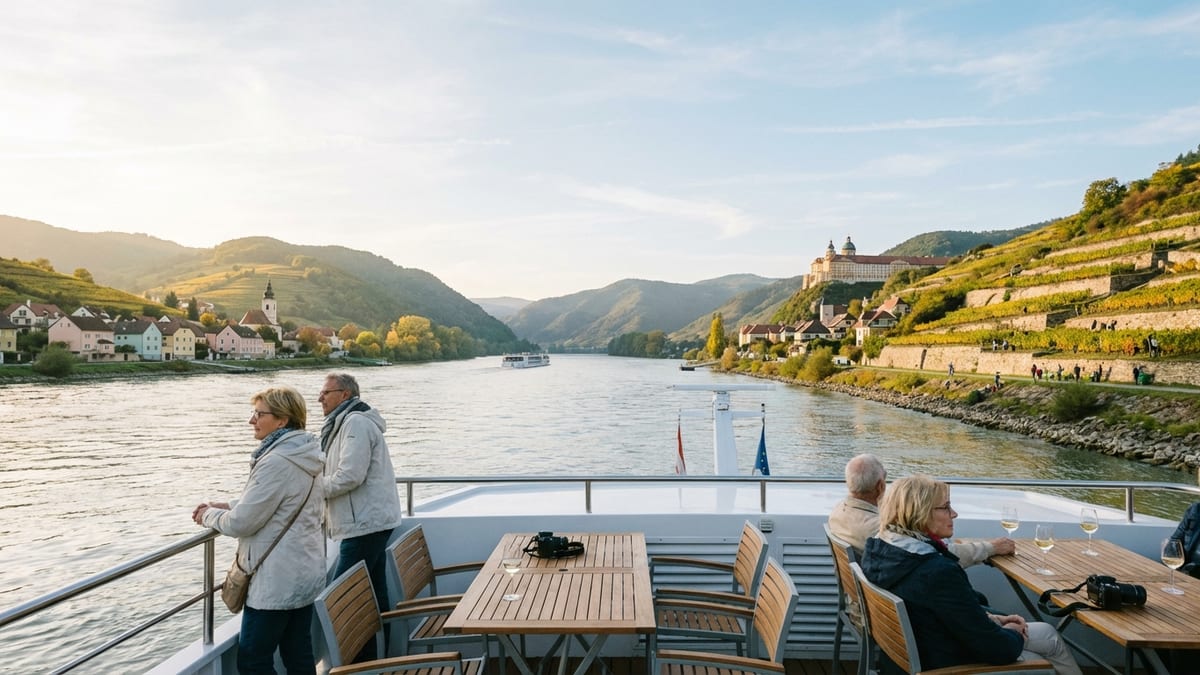
The Danube is more than just Europe’s second-longest river. For many travelers it is a moving grand tour, linking storybook Bavarian towns with imperial capitals, wine valleys, and the Black Sea.
Modern river ships have turned this ancient trade route into one of the continent’s most popular cruise corridors, with options that range from three-night samplers to multi-week expeditions. If you are considering a Danube cruise in 2026, understanding the main routes, ships, water-level realities, and must-see stops will help you choose an itinerary that fits your style and budget.
Understanding the Danube: Geography, Seasons, and Water Levels
The Danube rises in Germany’s Black Forest and travels through or along the borders of ten countries before it reaches the Black Sea. For cruise purposes, the river is usually divided into three segments. The Upper Danube runs from Germany through Austria to roughly Budapest, featuring well-known ports such as Passau, Linz, Melk, Vienna, and Bratislava.
The Middle Danube covers Hungary and the Balkans, including Mohacs, Novi Sad, and Belgrade. The Lower Danube continues through the dramatic Iron Gates gorge and on to Romania and Bulgaria, ending in the Danube Delta near the Black Sea.
On most consumer itineraries, you will see references to Upper or Lower Danube cruises, or a “Grand” route that links both. A shorter itinerary between Passau and Budapest will keep you on the Upper Danube.
Longer itineraries from Nuremberg or Regensburg into Serbia and Romania include at least part of the Middle and Lower stretches. Understanding this structure makes it easier to read brochures and realize whether a trip focuses on central European cities, wine country, or the more remote reaches of the river. This overview naturally leads to the question of whether Danube cruises are worth it for first-time travelers.
Seasonality matters, particularly as climate volatility has made European river levels less predictable. Spring, from March to May, typically brings higher water as snowmelt and rainfall swell the river, especially on the upper reaches through Germany and Austria. Cruise lines see strong bookings in late April and May, when the landscapes are lush and cities are less crowded than in peak summer. High water can occasionally affect clearances under bridges, and ships sometimes need to adjust schedules or bus guests around a swollen stretch, but navigation usually continues.
Late summer and early fall have increasingly become the period to watch on the Danube. Forecasts for 2026 indicate that August could again bring low water levels on some stretches, particularly through Hungary and Serbia, which may force ships to sail with reduced loads or require partial coach transfers. By mid-September, rainfall patterns usually normalize and water levels stabilize, making fall cruises from September through early November attractive for those seeking a balance of comfortable temperatures, reliable navigation, and harvest-season charm.
Core Danube Cruise Routes: From Samplers to Epic Journeys
Most Danube cruises cluster into a handful of classic route types. The quintessential Upper Danube itinerary is a one-week cruise between Passau and Budapest, or sometimes Vilshofen to Budapest. This route typically calls at Linz, the Wachau Valley, Melk, Vienna, and Bratislava, with daytime sailing through some of the river’s most scenic wine-country stretches.
Increasingly, lines also offer round-trip Budapest itineraries built around three capital cities in one go: Budapest, Vienna, and Bratislava, plus smaller stops along the Danube Bend or Wachau Valley. Route details make more sense when you compare the main Danube cruise itineraries side by side.
Longer “Grand Danube” or “Upper and Lower Danube” journeys stretch from Nuremberg or Regensburg through Passau and Vienna to Belgrade and beyond. In 2026, for example, some itineraries marketed as “Grand Danube from the Canal to the Balkans” travel from the Main Danube Canal at Nuremberg all the way through Budapest, Mohacs, Novi Sad, and Belgrade. Even more extended versions reach the Iron Gates gorge and ports like Donji Milanovac, Vidin, and Giurgiu, giving travelers a full view of how the river transitions from central Europe to the Balkans and into Romania’s borderlands.
Combination cruises that link the Danube with the Rhine and Main are also expanding. Itineraries branded as Rhine–Main–Danube odysseys or “Heart of Europe” cruises cross three rivers using the Main Danube Canal. These trips often run from Amsterdam or Basel on the Rhine through Frankfurt, the Main Valley, Nuremberg, and Regensburg to Vienna and Budapest. They appeal to travelers looking for a single, extended voyage that covers castles on the Rhine, half-timbered German towns on the Main, and Habsburg grandeur on the Danube without changing ships.
Shorter samplers have a growing presence on the calendar. Four-day itineraries through the Wachau Valley, from Passau to Vienna, deliver a compact slice of Danube scenery, often with overnights in Vienna and one or two smaller towns. Winter and Christmas market cruises are another popular niche, including itineraries in December branded along the lines of “Deck the Danube.” These focus on festive markets in Austria, Germany, Slovakia, and Hungary, combining river sailing with atmospheric evenings in old-town squares lit by holiday stalls.
Major Danube Ports and What to Expect Ashore
Some of the romance of Danube cruising comes from the contrast between ports of call. On a typical week you might start in a compact Bavarian city, move through baroque monastic complexes, and end your day in a grand imperial capital. Certain stops feature on nearly every Upper Danube itinerary. Passau, at the confluence of three rivers, is a common embarkation port in Germany. Its old town is known for pastel facades, narrow lanes, and the baroque St. Stephen’s Cathedral, home to one of the world’s largest church organs. Many itineraries include an organ concert or guided walking tour here before or after embarkation.
Downriver, Linz has evolved from a primarily industrial town into a creative and cultural hub. Travelers might split their time between its modern riverside museums and day trips to Salzburg or the Czech town of Cesky Krumlov. The Wachau Valley then presents one of the most iconic Danube landscapes, with terraced vineyards, apricot orchards, and hilltop ruins. Ports such as Melk, Krems, and Durnstein anchor this section. Melk Abbey, with its dramatic hilltop setting and lavish library, is a frequent highlight, while Durnstein charms with cobblestone streets and the ruins of a castle associated with Richard the Lionheart.
Vienna remains the marquee city on many itineraries. Ships usually dock within easy reach of public transport, and some offer shuttles into the center. Shore excursions range from classical walking tours of the Hofburg, Stephansplatz, and the Ringstrasse to more specialized outings focused on coffeehouse culture or evening concerts. Because Vienna has so much to offer, many routes schedule late departures or overnight stays, giving guests time for both daytime visits to museums and an evening performance or independent dinner ashore.
Further downstream, Bratislava and Budapest round out the trio of capital cities that define many Danube trips. Bratislava’s compact old town, crowned by a hilltop castle, is ideal for half-day exploring. The city’s position on a narrow curve of the river gives passengers striking views during arrival and departure. Budapest, by contrast, invites a slower pace. Many cruises either begin or end here, allowing time to explore Buda’s castle district, Pest’s grand boulevards, thermal baths, and the illuminated Parliament building, which becomes a highlight of nighttime sailing along the city’s riverfront.
On longer itineraries into the Balkans and Lower Danube, ports such as Mohacs, Novi Sad, Belgrade, and Vidin appear more frequently. These stops show a different, often less tourist-saturated face of the river, with a mix of Ottoman, Austro-Hungarian, and socialist-era influences. Belgrade in particular has emerged as a vibrant urban stop with a growing food and nightlife scene. Further east, the Iron Gates gorge between Serbia and Romania offers some of the Danube’s most dramatic scenery, with steep cliffs flanking the waterway and large rock-carved monuments visible from deck.
Ships on the Danube: Styles, Cabins, and Onboard Life
Danube ships share more similarities than ocean liners. River locks and bridge clearances impose strict limits on size and height, which means most vessels carry between 150 and 200 passengers with two or three main cabin decks. Still, design differences can meaningfully affect your experience. Lines such as Viking, AmaWaterways, Avalon, Emerald, Uniworld, Scenic, Riverside, and CroisiEurope all field modern ships on the Danube, each with a distinct approach to cabins, dining, and inclusions.
Cabin categories generally range from lower-deck staterooms with smaller windows set high in the wall to upper decks with French balconies or full-size step-out balconies. Some newer ships emphasize larger suites and wellness spaces. A small number of wide-bodied vessels on the Upper Danube, for example, are almost twice the width of standard river ships, with extra restaurants and more spacious cabins. These designs are intended for itineraries without the most restrictive locks and bridges and can feel more like boutique hotels afloat.
Onboard life is deliberately relaxed compared with big-ship cruising. Dress codes lean smart casual, with only the occasional suggested dressier evening. Dining rooms generally offer open seating, allowing guests to mix or keep to themselves as they wish. Contemporary ships emphasize regional cuisine, pairing Austrian or Hungarian specialties with international standards. Breakfast and lunch are usually buffet-forward with cooked-to-order options, while dinner is plated. Wine and beer with meals are common inclusions, though “all-inclusive” packages that cover drinks throughout the day are also available at higher price points.
Entertainment and enrichment reflect the cultural focus of river itineraries. Expect local musicians, folkloric groups, or lecturers to come aboard in Vienna, Bratislava, or Budapest. Some operators emphasize active and experiential offerings, including onboard fitness classes, small-group tastings, or biking and hiking excursions ashore. Others lean into quiet luxury with spa treatments, butler service in select suites, and curated small-group tours. Wi-Fi is standard on most ships, though speeds can vary by stretch of river and time of day.
Choosing the Right Itinerary: Duration, Direction, and Season
Choosing a Danube cruise starts with some basic decisions about how long you want to travel and what you most want to see. A seven-night Upper Danube itinerary between Passau or Vilshofen and Budapest remains the most popular introduction. It includes many of the river’s greatest hits in a manageable timeframe and fits neatly into a roughly 10-day trip from North America once you add flights and perhaps a pre- or post-cruise city stay. Travelers who want a compact experience with minimal transfers and broad appeal will find this route hard to beat.
Those who are already familiar with central Europe or who want a deeper dive into the river’s geography might consider 10- to 14-night itineraries that travel from Nuremberg or Regensburg to Belgrade, Giurgiu, or the Black Sea. These longer sailings provide more days of pure river scenery, more time in smaller towns, and an understanding of how the Danube functions as a transport route and cultural corridor beyond the big-name capitals. Combination Rhine–Main–Danube journeys appeal to travelers with extended vacation time who would rather settle into one ship than piece together separate trips.
The question of direction is often secondary to dates and pricing, but there are subtle differences. Sailing from west to east, for example from Passau to Budapest, means you progressively move from German and Austrian towns to the more dramatic landscapes and capitals of Slovakia and Hungary. Traveling in the opposite direction means starting with Budapest’s big-city energy and gradually transitioning to smaller, quieter stops and more intimate stretches of river. If you are booking a particular line’s flagship ship or cabin style, direction may be dictated by availability.
Season might be the most consequential factor after itinerary. Spring offers fresh greenery and cooler temperatures, but also the possibility of high water. Summer has long, light-filled evenings, busy cities, and school holiday crowds, combined with an increased risk of low water in late July and August. Early fall, especially September and early October, is an appealing compromise, combining generally reliable water levels, harvest season in wine regions, and milder weather. Late fall and winter trips, including Christmas market cruises, trade warm weather for festive atmospheres, fewer crowds in major cities, and lower average prices, though it is important to pack for colder, sometimes wet conditions.
Practical Planning: Costs, Booking Trends, and Water-Level Contingencies
The cost of a Danube cruise can vary significantly based on timing, ship category, and cabin type. For 2026 sailings, some midrange cruise-only itineraries on the Danube and connected rivers are currently advertised from the low 1,700s in US dollars per person for longer shoulder-season departures in standard cabins, while premium and luxury offerings commonly start several thousand dollars higher. Fares that appear lower at first glance may exclude port charges, gratuities, premium excursions, or some beverages, so it is important to compare inclusions as carefully as base prices.
Booking patterns have shifted in the post-pandemic years. Many departures on popular spring and fall dates, particularly around European public holidays and festival seasons, are now opening earlier for sale, sometimes with early-booking savings. At the same time, climate impacts and the possibility of water-level disruptions are leading some travelers to wait longer, seeking last-minute deals when forecasts are clearer. As of early 2026, it remains common for lines to hold sales several months in advance, particularly for new ships or special itineraries debuting in 2026 on both the Danube and Rhine.
Water levels are a practical concern, but not necessarily a reason to avoid the river. Operators along the Danube have developed robust contingency plans, honed during previous summers with low water and springs with high water. If a stretch becomes too shallow for safe passage, lines may use a “ship swap” arrangement, where guests disembark, transfer by coach around the affected section, and board a sister ship on the other side to continue the itinerary. In high water, when bridge clearances are an issue, a cruise may adjust timings, swap port days, or temporarily restrict access to the sun deck for safety.
When you evaluate itineraries, look less for guarantees about exact ports and more for a line’s track record of communication and guest care during disruptions. It is reasonable to ask a booking agent what contingency plans are in place, whether any alternative touring is provided if a port is missed, and how compensation is handled in the event of major changes. Travel insurance that covers trip interruption and additional expenses, such as extra hotel nights or independent rail tickets, is also worth considering given the evolving climate outlook along the Danube and other European rivers.
The Takeaway
A cruise on the Danube remains one of the most efficient and satisfying ways to experience the heart of Europe. Whether your priorities lean toward grand palaces in Vienna and Budapest, vineyard-clad river valleys, or off-the-beaten-path towns in the Balkans, there is likely an itinerary suited to your interests and schedule. Routes now range from compact Wachau Valley samplers and capital-to-capital loops to ambitious Rhine–Main–Danube odysseys that knit together multiple rivers and regions.
The ships themselves continue to evolve, with newer vessels offering larger cabins, wellness facilities, and a greater choice of dining and activity styles, from highly social to quietly luxurious. While water levels and climate change introduce more uncertainty than in decades past, cruise lines have become more adept at managing disruptions with ship swaps, modified routes, and alternative touring. Choosing shoulder seasons, building in flexibility, and working with a reputable operator can help you enjoy the Danube’s changing moods rather than be upended by them.
For first-time river cruisers, the Upper Danube between Passau and Budapest remains a near-ideal introduction. For return visitors or those craving a deeper narrative, longer sailings into the Middle and Lower Danube provide a richer sense of how this river has shaped, and continues to connect, widely different corners of Europe. Whichever path you choose, a well-planned Danube cruise offers a rare combination of convenience, cultural depth, and ever-changing views from your floating base of operations.
FAQ
Q1. What is the best time of year to take a Danube river cruise?
Most travelers find late April through June and September through early October to be the sweet spots. Spring offers fresh landscapes and fewer crowds, while early fall combines harvest-season charm with generally stable water levels and comfortable temperatures. July and August can be very warm and busier in cities, and there is a higher risk of low water in late summer, especially in drought years.
Q2. How long is a typical Danube cruise and how many countries will I visit?
The classic Upper Danube cruise lasts seven nights, usually visiting at least three or four countries, often Germany, Austria, Slovakia, and Hungary. Longer itineraries of 10 to 14 nights can add the Czech Republic via overland excursions, as well as Croatia, Serbia, Romania, or Bulgaria, depending on the route.
Q3. Are Danube river cruises suitable for children or multigenerational trips?
They can be, but it depends on the line and season. Some operators position the Danube primarily as an adult-focused, cultural product, while others offer family-themed or multigenerational departures with kid-friendly shore excursions and onboard activities. If you are traveling with children or teens, look for dedicated family itineraries and check minimum age policies and available cabin configurations.
Q4. How do water levels actually affect my cruise experience?
In most seasons, water levels have little visible impact on guests beyond occasional sun-deck closures near low bridges or locks. When levels become too low or too high in specific stretches, ships may not be able to pass. In that case, cruise lines typically transfer guests by coach around the affected section and continue the itinerary on a sister ship, or they adjust the route with extra time in certain ports. Total cancellations are relatively rare but can occur in extreme conditions.
Q5. Do I need to worry about seasickness on a Danube cruise?
Seasickness is uncommon on river cruises. The Danube is generally calm, with minimal swell compared with the open sea. Modern river ships are designed for stability, and motion is usually limited to subtle vibrations or slight movement when docking and passing through locks. Most travelers, even those prone to seasickness on ocean voyages, find the experience very comfortable.
Q6. What should I pack for a Danube cruise in spring or fall?
Layering is key. Pack a light waterproof jacket, a warm sweater or fleece, comfortable walking shoes suitable for cobblestones, and smart-casual outfits for dinners. In spring and fall, temperatures can swing from cool mornings to mild afternoons, and showers are possible. A small daypack, a travel umbrella, and a scarf or light hat for sun and wind on deck are also useful.
Q7. How much independent time will I have in each port?
Most itineraries include at least one included walking tour or excursion in each port, typically lasting two to three hours, followed by free time to explore on your own. In cities such as Vienna and Budapest, ships often dock for a full day or overnight, giving you enough time for both guided activities and independent exploration. You are usually free to skip organized tours and explore on your own, provided you respect the ship’s all-aboard times.
Q8. Are Danube cruises all-inclusive or will I pay extra once onboard?
It depends on the cruise line. Many fares include accommodation, most meals, basic excursions, and Wi-Fi, with house wine and beer at lunch and dinner. Premium drinks, optional excursions, gratuities, and spa services are typically extra. A smaller number of luxury lines bundle more into the fare, including open-bar drinks and gratuities. Review what is included for your specific sailing so you can budget accurately.
Q9. How far in advance should I book a Danube cruise?
For peak spring and fall departures, particularly on new ships or special itineraries, booking six to twelve months ahead is common, especially if you want a specific cabin type or deck. Shoulder-season or winter cruises may offer more flexibility closer to departure. As climate and water-level patterns evolve, some travelers are choosing to book slightly later, but availability on popular dates can still tighten well before sailing.
Q10. Is a Danube river cruise a good option for solo travelers?
Yes, especially on lines that offer single cabins or reduced solo supplements on select departures. The intimate scale of river ships and open-seating dining make it easy to meet fellow travelers, and group shore excursions provide a built-in social structure. If you prefer a quieter, independent experience, it is also possible to enjoy a Danube cruise largely on your own schedule, joining or skipping group activities as you wish.