

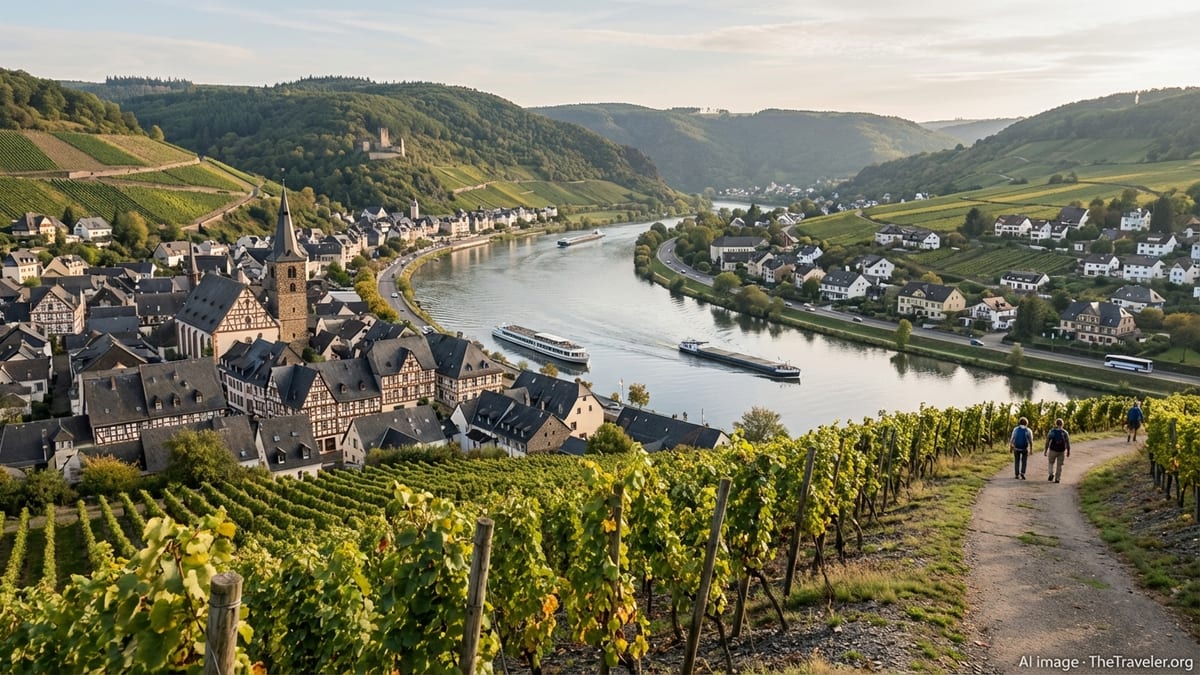
The twin town of Bernkastel Kues, draped in vineyards on a sweeping bend of the Mosel River, is an evocative base for exploring one of Germany’s most romantic wine landscapes. Within an hour or so in almost every direction, visitors can reach turreted castles, riverside villages, forested hiking trails, and quiet wine estates where Riesling is a way of life.
Trip planning often depends on realistic expectations, which is why travelers check if Bernkastel-Kues is worth visiting for more than one night. This guide explores the most rewarding day trips from Bernkastel Kues, with practical detail on what to see, how to get around, and how to make the most of limited time among villages, vineyards, and castles.
Planning Your Day Trips from Bernkastel Kues
Bernkastel Kues sits roughly midway along the Middle Mosel, giving travelers easy access to both up and downriver destinations as well as detours into the Eifel and Hunsrück hills.
If your time is limited, covering the main things to do in Bernkastel-Kues first helps decide which day trips are realistic. Thoughtful planning is worthwhile, because travel times on the winding river roads can be longer than they look on a map. With good timing and a bit of flexibility, however, you can comfortably visit at least one village and one major site on most days.
Public transport along the Mosel corridor is reasonably good, especially in season, and river boats add a scenic alternative between many towns. Drivers enjoy maximum freedom to dip into side valleys and hilltop lookouts. Many visitors find it easiest to build their excursions around themes: one day centered on castles, another on architecture and wine history, another on quieter villages where time seems to slow to river pace.
How to Get Around the Mosel Region
Getting out of Bernkastel Kues usually means choosing between car, bus, boat, bicycle, or a combination of these. For most travelers, a mix of driving or buses with one scenic boat leg offers the best balance of convenience and atmosphere.
By car, the main Mosel road follows close to the river, with frequent pullouts and signposted viewpoints. Distances are short in kilometers but traffic can be slow behind trucks and tractors, especially during harvest in September and October. Parking in popular towns such as Cochem and Traben Trarbach is generally well signposted but can be tight on festival weekends.
Public buses link Bernkastel Kues with neighboring wine villages and with rail hubs such as Wittlich and Traben Trarbach. From there, regional trains connect along the Mosel to Trier, Cochem, and Koblenz. River boats operate on a primarily seasonal timetable, usually from late spring through early autumn, connecting Bernkastel Kues with popular stops including Traben Trarbach and Cochem. Advance timetable checks are essential outside the peak summer months.
Best Times of Year for Excursions
The Mosel is a year round destination, but the character of day trips changes markedly with the seasons. Spring brings fresh green to the slopes and quieter streets in the villages, with blossom in the orchards and vineyards coming back to life.
Summer from late June through August offers long evenings, regular river boat schedules, and warm conditions for hiking and cycling. It is also the busiest period, so castle car parks and famous outlooks can feel crowded by midday. Autumn is arguably the most atmospheric time to visit, as vines turn golden and harvest work animates every hillside. Bernkastel Kues itself hosts the Weinfest der Mittelmosel over five days around the first Sunday in September, drawing large crowds and transforming the town into a festival zone, which travelers should factor into their day trip planning.
In winter months many castle interiors close and boat services largely cease, but the villages remain charming in a quieter, more introspective way. A winter stay is best suited to travelers with their own transport, who are happy to combine short walks with long evenings in traditional wine taverns.
Classic Mosel Villages Within Easy Reach
One of the simplest yet most satisfying ways to spend a day from Bernkastel Kues is to drift along the Mosel, stopping at villages that catch the eye. Some are known for preserved half timbered houses and market squares, others for steep vineyards and celebrated wines. Many can be comfortably combined into a single outing by car, bus, or bicycle, with ample opportunities to pause at wineries along the way.
Traben Trarbach: Art Nouveau and Wine Cellars
About 20 kilometers upriver from Bernkastel Kues, Traben Trarbach straddles both banks of the Mosel, connected by a distinctive bridge that hints at the town’s Art Nouveau heritage. Around 1900 it ranked among the most important wine trading centers in Europe, second only to Bordeaux, and the wealth of that era still shows in its noble townhouses and villas. Guided architectural walks today spotlight buildings by Berlin architect Bruno Möhring, including the Brückentor gate, the riverside Hotel Bellevue, and several grand villas that blend romantic detail with modern comfort.
Visitors can explore this architectural legacy through public tours focused on the Belle Époque period and its wine driven prosperity, often ending in one of the town’s extensive underground cellars. These vaulted spaces once stored enormous quantities of Riesling destined for Britain and overseas markets and now host tastings, exhibitions, and special events. Above ground, Traben Trarbach’s river promenade and compact streets offer relaxed strolling between cafés and wine bars.
Zeltingen Rachtig: Riverside Calm and Steep Slopes
Just a short hop downriver from Bernkastel Kues, Zeltingen Rachtig is a quieter alternative to its better known neighbor, with a handsome ensemble of traditional buildings gathered near the water and a number of top quality vineyards rising sharply behind the village. The riverside promenade has benches and flat walking paths, making it an easy stop for families and casual strollers.
Above the village, vineyards such as Zeltinger Sonnenuhr are among the Mosel’s classics, producing nuanced Rieslings that appear on serious wine lists worldwide. Many small estates welcome visitors for tastings by appointment or during posted opening hours. A visit here offers a close look at the hand tending required to work the region’s steep slopes, especially when seen from one of the paths that zigzag upwards through the vines.
Kröv: Vineyards, Views, and Traditional Taverns
Further upriver from Traben Trarbach, the village of Kröv sits in a generous curve of the river and is surrounded by broad vineyard terraces. It has a particularly traditional feel, with wine taverns tucked into side streets and a calm rhythm of village life centered on the church tower and main square.
Many visitors combine a stop in Kröv with short walks into the vineyards, where waymarked routes climb to viewpoints above the Mosel’s horseshoe bend. From these vantage points you can look back toward Traben Trarbach and downriver toward Bernkastel Kues, with cargo barges and excursion boats gliding below. The local wines, often labeled under the historic Kröver Nacktarsch name, range from easy drinking to more complex bottlings that reward attention.
Piesport and Trittenheim: Classic Vineyard Names
Downriver from Bernkastel Kues, the broad amphitheater of vineyards around Piesport is one of the most recognizable wine landscapes in Germany. Terraces climb in sweeping arcs above the river, with famous individual sites producing some of the region’s most sought after Rieslings. The village itself, though compact, makes a pleasant place for a stroll, with tasting rooms and riverfront paths that invite quiet contemplation of the steep surrounding slopes.
A little further, Trittenheim occupies another dramatic loop of the Mosel, framed by vineyards that seem to pour into the river. It is smaller and more intimate than Piesport, with a scattering of guesthouses and traditional wine estates. Together, these two stops form an ideal day focused on Mosel viticulture, especially for travelers who wish to spend more time in tasting rooms than in museums or castle courtyards.
Castles and Fortresses: From Hilltop Ruins to Storybook Icons
The Mosel valley is dotted with castles in varying states of preservation, from romantic ruins overlooking the vineyards to meticulously restored complexes filled with period furnishings. From Bernkastel Kues, several of the most compelling options can be visited on straightforward day trips, each offering a different window into the region’s turbulent history.
Reichsburg Cochem: Crown Above the Mosel
Cochem lies roughly an hour’s drive or a scenic boat and train combination from Bernkastel Kues, making it a feasible and highly rewarding day excursion. The town’s compact old center clusters below the steep cone of the hilltop Reichsburg, whose towers and battlements form one of the most enduring images of the Mosel. The castle you see today is largely a 19th century reconstruction in neo romantic style, but it sits on foundations dating back to a medieval stronghold that once controlled trade along the river.
Guided tours take visitors through richly furnished halls hung with hunting trophies, historic weapons, and stained glass, while the castle terrace offers sweeping views over Cochem’s rooftops and surrounding vineyards. The ascent can be made on foot via steep lanes and paths or by shuttle bus from the town below. Many travelers combine castle time with a stroll along Cochem’s riverside promenade, a visit to local wine estates, and perhaps a short boat trip to nearby villages.
Eltz Castle: A Fairytale Fortress in the Forest
Eltz Castle, or Burg Eltz, lies not directly on the Mosel but in a side valley near the village of Wierschem, between the river and the Eifel hills. From Bernkastel Kues, it is best reached by car, typically in around an hour and a quarter, though public transport combinations are also possible via regional hubs. Widely praised as one of the most beautiful castles in Germany, it has been owned by the same family for some 900 years and escaped the large scale destruction that befell many neighboring fortresses.
The castle opens seasonally to visitors, with daily touring hours from late March to early November. Tickets purchased at the gate include a guided tour through the interior, access to the inner courtyard, and entry to a treasury filled with historic armor, jewelry, and ceremonial objects. Tours, available in German and at intervals in other languages, typically last around 35 to 40 minutes. Outside of the winter closure period, visitor numbers can be high on weekends and during school holidays, so arrival earlier in the day helps avoid queues.
From the car park or bus stop, paths lead downhill through woodland, opening periodically onto views of the castle rising above the Elzbach stream. A circular hiking route connects several outlooks, offering photographers varied angles on the towers and pointed roofs. Even travelers who have visited many European castles often find Eltz exceptional for its remarkably intact medieval atmosphere and secluded forest setting.
Grevenburg and Mont Royal: Ruins Above Traben Trarbach
Closer to Bernkastel Kues and easily combined with a visit to Traben Trarbach are the ruins of Grevenburg and the former French fortress of Mont Royal. Grevenburg once served as the residence of the Rear County of Sponheim and saw repeated conflict before being destroyed by French forces in the 18th century. Today, its remaining wall sections and foundations cling to the hillside above Traben Trarbach, accessible by hiking trails that climb through forest and vineyard.
Mont Royal, meanwhile, occupies a broad plateau north of the town, where a star shaped fortress was constructed under the direction of Vauban in the late 17th century. Although largely dismantled in the early 18th century, its ramparts and earthworks remain visible and have been partially interpreted for visitors with information boards. The site is also popular for walking and cycling, with forest paths and open clearings offering far reaching views over the Mosel loop below.
Together, Grevenburg and Mont Royal offer a striking contrast to more thoroughly restored sites such as Cochem and Eltz. The emphasis here is on landscape and imagination: moss covered stones, traces of bastions, and the sense of how fortifications once dominated both the river and the trade routes that crossed it.
Wine Country Immersions: Vineyards, Tastings, and Trails
Day trips from Bernkastel Kues need not always revolve around a single village or castle. Many visitors prefer to structure their time around the wine culture that has shaped the Mosel valley for centuries. This can mean visiting specific estates, following signposted wine trails, or joining guided tours that blend tasting with insights into history, geology, and vineyard work.
Visiting Local Wineries
Almost every village within a short distance of Bernkastel Kues supports multiple family run wineries, some with histories stretching back generations. Visiting these estates gives a human face to the steep slopes seen from the river and road. Many remain small, with cellars and tasting rooms tucked behind unassuming street fronts; others occupy large houses or even former merchants’ mansions that reflect 19th and early 20th century prosperity.
While some wineries operate walk in tasting counters during posted hours, others require or strongly prefer advance bookings, particularly for English language tours or seated tastings of higher end wines. A typical visit may include a cellar tour, explanation of vineyard sites and classifications, and samples ranging from bone dry to lusciously sweet Rieslings. Purchases can often be shipped, though travelers driving their own cars may prefer to buy on the spot for later enjoyment.
To make the most of a focused wine day, travelers often choose one or two villages, such as Graach, Wehlen, or Zeltingen Rachtig, and arrange a small number of longer visits rather than a quick succession of brief tastings. This slower rhythm mirrors the pace of the river and leaves space to absorb the nuanced differences between neighboring vineyards.
Hiking and Cycling Through the Vineyards
For many, the most memorable encounters with Mosel wine country come not in the tasting room but on the trails that wind between the vines. The region maintains an extensive network of waymarked paths ranging from gentle riverside promenades to steep climbs that reward effort with panoramic views. From Bernkastel Kues itself, paths lead up to the Landshut castle ruins and along the ridges above the town, with spur routes dropping into adjacent valleys and villages.
Further afield, multi stage routes trace the Mosel from village to village, with sections that can be tackled as day hikes. Information panels along the way explain grape varieties, cultivation methods, and the geological history that underpins the area’s famed slate soils. In autumn, hikers often share the paths with harvest workers and tractor traffic, adding a sense of participation in the seasonal cycle.
Cyclists can choose between largely level bike paths close to the river and more strenuous circuits that climb into the hills. Rental outlets in Bernkastel Kues and larger neighboring towns offer conventional and electric bikes, the latter particularly useful for tackling routes above the valley floor. A typical cycling day might link Bernkastel Kues with Traben Trarbach via one bank of the river and return via the other, punctuated by tasting stops and café breaks.
Experiencing Local Wine Festivals
Timing a visit to coincide with a wine festival offers a concentrated glimpse of Mosel culture, although it does change the character of day trips. Bernkastel Kues hosts the Weinfest der Mittelmosel around the first Sunday of September, a five day celebration that draws roughly 200,000 visitors and transforms the riverfront into a strip of wine stalls, food stands, and music stages. During this period, day trips to quieter villages can provide a welcome counterbalance to the intensity in town.
Smaller festivals take place in many neighboring villages throughout late summer and early autumn, often centered on parish courtyards or village squares. These events pair local wines with simple regional dishes and brass band music, with a more intimate atmosphere than the large regional fairs. Travelers basing themselves in Bernkastel Kues can easily reach these celebrations by car or taxi and return to quieter accommodations afterward.
Cultural and Architectural Highlights Beyond Bernkastel Kues
While wine and castles dominate many itineraries, the Mosel region around Bernkastel Kues also offers museums, architectural ensembles, and themed tours that shed light on commerce, design, and daily life in earlier centuries. A number of these can be reached on quick half day excursions, leaving time to combine them with village strolls or vineyard visits.
Art Nouveau Heritage in Traben Trarbach
Traben Trarbach stands out among Mosel towns for the coherence and quality of its early 20th century architecture. Prosperity rooted in the wine trade funded a wave of ambitious building projects, many led by architect Bruno Möhring. His designs, ranging from the ornate Brückentor at the bridgehead to riverside villas and hotels, blend Jugendstil ornament with a confident, modern sense of scale and light.
Guided walks focused on this Art Nouveau heritage typically trace a route between key buildings, explaining their original uses and the social context that produced them. Participants learn how Traben Trarbach, once a key node in global Riesling commerce, attracted international merchants and tourists who expected cosmopolitan comforts. Tours often end in a historic wine cellar, underlining the fact that architecture here was inseparable from the industry that funded it.
The Mittelmosel Museum
For travelers seeking historical overview, the Mittelmosel Museum in Traben Trarbach offers a compact but wide ranging introduction to the region’s past. Housed in a former patrician residence at the riverfront, it presents exhibits on rural domestic life in the 19th century, the lifestyle of the wine trading elite, and the history of local castles and fortifications including Starkenburg, Grevenburg, and Mont Royal.
Period rooms furnished with original pieces help visitors visualize how prosperous families once lived along the Mosel, juxtaposing fine interiors with tools and household items from surrounding farms and vineyards. Displays on castle history, meanwhile, set the dramatic ruins on nearby hillsides in context, linking them to broader European conflicts and shifting borders. The museum’s scale makes it suitable for a half day visit, easily combined with a meal or tasting elsewhere in town.
Villa Huesgen and Riverside Villas
Among the most striking individual buildings in Traben Trarbach is Villa Huesgen, a large Art Nouveau residence completed in 1904 to designs by Bruno Möhring for wine merchant Adolph Huesgen. The villa’s flowing forms, elaborate details, and commanding position near the river encapsulate the ambitions of a town that saw itself as an international center of wine commerce. It now stands under heritage protection as a significant example of early 20th century architecture in the region.
Even for those who do not visit the interior, viewing the villa from the street and riverside paths offers a sense of the stylistic experimentation of the time. Nearby villas, merchant houses, and former wine warehouses form an ensemble that rewards slow walking and close observation. Decorative ironwork, carved stone, and stained glass windows all reflect the confidence of a period when Mosel wine fetched high prices in distant markets.
Practical Tips for Successful Day Trips
A bit of preparation goes a long way towards ensuring that day trips from Bernkastel Kues are relaxed rather than rushed. Considering transport logistics, seasonal changes, and simple day to day needs such as food and clothing can help travelers focus on the pleasure of villages, vineyards, and castles once out on the road.
Transport and Timing
Traveling the Mosel valley often takes longer than expected, particularly if you allow time for photograph stops and spontaneous detours. It is wise to plan no more than two major sights in a single day, especially if those include time consuming experiences such as castle tours or lengthy wine tastings. Allowing for a leisurely lunch and unplanned pauses typically results in a more enjoyable day than a packed hour by hour schedule.
Bus and boat timetables can change between seasons and on weekends, so checking schedules shortly before travel is essential. Many services operate more frequently in July and August than in April or October. On days when public transport options are limited, it may be worth investing in a taxi for specific transfers, particularly between remote castles and the nearest rail or bus hubs.
What to Pack and Wear
Even in high summer, conditions on hilltop castle sites and vineyard trails can be cooler and windier than in the sheltered river towns. Comfortable walking shoes with good grip are strongly recommended, as many paths are steep, rocky, or paved with old cobblestones. A light waterproof layer, hat, and refillable water bottle are helpful across all seasons, as showers can arrive quickly and shops or cafés may be spaced further apart than in a city.
For days focused on wineries, travelers might wish to bring a small backpack to carry bottles or brochures, leaving hands free for photos. In cooler months and during shoulder seasons, layering is key, since castle interiors and wine cellars can feel markedly colder than sunny terraces, especially during longer guided tours.
Etiquette and Local Customs
In wine villages, many estates remain family homes as well as businesses, so simple courtesies matter. Calling ahead when possible, arriving on time for arranged appointments, and purchasing at least a small quantity of wine after a formal tasting are all appreciated. If you are unsure whether a tasting is free or carries a set fee, it is reasonable to ask before starting.
At castles and historic sites, following designated paths helps protect both visitors and fragile structures. Certain areas may close temporarily during renovation or restoration work, particularly at heavily visited sites. Respecting posted signs and local staff guidance ensures continued access for everyone. Photography rules vary in castle interiors and museums, so it is best to confirm before taking pictures indoors.
The Takeaway
Bernkastel Kues may be the heart of many Mosel itineraries, but the true richness of the region reveals itself in the constellation of villages, vineyards, and castles within easy reach of its riverfront streets. From the Art Nouveau facades and ruined fortresses of Traben Trarbach to the fairy tale towers of Eltz Castle and the bustling terraces below Reichsburg Cochem, day trips radiating from this town offer endlessly varied perspectives on a single winding river.
Whether you choose to drift between villages on a boat, climb through terraced vineyards to windswept ruins, or linger over vertical tastings in historic cellars, each excursion adds a layer to your understanding of the Mosel. With thoughtful planning, respect for local rhythms, and a willingness to let the landscape dictate your pace, day trips from Bernkastel Kues become more than sightseeing; they become a way to briefly inhabit one of Europe’s most distinctive river cultures.
FAQ
Q1: How many days should I allow in Bernkastel Kues for day trips?
Most travelers find that three to five full days in Bernkastel Kues allows enough time for several varied day trips, including at least one castle focused excursion, one or two village and wine days, and a flexible day that can adjust to weather or spontaneous discoveries.
Q2: Is it realistic to visit both Cochem and Eltz Castle in a single day from Bernkastel Kues?
It is technically possible by car but not recommended, as travel times and guided tours at each site can easily turn the day into a rush; focusing on either Cochem and Reichsburg or Eltz Castle and nearby villages usually results in a more enjoyable, less hurried experience.
Q3: Do I need a car to make worthwhile day trips from Bernkastel Kues?
A car provides maximum flexibility, especially for reaching sites such as Burg Eltz and Mont Royal, but it is not essential; a combination of buses, trains, and river boats can comfortably connect you to major towns like Traben Trarbach and Cochem, with taxis filling occasional gaps.
Q4: When is Eltz Castle open to visitors?
Eltz Castle normally opens daily from late March until early November, with entry to the grounds and guided interior tours starting from mid morning; the castle is closed during the winter months, so travelers visiting between November and March will see it only from the outside, if at all.
Q5: Are wine tastings along the Mosel suitable for visitors who are new to Riesling?
Yes, most wineries along the Mosel welcome beginners and will often start with simple explanations of sweetness levels and styles, offering flights that move from dry to sweeter wines so that visitors can learn their preferences with guidance from the host.
Q6: Can I hike between villages and return to Bernkastel Kues by boat or bus?
In many cases this is possible, especially in the main season when boat and bus services are more frequent; a common strategy is to travel out by bus or boat in the morning, hike between one or two villages during the day, and return by another mode of transport in the late afternoon.
Q7: Are day trips from Bernkastel Kues child friendly?
Many excursions are well suited to families, particularly visits to easily reached castles such as Reichsburg Cochem, gentle riverside walks, and short boat trips; parents should, however, be cautious with young children on steep vineyard paths and castle ramparts where protective railings may be low or absent.
Q8: How crowded do villages and castles get during peak season?
In July, August, and during major wine festivals, popular sites like Cochem and Burg Eltz can become very busy by late morning, with queuing for parking and guided tours; visiting early in the day, on weekdays, or during the shoulder months of May, June, September, and October generally offers a calmer experience.
Q9: Is it necessary to speak German for day trips in the Mosel region?
Basic English is widely understood in tourist oriented businesses such as hotels, restaurants, castles, and wineries, especially in larger towns; learning a few simple German phrases is appreciated and can be helpful in smaller villages, but it is not essential for most practical arrangements.
Q10: What is the best way to combine wine tasting with safe travel?
The safest approaches are to rely on public transport or taxis on days devoted to wine, to designate a non drinking driver in your group, or to focus tastings on small sample pours rather than full glasses; many travelers also prefer to schedule their main tastings in the afternoon and end the day with a long meal before returning to Bernkastel Kues.