


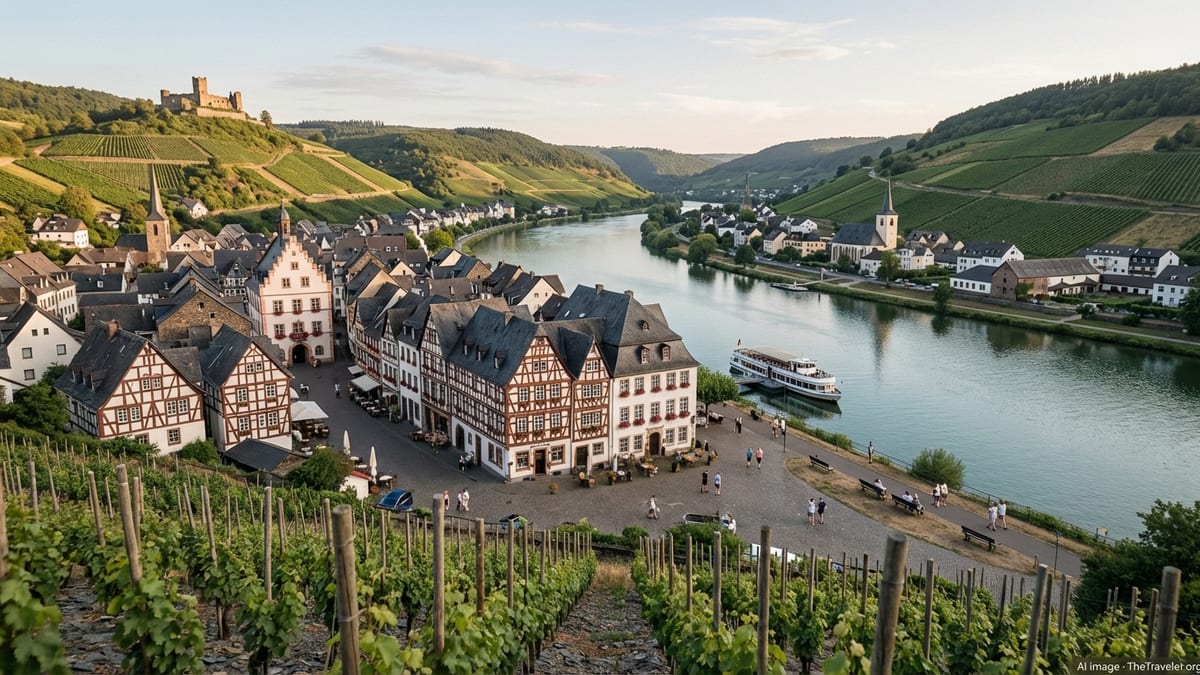
Straddling both banks of a sweeping Mosel River bend, Bernkastel-Kues pairs storybook half-timbered houses with some of Germany’s finest Riesling vineyards. It is small enough to feel intimate yet packed with experiences that can easily fill several days. This guide focuses on the very best things to do in and around Bernkastel-Kues, along with a few overrated or skippable options so you can make the most of limited time.
Getting Oriented in Bernkastel-Kues
Bernkastel-Kues is technically a twin town: medieval Bernkastel on one side of the Mosel, and quieter Kues on the other. Most visitors sleep, eat, and stroll in Bernkastel’s old town, then cross the bridge for riverside walks or winery visits in Kues. Understanding this layout helps you plan days that flow naturally instead of backtracking between banks and hills every few hours.
Knowing where attractions are located directly affects which best hotels in Bernkastel-Kues make sense. The historic center of Bernkastel is compact. You can cross it in about ten minutes, but you will want much longer to linger on the main square, climb up narrow lanes, and wander the river promenade. Vineyards rise immediately behind the town, crowned by the ruins of Burg Landshut. Everything in this article can be done without a car, combining walking, boats, and buses, although a vehicle gives you more freedom to explore smaller villages.
What To Prioritize First
If you only have one full day, concentrate on three signature experiences: wandering the old town, hiking or riding up to Burg Landshut, and tasting local Riesling. With two or three days, you can add a Mosel cruise, vineyard walks, and perhaps a day trip to a neighboring town. Seasonal visitors, especially around Advent, should also build time around the famous Christmas market and its evening events.
What You Can Comfortably Skip
Bernkastel-Kues is remarkably free of tacky attractions, but there are a few time sinks. Generic souvenir shops, overly packaged wine tastings aimed solely at tour groups, and some of the lesser “wine museums” add little to a short visit. Some highlights are best enjoyed slowly, which is why Bernkastel-Kues wine tastings often shape the visit.
Explore the Medieval Old Town of Bernkastel
The centerpiece of any visit is Bernkastel’s compact Altstadt, wrapped around the Marktplatz and radiating into alleys lined with half-timbered houses. This is where you feel the town’s medieval roots most strongly and where you will likely spend much of your time simply wandering without a plan.
Marktplatz and the Iconic Half-Timbered Houses
Marktplatz, the main market square, is the postcard view of Bernkastel: narrow gabled houses leaning toward one another, flower boxes on windowsills, and a Renaissance-style town hall on one side. One of the most photographed buildings is the narrow “pointed house,” seemingly balancing atop a stone base as it reaches upward in timber and plaster.
Come early in the morning or toward twilight for the most atmospheric light and fewer tour groups. In the middle of the day, the square can feel crowded when river cruise passengers pour in. Even then, stepping just one or two lanes away from the square quickly restores the sense of small-town calm.
Wander the Lanes Behind the Square
From the Marktplatz, lanes like Karlstraße and Römerstraße peel away between tall houses. These small streets reveal more modest homes, carved door lintels, and old wine merchants’ buildings. The charm lies in moving slowly, noticing building dates engraved in beams and small shrines tucked into corners.
Allow time to get a little lost. Bernkastel’s old town is small, and any uphill lane eventually leads you closer to the vineyards and viewpoints, while downhill lanes drift back toward the Mosel. This simple structure means you can explore spontaneously, knowing you will never stray far from your starting point.
What to Skip in the Old Town
The old town has a few tourist shops selling mass-produced knickknacks and generic “German” souvenirs. These add little to the experience and are not unique to Bernkastel-Kues. If you plan to bring something home, look for products actually made in the Mosel region, such as local wines, small-batch spirits, honey, or ceramics sold in more traditional shops and wineries.
Enjoy the Mosel River: Promenades and Boat Trips
The Mosel is as much a star as the town itself. Its slow, looping curves, framed by steep vineyards, shape Bernkastel-Kues’s rhythms. Spending time by or on the water connects the views, villages, and vineyards into a single landscape rather than a list of separate sights.
Stroll the Riverside Promenade
The riverside promenade in Bernkastel stretches along the right bank, just a minute or two from the Marktplatz. It is a pleasant place to walk, with benches facing the water and views of bridges, boats, and the hillside of Kues across the river. In summer, small kiosks open for ice cream or drinks, while in cooler seasons it is a peaceful route for an evening stroll.
For a gentler introduction, start here before tackling any hills. You will also find departure points for boat tours, which often run from late spring into autumn, with additional themed cruises around holidays like Christmas and New Year depending on the year’s schedule.
Take a Scenic Mosel Boat Cruise
Boat tours are one of the easiest and most relaxing ways to appreciate how steep and carefully cultivated the Mosel slopes are. Regular cruises connect Bernkastel with nearby towns, offering round trips or one-way journeys. Travelers deciding between towns often compare Bernkastel-Kues vs Cochem at this stage. Schedules change seasonally, with more frequent departures from roughly May to October and special winter routes around the holidays.
Expect routes that pass well-known wine villages and vineyard cliffs while commentary points out features like Roman wine presses or prominent single-vineyard sites. On board, you can usually enjoy Mosel wine by the glass, combining sightseeing and tasting in one experience. Seeing the sights firsthand helps reset expectations about whether Bernkastel-Kues is worth visiting overall.
- Allow at least 2 hours for a standard cruise
- Check departure times a day in advance, especially in shoulder seasons when services may be reduced
- On one-way trips, confirm how you will return, as not all routes run in both directions daily
Special Cruises and Wine-Themed Trips
Several operators offer trips that pair a boat ride with wine tasting, either on the ship or at a winery reached by boat. These are particularly appealing if you want a structured tasting without arranging appointments yourself. In some cases, you can book a cruise that ends at a wine estate, where a host guides you through different Riesling styles before or after sailing.
These wine cruises are best reserved in advance, especially on weekends, as they cater to groups and can fill quickly during harvest season and in the run-up to Christmas.
When River Cruises May Not Be Worth It
In poor weather, especially low, grey days or heavy rain, the views from the boat lose much of their drama. If visibility is limited, you may get more value from a winery visit, museum, or café break in the old town. Also, if you are extremely prone to motion sickness, remember that even the Mosel can feel choppy in strong winds, though it is generally calm.
Climb to Burg Landshut for Panoramic Views
Above the town looms Burg Landshut, the ruined castle whose walls have watched over Bernkastel-Kues for centuries. Restored sections, a modern restaurant, and sweeping views make this one of the must-do experiences. Reaching the castle is also a perfect excuse for a short vineyard walk directly from the old town.
Hiking Up Through the Vineyards
The most rewarding way to reach Burg Landshut is on foot. Paths start near the edge of Bernkastel’s old town and zigzag between vineyards. Even a modest amount of elevation gain quickly opens views back toward the Marktplatz and along the Mosel’s curve.
Wear comfortable shoes, as the path can be steep and uneven, especially after rain. The hike is short enough for most reasonably fit travelers, but if you prefer an easier route, there is also a road and seasonal shuttle options, which may run more frequently in summer and early autumn.
At the Castle: Views and Atmosphere
At the top, the ruins of Burg Landshut enclose a courtyard and restaurant terrace, with walls opening toward the river and town. What you see today is a mix of historical remains and sensitive modern additions. The real highlight is the 360-degree panorama.
From the castle, you can trace the Mosel as it snakes between hills blanketed in vines, pick out steeples and half-timbered rows in Bernkastel, and look across to Kues and further villages. Visit in late afternoon for warm light across the vineyards, or linger into evening to see the town lights flicker on below.
Is the Shuttle Worth Taking?
In high season there may be a shuttle or road train that runs between the town and Burg Landshut. While convenient for those with mobility issues, it can be underwhelming if you are able to walk. The real pleasure lies in the gradual unfolding of views as you climb through the vineyards. If your legs permit, skip the shuttle uphill at least once and enjoy the walk.
Savor Mosel Wine: Riesling at Its Source
Bernkastel-Kues sits in the heart of one of the world’s great Riesling regions. Even travelers who know little about wine quickly see that vineyards, cellar doors, and wine taverns underpin local life. Tasting here is less about chasing prestigious labels and more about engaging with the landscape and the people who farm it.
Discover the Bernkasteler Doctor and Steep-Slope Vineyards
Just above the town rises the legendary Bernkasteler Doctor vineyard, one of Germany’s most storied steep-slope sites. Its south-facing slopes and slate soils have long produced Rieslings famed for their intensity and aging potential. Local legend tells of a medieval archbishop miraculously cured by wines from this very hillside, hence the “Doctor” name.
You do not have to be an expert to appreciate the drama of these slopes. Standing below them, you see how vines cling to gradients that can exceed what most mechanized farming can handle, requiring many hours of handwork each season. This helps explain both the character and price of the wines from the most coveted parcels.
Visiting Local Wineries and Vinotheques
Both Bernkastel and Kues host a mix of family-run wine estates, cooperative cellars, and vinotheques where multiple producers’ wines are poured. Many offer informal tastings in vaulted cellars or tasting rooms opening onto courtyards. You can often drop in during posted opening hours, though serious enthusiasts may prefer to book ahead for guided tastings that delve into specific vineyards and vintages.
When tasting, do not be shy about asking for help in navigating terms like Kabinett, Spätlese, and Auslese, or the difference between dry, off-dry, and sweet styles. Mosel Riesling spans a wide range, from crisp and bone-dry to lush, honeyed dessert wines. A good host will help match wines to your taste and travel plans.
How to Taste Responsibly
Distances can be short, but steep roads and narrow river valleys make driving after tastings risky and unwise. When possible, walk, use local buses, or book a taxi if you plan more extensive sampling. Many estates are within comfortable walking distance of the old town, turning winery visits into part of a pleasant day of strolling and snacking.
What Wine Experiences to Skip
Some heavily marketed walk-in tasting rooms cater almost exclusively to bus tours and offer generic wine flights without much explanation. If you feel rushed, pressured to buy, or unsure what you are drinking, it is perfectly acceptable to cut such visits short. Focus instead on places where staff are willing to engage, answer questions, and allow you to taste a range of wines at a thoughtful pace.
Seasonal Highlights: Festivals, Christmas Market, and Events
Bernkastel-Kues has a surprisingly busy calendar for a small town, with events that can transform the atmosphere of the streets and riverfront. Knowing what is on when you visit helps you decide whether to lean into the festivities or plan a quieter stay just before or after major dates.
Wine Festivals and Harvest Season
Late summer and early autumn often bring wine festivals, open-cellar days, and harvest-related activities throughout the Mosel valley. In and around Bernkastel-Kues, you can expect outdoor wine stands, music, and sometimes fireworks. This period is ideal if you want to see vineyards heavy with grapes and taste the latest releases alongside older vintages.
However, it can also be one of the busiest times, with higher room rates and more crowded streets. Travelers who prefer quieter experiences might aim for late spring or early autumn once the harvest rush passes.
Christmas Market in Bernkastel-Kues
From late November into December, Bernkastel’s medieval lanes host one of the Mosel region’s most atmospheric Christmas markets. Stalls spread across the old town offer traditional crafts, seasonal food, and the local specialty of Riesling mulled wine. The half-timbered façades form a ready-made backdrop for twinkling lights and seasonal decorations.
The market typically runs for several weeks, with additional special events layered on top: musical performances, family activities, and occasional fireworks. While exact dates shift year by year, the core period generally covers most of Advent, and the town’s website and local tourist office publish detailed schedules well in advance.
Torch Swim and St. Nicholas Arrival
One of the Christmas season’s most striking events sees St. Nicholas arrive by boat, accompanied by dozens of torch-bearing swimmers who cross the icy Mosel at night. Spectators crowd the riverbanks and bridge to watch the procession of flickering lights across the water, followed by St. Nicholas distributing gifts once he reaches shore.
For many locals, this riverside spectacle is a highlight of the Bernkastel-Kues holiday calendar and a tradition that underlines how closely the town is tied to the river. If your visit coincides with this event, it is well worth braving the cold to witness it.
Winter Cruises and New Year on the Mosel
Winter does not close the river. Special cruises often run on selected dates around the Christmas period and New Year, sometimes including mulled wine on board or timed to fireworks displays. The landscape has a very different character in winter, with bare vineyards, mist over the water, and the warm glow of villages standing out against early dusk.
These can be memorable experiences, but check availability carefully, as winter cruise timetables are more limited and weather-dependent. Book tickets early if you plan to be in Bernkastel-Kues during the last week of December or the first days of January.
When Festivals Might Not Suit You
If you dislike crowds, loud music, or standing in lines for food, you may want to avoid peak festival weekends and the most crowded pre-Christmas Saturdays. On these days, the narrow lanes can feel congested and restaurants fill quickly. Consider visiting during midweek in shoulder seasons for a quieter, more contemplative experience of the town and river.
Walking, Hiking, and Day Trips Around Bernkastel-Kues
Beyond its immediate vineyards and riverbanks, Bernkastel-Kues is a convenient base for exploring other Mosel villages, viewpoints, and trails. Even short walks can yield panoramic views, while well-marked longer routes link vineyards and forests across the valley slopes.
Short Vineyard Walks Above Town
In addition to the path up to Burg Landshut, several short walking routes skirt the vineyards above Bernkastel and Kues. These loops typically begin close to the old town and ascend to terraces where you can follow relatively level paths with sweeping views before descending via a different route.
These walks are ideal in late afternoon when light slants across the vines, or in the morning before summer heat builds. Surfaces range from paved vineyard roads to gravel and dirt tracks, so footwear with some grip is recommended.
Longer Hiking Routes in the Mosel Hills
For more ambitious hikers, regional routes trace ridgelines and forests, occasionally dropping into villages before climbing again. Popular long-distance trails in the wider Mosel region often intersect near Bernkastel-Kues, giving you the option of tackling a single stage as a day hike. Expect longer ascents but ample rewards in the form of high viewpoints and quieter stretches away from the river traffic.
Carry water and snacks, as small villages may have limited services outside peak seasons, and always check trail maps in advance. Weather in shoulder seasons can change quickly in the hills, so bring layers and, if necessary, light rain gear.
Day Trips to Nearby Towns
Several Mosel towns make easy day trips from Bernkastel-Kues by boat, bus, or car. Heading downstream, places with Art Nouveau architecture, hilltop ruins, or spa amenities tempt with different atmospheres while still showcasing steep vineyards and riverside promenades. Upriver, smaller wine villages offer a quieter, more rural feel.
Balance how many side trips you attempt. Because travel follows the twisting river, distances that look short on a map can take longer than expected by road. It is often better to choose one or two key destinations and explore them in depth rather than racing between many towns in a single day.
What Day Trips to Skip on a Short Stay
If you only have two days in Bernkastel-Kues, skipping long day trips in favor of deeper local exploration is wise. The town itself, its vineyards, river experiences, and wine culture can easily fill this time and give a more relaxed sense of place than rushing to tick off multiple villages.
Practical Tips: Food, Transport, and What to Avoid
Good preparation can turn a pleasant trip into a truly smooth one. Bernkastel-Kues is small and walkable, but a few practical considerations around timing, food, and transport can help you avoid common frustrations.
When to Visit and How Long to Stay
For first-time visitors, two nights is an ideal minimum. This gives you one full day for the town, castle, and a tasting, plus another for a cruise or a longer hike. A third night allows a day trip or simply more unhurried time with a book and a glass of wine by the Mosel.
In terms of timing:
- Spring brings fresh green vines, quieter streets, and milder temperatures
- Summer offers lively riverside scenes and warm evenings, but also more visitors
- Autumn combines harvest atmosphere with colorful hillsides and wine festivals
- Advent brings the Christmas market, torch swim, and winter cruises for a festive feel
Getting There and Around Without a Car
Many visitors arrive via regional trains to larger hubs and then transfer to buses that follow the Mosel valley. Once in Bernkastel-Kues, you can walk almost everywhere within town. River cruises and regional buses extend your reach to nearby villages. Taxis and occasional ride services fill gaps when buses are infrequent, especially in the evening.
If you do drive, remember that streets in the old town are narrow and often pedestrian-focused. Parking is generally found along the riverfront and in designated lots just outside the very center. Leave the car there and explore on foot.
Dining: What to Seek Out
Local menus naturally lean toward hearty German dishes suited to pairing with Riesling and other Mosel wines. Look out for:
- River fish, particularly trout, often served simply grilled
- Seasonal game dishes in autumn
- Flammkuchen, a thin flatbread with various toppings, ideal for sharing
- Regional cheeses and charcuterie plates alongside wine tastings
Reserve ahead for more popular restaurants during summer weekends and in the run-up to Christmas, when day-trippers can quickly fill prime spots.
What to Skip in Terms of Food and Shopping
In very touristy stretches near the river and main square, some businesses rely on transient trade and may offer generic menus or mass-produced souvenirs. If prices seem significantly higher than elsewhere for similar dishes, or if menus appear translated into a dozen languages with little local focus, you may have better experiences just one or two streets back, where establishments cater more to repeat visitors and residents.
The Takeaway
Bernkastel-Kues shines where the Mosel, medieval architecture, and steep vineyards meet. Its best experiences are rooted in this setting: wandering cobbled lanes, climbing to Burg Landshut, drifting along the river by boat, and tasting Riesling in the town that helped make it famous. Seasonal layers, from harvest festivals to torchlit swims and Christmas markets, add further character without overwhelming its small scale.
By prioritizing these place-specific highlights and skipping generic shops or rushed tourist tastings, you can allow the town’s true strengths to emerge. Whether you come for a single night on a wider Mosel itinerary or linger for several days, Bernkastel-Kues rewards unhurried exploration and a willingness to look up from your glass and take in the slopes, river, and rooftops around you.
FAQ
Q1: How many days do I need in Bernkastel-Kues?
Most travelers find that two nights is a comfortable minimum, giving one full day for the town, castle, and wine tasting, plus another for a river cruise or longer walk. With three or more nights, you can add day trips to neighboring Mosel villages without feeling rushed.
Q2: When is the best time of year to visit?
Late spring and early autumn are ideal for mild weather, scenic vineyards, and manageable crowds. Summer brings the most lively atmosphere but also more visitors, while late November and December are perfect if you want to experience the Christmas market and seasonal events.
Q3: Is Bernkastel-Kues suitable for travelers without a car?
Yes. The town is compact and highly walkable, with buses and river cruises connecting to nearby villages. Regional buses link Bernkastel-Kues to larger train hubs along the Mosel, and taxis can fill gaps in the evenings or to reach trailheads if needed.
Q4: Do I need to book wine tastings in advance?
For casual drop-in tastings at vinotheques and some wineries, advance booking is often not required, especially outside peak weekends. For more in-depth, guided tastings at specific estates or during harvest season and holiday periods, it is wise to reserve ahead to ensure availability and a more personal experience.
Q5: How difficult is the walk up to Burg Landshut?
The hike is relatively short but can be steep in places, with sections of uneven paths between vineyards. Most reasonably fit visitors manage it without difficulty in normal conditions, though those with mobility issues may prefer using the road or any seasonal shuttle services when available.
Q6: Can I visit Bernkastel-Kues as a day trip from a larger city?
It is possible to visit as a long day trip from regional hubs if you are comfortable with transfers by train and bus, but the journey times along the winding Mosel make it more enjoyable as an overnight stay. Spending at least one night lets you enjoy the town in the quieter early morning and evening hours.
Q7: Is the Christmas market worth planning a special trip for?
For travelers who enjoy festive atmospheres, traditional stalls, and seasonal events like the torch swim and St. Nicholas arrival, the Christmas market in Bernkastel-Kues is a strong draw. The combination of the medieval old town, Riesling mulled wine, and riverside setting makes it particularly memorable compared with more generic urban markets.
Q8: What should I wear for vineyard walks and boat trips?
Comfortable footwear with some grip is essential for vineyard paths, which can be steep and uneven. Layers are helpful throughout the year, as temperatures can shift between sunny slopes, shaded lanes, and breezy boat decks. In cooler months, a warm hat and gloves make outdoor river and hilltop viewpoints far more enjoyable.
Q9: Are there good options for travelers who do not drink alcohol?
Yes. While wine is a major focus, the town and region also offer scenic walks, river cruises, historical architecture, and cultural events that can be enjoyed without drinking. Many cafés and restaurants serve non-alcoholic beverages, and some wineries or local producers offer high-quality grape juices or non-alcoholic alternatives.
Q10: What are the most overrated things to do in Bernkastel-Kues?
For many visitors, the least rewarding experiences are generic souvenir shopping in heavily touristed streets and rushed, impersonal wine tastings aimed at large bus groups. Skipping these in favor of quieter lanes, thoughtful tastings, and time on the river or in the vineyards usually leads to a more memorable and authentic stay.