


More news on this day
Passengers traveling through London Gatwick on Thursday, June 18, are encountering pockets of disruption, with delays, a scattering of cancellations and wider transport issues combining to lengthen some journeys.
Get the latest news straight to your inbox!
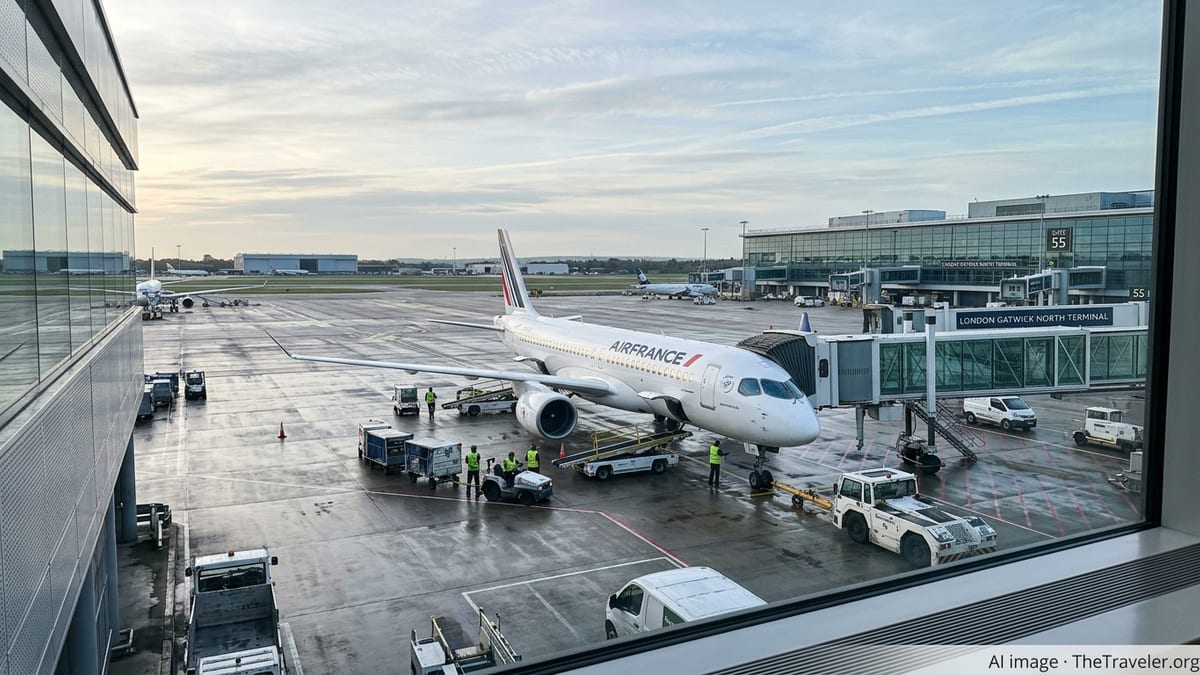
Mixed picture across departures and arrivals
Live flight boards for London Gatwick on Thursday indicate a generally busy schedule operating close to normal, but with a noticeable band of delayed services and a smaller number of outright cancellations. Publicly available data from flight tracking and airport information tools shows that most early morning departures left broadly on time, while mid morning and early afternoon waves have seen more instances of aircraft leaving later than scheduled.
Arrivals show a similar pattern, with many flights landing to timetable but a cluster arriving behind schedule, particularly services from parts of Europe that have recently experienced weather or air traffic control restrictions. Some long haul services also appear to be operating with extended flight times, which in turn can create small knock on delays for return sectors out of Gatwick.
While the overall operation remains intact, the pattern points to a day where passengers are more likely than usual to encounter late boarding, extended time on stand or in holding patterns, even where their flights are not formally marked as disrupted.
Weather and air traffic management impacts
Regional weather continues to play a role in punctuality at Gatwick. Recent days have brought periods of low cloud, poor visibility and convective weather over parts of the British Isles and near continent, conditions that have already forced diversions and go arounds involving flights to and from London area airports earlier in the week. Reports from aviation outlets and flight tracking analyses suggest that flow restrictions linked to such conditions can reduce airspace capacity and slow the rate at which arrivals and departures are handled.
At the same time, the UK air traffic system remains under close scrutiny following previous seasons of strain, with industry coverage highlighting how even short term capacity constraints at control centres can quickly ripple through a tightly scheduled hub like Gatwick. Sector regulations applied to manage weather or traffic elsewhere in Europe can also delay aircraft on inbound legs, leaving them out of position for subsequent services from Gatwick later in the day.
On Thursday, publicly available information does not indicate a single major system failure or prolonged shutdown affecting Gatwick specifically, but rather a combination of moderate weather related constraints and routine spacing measures that together contribute to incremental delays across parts of the schedule.
Knock on effects from earlier disruptions
Some of the disruption visible today appears to be a continuation of issues that began earlier in the week. In the days leading up to Thursday, several airlines operating at Gatwick have dealt with weather diversions, extended holding and aborted approaches on routes around the British Isles and northwestern Europe, including services to regional airports such as the Isle of Man. Those events can leave aircraft and crews displaced from their planned rotations, with consequences that can carry into subsequent operating days.
Industry analysts frequently point out that when an aircraft returns late to Gatwick or diverts away entirely, the delay does not end when passengers disembark. Crews may reach duty time limits, scheduled maintenance slots can be disrupted and aircraft may not be in the right place for their next departure. As a result, a seemingly isolated weather event early in the week can still be visible as a delayed departure or re timed flight on Thursday, particularly for airlines that run tight turn times and rely heavily on Gatwick based fleets.
In parallel, the recent collapse of a leisure focused carrier that had been operating wet lease services from Gatwick has tightened aircraft availability for some package and charter programmes. While replacement capacity has been sourced, industry reporting suggests that the broader charter and leisure market remains finely balanced at the start of the main summer season, leaving less room in the system to absorb unexpected disruption.
Ground and rail access challenges for passengers
For some travelers, the day’s difficulties are beginning even before reaching the terminal. In the wider Gatwick corridor, passengers are still contending with the after effects of serious disruption to rail services serving the airport earlier in the week, when infrastructure problems on the main route between central London and Gatwick led to long queues and the suspension of key services. Although services have been progressively restored, recent coverage indicates that timetables and crowding patterns remain less predictable than usual.
These ground transport issues compound the impact of flight delays. Passengers who need to build in extra time for uncertain rail connections may arrive at the airport far earlier than normal, increasing peak time pressure on check in, security and seating, even on a day when the flight schedule itself is broadly intact. Others risk cutting it too fine if they rely on rail connections that are still vulnerable to short notice alterations.
Road access remains an alternative, but congestion on approaches to the airport can also lengthen journey times during busy periods. Public information portals continue to advise passengers to check the latest status of both rail and road routes before departing for Gatwick, and to consider contingency options where possible.
Advice for travelers using Gatwick today
Given the mixed but manageable level of disruption, passenger advocates and travel commentators are broadly recommending a cautious approach for anyone flying from or to Gatwick on Thursday. The consistent message is that travelers should assume that schedules may be fluid, even if their own flight is still shown as operating.
Airlines are continuing to update their digital channels and apps throughout the day, and publicly available guidance emphasizes the importance of monitoring these tools for gate changes, revised departure times and rebooking options. Where cancellations occur, standard passenger rights under UK regulations may apply, particularly when disruption is within the airline’s control, although weather, airspace and infrastructure problems are often classed as extraordinary circumstances.
For those connecting through Gatwick, the current pattern of modest but frequent delays suggests allowing a wider margin between flights than would be comfortable on a fully punctual day. Travelers with separate tickets for onward journeys may be especially exposed if early segments arrive late. Many travel advisers suggest that, where possible, passengers keep hand luggage compact, prepare for extended waiting times and build flexibility into their plans while conditions remain unsettled.