


More news on this day
New York’s John F. Kennedy International Airport has emerged as America’s most stressful major hub for business travelers, edging out Newark Liberty, Los Angeles, Miami, Chicago O’Hare, San Francisco and other busy gateways as flight disruptions and congestion intensify across the United States.
Get the latest news straight to your inbox!
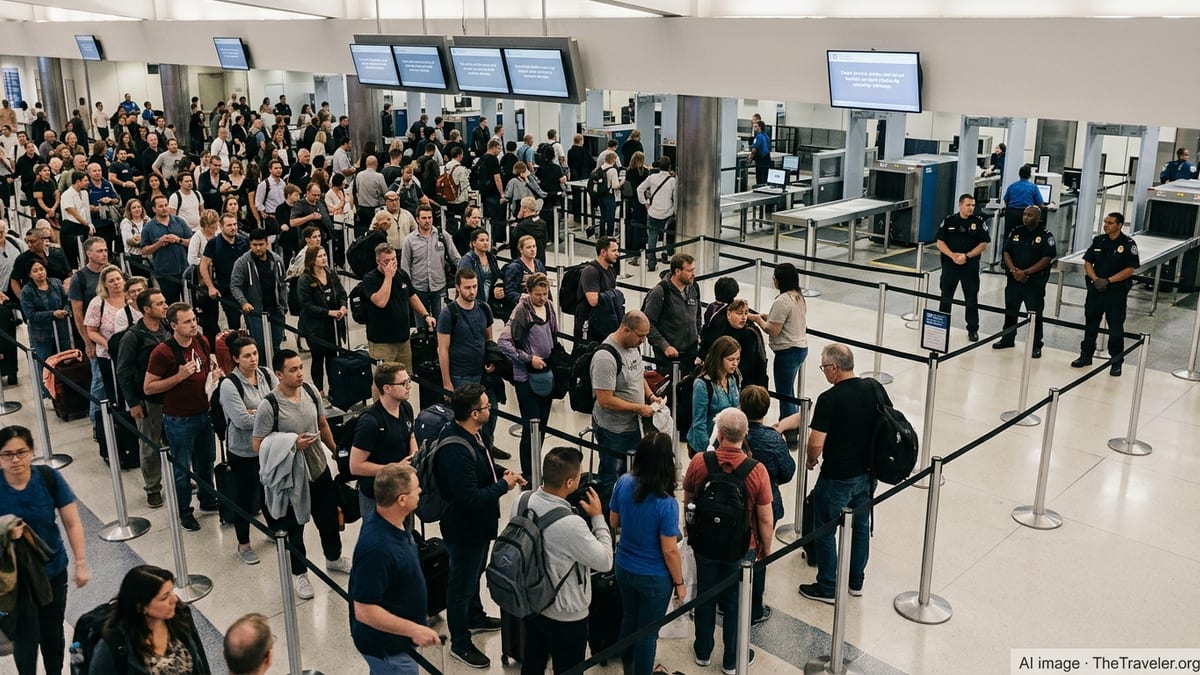
New Index Puts JFK at the Top of the Stress League
The latest comparison of major U.S. airports for business travel stress places JFK at the top of a field that includes Newark Liberty, Ontario, Fort Lauderdale, Orlando, Chicago O’Hare, San Francisco, Miami, Los Angeles and Seattle. The ranking draws on passenger volume, on-time performance, congestion indicators, connection complexity and user satisfaction scores to capture how difficult airports are to navigate when time is tight and itineraries are packed.
Publicly available data show that JFK is among the busiest airports in the United States, handling more than 60 million passengers a year and serving hundreds of domestic and international destinations. High traffic alone does not guarantee a poor experience, but combined with tight runway capacity, frequent coastal weather issues and complex airline hub operations, it increases the likelihood that business travelers will encounter delays and missed connections.
Analyses of federal on-time performance statistics indicate that some of the most delay-prone U.S. airports now see more than one in four departures leave late, with average delays stretching close to an hour on some routes. While JFK is not the worst in the country by raw delay percentage, researchers point out that even a modestly higher disruption rate becomes particularly damaging at a global hub where a large share of passengers are connecting to long-haul business and financial centers.
Business-focused travel surveys over the past several years have consistently placed JFK near the top of stress rankings, citing long queues at security, crowded gate areas, time-consuming transfers between terminals and the challenge of reaching the airport from Manhattan or other business districts during peak traffic hours.
How Newark, LAX and O’Hare Compare for Business Travelers
Newark Liberty International Airport, serving the same metropolitan region as JFK, has in recent studies been labeled one of the most disruption-prone hubs in the country, particularly during the busy summer season. Reports indicate that a high share of flights at Newark experience delays or cancellations, and the airport frequently appears near the bottom of reliability tables. Yet the new stress index suggests that for business travelers, JFK edges ahead overall once access, connections and terminal experience are factored in.
Los Angeles International and Chicago O’Hare, two of the nation’s largest hubs by passenger volume, also rank prominently in stress assessments. Both airports handle tens of millions more passengers annually than JFK and operate as major connecting points for cross-country and international itineraries. Historically, surveys of corporate travelers have named these airports as challenging environments due to sprawling terminal layouts, heavy runway utilization and long taxi times, all of which can be particularly problematic for tight business schedules.
San Francisco and Seattle enter the conversation as key gateways for the technology sector, where a high concentration of business travel combines with coastal weather patterns that can quickly disrupt operations. San Francisco’s fog and runway configuration, along with Seattle’s rapid growth in international and transcontinental routes, have contributed to periodic spikes in delays, making both airports closely watched by companies that rely on predictable travel to and from the West Coast.
Miami, Orlando and Fort Lauderdale, while heavily associated with leisure travel, also support significant volumes of corporate, convention and international business traffic. In Florida’s busiest airports, the mix of holiday crowds, seasonal storms and constrained infrastructure creates conditions where business travelers often face the same bottlenecks as vacationers, from packed security lanes to gate changes and late-night arrivals.
Flight Disruptions Rising Across the U.S. Network
The singling out of JFK comes against a backdrop of rising concern about reliability across the U.S. aviation system. Industry analyses released in 2025 and 2026 describe a pattern of increasingly frequent “disruption days,” when storms, staffing constraints, airspace congestion or technology issues ripple across multiple hubs at once, triggering rolling delays and cancellations.
Consumer research cited in recent business and financial press coverage indicates that nearly nine in ten travelers now expect at least some disruption when they fly, and many list delays and cancellations as their top worry when planning trips. For business travelers who often have non-flexible meeting times or event schedules, those disruptions translate directly into missed opportunities, added costs and higher stress.
Operational data from airport performance trackers show that coastal hubs such as JFK, Newark, San Francisco and Miami are particularly vulnerable to weather-related pressure, while large inland hubs like O’Hare and Dallas Fort Worth feel the impact of thunderstorm systems that sweep across the central United States. When these disruptions coincide with peak travel periods, they quickly overwhelm available slack in the schedule, leading to long lines at customer service counters and competition for rebooking options.
Industry observers note that airlines and airports have invested in technology and infrastructure upgrades to improve resilience, but those efforts have struggled to keep pace with the rapid return of demand after the pandemic downturn and the continued growth of domestic and international travel.
Why JFK Feels Especially Tough for Business Travelers
JFK’s position at the top of the stress ranking reflects not only its operational challenges but also the specific needs of business travelers who frequently pass through the airport. New York City remains one of the world’s leading finance, media and professional services centers, and JFK serves as a primary gateway for transatlantic and transpacific business routes. Many trips involve connections between regional U.S. flights and long-haul services to Europe, the Middle East and Asia, where missed departures can mean losing an entire working day.
The airport’s layout, with multiple terminals operated by different airlines and partners, adds complexity for passengers unfamiliar with the facility or switching between carriers. Traveling between terminals often requires additional security checks or shuttle transfers, extending total journey time and making tight connections risky, particularly during peak evening departure banks.
Access from Manhattan and other corporate districts is another pressure point. Travel by road can be unpredictable in heavy traffic, and while rail links provide alternatives, journey times are still considerable compared with some competing international hubs. For business travelers who are moving between meetings and flights on the same day, this adds another layer of planning and potential stress.
Although recent redevelopment projects have brought new terminals, improved concessions and upgraded public spaces to JFK, reviews compiled by aviation and travel research outlets suggest that crowding and queuing remain persistent concerns at certain times of day, especially during the transatlantic and Caribbean peaks that overlap with business demand.
Corporate Travel Policies Adjust to a More Volatile Sky
The elevation of JFK as the most stressful major U.S. airport for business travelers aligns with broader shifts in corporate travel planning. Travel managers and booking platforms report that companies are increasingly building extra time into itineraries, favoring earlier flights in the day and sometimes directing employees through alternative hubs where the historical risk of disruption is lower.
Some organizations are encouraging rail or virtual meeting options for shorter domestic journeys, reserving air travel for trips where face-to-face contact is considered essential. Where flights are unavoidable, policies are being updated to include additional protections such as more flexible fares, wider adoption of travel insurance and clearer guidance on how to handle significant disruption while on the road.
For airports like JFK, Newark, O’Hare, Los Angeles and Miami, the growing emphasis on reliability from corporate clients adds pressure to keep improving operations, communication and passenger flow. Business travel remains a lucrative segment for airlines and airports alike, and the relative stress levels at competing hubs may increasingly influence network and scheduling decisions.
As another busy summer season approaches, the latest rankings underscore that for many business travelers, the most important amenity is no longer a new lounge or dining option but a smoother, more predictable journey through some of the country’s most congested gateways.