


More news on this day
Delta Air Lines and other major carriers are confronting a fresh test from global markets as oil prices surge past 100 dollars a barrel, reviving concerns that fuel costs and geopolitical shocks could again squeeze airline profits just as travel demand normalizes.
Get the latest news straight to your inbox!
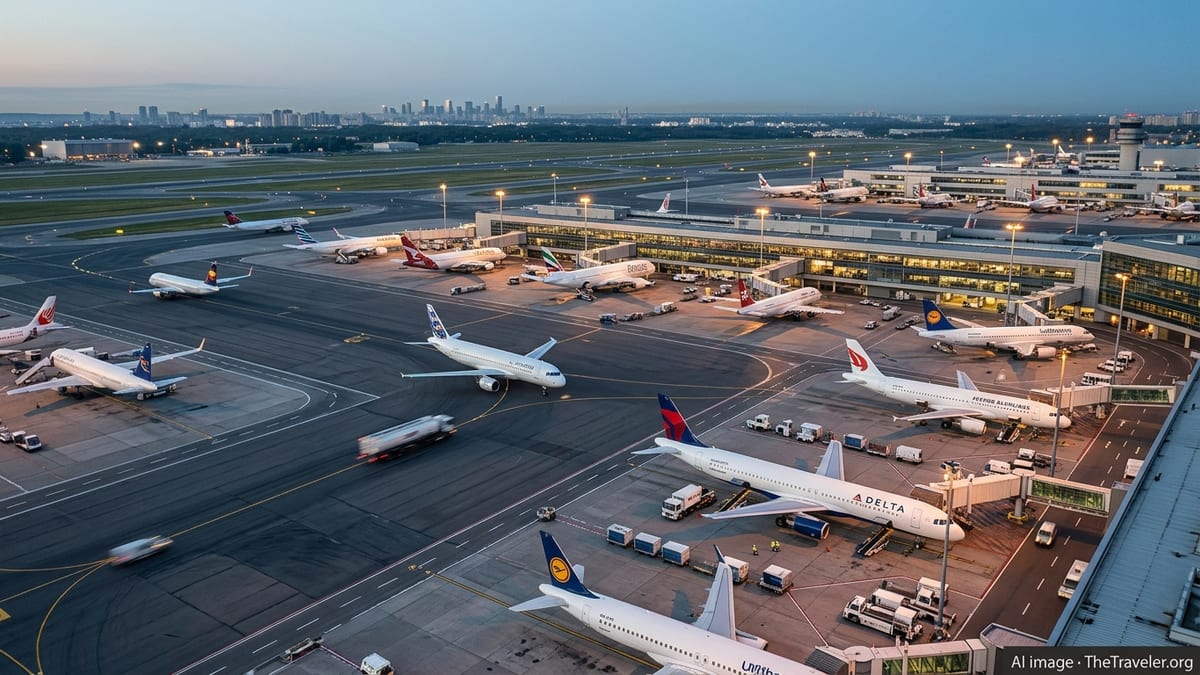
Oil Price Surge Reopens Old Wounds for Airline Investors
The latest spike in crude has pushed Brent above 100 dollars a barrel for the first time since July, after new attacks on energy infrastructure and shipping routes in the Middle East deepened supply fears. U.S. benchmark crude has also climbed into the mid-90s, a move that has rattled broader equity markets and hit fuel-intensive sectors particularly hard, according to recent market coverage.
Wall Street indexes turned lower on September 9 as traders digested the higher energy costs and rising geopolitical risk premia. Airline shares, which had benefited from a strong summer of travel, were again trading in the crosshairs as investors weighed whether carriers can keep passing higher fuel costs through to fares without eroding demand.
Major banks have started to lift their medium-term oil price assumptions, signaling that the current spike might not be a short-lived anomaly. Recent analysis from global investment houses points to an emerging consensus that Brent could average in the 80 to 90 dollar range through the second half of the decade, implying a structurally higher fuel bill for aviation than many forecast at the start of the year.
Airline Profit Forecasts Cut as Fuel Costs Climb
Industry-level projections already reflect the growing strain. Updated forecasts from the International Air Transport Association indicate that global airline net profit in 2026 could fall to roughly half the level recorded in 2025, with war-related disruptions in the Middle East and a near-70 percent jump in jet fuel prices cited as the main drivers. Publicly available IATA data suggests jet fuel could average more than 150 dollars a barrel this year on an assumed Brent price in the mid-90s, sharply above 2025 levels.
IATA’s economics briefings estimate that fuel will account for nearly one third of airline operating costs in 2026, or about 350 billion dollars in aggregate spending. That limits the room carriers have to absorb additional shocks, and it narrows margins even when planes are relatively full. The association has also flagged that airlines are simultaneously facing rising labor expenses and persistent supply chain bottlenecks in aircraft and spare parts, constraining capacity growth just as demand stabilizes.
To offset the oil shock, many airlines have been nudging fares higher and leaning on ancillary revenues. IATA’s financial outlook notes that unit revenues have risen faster than underlying traffic volumes as carriers attempt to recoup fuel costs, a trend that risks testing the willingness of leisure travelers to keep paying post-pandemic prices for tickets.
Delta and U.S. Carriers Feel the Heat in Equity Markets
Against this backdrop, Delta Air Lines has become a closely watched bellwether for investor sentiment. The stock closed at 78.96 dollars on September 8, down about 1.5 percent on the day and underperforming the broader market, according to exchange data compiled by financial platforms. Research commentary highlighted that the move tracked the latest leg higher in oil and a cautious tone on the outlook for airline fuel expenses.
Analyst notes over recent months have systematically revised higher their assumptions for 2026 fuel costs across the U.S. airline sector, citing the escalation of the Iran conflict and its impact on crude benchmarks. Market intelligence providers report that the earnings sensitivity of carriers to further oil increases remains significant, particularly for those with limited fuel hedging and ambitious capacity growth plans.
Delta and its domestic peers are entering this new fuel cycle with relatively solid balance sheets after several years of repair, but at a time when U.S. consumers are also confronting higher gasoline prices and wider cost-of-living pressures. Industry presentations from advisory firms tracking airline restructurings suggest that while liquidity cushions at most large U.S. airlines are stronger than in the pre-pandemic era, credit markets are less forgiving of missteps, making sustained cost inflation a key risk for valuations.
European Giants Lean on Fuel Hedging, but Pressure Builds
Across the Atlantic, carriers such as Lufthansa and International Airlines Group are leaning heavily on fuel hedging programs to blunt the immediate impact of the price surge. Lufthansa’s recent investor materials indicate that roughly 80 percent of its 2026 kerosene requirement is covered by derivatives, while other European groups including IAG and Air France KLM also report hedge ratios above 60 percent for the year, according to compiled sell-side and industry research.
Even with that protection, executives at major European airlines have acknowledged in public documents that the significant rise in kerosene prices is putting considerable pressure on cost positions. Lufthansa’s half-year report noted that, after hedging, a 10 percent move in kerosene prices in 2026 could still shift its annual fuel bill by several hundred million euros.
At the same time, European aviation is slowly consolidating around a handful of large groups. Commentary in leading European financial media points to IAG, Lufthansa, Air France KLM and Ryanair as the core pillars of a more concentrated regional market, mirroring the structure in the United States with Delta, United, American and Southwest. Analysts argue that this consolidation could ultimately support pricing power, but also expose travelers to structurally higher fares if fuel volatility persists.
Strategic Tug of War: Hedging, Efficiency and Sustainable Fuels
The oil shock is forcing airlines into a strategic tug of war between near-term cost control and long-term sustainability commitments. According to IATA, fuel hedging practices vary widely across carriers, with some European airlines covering most of their annual needs while many North American players rely more on operational flexibility and capacity discipline to manage price swings.
Recent IATA opinion pieces emphasize that data-driven efficiency gains are becoming central to managing this new cost environment. The association estimates that airlines collectively will spend around 350 billion dollars on fuel in 2026, and surveys show that more than 90 percent of carriers rank fuel efficiency improvements as a top priority. Investments in lighter aircraft, optimized flight paths and more efficient ground operations have moved higher on capital allocation agendas.
At the same time, airlines are under pressure to expand purchases of sustainable aviation fuel even as it remains significantly more expensive than conventional jet fuel. IATA’s latest forecast suggests that SAF will represent less than 1 percent of total airline fuel consumption in 2026 but will still add more than 4 billion dollars to industry costs because of its price premium. For investors in Delta and other global carriers, this underscores that the path to lower-carbon flying and stable margins is likely to be uneven in a world where oil prices are swinging between geopolitical flashpoints and shifting supply dynamics.
Associated Press market coverage on stocks and oil, September 2026
IATA 2026 airline industry financial outlook
Delta Air Lines stock information