

More news on this day
Delta Air Lines is under scrutiny after an elite frequent flier says she was denied boarding on a domestic flight in the United States because of a medical emergency she had suffered on a previous trip, spotlighting growing tensions between carrier safety protocols and passenger rights.
Get the latest news straight to your inbox!
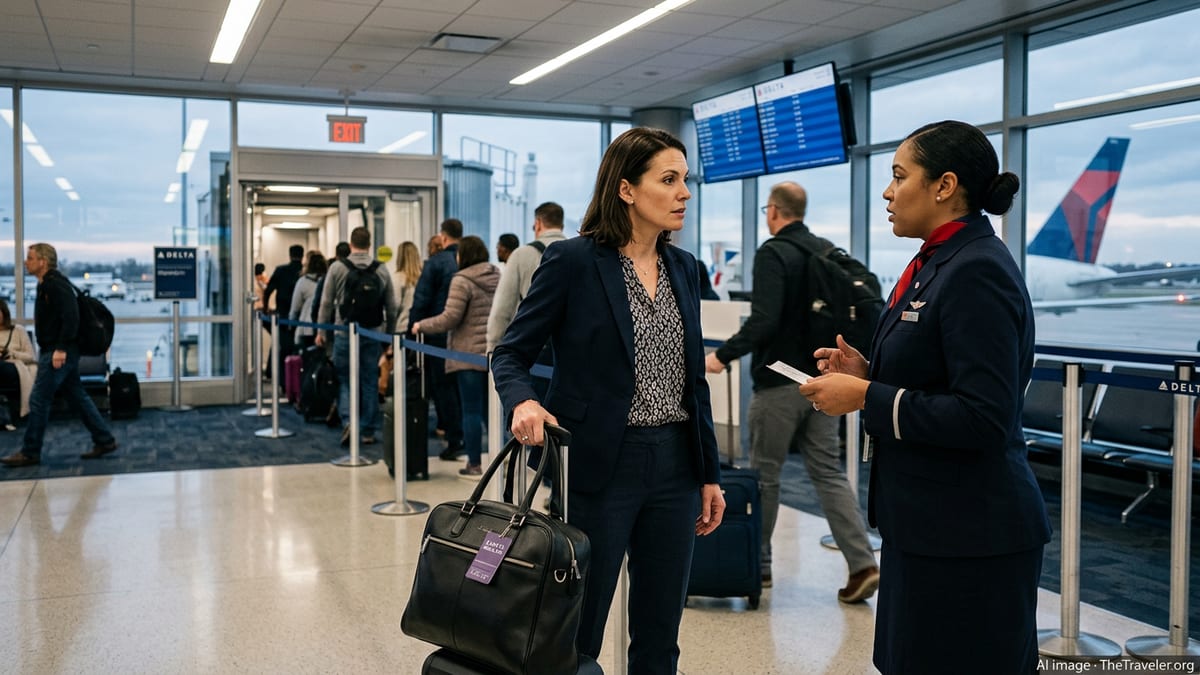
Frequent Flier Says Past In-Flight Scare Led to Travel Ban
The passenger, a Delta SkyMiles Medallion member who asked not to be named due to privacy concerns, told travel forums and consumer advocates that she was stopped at the gate for a recent U.S. domestic departure despite holding a confirmed reservation and seat assignment. According to her account, agents cited a serious medical episode she experienced on an earlier Delta flight as the reason they would not allow her to board.
She described having required urgent assistance from crew and volunteer medical professionals on that earlier journey, after which the flight diverted for emergency treatment on the ground. On the subsequent trip, she said she was pulled aside at boarding, informed that she had been flagged in the system, and told she would not be flying that day.
The traveler, who holds mid-tier elite status and routinely spends thousands of dollars a year with the carrier, said she was stunned that her loyalty did not appear to provide any additional consideration. “I did everything right, I disclosed what happened, I had clearance from my doctor, and they still treated me like a risk,” she told a consumer advocate, according to a summary of her complaint.
Her story has since circulated widely among frequent flier communities, where many travelers are debating how much control airlines should have over a passenger’s ability to travel after a health scare, and whether elite customers can expect any special handling when questions arise over their medical fitness to fly.
Delta Cites Safety Obligations as Questions Mount
Delta has not publicly commented on the specific case, but aviation attorneys and former airline managers say carriers have broad discretion to determine whether a customer is fit to travel. U.S. Department of Transportation rules allow airlines to deny boarding if staff reasonably believe a passenger may pose a safety or health risk to themselves or others.
In internal policies and contracts of carriage, large U.S. airlines reserve the right to refuse transport to passengers with serious or unstable medical conditions if they believe the risk of an in-flight emergency is unacceptably high. Industry experts note that such determinations are usually made with input from aviation medical consultants, often based on information from prior incidents logged in a traveler’s record.
Critics argue that what begins as a legitimate safety concern can become opaque and heavy-handed when customers are not clearly told what standard they must meet to travel again. “People accept diversions and medical interventions as part of keeping everyone safe,” said one passenger rights advocate. “What they do not accept is being quietly blacklisted from a future flight with little explanation and no clear path to resolution.”
In online discussions about the case, frequent travelers questioned whether gate agents had clear medical guidance or were acting out of an abundance of caution without fully understanding the passenger’s current condition. Several noted that front-line staff are often caught between rigid system flags and the pressure to dispatch flights on time, leaving little room for nuanced, case-by-case judgment.
Elite Status Offers Priority, Not Immunity
The controversy has also reignited debate over what airline status really guarantees when operations become complicated. Delta’s published boarding priority places passengers holding premium-cabin tickets and top-tier Medallion members ahead of most other travelers when flights are oversold or disrupted, but it does not override safety, security or health-based decisions.
Former airline operations managers say a system note about a previous in-flight medical emergency can trigger mandatory review, regardless of how much a customer spends or how often they fly. In practice, that can mean an elite frequent flier with a long and profitable history on a route may still be stopped at the gate if a medical clearance box has not been checked or updated.
Travel strategists point out that many road warriors assume their loyalty shields them from the harshest inconveniences, such as involuntary denied boarding. The reported Delta case underscores that status is largely about priority for upgrades, standby and rebooking, not a guarantee that a traveler will be accepted if there are health concerns on file.
“Elite customers understandably feel blindsided when, after years of loyalty, they are treated like any other passenger with a flagged medical history,” said one airline analyst. “But from the carrier’s perspective, applying different medical standards to high-value customers would create legal risk and potential claims of unequal treatment.”
Medical Transparency and Documentation Become Critical
A key point of contention in the reported incident is how, and when, passengers are informed that a previous in-flight emergency could affect future travel. Consumer advocates say too many travelers first learn of a restriction only when they are physically at the gate, a moment that leaves little room to gather paperwork, seek a second opinion or make alternative arrangements.
Health and legal experts recommend that any passenger who experiences a serious medical event in the air promptly request details of what was documented by the airline and any airport medical team. That information can help physicians provide more tailored clearance letters addressing fitness to fly, potential triggers and any mitigation measures such as supplemental oxygen or mobility assistance.
Some frequent fliers say they now proactively carry recent medical letters when traveling after hospitalizations, surgeries or events like fainting or seizures, even if they feel fully recovered. They argue that the burden of proof, fairly or not, has shifted to travelers to show that a previous emergency is unlikely to recur.
The Delta case is resonating with travelers who have invisible disabilities or chronic conditions that are well managed but not always understood by front-line staff. Many worry that one high-profile incident, logged without context in an internal system, may shadow their future trips unless they actively push for clarity and updated medical notes.
Wider Implications for U.S. Airline Passengers
As stories of denied boarding and sudden rebookings gain traction on social media, U.S. regulators face renewed pressure to clarify how airlines should handle passengers with prior medical emergencies. Advocacy groups are urging clearer notification rules, including requirements that carriers tell customers in writing if a health incident has triggered any special conditions for future travel.
Some passenger rights organizations would like to see standardized processes across major airlines, so that travelers are not subject to widely varying interpretations of fitness to fly. They also call for independent appeal mechanisms that would allow medical decisions to be reviewed by neutral experts rather than solely by airline-contracted physicians or risk managers.
For now, the burden largely remains on travelers to anticipate how past medical events might intersect with carrier policies. Travel advisors suggest building extra time into itineraries, keeping digital copies of recent medical assessments, and preparing backup plans in case a gate agent or onboard crew raises concerns at the last minute.
The elite passenger who says she was barred from boarding after her emergency is still pursuing a formal complaint and has requested a full explanation of the decision. Her experience, widely shared among frequent fliers, underscores a growing reality of modern air travel in the United States: loyalty and status may buy comfort and convenience, but when medical risk is perceived, they do not guarantee a seat on the plane.