

More news on this day
A powerful March snowstorm and operational snarls at Denver International Airport on Friday triggered more than 1,200 flight delays for United Airlines, Southwest, Delta and American Airlines, unleashing travel chaos that quickly spilled beyond Colorado and sent fresh shockwaves through tourism and hospitality markets in the United States, Canada, the United Kingdom and Mexico.
Storm, Tarmac Collision and Ground Delays Snarl a Key U.S. Hub
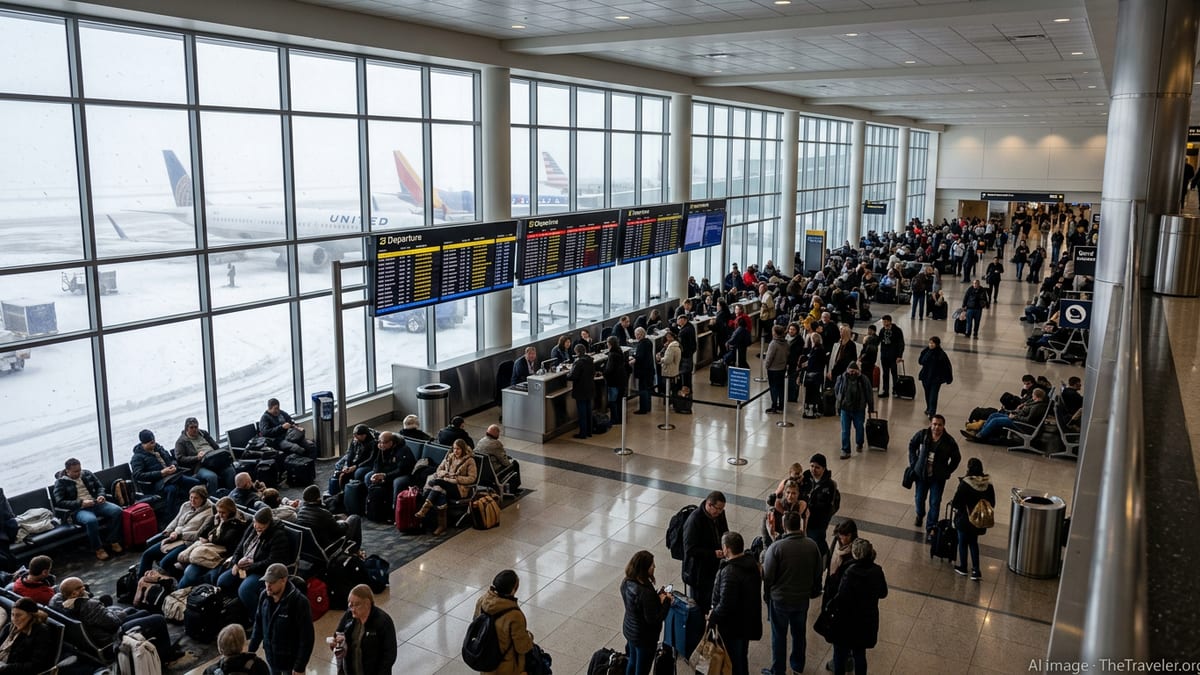
Denver International Airport, one of the nation’s busiest connecting hubs, became the most delay-plagued airport in the country on Friday as heavy snow, low visibility and icy conditions forced widespread schedule disruptions. Flight-tracking data showed more than 1,200 delays and over 100 cancellations by late evening, with United, Southwest, Delta and American all reporting knocked-out schedules as aircraft and crews fell out of position.
The Federal Aviation Administration issued a ground delay program for flights headed into Denver as the storm intensified, compounding earlier disruptions tied to deicing operations and runway congestion. Airport officials warned that knock-on effects could stretch into the weekend as carriers worked through backlogs of aircraft, passengers and baggage.
Adding to the turmoil, a United Airlines aircraft struck a deicing truck on the tarmac during the height of the storm, briefly disrupting operations and prompting an investigation. While no serious injuries were reported, the incident underscored the operational strain at Denver’s sprawling airfield, where winter weather can rapidly transform what appears to be a routine system into a day of cascading delays.
United, Southwest, Delta and American all use Denver as either a hub or a key connecting point in their domestic networks, and Friday’s problems highlighted how quickly a single weather event at a major node can reverberate through the broader North American aviation system.
Nationwide Ripple Effects for U.S. Tourism and Hospitality
Across the United States, Friday’s Denver disruptions rippled through airports from Chicago and Dallas to New York and Los Angeles, as delayed inbound aircraft forced rolling pushbacks on departures. For leisure travelers at the start of spring break season, the timing was particularly punishing: families headed to ski slopes, desert resorts and theme parks encountered unexpected overnight stays and missed connections.
Hotels near Denver International and in the broader metro area reported a spike in last-minute bookings as stranded passengers scrambled for rooms, often at peak-season rates. Airport hotels in other hub cities, including Chicago and Houston, also saw a lift in unplanned demand as missed connections forced travelers to reschedule for Saturday and Sunday departures.
At major tourism destinations across the country, from Florida beaches to Rocky Mountain ski towns, operators reported a mix of no-shows and late arrivals that will take days to untangle. Tour providers, rental car companies and short-term rental hosts described a familiar pattern of sudden cancellations and frantic rebookings, with many guests asking for waivers or credits as they tried to salvage shortened holidays.
Industry analysts note that while a single day of heavy disruption rarely derails seasonal performance, repeated high-profile meltdowns at large hubs such as Denver can erode traveler confidence, particularly among international visitors wary of tight connections through weather-prone airports.
Shockwaves Reach Canada, the UK and Mexico
Because Denver serves as a gateway and connecting point for transborder and transatlantic itineraries, Friday’s chaos did not stay confined to the United States. In Canada, passengers traveling through Denver on United, Air Canada codeshares and other partner flights faced missed onward connections to and from cities such as Vancouver, Calgary and Toronto, complicating the return from late-winter vacations and business trips.
Transatlantic routes also felt the strain. Delta, United and American each carry UK-bound passengers through inland hubs, including Denver-linked connections, and airline agents spent much of Friday rebooking travelers onto later departures from coastal gateways such as New York and Chicago. Some British visitors heading for ski vacations in Colorado and Utah found themselves stuck overnight in intermediate cities, with lost days on the slopes and higher out-of-pocket costs for meals and lodging.
To the south, Mexico’s tourism sector experienced its own share of disruptions as Denver’s storm knocked aircraft out of rotation on popular routes to beach destinations such as Cancun, Los Cabos and Puerto Vallarta. Resort managers reported delayed arrivals and last-minute cancellations from U.S. and Canadian guests who had been scheduled to connect through Denver on United and Southwest, as well as on partner itineraries with Delta and American.
For destinations that rely heavily on short, tightly packed holiday stays, even a 24-hour delay can mean the loss of a significant share of a guest’s trip. Several Mexican and Caribbean hoteliers said they were again weighing more flexible rebooking policies to protect long-term loyalty, even as they absorbed the immediate revenue hit.
Airlines Under Pressure Over Resilience and Communication
The latest Denver meltdown reignited questions about how well major carriers are prepared to cope with predictable seasonal weather at critical hubs. While airlines stressed that safety remains the overriding priority in winter operations, passenger accounts from Denver and downline airports pointed to recurring frustration over real-time communication, staffing levels and contingency planning.
Travelers reported long queues at customer service desks, limited information about standby options and hours-long waits on phone lines and chat systems as they sought rebooking help. As delay counts climbed, social media filled with images of crowded concourses, sleeping passengers and departure boards dominated by yellow and red status alerts.
Advocates for air travelers said that the Denver episode would add pressure on carriers and regulators to push further on customer protections, including clearer standards for hotel and meal vouchers when delays stretch into overnight territory. With U.S. regulators already tracking on-time performance and long tarmac waits more closely, major disruptions at hubs like Denver are likely to remain under scrutiny.
For United, Southwest, Delta and American, all of which count Denver as an important spoke or hub, the latest storm-driven meltdown is a reminder that operational resilience has become a central competitive issue. As leisure and business travelers weigh which routes and carriers to trust during peak seasons, how airlines handle days like Denver’s latest crisis may prove as important as their fares and onboard service.