

More news on this day
Widespread flight disruptions at Denver International Airport on April 11 left hundreds of passengers contending with rolling delays and scattered cancellations, as schedule pressures on United Airlines and regional partner SkyWest rippled across North American routes.
Get the latest news straight to your inbox!
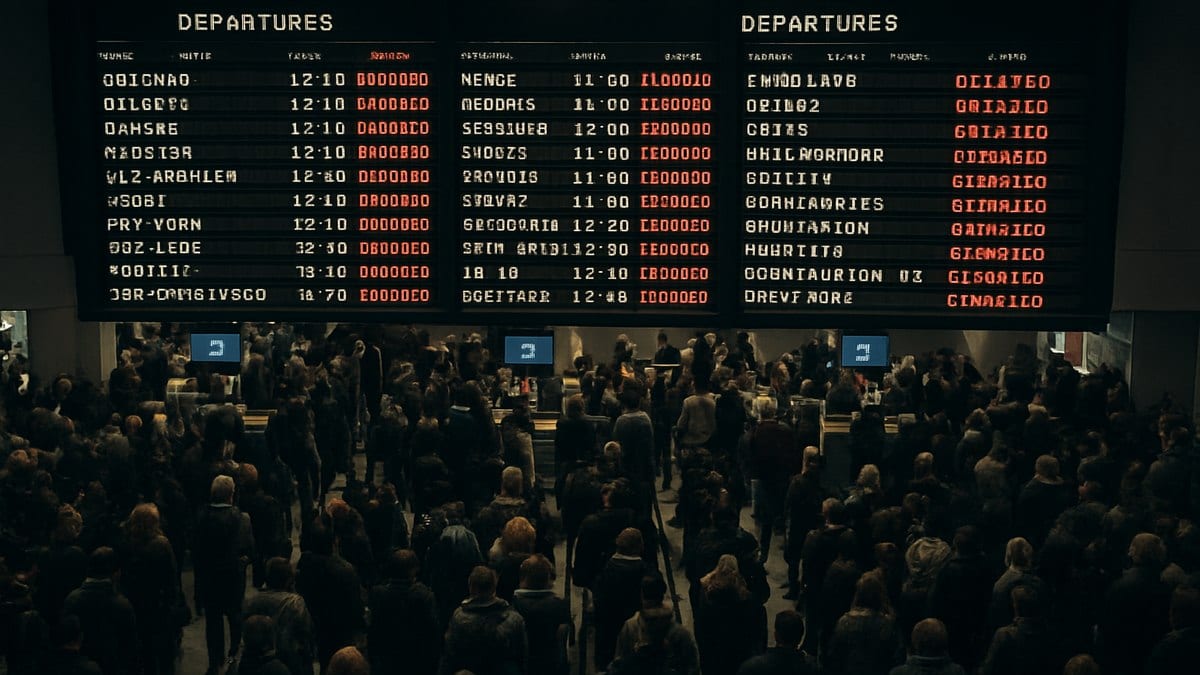
Denver’s Busy Hub Strains Under Elevated Delay Levels
Publicly available tracking data for April 11 indicates that Denver International Airport logged more than 200 delayed and a handful of canceled flights, placing it among the most disrupted major hubs in the United States for the day. Reports highlight that United Airlines, which operates a large hub at Denver, absorbed a substantial share of the schedule pressure, alongside other major carriers serving domestic and international routes.
Coverage focused on Denver notes that the delays affected departures and arrivals spanning key business and leisure markets, including flights to Los Angeles, Chicago, New York area airports, San Francisco and Dallas. The operational strain translated into congested gate areas, tightened turnaround times and longer-than-usual waits for both originating passengers and those relying on Denver for onward connections.
Analysts point to a mix of contributing factors, including the cumulative impact of earlier disruptions in the national network, air traffic management constraints and the challenge of running high aircraft utilization through a mountain-adjacent airport that can be sensitive to winds and changing conditions. While no single triggering incident has emerged from publicly available information, Denver’s elevated delay minutes on April 11 fit into a broader pattern of system stress observed at multiple hubs this spring.
For United, the disruption at a core connecting hub complicated operations across its wider route map. Even modest schedule slippage in Denver can cascade into later departures elsewhere, as aircraft and crews arrive behind plan to other airports and require rapid rescheduling to keep the network moving.
United and SkyWest Delays Feed a Wider National Backlog
National statistics compiled for April 11 show that airlines across the United States reported well over a thousand delayed flights, with carriers such as United and regional operator SkyWest featuring prominently in the day’s disruption totals. Industry-focused coverage notes that, on this date, U.S. airlines collectively recorded dozens of cancellations and more than 1,700 delayed movements, underscoring how widespread the operational challenges have become during peak travel weekends.
United’s role as a primary tenant at Denver means that irregular operations there can quickly reverberate through its North American network. When Denver-based departures push back late, corresponding inbound legs to secondary cities are also delayed, affecting travelers who may be far removed from the original chokepoint. Flights linking Denver to other major hubs, including Chicago and New York, are particularly sensitive because they carry large numbers of connecting passengers and serve as feeders into additional onward services.
SkyWest, which operates regional flights under brands such as United Express and for other major airlines, also appears in the day’s national delay tallies. Its regional jets connect smaller communities into large hub airports, including Denver, Salt Lake City and major coastal gateways. When a hub like Denver falls behind schedule, SkyWest’s tightly timed sequences of short-haul sectors can be disrupted for the remainder of the operating day, leaving aircraft and crews out of position.
Recent federal performance summaries and airline operational reports have highlighted that such cascading effects are becoming more frequent when the system is already running close to capacity. With little slack in daily aircraft utilization and crew scheduling, even localized disruptions can lead to a disproportionate number of delayed flights across multiple time zones.
Ripple Effects Reach Other Hubs Across North America
The strain at Denver on April 11 coincided with elevated disruption indicators at other U.S. airports, painting a picture of a network under simultaneous pressure at several critical nodes. Separate reports describe significant delays at Phoenix Sky Harbor International Airport on the same day, with more than 160 flights running late and additional disruptions recorded at Las Vegas and Detroit.
These concurrent issues demonstrate how quickly a day of challenging operations can broaden from one hub to a continental phenomenon. When flights into Denver from cities such as Phoenix, Las Vegas or Detroit depart behind schedule, connecting passengers risk missing onward services, and aircraft intended to continue to other destinations arrive after their planned departure times. This sets off a chain reaction that can affect airports far from the original delay centers, including in Canada and Mexico, as transborder services are slotted into already constrained schedules.
Publicly available aviation data suggests that April has featured multiple days with several thousand delayed flights across the United States, making it more difficult for airlines to fully recover before the next wave of peak demand. For passengers, that means that a delay at Denver may be tied not only to local conditions but also to earlier days of disruption at other hubs that have left aircraft and staffing patterns misaligned.
As a result, some travelers connecting through Denver to cities across North America have reported facing rolling rebookings, tight connection windows and occasional overnight stays when schedules could not be realigned in time. While airlines have increased digital tools for same-day changes, the availability of empty seats on already-busy flights often limits how quickly disrupted itineraries can be stitched back together.
Weather, Infrastructure and System Capacity Under Scrutiny
Although Denver’s high-altitude location on the edge of the Rocky Mountains has long been associated with weather-related challenges, early indications from April 11 suggest that broader operational constraints played a central role in the day’s disruption. Industry commentary notes that while gusty winds or passing showers can contribute to spacing requirements between aircraft and slower arrival rates, the root causes of extended delay waves frequently lie in scheduling density and air traffic management decisions.
In recent years, federal updates and airline filings have pointed to a tight balance between flight schedules and the available capacity of controllers, runways and terminal infrastructure at many major U.S. airports. Denver, one of the country’s busiest hubs by passenger volume, fits squarely into this dynamic. When a bank of arrivals or departures cannot be handled at the initially planned rate, excess aircraft quickly stack up on taxiways or remain at gates, resulting in an immediate backlog.
Regional carriers such as SkyWest are particularly exposed to these conditions because their operations rely on high-frequency, short-haul flying that depends on precise timing. A single delay early in the day can compress turn times to levels that are difficult to sustain in real-world conditions, especially when compounded by check-in, boarding and ground-handling variability.
Observers also note that the national airspace system has faced recurring stress since late 2025, following a period of air traffic control staffing concerns and schedule caps at several high-traffic airports. While Denver has not featured as prominently as some coastal hubs in these discussions, its role as a linking point between east and west means that any capacity adjustment elsewhere can still reverberate through its daily operation.
What Travelers Can Do on High-Disruption Days
The disruptions centered on Denver on April 11 serve as a timely reminder for travelers of how interconnected the air transport network has become. When multiple airlines, including United and SkyWest, encounter delays at a major hub, even passengers on otherwise routine domestic segments may be drawn into a wider pattern of interruption.
Travel guidance from aviation and consumer organizations recommends that passengers monitor flight status frequently on days when national delay counts are elevated. Airline mobile apps and airport display boards provide near-real-time updates on gate assignments and departure estimates, while text or email alerts can offer an early warning that a schedule is slipping and that connection plans may need to be adjusted.
Experts also point out that building extra time into itineraries involving Denver or other busy hubs can reduce the risk of missed onward flights when disruptions arise. Longer connection windows, early-morning departures and flexible routing options can all help travelers maintain more control over their journeys when the system is under strain.
Ultimately, the April 11 disruption highlights how a combination of dense schedules, regional carrier dependencies and the operational realities of a major inland hub can converge into a difficult travel day. As airlines refine their summer timetables and regulators continue to focus on capacity and staffing, travelers passing through Denver and other key nodes in the North American network are likely to watch closely for signs of greater resilience in the months ahead.