

More news on this day
Travelers bound for or transiting through Riyadh are confronting a confusing mix of open terminals and cancelled flights, as airlines recalibrate routes and schedules in response to wider Middle East tensions.
Get the latest news straight to your inbox!
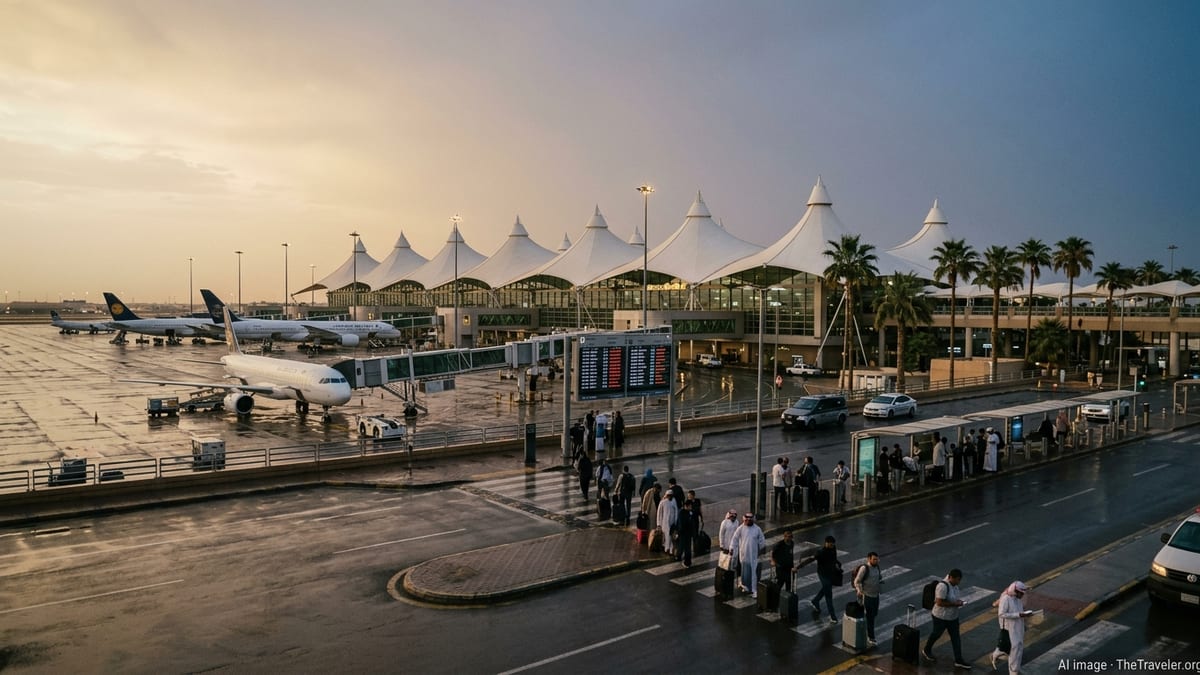
Airport Technically Open, Flight Schedules Under Strain
Publicly available information shows that King Khalid International Airport in Riyadh remains open, with runways and terminal facilities operational. The airport has not been listed as closed in recent regional aviation and port advisories, which continue to describe Saudi Arabia’s main hubs as functioning. This contrasts with neighboring countries that have partially shut airspace or imposed heavier restrictions.
At the same time, a growing number of airlines have reduced or suspended services into Riyadh. In recent days, traveler reports and airline notices have highlighted cancellations on routes linking Riyadh with other Gulf capitals, particularly Dubai and Abu Dhabi, as well as schedule cuts to several regional destinations. The result is that passengers can enter the terminal and pass security, yet find their specific flight delayed, rerouted, or missing from departure boards.
Online discussions among travelers indicate that domestic flights have been more resilient, often operating with delays rather than outright cancellations. However, some domestic services have reportedly been diverted or held in holding patterns when regional security alerts spike. This uneven pattern fuels the perception that the airport is simultaneously open and disrupted, depending on the route, time of day, and carrier involved.
Saudi Arabia’s position as a key east west aviation corridor has kept its main airspace segments open even as other countries restrict theirs. That strategic role appears to be underpinning continued operations at King Khalid International Airport, even while airlines apply their own, often stricter, risk assessments on a route by route basis.
How Regional Conflict Is Reshaping Routes to Riyadh
The broader backdrop to the situation in Riyadh is the ongoing conflict involving Iran and the United States, which has triggered missile and drone incidents across parts of the Gulf. Published coverage describes strikes and attempted strikes on infrastructure in Saudi Arabia and neighboring states, prompting temporary airspace closures and rerouting of international traffic far beyond the immediate target areas.
Travel and security advisories released in early March describe Saudi Arabia as one of the few remaining major east west corridors currently open to civilian traffic, as carriers look to skirt higher risk skies over other parts of the region. That status has created heavy pressure on Saudi air traffic control and hub airports, with some reports characterizing congestion as unprecedented. While Riyadh remains operational, it is operating in a stressed regional network where a closure or alert in one country can ricochet across schedules in another.
Airlines have responded by trimming or cancelling flights that rely on now constrained regional connections, even if Riyadh itself is still able to handle arrivals and departures. Reports from travelers show long delays on some long haul services that continue to operate, with aircraft forced into extended routings to avoid closed or restricted airspace. Other services, particularly short haul links between Gulf capitals, have disappeared from schedules or been replaced with limited evacuation style flights.
This shifting route map explains why passengers see contradictory signals: an airport that is open and functioning locally, but a long list of missing or heavily disrupted flights shaped by decisions made in distant airline operations centers.
What Airlines Are Doing With Tickets to and From Riyadh
Alongside schedule changes, airlines have been steadily expanding their waiver and refund policies for travel touching Saudi Arabia, including Riyadh. Major carriers with extensive Middle East networks have issued travel notices covering late February through at least the end of March, allowing customers booked to or from Riyadh to change dates, alter routings, or request refunds under specific conditions.
One widely shared advisory from a large European based airline group extended free refunds and rebooking for passengers ticketed to several Middle Eastern destinations, explicitly listing Riyadh among the affected cities. More recently, information circulated by travelers points to Turkish Airlines offering extended free refunds into April for flights involving Riyadh and Dammam, a sign that carriers do not expect a rapid return to normal timetables.
North American airlines have implemented their own versions of “unrest” waivers that apply to journeys passing through the region between late February and the end of March, including itineraries connecting via Riyadh on partner airlines. These policies generally allow at least one change without a fee, although fare differences may still apply beyond certain dates or for major itinerary changes.
For passengers, this means that while their flight may technically still appear on schedule at King Khalid International Airport, they often have a window to reshape their plans without the usual penalties. The challenge is timing: airline policies are evolving rapidly, and travelers must continually check the latest conditions from the carrier that actually issued their ticket.
On the Ground: What Travelers Report Experiencing
First hand accounts shared on social platforms paint a picture of a busy but tense airport environment. Several contributors describe arrival and departure halls operating close to normal, with shops open and security checks proceeding as usual. At the same time, they report sudden gate changes, last minute delays attributed to “force majeure,” and in some cases aircraft diverting after extended periods in holding patterns near Riyadh.
Some travelers checking King Khalid International Airport’s official flight information pages have noted what appears to be a relatively normal schedule, yet others have posted screenshots from airline apps showing cancellations or diversions for the same time period. This has prompted speculation that airport and airline information systems are not always updating in sync, adding to confusion for passengers trying to decide whether to head to the airport.
Reports also suggest that while many domestic services continue to run, international flights are bearing the brunt of disruption, especially those connecting Riyadh with Gulf hubs whose own airspace or airport operations have been constrained. Long queues at airline service desks and crowded customer service phone lines are a recurring theme, as passengers seek rebooking options or documentation needed for travel insurance claims.
Despite the uncertainty, many accounts emphasize that flights to certain long haul destinations, particularly in Asia, are still operating, albeit sometimes with significant delays. Travelers scrambling to leave the region have sought out these continuing services from Riyadh as a relatively reliable “escape route” compared with more heavily affected hubs.
Practical Advice for Anyone Flying Via Riyadh Now
With King Khalid International Airport open but flight patterns in flux, the main message from both formal advisories and traveler experience is to verify, verify, verify. Passengers are urged to check their booking directly with the operating airline rather than relying solely on airport departure boards or third party travel apps, which may lag behind real time operational decisions.
Security focused travel advisories recommend allowing extra time at the airport, preparing for longer than usual check in and security procedures, and being ready for last minute gate or timing changes. For those with onward connections beyond Riyadh, building in generous layovers is advisable given the potential for upstream delays.
Travelers who have flexibility in their plans are being encouraged, through airline waiver policies, to consider postponing non essential trips involving Riyadh until after the current wave of regional disruptions subsides. Those who must travel now are advised to monitor both aviation notices and regional news in case further airspace restrictions force airlines to make abrupt schedule adjustments.
For many passengers, the reality at Riyadh’s King Khalid International Airport in mid March 2026 is a paradox: a functioning airport serving as a key artery in a disrupted region, where the terminal lights are on and runways are active, but where the decision of whether any single flight takes off rests on fast moving calculations far beyond the airport perimeter.