

More news on this day
An American Airlines Boeing 737 MAX 8 operating a domestic U.S. route diverted to Detroit Metropolitan Wayne County Airport after crew members reported a disruptive passenger on board, according to early media and tracker reports compiled on Sunday.
Get the latest news straight to your inbox!
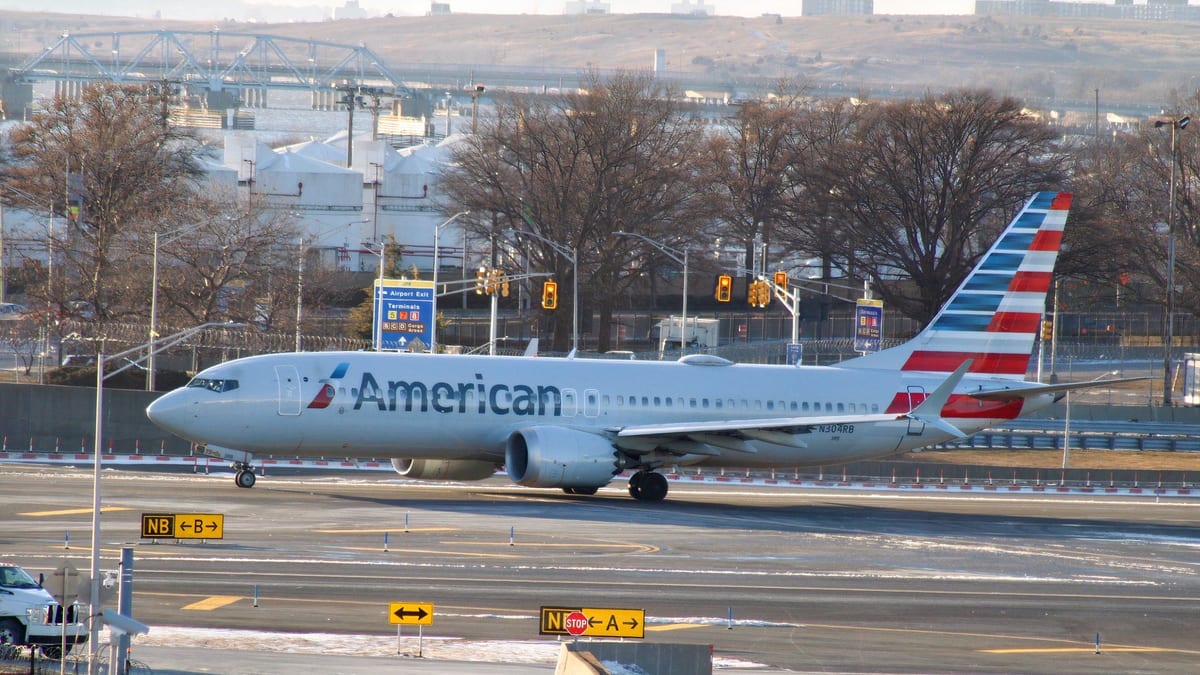
Image by Simple Flying - Aviation News
Diversion to Detroit After In Flight Disturbance
Publicly available flight tracking data and local media coverage indicate that the 737 MAX 8 altered course toward Detroit after departure when the situation with the passenger escalated in the cabin. The flight landed safely at Detroit Metropolitan Wayne County Airport, where it taxied to a remote area of the airfield so that the individual could be removed.
Initial reports suggest the incident involved an individual who allegedly failed to follow crew instructions and became increasingly disruptive as the flight progressed. Details on the exact nature of the behavior, including whether there were any attempted interferences with aircraft systems or crew duties, had not been fully clarified in early coverage.
Information made public so far indicates that other passengers remained seated while the crew managed the disturbance in accordance with airline procedures. There were no immediate reports of serious injuries among passengers or crew, and the aircraft was later expected to continue its journey or have passengers re accommodated on other flights.
Cabin Safety Protocols and Crew Response
Aviation safety procedures require flight attendants and pilots to treat any escalating cabin disturbance as a potential risk to the safety of the aircraft. When verbal de escalation and standard measures are not sufficient, airline manuals generally allow crews to request a diversion so that law enforcement or airport personnel can meet the aircraft on the ground.
In this case, publicly accessible accounts indicate that the crew coordinated with air traffic control to obtain priority handling into Detroit once it became clear that the behavior could no longer be addressed as a routine passenger issue. Diversions of this kind typically involve a balance between reaching an appropriate airport quickly and ensuring that fuel and airspace conditions allow for a safe arrival.
Industry guidance shows that crews are trained to secure the cabin, protect access to the flight deck, and document disruptive conduct in real time. After landing, written reports, surveillance footage where available, and witness statements are commonly used in later reviews or any potential legal proceedings.
Disruptive Passenger Incidents on the Rise
The diversion comes against a backdrop of heightened attention to disruptive passenger behavior on commercial flights in the United States and elsewhere. Data compiled by aviation regulators and industry groups in recent years show a noticeable increase in reports ranging from verbal confrontations and non compliance with seatbelt or mask rules to more serious attempts to interfere with crew members.
Travel industry observers note that even when physical damage to the aircraft does not occur, diversions can create extensive knock on effects across an airline’s network. A single unscheduled landing may lead to missed connections, aircraft and crew displacements, and delays that ripple through multiple cities for the rest of the day.
Some carriers have responded by updating training materials, revising internal reporting tools, and in certain cases seeking to recover diversion related costs from individuals found responsible for serious disturbances. Publicly reported enforcement cases in recent years show that disruptive passengers can face significant financial penalties and, in more severe cases, potential criminal charges.
Spotlight on the Boeing 737 MAX 8 Platform
Although the diversion appears to be related to passenger conduct rather than a technical problem, the involvement of a Boeing 737 MAX 8 inevitably draws renewed attention to the aircraft type. The MAX family, including the MAX 8, has been under close public and regulatory scrutiny since its global grounding following two fatal accidents several years ago, and its return to service has been closely monitored.
The Federal Aviation Administration and other regulators cleared the 737 MAX series to return to passenger service after extensive software modifications, pilot training updates, and additional oversight of Boeing and airline maintenance procedures. Since then, most reported occurrences involving MAX aircraft have been handled under standard safety and maintenance protocols similar to those for other modern narrowbody jets.
In the Detroit diversion, publicly available information points to a normal landing and taxi, with no indication that the aircraft’s systems or performance played any role in the event. The use of the MAX 8 on the route largely reflects its position as a workhorse in American Airlines’ narrowbody fleet for domestic and shorter international services.
Impact on Travelers and Ongoing Review
Passengers on the affected flight experienced an unplanned stop, likely followed by a period of waiting on the ground while airport personnel boarded the aircraft and the situation was resolved. Airlines typically provide updates over the public address system and through mobile notifications as dispatchers determine whether the same aircraft can continue or whether rebooking is required.
Past incidents of a similar nature suggest that an internal review will assess the timeline of the disturbance, the steps taken by crew members, and any coordination with ground staff and regulators. Such reviews are commonly used to refine training scenarios, confirm that policies were followed, and identify any opportunities for improvement.
For travelers, the event serves as a reminder that in flight conduct is subject to strict rules designed to protect everyone on board. Even relatively brief disturbances can lead to major operational impacts, particularly when they force a diversion to an unscheduled airport such as Detroit during a busy travel period.