

More news on this day
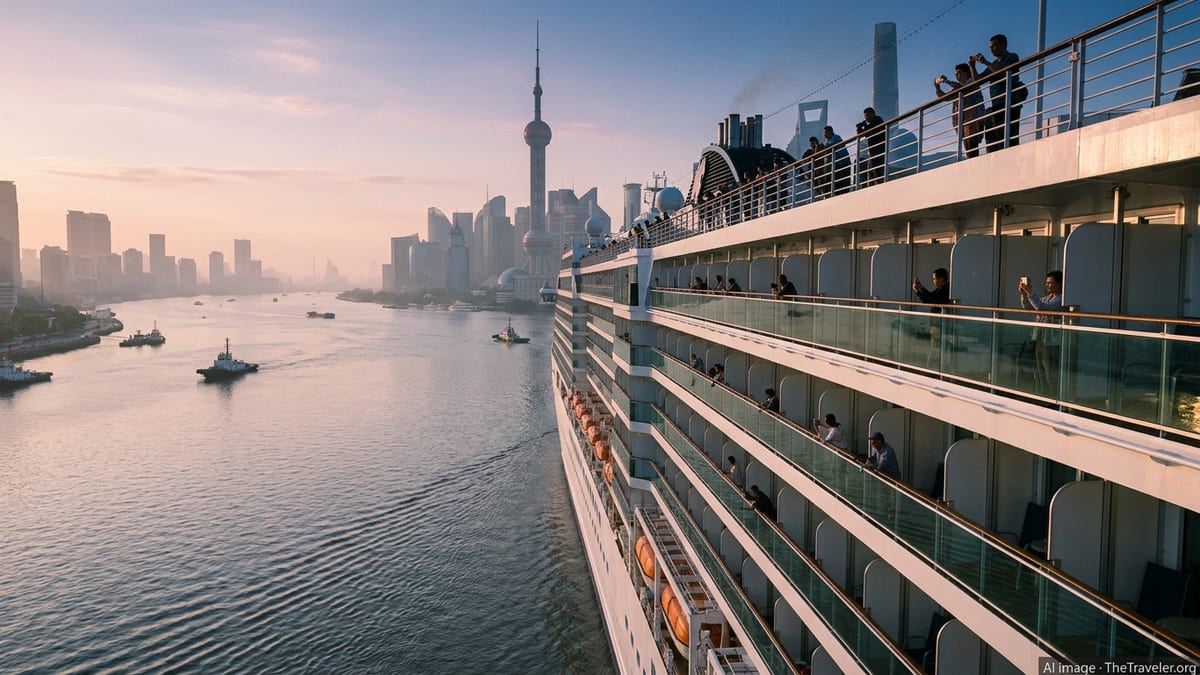
Dream Cruises is charting a return to Asia with new sailings from Shanghai, signaling a fresh chapter for the once‑grounded brand and underscoring the rapid revival of China’s outbound cruise market.
Get the latest news straight to your inbox!
A Storied Brand Makes a Comeback
The reboot of Dream Cruises from Shanghai marks a dramatic turnaround for a name many travelers had written off after its parent company collapsed in early 2022, halting operations and stranding future plans. Under a new structure tied to Resorts World’s broader cruise portfolio, the Dream Cruises banner is being repositioned as an upscale, Asia‑centric brand aimed squarely at the growing Chinese middle class and regional travelers looking for short‑haul sea escapes.
Shanghai, which has emerged as the primary gateway for China’s restarted cruise economy, provides a symbolic and commercial anchor for the relaunch. By homeporting in the city, Dream Cruises is re‑entering a market that has transformed rapidly during its hiatus, with domestic operators and international brands vying to secure berths at Wusongkou International Cruise Terminal and other regional hubs.
Industry analysts say the decision to revive the Dream name, rather than launch under an entirely new banner, reflects strong residual recognition in markets such as mainland China, Hong Kong and Southeast Asia. Even after years out of service, Dream’s large‑ship hardware and its reputation for Asian‑focused entertainment and dining still resonate with cruisers who associate the brand with multi‑generational holidays at sea.
Shanghai’s Cruise Comeback Accelerates
Dream Cruises’ return comes as Shanghai cements its role as China’s cruise capital. The city has already become the year‑round base for Adora Magic City, the country’s first domestically built large cruise ship, which has logged more than a million passenger embarkations on regional routes to South Korea and Japan. With Dream Cruises now joining the roster, capacity out of Shanghai is set to climb further, pushing the city back toward its pre‑pandemic ambition of being Asia’s leading cruise gateway.
Cruise bookings originating in Shanghai have rebounded sharply over the past two years as outbound travel restrictions eased and appetite for regional leisure trips returned. Authorities and port operators have invested in upgraded terminal facilities, streamlined immigration processing and enhanced transport links to the city center, all designed to handle rising volumes of short‑haul sailings that appeal to first‑time and repeat cruisers alike.
The addition of Dream Cruises also broadens the mix of products sailing from Shanghai. Alongside domestically branded ships, large foreign‑flag vessels and chartered offerings, Dream promises to restore a familiar combination of casino‑style entertainment, Asian fine dining and family‑friendly amenities, carving out a differentiated niche while still playing within the mainstream segment.
New Itineraries Across Northeast Asia
From its Shanghai base, Dream Cruises is expected to focus initially on short regional itineraries that connect mainland travelers with popular cruise ports in Northeast Asia. Sailings of three to seven nights are likely to feature calls in South Korean destinations such as Jeju, Busan and Incheon, as well as Japanese ports along the Sea of Japan and in Kyushu, mirroring the regional patterns already established by competitors out of China’s east coast.
These tightly scheduled voyages cater to Chinese travelers’ limited annual leave and preference for compact holiday windows that still feel aspirational. For many, a cruise from Shanghai offers a one‑stop way to sample multiple countries without the complexity of independent trip planning or multiple hotel stays, a proposition that proved highly popular during Dream Cruises’ first incarnation.
Over time, industry observers expect Dream Cruises to experiment with longer seasonal itineraries reaching further into Japan’s northern regions and potentially down the East China Sea into Taiwan and the Philippines, particularly during school holidays and national Golden Week travel peaks. The flexibility to redeploy capacity around Asia gives the brand room to chase demand while keeping Shanghai as its flagship homeport.
Competition Heats Up in the Asian Cruise Arena
Dream Cruises is re‑entering a far more competitive environment than the one it left. Adora Cruises has rapidly expanded its footprint from Shanghai with the domestically built Adora Magic City and an upgraded sister ship serving multiple Chinese homeports. International names, from American mass‑market brands to European premium lines, are also ramping up Asian deployments as port restrictions ease and air links normalize.
This new landscape will test Dream’s ability to stand out on service, onboard experience and pricing. While the brand can lean on familiarity and a strong legacy among regional cruisers, consumer expectations have risen, shaped by newer vessels boasting cutting‑edge entertainment venues, high‑speed connectivity and expansive duty‑free retail. Dream Cruises will need to deliver upgrades across hardware and software alike if it hopes to recapture its pre‑crisis market share.
For Shanghai, heightened competition is largely welcome. A greater variety of cruise brands and itineraries helps solidify its positioning as a must‑call homeport for any company serious about Asia. It also incentivizes local authorities to continue improving port infrastructure, customs clearance and urban transport links that directly affect passengers’ first and last impressions of the city.
What the Relaunch Means for Travelers
For travelers across Asia, the return of Dream Cruises from Shanghai expands the menu of regional cruise options at a time when many are seeking value‑driven yet experience‑rich holidays closer to home. Short‑haul itineraries priced competitively against land‑based vacations can be especially attractive for families, younger couples and first‑time cruisers wary of committing to long‑haul international trips.
Travel agents in China and neighboring markets are already positioning the Dream brand’s Shanghai sailings as part of broader air‑and‑sea packages, bundling regional flights with cruises and pre‑ or post‑stay city experiences. As more capacity enters the market, promotional fares, onboard credits and group offers are expected to feature prominently, at least during the early stages of the relaunch.
For the wider industry, Dream Cruises’ comeback is being viewed as another sign that Asia’s cruise recovery is entering a more confident phase, shifting from cautious restarts to active expansion. With Shanghai at the center of that shift, the city’s waterfront is once again poised to become a familiar sight in travelers’ holiday photos, as Dream Cruises and its rivals compete to capture the imagination of a new generation of Asian cruisers.