


More news on this day
Passengers flying through Dubai and other Gulf hubs are facing renewed disruption as escalating missile and drone attacks in Saudi Arabia trigger fresh cancellations, diversions and airspace warnings across the region.
Get the latest news straight to your inbox!
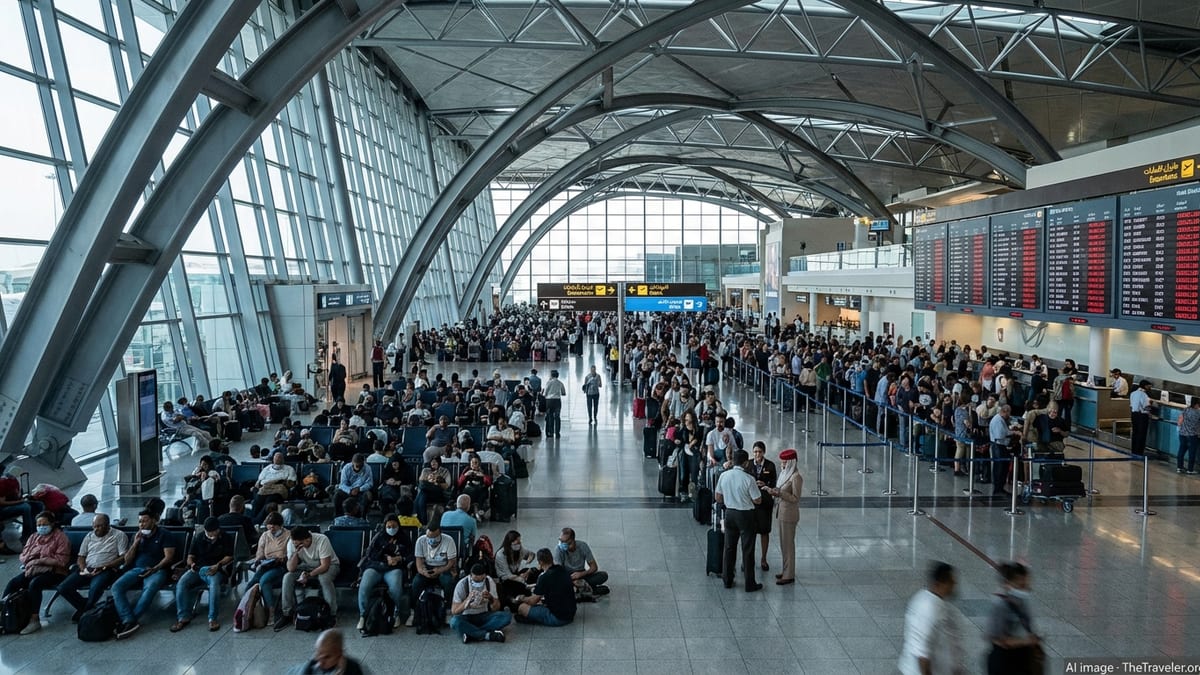
Saudi attacks keep pressure on regional airspace
Publicly available security assessments show that Saudi Arabia continues to absorb repeated missile and drone strikes targeting airports, energy facilities and major cities, prompting regulators and airlines to reassess how and when they use the kingdom’s airspace. Aviation risk platforms describe Saudi skies as technically open but exposed to spillover hazards from air defence activity and falling debris, particularly around Riyadh and other high‑profile locations.
In late October, specialist aviation coverage reported that Riyadh’s King Khalid International Airport endured thousands of cancellations in just over two weeks as attacks intensified, with services curtailed not only at the capital but also at regional gateways such as Jazan, Abha and Najran. Industry analysis indicated that more than four in five scheduled flights at Riyadh were cancelled between 8 and 25 October as airlines cut frequencies or halted routes altogether in response to the deteriorating threat picture.
International aviation regulators have reacted in stages. The European Union Aviation Safety Agency extended an earlier conflict advisory in late September, highlighting the risks to civil aircraft at all altitudes in parts of Saudi airspace and neighbouring Gulf regions and pointing in particular to the dangers of misidentification and interception during missile and drone engagements. The guidance, which currently runs through at least mid November, continues to influence routing choices for European and partner carriers.
Industry bulletins circulated to corporate travel managers in recent weeks suggest that further attacks on Saudi airports are considered likely in the short term, even as some facilities reopen for limited operations. Several regional and international airlines remain cautious about returning to the most heavily affected cities, and schedules into November reflect a patchwork of suspensions, reduced frequencies and last‑minute operational changes.
Dubai and UAE hubs manage rolling waves of disruption
Dubai International Airport and its fellow UAE hubs in Abu Dhabi and Sharjah remain fully operational, but the impact of Saudi‑focused attacks is clearly visible in daily departure boards. UAE media reports on 9 November describe a fresh round of cancellations and delays affecting flights to Saudi destinations, including services operated by carriers such as Flynas and newly launched Saudi brands, alongside knock‑on disruption to connecting routes that rely on Riyadh or Jeddah as intermediate stops.
Separate business travel coverage the same day highlighted that several airlines serving the UAE have extended suspensions of Saudi routes until at least 19 November, citing the ongoing security situation and associated airspace restrictions. These adjustments come on top of earlier cancellations at the start of the month, when flights linking Dubai, Abu Dhabi and Sharjah to cities across the kingdom were thinned out or pulled entirely, affecting passengers travelling between the Gulf and South Asia, Africa and Europe.
Travel rights organisations tracking the situation note that disruption at Dubai, Abu Dhabi and Sharjah has been most pronounced on Saudi services but has also spilled over to some long haul departures as aircraft and crews fall out of position. While many delays are directly tied to evolving security measures and routing constraints, others are described as operational, reflecting the complexity of keeping schedules stable when a major neighbouring market is repeatedly affected.
At the same time, fact‑checking outlets and regional travel publications stress that social media posts depicting mass evacuations or chaotic scenes at Dubai’s terminals are often misleading or outdated. Recent investigations have shown that some widely shared videos of crowded departure halls actually predate the current spike in Saudi attacks, underlining the importance for passengers of relying on verified airline and airport updates rather than viral clips.
Reroutes, longer journeys and suspended Saudi links
The most visible effect for travellers transiting Dubai and other Gulf hubs is a shift in routings. Airspace advisories from European and international regulators have prompted many carriers to file flight plans that avoid sensitive portions of Saudi territory, especially over the west of the country. Aviation risk summaries explain that this reflects concern not only about a direct hit but also about the possibility of missiles or drones crossing civil flight paths, and about interceptor activity at high altitude.
For some passengers, the change is relatively minor, resulting in modestly longer flight times or altered track maps on seatback screens. For others, especially those booked on itineraries connecting via Riyadh or Jeddah, the impact is more significant. Corporate travel briefings in late October recorded widespread cancellations at Saudi airports, with certain foreign carriers suspending Riyadh services into November and regional airlines putting flights to cities such as Abha and Jazan on hold until further notice.
In parallel, specialist compensation and consumer advice platforms report a spike in enquiries from passengers whose Dubai‑origin or Dubai‑bound flights were delayed or cancelled because of diversions around affected airspace. Their guidance emphasises that while travellers are often entitled to rebooking or refunds, eligibility for cash compensation can vary depending on the cause and on which jurisdiction’s rules apply to the airline in question.
For routes that remain scheduled, operational resilience is improving compared with the most acute phase of disruption earlier in the year, when consultancy reports described severe congestion at major Gulf hubs and emergency measures to move stranded passengers. However, with airspace warnings still active and Saudi infrastructure under intermittent attack, airlines continue to warn that further short‑notice changes remain possible.
What passengers flying via Dubai should do now
Consumer travel advisories revised over recent weeks urge passengers with upcoming trips through Dubai, Abu Dhabi, Doha and other Gulf hubs to monitor bookings closely and allow additional time for connections, particularly where Saudi sectors are involved. Travel experts quoted in regional media recommend avoiding ultra‑tight layovers where possible, given the heightened risk that a short delay on an inbound leg could cause a missed onward flight or an enforced overnight stay.
Public information from airport operators and airlines continues to stress the importance of checking flight status on official channels on the day of travel and signing up for notifications. With some cancellations announced only hours before departure, especially on routes crossing or approaching Saudi airspace, real‑time updates remain the most reliable way to track whether a journey is running as planned.
Advisory services that specialise in corporate and high‑risk travel also underline the value of flexible ticket conditions during this period. Fully changeable or refundable fares, while more expensive upfront, can offer greater protection if flights are cancelled or rerouted for security reasons. Travellers are being encouraged to review the small print of both airline contracts and travel insurance policies, paying particular attention to clauses relating to war, terrorism and government‑mandated airspace restrictions.
For now, guidance from major travel publishers describes Dubai itself as open to visitors and functioning normally, even as regional tensions remain elevated. The key message for passengers is that the most acute disruption is concentrated on Saudi routes and overflights, and that careful planning, flexible arrangements and up‑to‑date information can help reduce the impact of a volatile security environment on individual journeys.