

More news on this day
Hundreds of passengers connecting through Dubai International Airport on April 9 found themselves stranded or severely delayed after a new wave of flight disruptions rippled across major international routes, affecting services operated by Emirates, flydubai, Air India and other global carriers.
Get the latest news straight to your inbox!
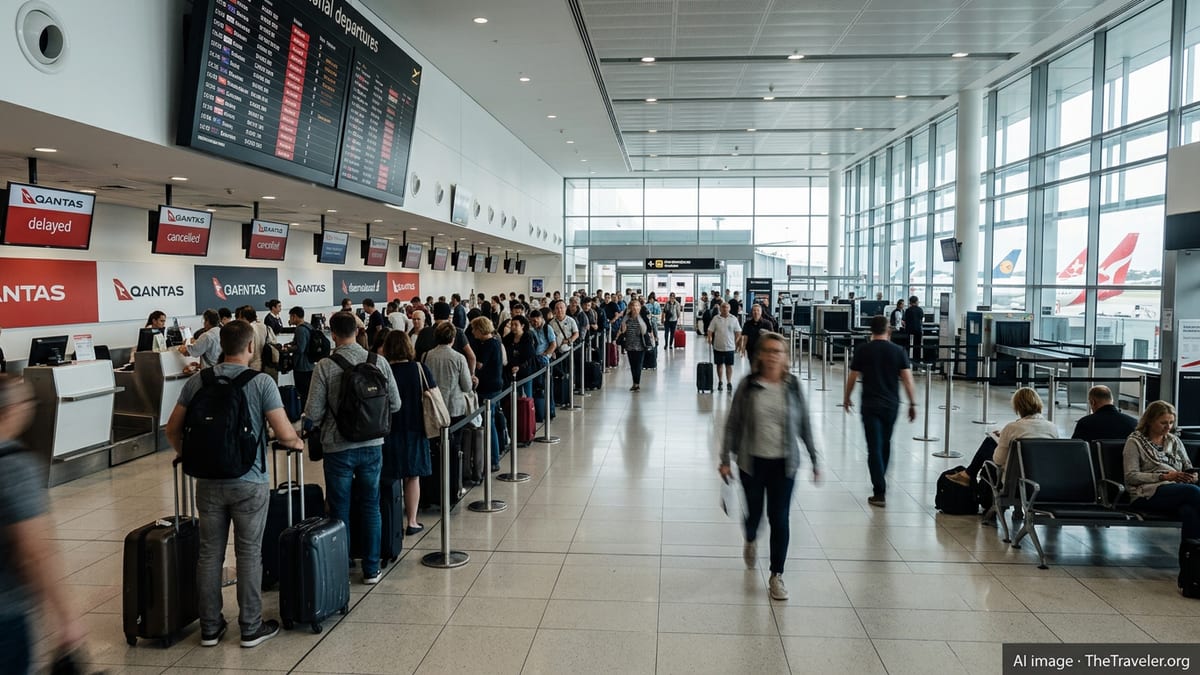
Fresh Disruptions Hit One of the World’s Busiest Hubs
Publicly available flight-board data and regional aviation coverage for April 9 indicate that Dubai International Airport is still operating on a constrained schedule, with reports of more than 100 flights delayed and a smaller number cancelled as the network struggles to stabilise. In total, around 103 departures and arrivals were reported as significantly delayed, while at least six flights were cancelled outright, causing knock-on disruption for passengers on long-haul itineraries.
These figures come as Dubai continues to adjust operations following weeks of airspace tensions and earlier suspensions that affected movements across the United Arab Emirates. While the airport remains open, schedules are being continually revised, with some services restored and others pared back to accommodate safety measures, slot constraints and aircraft rotations.
The impact is being felt most acutely on trunk routes linking Dubai to major global cities, including London, Paris, New York, Mumbai and Sydney. With these flights often operating at or near capacity, even a small number of cancellations create significant backlogs of passengers seeking new connections, hotel accommodation or alternative routings.
Travel industry reports suggest that passenger loads into and out of Dubai remain high as the city serves as a key bridge between Europe, Asia, Africa and the Americas. The combination of strong demand and reduced schedule flexibility has resulted in long queues at rebooking desks, crowded departure areas and extended wait times for those trying to reach their final destinations.
Emirates Adjusts Global Network as Delays Cascade
Emirates, the largest operator at Dubai International Airport, has been at the centre of the current disruption. Recent network updates covered by regional business media show that the airline is in the process of rebuilding services to more than 120 destinations, yet it continues to operate with modified timings and selective cancellations on certain days as aircraft and crew are repositioned.
On April 9, flight-status snapshots indicated that several Emirates services on flagship routes to London Heathrow, Paris Charles de Gaulle, New York JFK, Mumbai and Sydney were subject to extended delays, with some departures held on the ground for operational reasons. A limited number of frequencies on these routes were cancelled, forcing passengers to be moved onto later services or re-routed via alternative gateways.
According to publicly available guidance, Emirates is offering options such as free rebooking within a defined travel window and, in some cases, refunds for passengers whose journeys are heavily disrupted. However, the sheer volume of affected travellers means that many are facing multi-day waits for the next available seat, particularly in premium cabins and during peak travel banks.
Aviation analysts note that Emirates is balancing the need to restore its global reach with the constraints of operating in an environment affected by recent regional security incidents. The airline has prioritised maintaining connectivity on core long-haul routes, even if that means consolidating flights or adjusting departure times at short notice.
flydubai and Air India Confront Capacity and Regulatory Limits
Low-cost carrier flydubai, which also uses Dubai as its primary hub, continues to run a reduced schedule compared with pre-disruption periods. Recent passenger advisories urge travellers not to proceed to the airport until their flights are explicitly confirmed, underscoring the ongoing risk of last-minute changes. For some regional routes feeding into the Dubai hub, limited frequencies have left passengers with fewer alternatives when a flight is delayed or cancelled.
Indian carriers, particularly Air India and its low-cost affiliate Air India Express, face a different set of challenges. Industry statements and media coverage describe how temporary caps on foreign carrier operations at Dubai are constraining the number of daily rotations available to Indian airlines. These restrictions, scheduled to take effect for the upcoming northern summer season, are already influencing planning and have resulted in selective cancellations and ad hoc operations on Gulf routes.
For passengers travelling between Mumbai and Dubai on April 9, this environment translated into a patchwork of services. Some Air India and Air India Express flights operated as planned, while others were absent from regular timetables or listed with significant delays. Travellers connecting onward from Dubai to Europe, North America or Australia faced heightened uncertainty, particularly when itineraries combined non-UAE and UAE-based carriers on a single ticket.
Trade associations representing Indian airlines have publicly raised concerns about the imbalance created when UAE-based carriers such as Emirates and flydubai are able to restore capacity more quickly than foreign competitors. While these policy debates play out at a governmental level, ordinary passengers experience the immediate effects in the form of tighter seat availability, higher last-minute fares and limited rebooking choices.
Global Routes to London, Paris, New York, Mumbai and Sydney Disrupted
The scale of the disruption is most visible on marquee intercontinental routes that hinge on Dubai’s role as a connecting super-hub. On April 9, long-haul travellers on flights to and from London reported schedule changes and rolling delays as airlines sequenced aircraft through constrained airspace and crowded ground operations. Similar patterns were observed on services linking Dubai with Paris, where adjusted departure slots and aircraft swaps contributed to irregular operations.
Transatlantic traffic between Dubai and New York also experienced disruptions, with at least one rotation cancelled and others subject to multi-hour delays. Passengers whose itineraries depended on same-day connections from Indian or Southeast Asian cities through Dubai to the United States found themselves rebooked onto later flights, overnighting in the UAE or being re-routed through European hubs.
On routes to Mumbai, the network pressures were compounded by the broader regulatory environment affecting Indian carriers. Some Dubai to Mumbai services operated by UAE airlines departed close to schedule, but reduced frequency from Indian operators created bottlenecks in the opposite direction. For travellers attempting to return to India at short notice, the combination of constrained capacity and high demand translated into lengthy standby lists and limited flexibility.
Services to Sydney highlighted the long-haul stakes for passengers journeying between Australia and Europe via Dubai. Even a single cancelled Dubai to Sydney rotation can leave hundreds of travellers searching for scarce alternative seats across multiple days, particularly when connecting flows from London and Paris are taken into account. Published coverage of April’s flight patterns indicates that these southern-hemisphere routes remain particularly sensitive to aircraft availability and crew rest requirements.
Passengers Navigate Rebooking, Vouchers and Changing Advice
For stranded passengers, the most immediate concerns on April 9 were practical: securing new flights, arranging accommodation and managing visa or transit requirements. Travel advisories circulating in recent days consistently urge passengers to rely on official airline communication channels and real-time flight-status tools, rather than heading directly to the airport in the hope of a standby seat.
Emirates, flydubai, Air India and several other carriers serving Dubai have outlined a variety of customer-support measures. These include free date changes within specified periods, waivers of certain change fees, and, in some circumstances, full refunds. Some airlines are also providing travel vouchers for future use when passengers choose to cancel disrupted journeys entirely. The exact options vary by carrier, ticket type and route, leaving many travellers to navigate complex conditions while under time pressure.
Consumer-rights commentators point out that the situation in Dubai highlights broader questions about passenger protections on international routes that involve multiple jurisdictions. While some countries mandate specific compensation or care standards for long delays and cancellations, others leave these matters largely to airline policies and contracts of carriage. As a result, two passengers experiencing similar disruptions on the same day may face different entitlements depending on their airline and ultimate destination.
As April progresses, aviation observers expect Dubai International Airport to continue gradually increasing capacity while retaining a cautious approach to airspace and scheduling. For passengers booked on routes touching Dubai, the prevailing advice remains clear: monitor bookings closely, confirm flight status repeatedly in the 24 hours before departure and be prepared for itineraries to change with limited notice.