


More news on this day
Air travel across Dubai and the wider Middle East is facing renewed uncertainty after the United Arab Emirates intercepted an Iranian drone over its territorial waters just days after the first exchange of fire in a month between United States and Iranian forces.
Get the latest news straight to your inbox!
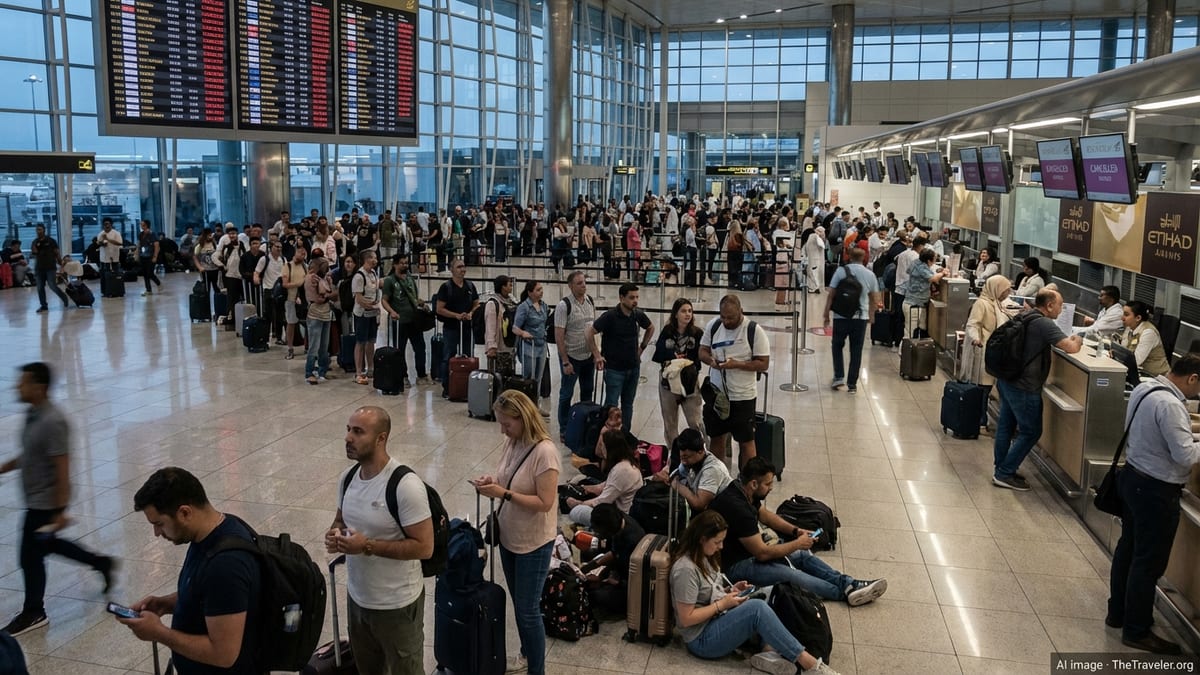
New drone incident follows fresh US Iran clashes
According to published coverage, the UAE air force detected and intercepted an unmanned aircraft approaching from Iran over Emirati waters early on Monday, August 31, 2026. The country’s Defense Ministry stated that its forces had “dealt with” the drone and there were no immediate reports of casualties or damage on the ground in the Emirates.
The interception came less than 24 hours after United States forces struck Iranian rocket launchers positioned on an Iranian island near the Strait of Hormuz, a chokepoint for global energy shipments. Publicly available information indicates that US Central Command described the launchers as a threat because they were being prepared to fire rockets carrying sea mines into critical shipping lanes.
Iranian state-linked outlets reported that Tehran responded by launching missiles toward US-linked sites in Jordan. Reports indicate that the incoming projectiles were intercepted, continuing a pattern of long-range exchanges that have escalated periodically since early 2026.
The sequence of events marks the first significant exchange of fire between the United States and Iran in around a month, after a period of relative military quiet but ongoing diplomatic tension. For travelers, the renewed confrontation raises concerns about the stability of air corridors threading between the Gulf, Iran and the wider region.
Dubai airspace remains open but airlines review routings
Despite the latest incident, major UAE airports, including Dubai International and Dubai World Central, remained open and operational on Monday. Flight-tracking data and regional aviation coverage show that scheduled services were largely maintained, but carriers have been reassessing routings over or near the Strait of Hormuz in response to shifting risk assessments.
Many Middle East and international airlines adjusted flight paths earlier in the year after a series of missile and drone attacks linked to the broader Iran conflict. Subsequent advisories led to temporary diversions around certain parts of Iranian airspace and the Gulf’s northern approaches, lengthening some long-haul journeys between Europe or North America and destinations in Asia and Australia.
In the latest episode, there have been no immediate reports of widespread cancellations in or out of Dubai. However, aviation analysts cited in regional reports note that carriers are likely to build in additional fuel and time margins in the coming days, anticipating potential last-minute reroutes around emerging military activity.
For passengers, that can translate into modestly longer flight times, occasional holding patterns on approach to Dubai, and aircraft taking less direct tracks over the Arabian Sea or Saudi Arabia to maintain distance from any perceived flashpoints near the Strait of Hormuz.
Memories of earlier strikes keep nerves high for travelers
The interception is occurring against the backdrop of a longer period of tension that has already affected traveler confidence. Background reporting on the 2026 Iranian strikes on the UAE details how a wave of missiles and drones targeted infrastructure across the country earlier in the year, with air defenses intercepting large numbers of incoming threats and at least one drone igniting a fuel tank fire near Dubai International Airport.
At that time, flights were briefly suspended and later rescheduled as crews inspected runways, fuel facilities and terminal areas. The disruption underscored how even localized damage or precautionary closures can ripple through global schedules, given Dubai’s role as one of the world’s busiest hubs for international passengers and cargo.
Since then, UAE investments in layered air and missile defense, including US-supplied systems, have been widely credited in open-source assessments with preventing more serious damage from subsequent salvos. Monday’s quick interception of the Iranian drone, with no reported impact on populated areas, appears consistent with this pattern of rapid response.
Nevertheless, travelers familiar with the earlier episodes are closely watching developments. Online travel forums and regional discussion threads in recent weeks have reflected both ongoing anxiety and first-hand reports from passengers who describe steady but heightened security checks and occasional delays around peak periods.
Practical advice for passengers transiting Dubai and the Gulf
Publicly available information from airlines, airports and foreign travel advisories suggests that passengers with upcoming itineraries through Dubai, Abu Dhabi or other Gulf gateways do not currently face blanket disruption. Travel experts recommend that passengers keep contact details up to date with their airline or booking agent, as carriers increasingly rely on apps and text alerts to communicate last-minute gate changes, delays or reroutes.
In addition, travelers are encouraged to monitor official advisories from their home country’s foreign ministry or state department when planning connections through the region. Security alerts in early August, along with later notices linked to missile-threat warnings and trade restrictions with Iran, illustrate how guidance can evolve quickly as the situation on the ground changes.
On the ground in Dubai, recent reporting has highlighted the continued roll-out of advanced security and screening technology at terminals, aimed at reducing queues even as overall alert levels remain elevated. For most passengers this has meant a familiar experience at check in and security, albeit with a heightened presence of uniformed personnel and occasional spot checks.
For those still weighing whether to book new trips, analysts commonly emphasize that commercial aviation remains tightly regulated in conflict-adjacent airspace, with airlines required to integrate real-time intelligence and government restrictions into their flight-planning systems. As long as routings remain open and demand continues, Dubai is expected to preserve its central role in connecting Europe, Asia, Africa and Oceania, even as operators navigate a more complex security landscape.
Wider regional impact on Middle East connectivity
The flare-up between the United States and Iran, coupled with the latest drone incident off the UAE coast, has implications well beyond Dubai. The Gulf corridor functions as a crucial bridge between continents, and any sustained increase in military activity around the Strait of Hormuz can affect airlines based in Qatar, Saudi Arabia, Oman and Bahrain, as well as European and Asian carriers crossing the region.
Recent regional coverage from the UAE and neighboring states has already highlighted ripple effects from earlier missile-threat alerts and tightening trade measures linked to Iran, including heightened insurance costs for shipping and more conservative overflight planning for some carriers. Industry observers note that even minor route extensions can add significant fuel costs when multiplied across a global network.
So far, there is no indication that airspace closures are imminent. However, the return to active exchanges of fire after a month-long lull reinforces the sense that Middle East aviation will continue to operate in a fluid environment. For frequent travelers, particularly those connecting between long-haul markets, allowing extra time for connections and staying flexible about routings may help mitigate frustration if military developments prompt sudden changes.
Much now depends on whether the latest US and Iranian actions evolve into a more sustained confrontation or settle back into an uneasy stalemate. Travel patterns through Dubai and other Gulf hubs are likely to adjust accordingly, balancing enduring demand for global connectivity with the need to manage security risks in one of the world’s most strategically sensitive airspaces.
United Arab Emirates intercepts Iranian drone over its territorial waters
US strikes Iranian rocket launchers near Strait of Hormuz