


More news on this day
Kenya’s role as a key East African tourism and travel gateway has been shaken after aviation workers at major airports launched industrial action, severely disrupting flights at Nairobi’s Jomo Kenyatta International Airport (JKIA) and other hubs and leaving thousands of passengers facing delays, diversions and overnight waits in terminal halls.
Get the latest news straight to your inbox!
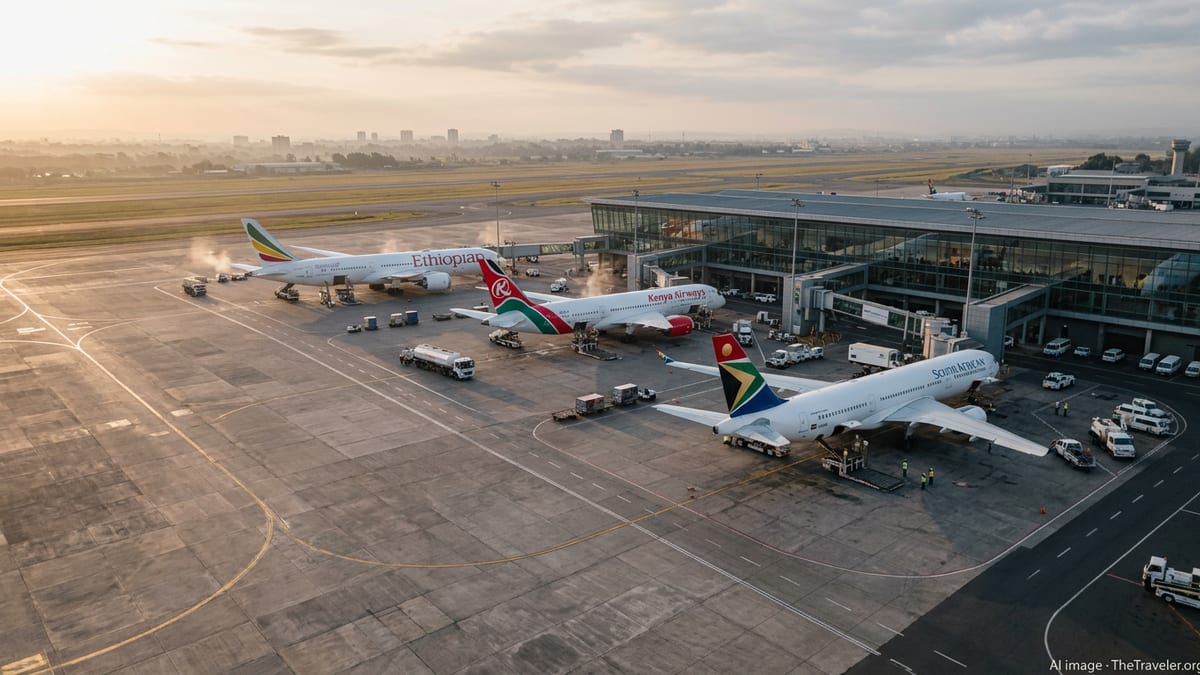
Go-slow Escalates into Full-Blown Airport Disruption
Published coverage indicates that the latest wave of disruption began on Sunday, August 30, 2026, when workers affiliated with the Kenya Aviation Workers Union (KAWU) and staff from agencies including the Kenya Airports Authority (KAA) and the Kenya Civil Aviation Authority (KCAA) began a go-slow at JKIA in Nairobi and Moi International Airport in Mombasa. Reports describe airport entrances partially blocked and key operational posts understaffed, slowing the flow of passengers and aircraft on one of the region’s busiest travel weekends.
News outlets in Kenya report that the industrial action follows a breakdown in efforts to resolve grievances over pay, benefits and working conditions, as well as concerns linked to earlier disputes that had prompted a suspension of strike plans earlier in the year. According to this coverage, union leaders accuse government entities and airport operators of failing to fully implement previously agreed measures, prompting the renewed stoppage.
By Sunday night, images and videos circulating on local media and social platforms showed long queues at check in counters and security lanes, with some passengers seated on the floor beside their luggage as departure boards filled with delayed or cancelled flights. Nairobi based outlets describe hundreds of travelers spending the night at JKIA waiting for clarity on revised schedules or hotel accommodation arranged by airlines.
Regional reports highlight that the disruption is not limited to international long haul services but also affects domestic and regional connections that funnel tourists to safari destinations, coastal resorts and neighboring countries, compounding the impact on time sensitive travel plans.
Flight Delays Mount as Airlines Scramble to Adjust
Kenya Airways, which uses JKIA as its main hub, has issued a series of public advisories acknowledging significant delays to its operations. A customer update dated August 30 indicates that by late afternoon all scheduled flights had departed, but with average delays of two to three hours on departures into and out of Nairobi due to constraints within air traffic control services. The carrier has urged passengers to verify their flight status before leaving for the airport and to allow additional time for check in and security.
Local media reports show that other airlines operating at JKIA and Moi International Airport have likewise been forced to reschedule or temporarily suspend flights as they navigate reduced staffing and slower turnaround times on the ground. Some carriers are reported to have arranged hotel stays or meal vouchers for stranded passengers, though travelers’ accounts shared online suggest that support measures have varied widely between airlines and flights.
Travel alerts collated by regional aviation and tourism outlets describe a patchwork of disruption across the network, with some early morning and late night services facing the longest delays as staffing shortages intersect with peak traffic waves. Even flights that eventually depart often do so outside their assigned slots, hampering onward connections and forcing last minute rebookings, particularly for passengers heading to popular safari circuits or onward links to southern Africa.
Observers note that the situation at JKIA is further complicated by ongoing infrastructure works and recent announcements about terminal changes designed to streamline operations ahead of a new phase of renovation. The combination of construction related adjustments and industrial action has intensified pressure on airport systems that were already adapting to shifting terminal allocations.
Tourism and Regional Connectivity Under Strain
Kenya’s aviation system serves as a critical gateway for international tourism across East Africa, funnelling visitors to Kenya’s own national parks and coastal resorts as well as to neighboring destinations through Nairobi’s extensive connecting network. Publicly available information on Kenya Airways’ route map shows that JKIA links more than three dozen African cities with Europe, the Middle East and parts of Asia, making operational stability at the airport central to the region’s travel and tourism flows.
Industry commentary in recent months has stressed that even short lived disruptions at JKIA can reverberate across multiple countries, forcing tour operators to rework itineraries and raising costs for hotels that suddenly must accommodate unexpected overnight stays. The latest strike related delays have arrived just as many operators are preparing for the upcoming high season in early 2027, when long haul holidaymakers typically transit Nairobi en route to safaris in the Maasai Mara or beach stays along the Kenyan and Tanzanian coasts.
Reports from Kenyan travel desks indicate that domestic tourism has also been affected, with residents traveling between Nairobi, Mombasa, Kisumu and regional hubs experiencing extended waits and uncertainty. For travelers with tight schedules, particularly those connecting to charter flights, bush airstrips or cruise departures, prolonged delays at the gateway airports can force cancellations or curtailment of once in a lifetime trips.
Economic analysts quoted across regional media have previously estimated that major aviation disruptions in Kenya can cost the broader economy millions of dollars per day when factoring in lost tourism revenue, cargo delays and productivity losses. While formal assessments of the current stoppage are not yet available, the scale of stranded passengers and cumulative delays suggests a substantial short term hit to the travel and hospitality sectors.
Authorities Signal Mitigation Efforts Amid Ongoing Talks
Public statements posted online by the Kenya Airports Authority outline efforts to keep essential services running while the dispute continues. According to published coverage, KAA has indicated that it is coordinating with airlines, aviation agencies and security services to manage passenger flows, prioritize certain departures and maintain safety standards despite reduced staffing.
Aviation focused outlets report that contingency plans at JKIA and other affected airports include redeploying supervisory staff to critical operational roles, adjusting runway and gate usage to shorten turnaround times where possible, and working with air traffic management teams to re sequence departures. These measures aim to prevent a complete shutdown of operations, though they have not eliminated the widespread delays documented over the weekend.
Negotiations between union representatives and government stakeholders appear to be continuing, with media reports pointing to a mix of short term demands, such as payment of outstanding allowances, and longer term issues related to staffing levels, job security and proposed changes in airport management structures. Commentators in the Kenyan press note that similar disputes in past years have occasionally led to court interventions or temporary back to work arrangements while talks proceed.
Travel advisories compiled by tourism associations and aviation information sites currently urge passengers with near term departures to monitor airline channels closely, confirm terminal information and build in additional buffer time for check in and security. Prospective visitors planning future trips are advised to remain in contact with their tour operators and to watch for further updates as the situation develops.
Travelers Weigh Alternative Routes and Contingency Plans
The latest disruptions come at a time when many international travelers are once again prioritizing reliability in choosing long haul routes, after several years of pandemic related uncertainty. With images of crowded terminals and overnight queues at JKIA circulating widely online, some passengers with flexible plans are reportedly exploring alternative routings through other African or Middle Eastern hubs to reach East African destinations.
Regional travel forums and consumer reports indicate that a number of tour operators are reviewing their standard arrival day advice, encouraging clients to schedule an additional night in Nairobi before onward domestic flights to reduce the risk of missed connections if delays recur. Airlines and travel advisers are also emphasizing the importance of comprehensive travel insurance that covers missed connections and additional accommodation related to operational disruptions.
Analysts commenting in African aviation publications suggest that the strike may intensify calls for structural reforms in Kenya’s aviation sector, including investment in staffing, training and infrastructure, as well as clearer mechanisms for resolving industrial disputes before they escalate into full scale travel disruptions. For now, the focus for airlines, airports and travelers alike remains firmly on navigating the immediate impact while waiting to see how quickly normal operations at Kenya’s primary tourism and travel gateway can be restored.
Nation: Flights disrupted at JKIA as aviation workers resume strike
CGTN: Flight delays hit Kenya's main airport amid workers' go-slow
Kenya Airways: Customer update on delays at JKIA
Standard Media: KAA warns of flight delays at its various airports