


More news on this day
Air travel across Dubai and the wider Middle East is facing renewed disruption as airlines extend suspensions of routes to Saudi Arabia and adjust flight paths around the kingdom, responding to ongoing missile threats against key Saudi airports.
Get the latest news straight to your inbox!
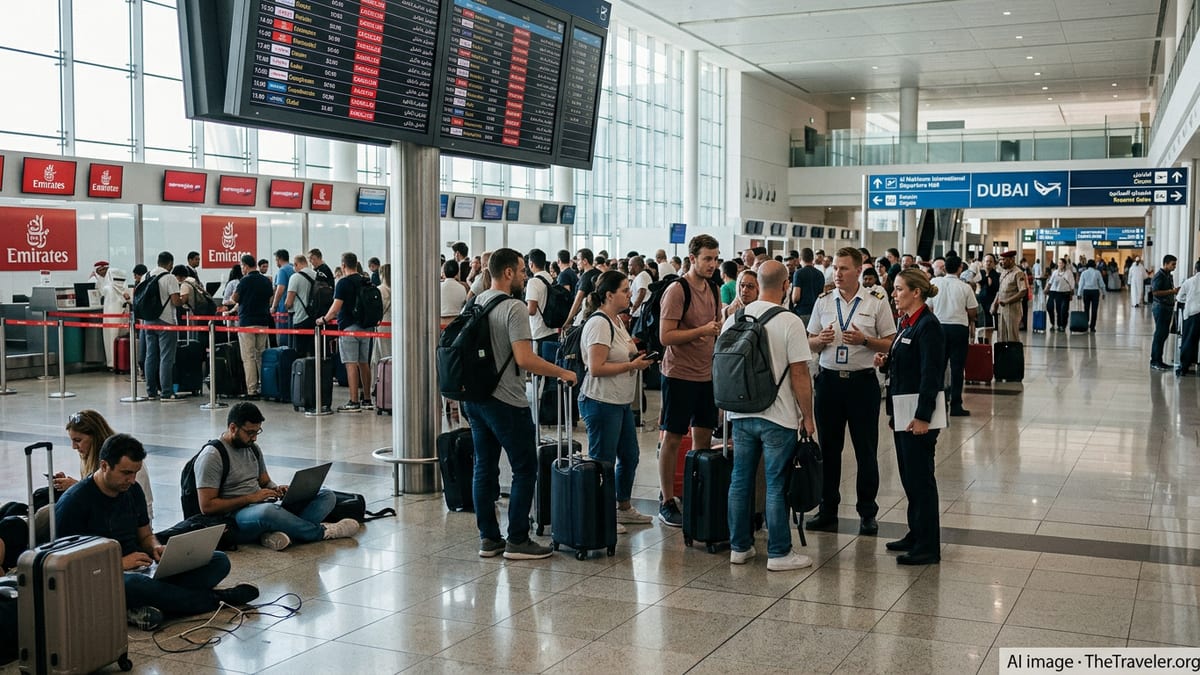
Missile attacks on Saudi airports ripple across regional airspace
Recent missile and drone attacks on Saudi airports have triggered a fresh wave of schedule changes and cancellations across the Gulf’s major hubs, including Dubai International and Abu Dhabi’s Zayed International Airport. Publicly available aviation safety assessments highlight sustained missile and drone activity linked to Houthi forces in Yemen, with recent strikes and attempted strikes reaching as far as Riyadh and the Eastern Province, including King Khalid International Airport and King Fahd International Airport.
According to open-source conflict monitoring and flight safety briefings, the current risk profile for Saudi airspace includes the possibility of long-range missile and drone launches capable of reaching multiple civilian airports. Advisories recommend that operators carefully evaluate overflight and destination risks, particularly for routes crossing central and southern Saudi Arabia. This evolving threat picture has encouraged airlines and insurers to reassess exposure on city pairs that rely on Saudi airspace as a direct corridor between the Gulf and destinations in Asia, Europe and Africa.
Travel disruption intensified this month after attacks around Riyadh’s main airport were followed by a fatal strike at King Fahd International Airport in Dammam, where the Saudi civil aviation regulator reported casualties and diversions. Flight-tracking data and regional aviation bulletins show multiple diversions and temporary suspensions into affected airports, alongside route-level decisions by foreign carriers to avoid Saudi territory entirely even when airports technically remain open.
Dubai and Abu Dhabi carriers extend Saudi route suspensions
Flag carriers based in the United Arab Emirates have responded by extending or expanding suspensions on services linking UAE hubs to Saudi cities. Coverage in Gulf-focused business media shows that Etihad Airways has prolonged cancellations on flights between Abu Dhabi and several Saudi destinations, including Riyadh, Jeddah and Dammam, through at least 24 October 2026, citing regional disruption. Schedules indicate that frequencies on remaining services are subject to short-notice changes as the airline monitors security assessments and operational constraints.
Emirates and flydubai, both operating from Dubai, have also adjusted their Saudi networks. Reports from regional news outlets and airline passenger notices point to cancelled and retimed flights on Dubai routes to Riyadh, Jeddah and Dammam over the past week, with some rotations removed from the schedule altogether. Passengers holding tickets issued before mid October for travel dates falling within the disruption window are being offered complimentary date changes or refunds under temporary travel waiver policies.
Sharjah based Air Arabia is among the low cost carriers scaling back Saudi operations. Publicly available information on recent schedules and travel alerts shows that selected services from the UAE to secondary Saudi cities have been suspended or consolidated, with advice for travellers to confirm flight status on the day of departure. The resulting cutbacks mean fewer options for point to point travel between the UAE and Saudi Arabia, particularly for labour, religious and short haul business traffic that depends on frequent departures.
International airlines reroute and delay Middle East expansion plans
The impact of missile threats and recent attacks is not limited to Gulf based carriers. European and Asian airlines have extended suspensions of Riyadh and Dubai routes or postponed planned launches involving Saudi airports. A recent factbox style summary of airline moves compiled by international financial news outlets shows that several carriers, including Singapore Airlines and Cathay Pacific, have prolonged their suspension of Dubai services into late October, while also extending Riyadh route suspensions to the end of the month or beyond.
Some long haul airlines are adjusting their network strategies more fundamentally. According to industry coverage, Delta Air Lines has pushed back the start of its planned Atlanta to Riyadh service, originally scheduled to begin on 23 October 2026, to March 2027, following the escalation of attacks on Saudi airports. Travel waivers allow affected passengers booked on early services to cancel or rebook, underscoring the uncertainty around the near term viability of new Saudi long haul connections.
European groups such as Lufthansa and Air France KLM are maintaining cancellations on Riyadh flights through mid or late November after the recent strikes. Aviation specialist publications report that while Saudi authorities have permitted a limited resumption of operations at Riyadh’s King Khalid International Airport, foreign carriers are taking a cautious approach in light of regulatory advisories, war risk insurance conditions and the possibility of further attacks. This has left national airlines and a small number of regional operators handling the bulk of traffic into the Saudi capital, often under special permissions or repatriation style arrangements.
Patchwork of reroutes, longer flight times and busy Gulf hubs
For many flights that do not land in Saudi Arabia but previously transited its airspace, the current situation has translated into longer routings and more complex flight planning rather than outright cancellation. Independent airspace monitoring platforms note that some airlines have begun routing services further south or north of Saudi Arabia to reduce exposure, sometimes skirting over the Arabian Sea or via alternative corridors over Egypt, Oman or Central Asia.
These detours increase block times and fuel burn, factors that feed into higher operating costs and, potentially, ticket prices on certain long haul routes linking Europe and Asia. Earlier analytical reports on Middle East airspace closures estimated that major diversions can add several hours to flights and force carriers to rework crew schedules, aircraft rotations and connecting banks. For travellers passing through Dubai, Abu Dhabi or Doha, this may mean tighter connection windows on some itineraries and longer layovers on others as airlines rebalance their networks.
Within the Gulf, already busy hubs are managing irregular peaks as disrupted flights are retimed or diverted. Advisory notes from travel risk consultancies describe heavy congestion at airports such as Dubai International and Zayed International when regional airspace conditions shift, creating periods of gate pressure and extended ground holding. While airport operators in the UAE have introduced exceptional measures at times of peak disruption to clear backlogs of stranded passengers, schedules remain vulnerable to sudden changes in missile activity or regulatory guidance on overflight.
What affected passengers need to know right now
For travellers booked on flights between Dubai and Saudi Arabia, or on itineraries that cross Saudi airspace, the primary recommendation from airlines and travel advisories is to monitor flight status up to the moment of departure. Publicly available guidance from UAE based carriers stresses that services may be cancelled, rerouted or delayed at short notice and that passengers should wait for direct notification from the airline before heading to the airport.
Several airlines have introduced temporary flexibility policies covering travel to, from or via Saudi cities such as Riyadh, Jeddah, Medina and Dammam. Gulf based news outlets report that passengers with tickets issued before specified cut off dates in October for journeys during the disruption window are being offered one time free date changes within set validity periods, or refunds for unused segments. The exact rules differ by carrier, so checking the fare conditions and any dedicated travel waivers is essential.
International aviation regulators have also published advisories urging airlines to exercise caution when operating in or over Saudi Arabia, citing safety risks associated with ongoing military activity and interference with navigation systems. While these notices are directed at airlines rather than individual travellers, they help explain why some carriers choose to suspend routes entirely while others continue operating with modified flight paths or restricted schedules.
Given the fluid security situation and the potential for further missile incidents, industry analysts expect that flight patterns between Dubai, the wider Middle East and Saudi Arabia will remain in flux in the near term. Travellers planning to use Gulf hubs are being encouraged by travel risk analysts and consumer travel media to keep itineraries as flexible as possible, allow additional time for connections and stay alert to last minute schedule updates as airlines continue to manage the evolving threat environment.