

More news on this day
Two recent rounds of flight halts centered on Washington Dulles International Airport have triggered nationwide disruptions, exposing how a single chokepoint can destabilize tightly wound U.S. airline networks.
Get the latest news straight to your inbox!
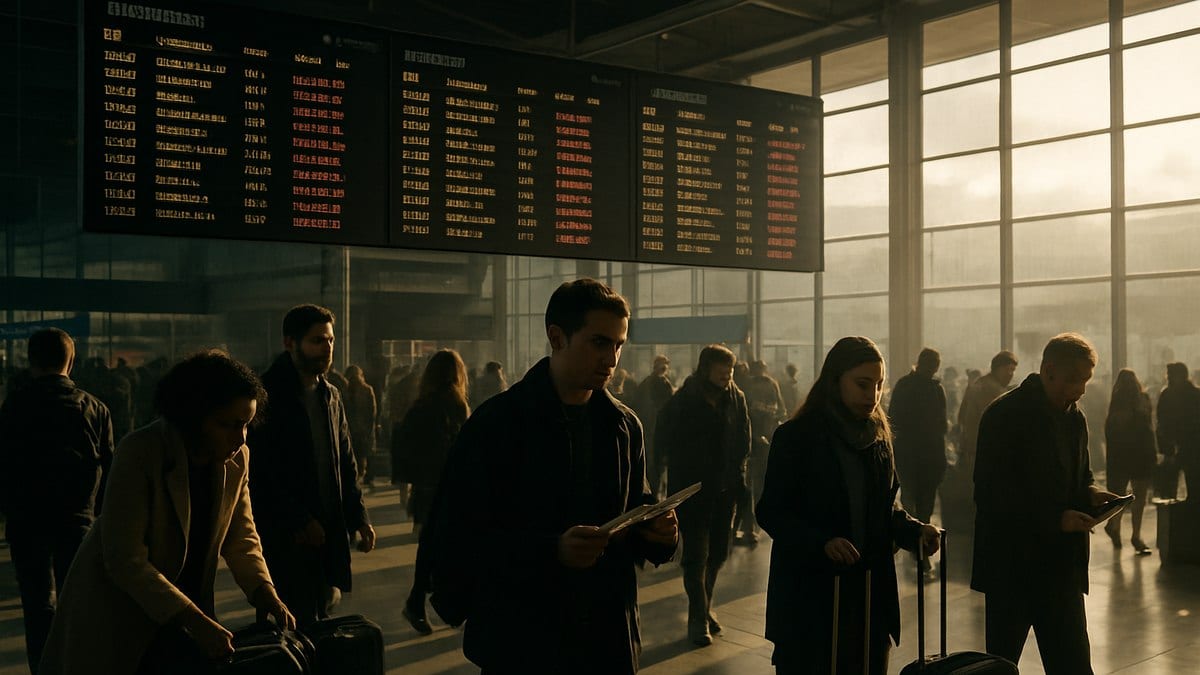
Back-to-Back Ground Stops Disrupt the Capital Region
In March 2026, Washington Dulles International Airport was twice swept up in ground stops across the Washington and Baltimore region after a strong chemical smell affected the Potomac Consolidated TRACON, the air traffic control facility that manages approach traffic for the area. Publicly available information shows that on March 13 a stoppage lasting more than an hour halted arrivals at Dulles, Reagan National and Baltimore/Washington International, with departures also held and diversions reported at outlying airports.
Reports from late March describe a second, similar incident, again forcing the Federal Aviation Administration to slow or stop traffic into Dulles and neighboring airports while controllers were moved out of the facility and safety checks were carried out. Airlines caution that even when restrictions are lifted within hours, aircraft and crews often remain scattered across the network, prolonging disruption well into the next day.
For passengers, the immediate impact has included diversions to cities such as Pittsburgh, extended tarmac waits and late-night cancellations affecting long haul routes that rely on Dulles as a transatlantic and transpacific gateway. Social media posts and airline status pages during both March events pointed to rolling delays of up to several hours as operations struggled to recover.
The fact that the same regional control facility was implicated twice in a matter of weeks has sharpened attention on the vulnerability of shared infrastructure that feeds multiple major airports. While each incident was localized in time, their reach across airline schedules was national in scope.
How a Dulles Disruption Echoes Across U.S. Hubs
Dulles functions as a key hub for both domestic connections and international flights, particularly for United Airlines, which operates a large banked schedule at the airport. When a ground stop interrupts those banks, dozens of onward connections to cities across the United States and overseas are jeopardized at once, creating what analysts describe as a domino effect.
On days when restrictions hit the Washington region, flight-tracking data and airline advisories indicated mounting delays in cities as far apart as Chicago, Houston, Denver and San Francisco as inbound aircraft missed their assigned departure slots. With planes already operating near full and turnaround times compressed, a wave of late arrivals from Dulles can force widespread retiming or cancellation of subsequent legs.
Travel industry coverage notes that the same dynamics apply at other major hubs such as Atlanta, Dallas-Fort Worth and Newark, but the March incidents highlighted how the Washington area’s multiple large airports all depend on a single approach-control node. When that node slows, the effect is amplified because airlines frequently schedule tight inter-airport connections, such as international arrivals into Dulles feeding domestic departures from Reagan National.
The result is that a disruption which begins as a safety response to conditions in one facility can, within hours, reduce available capacity on entire east coast and midcontinent corridors. That pattern was evident in March as ground holds for flights bound for Dulles, Reagan National and Baltimore led to queues at origin airports around the country.
Systemic Weakness in a Hub-Dependent Network
Research on the U.S. flight network has long described it as hub dominant, with a relatively small number of airports and control centers handling a disproportionately large share of traffic. Recent academic work using complex network theory characterizes this structure as efficient for routine operations but vulnerable to targeted failures at critical nodes.
The experience surrounding Dulles in March appears to mirror those findings. When operations at a single critical node, in this case the approach-control facility serving multiple hubs, are curtailed, connectivity across the network drops sharply. Airlines can reroute some flights, but constraints on airspace, gate availability and crew duty limits cap the system’s ability to absorb the shock.
Similar vulnerabilities have been exposed in other recent disruptions, from communications outages at regional air traffic centers to technology failures at individual airlines that quickly ballooned into nationwide delays. In each instance, the concentration of traffic through a relatively small number of hubs magnified the impact far beyond the originating problem.
For policymakers, the Dulles-related disruptions arrive amid ongoing debate over investment in air traffic control technology, facility redundancy and resilience planning. Industry observers argue that the network’s current configuration offers little margin when a key node is compromised, whether by technical failure, safety concern or external hazard.
Strain on Travelers and Airlines Alike
For travelers connecting through Dulles, the March ground stops translated into missed international departures, overnight stays and rebookings that stretched into the following day. Travel advisories highlighted that some passengers found themselves re-routed through secondary hubs or sent to alternate airports before being reconnected to the main network.
Airlines, for their part, must juggle the competing demands of safety, crew scheduling rules and aircraft positioning. Once a bank of inbound flights to Dulles is delayed or diverted, outbound flights can quickly lose their crews or aircraft, triggering a cascade of schedule changes. This is especially acute on long haul routes, where missed departure windows can mean a full-day delay because of slot constraints and airport curfews overseas.
Publicly available operational data from the March events indicate that a significant share of flights touching the Washington region experienced delays, with some carriers canceling select services preemptively to stabilize their operations. Analysts note that while these decisions can be frustrating in the short term, they may prevent even broader disruption across the network.
The incidents have also renewed discussion among consumer advocates about communication practices during major disruptions. Reports describe travelers receiving fragmented updates from airlines, airport displays and federal systems, making it difficult to discern whether to stay at the gate, deplane or seek alternative arrangements.
Calls for Redundancy and Smarter Planning
The Dulles flight disruptions are feeding into a wider conversation about how to make the U.S. aviation system more resilient to localized shocks. Some aviation specialists point to the need for greater redundancy in air traffic control facilities, including backup sites that can quickly assume responsibility when conditions at a primary center deteriorate.
Others highlight operational strategies, such as spreading connecting banks more evenly across the day at major hubs, investing in more flexible crew scheduling tools and building slack into high-density routes so that a short ground stop does not instantly overload downstream airports. Carriers have also experimented with enhanced passenger-facing technology, such as real-time wait-time trackers and proactive rebooking tools, in an effort to reduce the passenger impact when disruptions occur.
For travelers, recent coverage emphasizes practical steps that can soften the blow of a Dulles-centered disruption. Recommendations include allowing longer connection times at hub airports, opting for earlier departures on days with forecast storms or infrastructure work and monitoring flight status through official channels before leaving for the airport.
As the spring and summer travel seasons ramp up, the March ground stops affecting Dulles serve as a timely reminder that the efficiency of the hub-and-spoke model carries a trade-off. When a single node in that system falters, the shock waves can extend far beyond the Washington region, reshaping travel plans across the country within a matter of hours.