

More news on this day
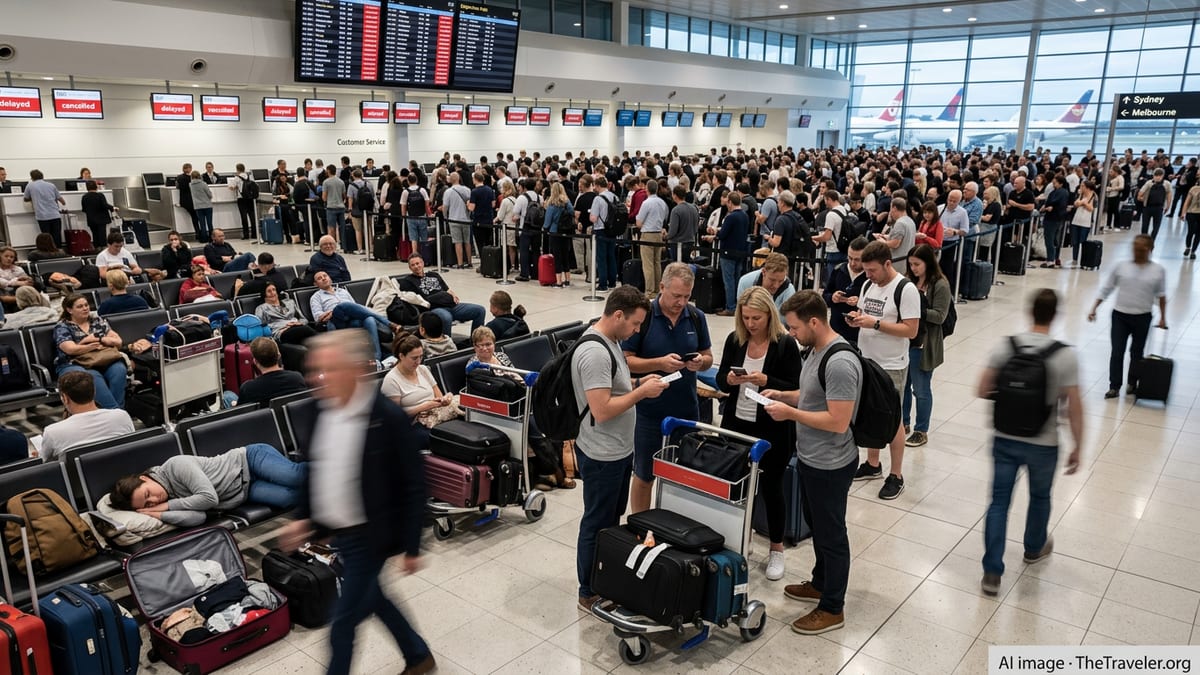
Severe spring storms colliding with record Easter holiday demand have triggered about 5,600 flight delays and hundreds of cancellations across the United States, disrupting journeys from major hubs in the South and Midwest to coastal gateways and leaving travelers facing crowded terminals and extended waits.
Get the latest news straight to your inbox!
Storm Systems and Holiday Crowds Converge
According to flight-tracking data compiled over the Easter 2026 travel window, operations across the United States were hit by a surge of delays and cancellations as thunderstorms, heavy rain and strong winds moved across key aviation corridors. Publicly available figures referenced in multiple outlets indicate that roughly 5,600 flights were delayed and several hundred were canceled into, within or out of the country during the peak of the Easter rush, with the most serious disruption concentrated from Good Friday through Easter Sunday.
Coverage drawing on FlightAware and similar tracking services shows that the most intense delays coincided with storm bands sweeping through parts of the South and Midwest, affecting airports in regions from Texas to the Southeast and up toward the Mid-Atlantic. As storms stalled over some metro areas, aircraft were held on the ground or slowed en route, compressing schedules and forcing airlines to extend block times or reroute traffic to avoid the worst conditions.
Reports indicate that the Easter weekend chaos capped a turbulent stretch for U.S. aviation in early 2026, which has already seen several high-impact weather events and repeated multi-thousand-delay days. Analysts note that while the overall number of cancellations during the Easter period remained below the worst winter storm episodes earlier in the year, the combination of packed planes and widespread delays made it difficult for passengers to find alternative seats once problems emerged.
Major Hubs Bear the Brunt of Disruption
Data highlighted by national and specialist travel coverage show that the burden of Easter delays fell heavily on the country’s largest hubs. Hartsfield-Jackson Atlanta International, Dallas/Fort Worth, Chicago O’Hare and Houston George Bush Intercontinental all reported substantial disruption as storms and congestion rippled through their tightly scheduled operations. These airports serve as critical connection points, so a single blocked arrival or departure bank could cascade into dozens of late flights across domestic and international networks.
Some regional and coastal airports also experienced severe knock-on effects as delays at upstream hubs pushed back aircraft and crews. Coverage of Miami International, for example, described a sharp spike in Easter Sunday disruption after earlier storms and staffing strains triggered roughly 175 affected flights on a single day, filling terminals with passengers rebooking connections and waiting out rolling delays.
At the same time, not all large airports saw the same level of stress. Reports from Los Angeles International on Easter Sunday pointed to relatively short security lines and fewer schedule problems compared with storm-hit regions, underscoring how localized weather patterns and recent staffing adjustments can shape passenger experiences during national holiday peaks. The uneven impact meant some travelers moved through their journeys with only minor inconvenience while others faced long hours in crowded concourses.
Airline Networks Struggle With Knock-On Effects
Industry-focused analysis of the Easter period emphasizes that much of the disruption stemmed from how airlines’ networks absorbed the shock of repeated weather interruptions. Modern schedules rely on tight aircraft rotations and complex crew pairings, and when storms force ground stops or reroutes, recovery can take multiple days. Publicly available data on March and early April operations show that several carriers entered the Easter weekend after already dealing with heavy delay days earlier in the month, leaving limited slack in fleets and staffing.
Reports indicate that regional partners, which operate feeder services into larger hubs, were particularly exposed. These airlines often run smaller fleets and shorter-haul routes, so an aircraft or crew out of position after a weather disruption can quickly translate into a cancellation rather than a long delay. When that happens at scale, passengers connecting from regional spokes onto mainline routes may miss onward flights, compounding the visible congestion at hub airports.
Aviation analysts cited in recent coverage also point to broader structural pressures that have built since the pandemic era, including persistent pilot and ground-crew shortages, high aircraft utilization, and continued growth in leisure demand around school holidays and long weekends. The Easter 2026 chaos is being framed as another example of how even forecast weather events can generate outsized operational stress when networks are already running close to capacity.
Passenger Experience: Long Lines and Limited Options
For travelers, the headline numbers translated into a familiar pattern of missed connections, lengthy customer service queues and, in some cases, unexpected overnight stays. Social media posts and traveler accounts compiled in news coverage describe passengers waiting hours to speak with airline agents, standing in dense lines at rebooking desks and camping out near gate areas as departure times repeatedly slid.
With holiday flights running close to full, re-accommodating disrupted passengers proved challenging. When cancellations occurred late in the day or in markets with limited competition, many travelers reported being offered itineraries that pushed their arrivals into Monday or later, effectively wiping out short Easter weekend trips or delaying returns to work and school. Families traveling with children, in particular, faced additional complexity as they tried to secure adjacent seats on remaining services.
Some passengers, especially those on shorter-haul routes, turned to rental cars, intercity buses or trains when faced with multi-day delays, mirroring behavior seen during previous major disruption events. Travel advisors quoted in recent articles suggest that this modal shift is becoming more common during severe aviation disruptions, as travelers weigh the certainty of ground travel against the risk of further air network complications.
What the Easter Disruptions Signal for Upcoming Travel Peaks
Analysts examining the Easter 2026 disruption say the episode offers an early stress test for the U.S. aviation system ahead of the busy summer season. With multiple large-scale weather events already recorded in 2026 and airlines still refining schedules and staffing models, the performance of carrier networks during holidays is being closely watched by consumer advocates and industry observers.
Recent studies of U.S. delay trends have highlighted how causes of disruption have shifted in the past decade, with weather and airspace constraints increasingly interacting with airline-controlled factors such as maintenance planning and crew scheduling. The Easter period, marked by 5,600 delays and widespread though not catastrophic cancellations, is being viewed as a case study in how those overlapping pressures manifest on a high-demand weekend.
For travelers looking ahead to summer, public guidance from regulators, advocacy groups and travel experts consistently emphasizes preparation. Recommendations include building longer connection times into itineraries, scheduling early-morning departures when possible, monitoring flight status and inbound aircraft positions through airline apps, and knowing refund and rebooking rights before travel begins. The Easter experience suggests that when storms align with peak demand, even well-prepared passengers may face disruption, but those with flexible plans and clear information can navigate the chaos more effectively.