

More news on this day
Thousands of travelers across Europe are facing renewed flight chaos this Easter period as large-scale disruption at Frankfurt and London’s main airports ripples through already fragile global schedules.
Get the latest news straight to your inbox!
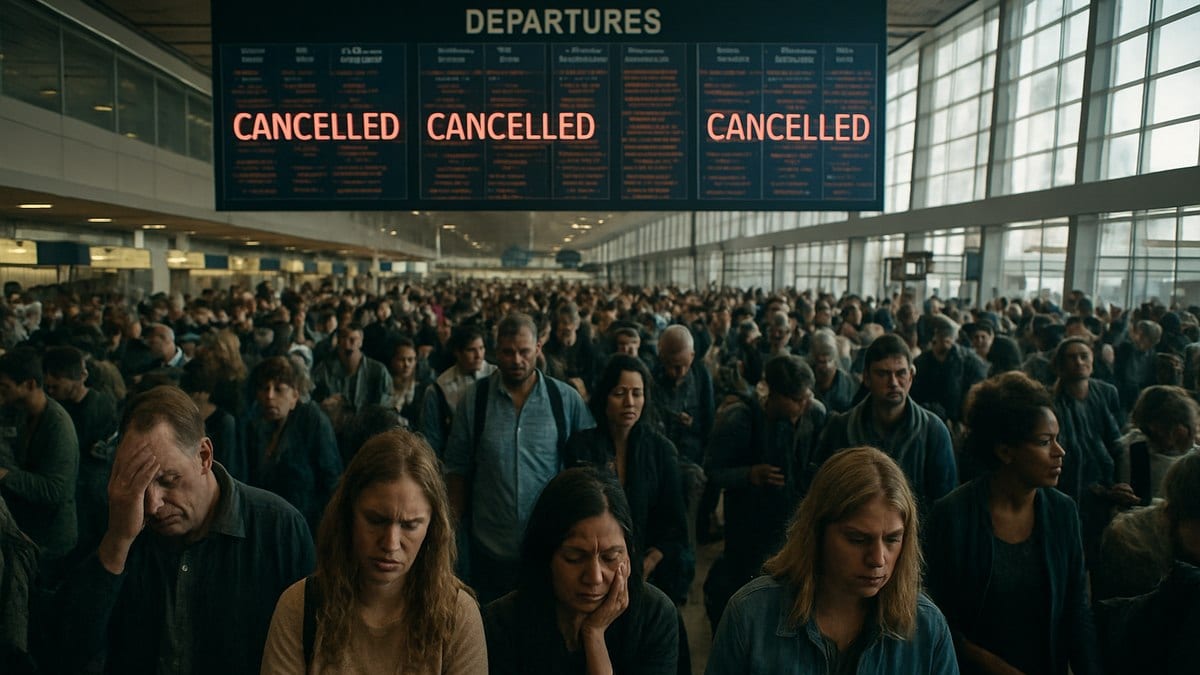
Lufthansa strike paralyses Frankfurt at peak holiday return
Frankfurt Airport, Germany’s busiest hub, has become the epicentre of Europe’s latest aviation disruption as a fresh wave of industrial action at Lufthansa coincides with the tail end of Easter holidays. Recent reports indicate that a one-day cabin crew strike at two Lufthansa brands has led to the cancellation of around 580 flights at Frankfurt alone, with the majority of the airline’s schedule grounded.
Publicly available information from union statements and airport updates shows that close to 90 percent of flights at the affected Lufthansa subsidiaries were cancelled during the most recent stoppage. The disruption hit both domestic and European routes, as well as long haul services to North America, Asia and the Middle East, leaving aircraft and crews out of position for subsequent rotations.
The latest strike follows a sequence of labour disputes that have punctuated Lufthansa’s operations since early 2026. Previous actions in March had already forced passengers to rebook or abandon trips, and analysts note that the new walkout comes at a particularly sensitive moment, just as Easter travelers attempt to return home before schools and workplaces fully resume.
Indicators from flight-tracking and compensation services suggest a sharp spike in delays and missed connections routed through Frankfurt since the stoppage began. With Lufthansa occupying a dominant position at the airport, cancellations have quickly cascaded onto partner airlines sharing the same terminals and feeder traffic.
London passengers face knock-on delays as Easter crowds surge
While Frankfurt absorbs the direct impact of strike action, London’s airports are wrestling with a different kind of Easter turbulence. Forecasts from travel risk consultancies in the run-up to the holiday period highlighted Good Friday and Easter Monday as among the most disruption-prone days of 2026 at major UK hubs including Heathrow and Gatwick, driven by record passenger volumes and tight staffing margins.
According to published coverage analysing on-time performance data, London has already experienced several days of elevated delays during March as weather systems, airspace congestion and residual staffing shortages converged. With Easter departures peaking and many families opting for short European breaks, even small operational hiccups have translated into long queues at security, extended wait times at check-in and missed slot windows.
Travel blogs and consumer advisories tracking airport performance note that flights linking London to key continental hubs such as Frankfurt, Amsterdam and Paris are among the most vulnerable. Any disruption on one side of these routes quickly ricochets, as aircraft arrive late, crews time out and subsequent departures from London are pushed back or cancelled entirely.
Passenger accounts shared on social platforms over the holiday period describe crowded gate areas, last-minute gate changes and overnight stays in airport hotels after missed onward connections. For many travelers connecting between transatlantic services and European short-haul legs, London’s role as a transfer point has magnified the impact of problems originating elsewhere on the continent.
Europe-wide pressures create a fragile backdrop
The turbulence at Frankfurt and London is unfolding against a wider backdrop of strain across Europe’s aviation network. Monitoring by travel rights organisations and specialist disruption trackers during March shows repeated flare-ups of delays and cancellations at major hubs including Paris Charles de Gaulle, Amsterdam Schiphol and Munich, driven by a mix of industrial action, staffing gaps and unsettled late-winter weather.
Recent analyses of March 2026 operations indicate that in a single day of heavy disruption, nearly 1,900 flights across Europe departed late, with hubs such as Frankfurt and Paris among the worst affected. This level of strain has reduced the system’s ability to absorb new shocks, meaning that each additional strike or weather front now has a disproportionate impact on travelers.
The Easter period has also coincided with fresh strike threats at ground handling providers in Spain and other southern European countries, where unions have announced work stoppages overlapping with school holidays. Although not directly centered on Frankfurt or London, these actions affect the same carriers and aircraft that feed into northern European hubs, further tightening aircraft availability and complicating recovery efforts after cancellations.
Aviation analysts point out that airlines and airports entered 2026 with ambitious capacity plans to meet pent-up travel demand, but recruitment and training have lagged behind. As a result, many hubs are operating with minimal buffer: sickness, industrial unrest or localised storms can quickly tip operations from manageable delay into full-scale disruption.
Families and long-haul travelers among the hardest hit
Among those most exposed to the latest wave of disruption are families returning from Easter holidays and long-haul passengers relying on tight connections through Frankfurt and London. Reports from passenger advocacy forums highlight cases of travelers arriving from North America or Asia into Europe only to find their onward flights cancelled, leaving them stranded with limited rebooking options as peak flights sell out.
Industry observers note that long-haul networks are particularly vulnerable when a dominant hub carrier like Lufthansa is affected. Aircraft stuck in Frankfurt can lead to gaps in service days later on routes as far afield as the United States, South Africa or India. When combined with busy Easter loads at London’s airports, passengers often discover that alternative seats on other airlines are scarce or significantly more expensive.
Families travelling with children face added complications, as overnight delays mean sourcing accommodation near the airport, navigating rebooking queues and managing school return deadlines. Consumer watchdogs in Europe remind passengers that, under EU and UK air passenger rights regulations, airlines remain responsible for offering rerouting or refunds and for providing meals and hotel stays once delays cross certain thresholds, even in cases linked to strikes or weather.
However, the practical reality at heavily disrupted hubs is that hotel capacity and customer service staffing can quickly be overwhelmed. Travelers caught in the current wave of Easter chaos report spending hours in telephone queues or struggling with overloaded airline apps as they search for new itineraries home.
What travelers can expect in the days ahead
Looking beyond the immediate wave of cancellations, public information from airlines and airports suggests that residual disruption at Frankfurt and London could persist for several days as operations are rebalanced. Aircraft and crews that have fallen out of their planned rotations must be repositioned, and backlogs of stranded passengers need to be cleared on already full post-holiday flights.
Travel advisory platforms recommend that passengers scheduled to fly through Frankfurt, Heathrow or other major European hubs in the coming days monitor their bookings closely, use airline apps for real-time updates and be prepared for schedule adjustments. Those with flexible plans may find it worthwhile to shift flights away from the busiest Easter return days or to consider secondary airports where feasible.
Insurance comparison services note renewed interest in policies that include missed-connection and delay coverage, as travelers seek financial protection against the kind of multi-day disruption that has affected Europe several times already this year. While such cover cannot prevent flight chaos, it can soften the financial blow of unexpected hotel stays and alternative transport arrangements.
With further labour negotiations pending at several European carriers and airport service providers, the underlying risk of fresh disruption remains elevated beyond Easter. For now, the combination of strikes at Frankfurt, pressure on London’s congested airports and lingering operational fragility across the continent has created one of the most challenging early-spring travel periods Europe has seen since the pandemic.